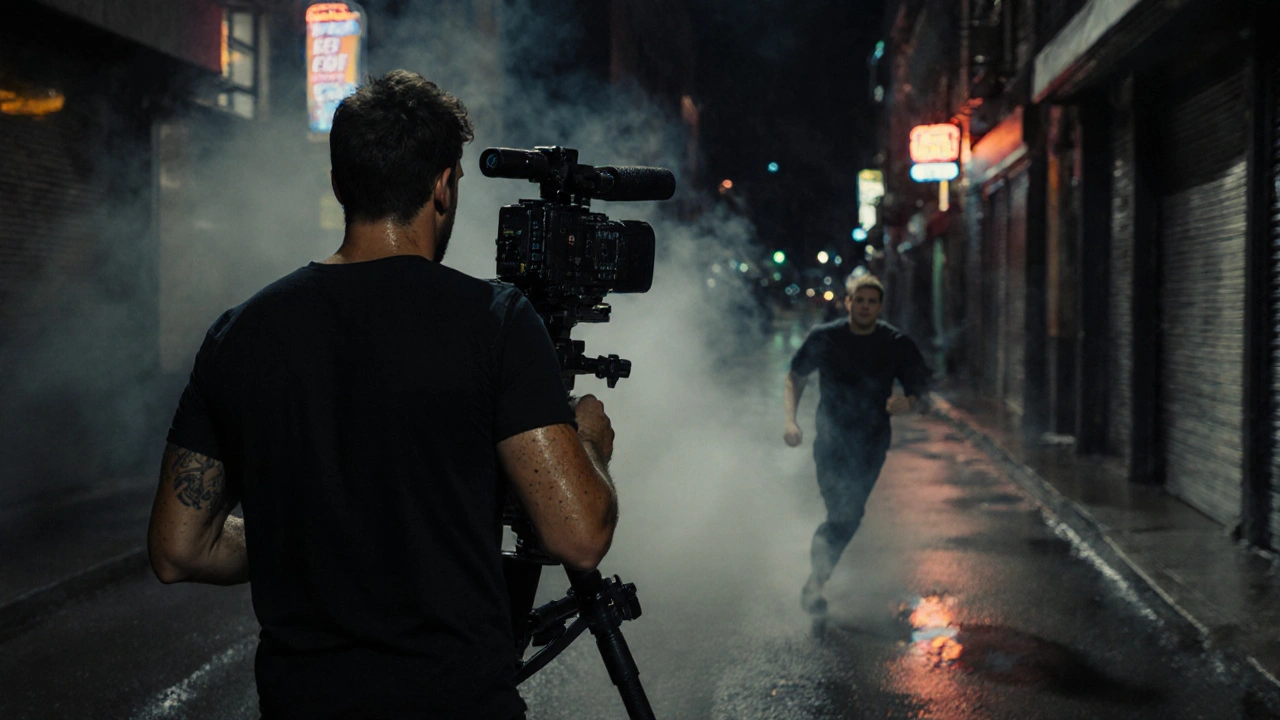
Ever wonder how a car chase in a movie feels so real, even when you know it’s all staged? Or how a fight scene in a narrow alley looks like it’s happening in real time, with every punch landing with weight? That’s not luck. It’s cinematography - the art and science of capturing motion on film - and it’s one of the most complex parts of making action movies. The camera isn’t just recording the action; it’s becoming part of it. And that comes with a whole set of technical problems most viewers never notice - until something goes wrong.
Camera Movement That Keeps Up With the Chaos
Action scenes move fast. Actors sprint, cars swerve, explosions ripple through the air. The camera has to match that energy without looking shaky or disorienting. But if you mount a camera on a rig that’s too heavy, it won’t move fluidly. Too light, and it shakes from every footstep or wind gust. Steadicams and gimbals are the go-to tools, but they’re not magic. A Steadicam operator needs to train for months just to walk smoothly while carrying 30 pounds of gear. In Mad Max: Fury Road, the crew used custom-built rigs mounted on moving vehicles, synced with hydraulic arms that absorbed bumps. The result? A chase that feels like you’re inside the car, not watching it from a distance. Gimbals work well for tighter spaces, like indoor fights or crowded streets. But they have limits. If a stunt involves a 360-degree spin or a sudden drop, the gimbal’s motors can’t react fast enough. That’s when you need a cable cam or drone - but only if the lighting and wind cooperate. In John Wick: Chapter 4, a drone shot tracking the protagonist through a Parisian rooftop chase required perfect timing. One gust of wind, and the shot was ruined. They did 17 takes.Lighting That Doesn’t Kill the Mood
Action scenes often happen at night. Rain, smoke, explosions - they all eat light. But if you over-light the scene, you lose the gritty, cinematic feel. Under-light it, and you can’t see the actors’ faces or the details of the stunt. Traditional lighting rigs are too slow to set up and too bulky to move during a stunt. So crews use LED panels that are lightweight, bright, and can be mounted on drones, cars, or even handheld rigs. In The Dark Knight, the team used modified LED strips taped to the sides of the Batmobile to simulate headlights that reacted in real time to the car’s movement. No post-production tricks - just real light moving with the vehicle. Smoke and dust are another nightmare. They scatter light, turning a clean shot into a blurry mess. The solution? Directional lighting. Instead of flooding the scene, they use narrow beams from the side or back to cut through the haze. In Atomic Blonde, a hallway fight scene used only two 100-watt LED panels placed at 45-degree angles. The result? Sharp silhouettes, visible breath in the cold air, and every punch clearly defined.Stunt Coordination Meets Camera Timing
A stunt performer might leap from a second-floor window, but if the camera isn’t positioned exactly right, you miss the landing. Or worse - you catch the moment they’re about to hit the ground, and it looks fake. This is where pre-visualization (pre-vis) comes in. Before filming, teams build digital models of the stunt using motion capture and 3D animation. They simulate camera angles, actor movement, and even lighting conditions. Then they test it in VR. Directors and cinematographers walk through the scene as if they’re inside it, adjusting the shot until every movement lines up. In Mission: Impossible - Fallout, Tom Cruise’s HALO jump (High Altitude, Low Opening) required the camera to follow him from 25,000 feet. The team used a custom helmet cam with a stabilized lens, synced to a secondary drone that tracked his fall. They didn’t have room for error. One misalignment, and the entire sequence - shot in real time over 40 seconds - was useless. They got it in three takes.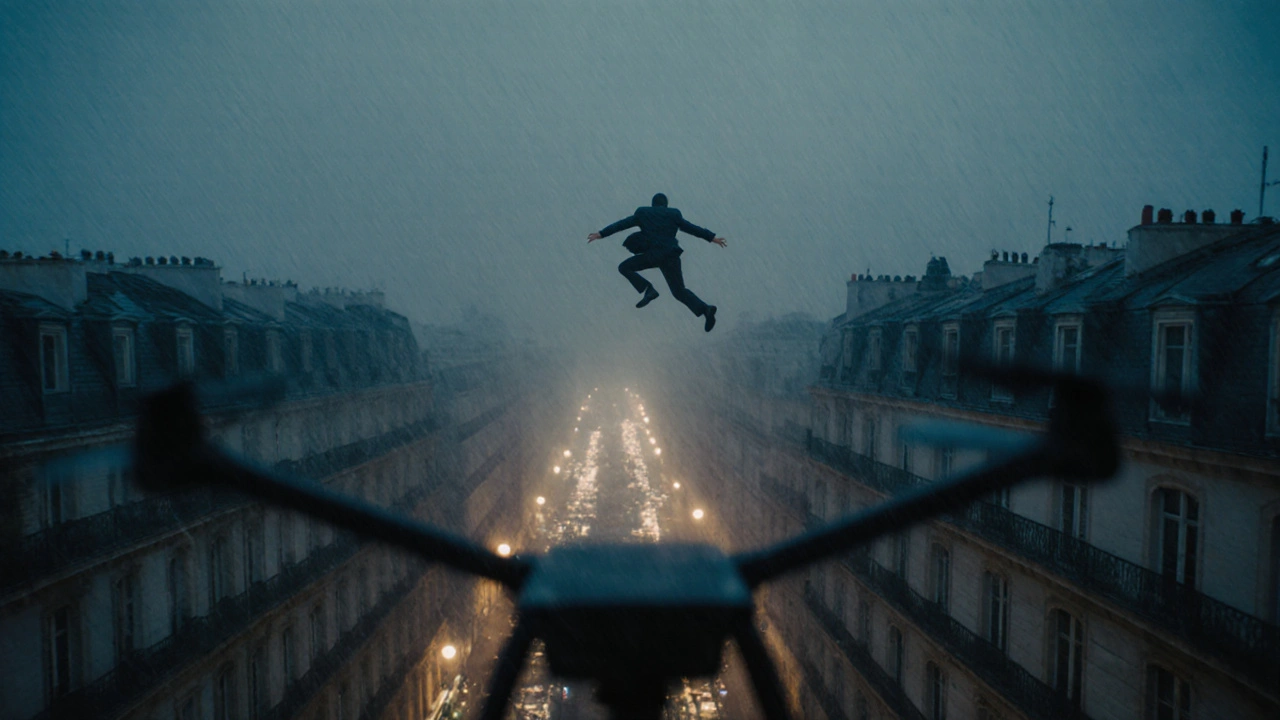
Dealing With Speed: Frame Rates and Motion Blur
Action scenes are often shot at higher frame rates - 60fps, 120fps, even 240fps - to capture every detail. But when you play those frames back at 24fps, the motion looks unnaturally smooth. It’s called the "soap opera effect," and audiences hate it in big-budget films. The fix? Shoot at high frame rates, but use motion blur in post-production to mimic how the human eye sees motion. In 1917, the entire film was shot to look like one continuous take. For action moments - like soldiers running through no-man’s-land - the crew shot at 48fps and added subtle motion blur in editing. The result? The movement felt urgent and real, not digital or artificial. Another trick: shoot the slow-motion parts separately. In John Wick: Chapter 3, the bullet-time shots of Wick dodging gunfire were filmed at 1,000fps using a Phantom camera. But the rest of the scene was shot at 24fps. Editors blended the two by matching the lighting and camera position exactly. It took weeks to get the transition right.Working With Weather and Unpredictable Environments
You can’t control the weather. But you can plan for it. Rain, wind, extreme heat - they all affect cameras, lenses, and batteries. A raindrop on the lens can ruin a shot. A cold battery dies in minutes. A hot camera overheats and shuts down mid-take. Crews now use waterproof housings with internal fans and moisture-absorbing silica packs. For outdoor night shoots, they carry spare batteries in heated pouches. In Black Widow, a fight scene in a Russian warehouse was shot during a real winter storm. The team wrapped every camera in thermal blankets and used battery warmers designed for Arctic expeditions. They also used infrared lighting to maintain visibility without affecting the scene’s natural look. Wind is the silent killer. It causes lens flare, makes smoke drift unpredictably, and shakes even the most stable rigs. The solution? Wind screens - not just for microphones, but for lenses. In Top Gun: Maverick, the aerial sequences used custom wind baffles on the camera mounts that reduced turbulence by 70%. The result? Clear, stable shots from planes flying at 500 mph.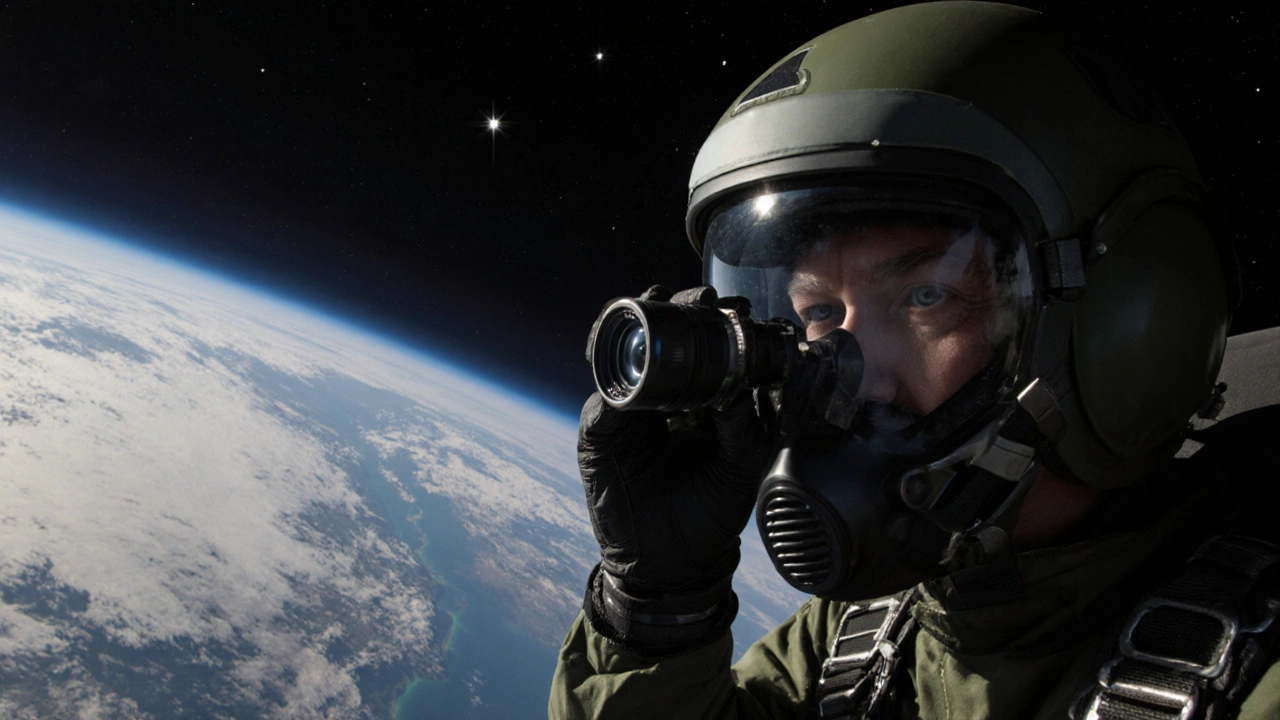
Post-Production: Fixing What the Camera Couldn’t Catch
No matter how good the planning, something always goes wrong. A stunt misses the mark. A camera lens fogs up. A light flickers. That’s where post-production steps in. But here’s the rule: don’t fix it in post if you can fix it on set. VFX are expensive and time-consuming. In Extraction, the entire film was designed to minimize CGI. A 90-second hallway fight had only one digital element - a bullet hole added after the fact. Everything else - the blood, the kicks, the camera movement - was real. When you do need to fix something, use motion tracking and rotoscoping. These tools let editors match digital elements to real camera movement. In Avengers: Endgame, a character was thrown through a glass window. The glass was added digitally, but the camera movement, the debris, and the lighting were all real. The software tracked every pixel of the camera’s motion to make the glass look like it was part of the scene.What Happens When It All Goes Wrong?
The biggest mistake? Trying to do too much in one shot. You want the camera to follow the stunt, the lighting to be perfect, the actors to hit their marks, and the sound to sync - all at once. That’s asking for failure. The best crews break action scenes into smaller pieces. They shoot the setup, then the impact, then the reaction - separately. Then they edit them together. In John Wick: Chapter 2, a gunfight in a subway station was shot in six different segments. Each had its own lighting setup and camera rig. The final edit made it look like one continuous, chaotic moment. Another pitfall: over-relying on shaky cam. It’s tempting to make everything jittery to feel "intense." But that just makes viewers nauseous. The best action sequences use controlled movement. Even when the camera shakes, it’s intentional - a quick jerk to mimic a character’s heartbeat, not random noise.Final Rule: The Camera Is a Character
The most successful action cinematography doesn’t just record the action - it reacts to it. The camera leans into a punch. It pulls back when someone gets hurt. It holds on a face after a victory. It breathes with the scene. In Children of Men, a single 4-minute shot inside a car during a surprise attack doesn’t use a single cut. The camera moves with the actors, tilts as they turn, and focuses on the fear in their eyes. That’s not technology - that’s storytelling. Action cinematography isn’t about fancy gear. It’s about knowing when to push the camera, when to hold back, and how to make the audience feel like they’re in the middle of the chaos - not just watching it from the sidelines.What’s the most important tool in action cinematography?
There’s no single tool - it’s the combination of camera rigs, lighting, and skilled operators. But the most critical element is the cinematographer’s ability to plan ahead. A Steadicam won’t help if the shot isn’t designed for the stunt. The best gear in the world can’t fix a bad plan.
Why do some action scenes look fake even with high-end equipment?
Usually because the lighting, motion blur, or camera movement doesn’t match reality. If the shadows don’t line up with the sun’s position, or if the camera shakes too much without purpose, the brain senses something’s off. Real action has weight, timing, and imperfection - and those details are hard to fake.
Can you shoot action scenes with a smartphone?
Yes - but only for small-scale scenes. Modern smartphones have excellent stabilization and high frame rates. You can shoot a realistic fight in a hallway or a car chase on a quiet street. But for explosions, high-speed stunts, or complex lighting, you need professional gear. A smartphone can’t handle the heat, wind, or physical stress of real action filming.
How do cinematographers avoid getting hurt during stunt filming?
They stay out of the danger zone. Cameras are mounted on rigs, drones, or remote-controlled arms. Operators work from safe distances using monitors. When they need to be close - like during a hand-held chase - they rehearse the path with stunt coordinators and wear protective gear. Safety isn’t optional - it’s built into every shot.
Is CGI replacing real cinematography in action scenes?
Not replacing - supplementing. The best action films use real camera work as the foundation. CGI is added only where necessary: to extend a building, remove a wire, or enhance an explosion. Audiences can tell the difference. Movies like Mad Max: Fury Road and John Wick succeeded because they prioritized real stunts and real camera movement - and used CGI sparingly.




Comments(5)