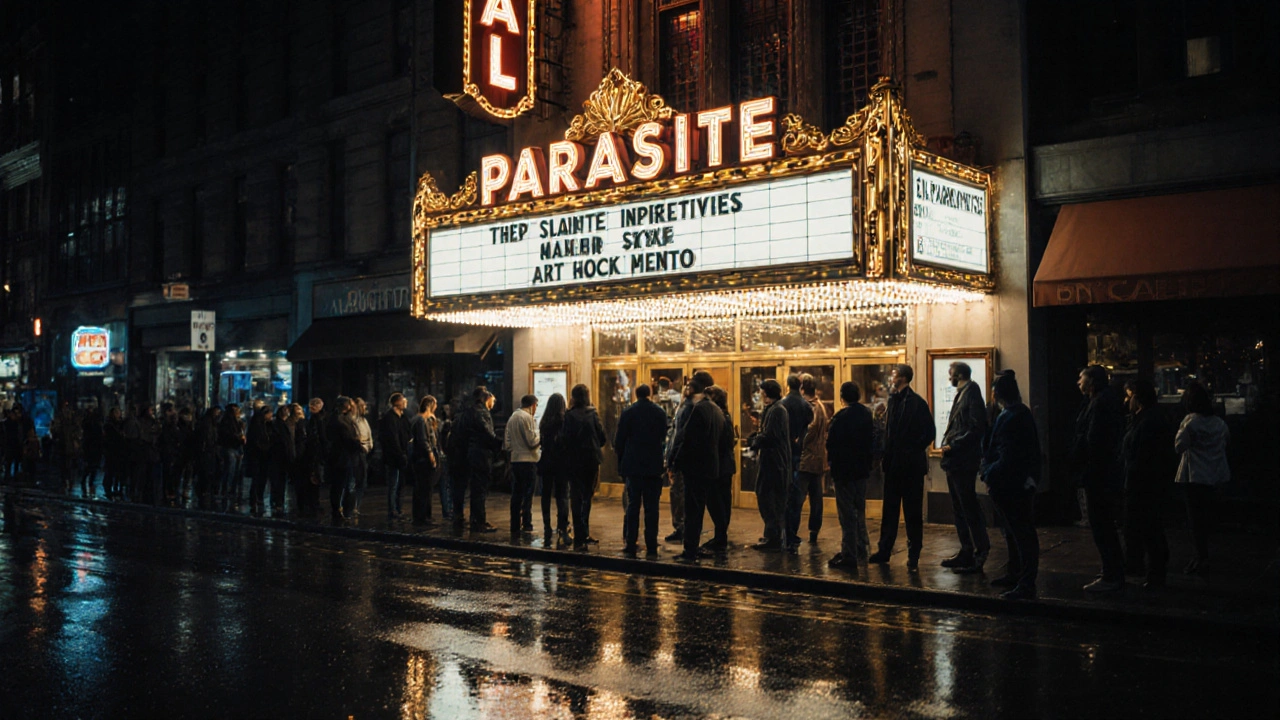
Most people think big openings mean big money. A movie hits 4,000 theaters on Friday, racks up $50 million, and everyone calls it a hit. But that’s not the whole story. Some of the most profitable films in history started in just 10 or 20 theaters. They didn’t need a nationwide rollout to break records. They used a simple, old-school trick: limited release.
Why Start Small?
Starting with a limited release isn’t about saving money. It’s about control. When you open a movie in only a handful of theaters-say, in New York, Los Angeles, and maybe Chicago-you’re not gambling on mass appeal. You’re testing it. You’re letting the right audience find it first. Critics notice. Word spreads. Social media buzz builds. Then, when you expand, you’re not guessing anymore. You know where it works.Take Parasite in 2019. It opened in just four theaters. In its first weekend, it made $107,000 per screen. That’s more than most blockbusters. By the time it hit 1,000 screens, it had already earned $30 million. That’s not luck. That’s strategy.
Small releases work because they create scarcity. People feel like they’re getting in on something early. They talk about it. They drag friends. They write reviews. Studios don’t need to spend millions on ads when the audience is doing the marketing for them.
The Math Behind the Strategy
It’s not just about buzz. It’s about numbers. A movie that opens in 20 theaters and makes $1 million has a per-screen average of $50,000. That’s a monster number. Compare that to a movie opening in 3,000 theaters and making $15 million-that’s only $5,000 per screen. The first one is a breakout. The second one? Just average.Why does this matter? Because theaters care about per-screen averages. High numbers get you more screens. Theaters don’t just give you space because you’re a big studio. They give you space because you’re making money. A movie with a $40,000 per-screen average? That’s a priority. A movie with $3,000? It gets pushed to the back room, maybe even dropped after a week.
Here’s the rule of thumb: if your per-screen average is above $25,000 in your first weekend, you’re in the top 1% of releases. If you hit $50,000, you’re in the top 0.1%. Studios know this. That’s why they don’t just open wide-they open smart.
Who Uses This Strategy?
It’s not just for indie films. Even major studios use limited releases when they want to win awards or build hype. Call Me by Your Name opened in four theaters. Manchester by the Sea opened in five. Both went on to make over $50 million. Black Panther didn’t start small, but Black Panther: Wakanda Forever did-opening in 100 theaters in select international markets before expanding.Streaming giants like Netflix and Apple TV+ are catching on too. The Power of the Dog opened in just 10 theaters in November 2021. It earned $1.2 million in its first weekend. That’s $120,000 per screen. It went on to win five Oscars. The studio didn’t need to flood theaters. They just needed the right ones.
The pattern is clear: if you’re a film with strong critical appeal, emotional depth, or cultural relevance, you don’t need 4,000 screens. You need 20. And you need them in the right cities.

Where to Open
Not every city works. You can’t just pick any five theaters and hope for the best. You need places where audiences care about quality cinema. That means:- New York City (especially Manhattan)
- Los Angeles (Westside and Downtown)
- Chicago (North Side)
- San Francisco
- Washington, D.C.
- Seattle
- Austin
- Portland
These are the cities where critics live, where film festivals happen, where people pay to see movies that aren’t just action or comedy. They’re also where social media influencers and bloggers live. A tweet from a film critic in LA can spark a national conversation.
Some studios even target specific theaters known for strong word-of-mouth. The Laemmle in LA. The Angelika in NYC. The Coolidge Corner in Boston. These places don’t just show movies-they cultivate audiences. A strong opening in one of these theaters can mean your film gets picked up by the New York Times, or featured on NPR. That’s free publicity worth millions.
When to Expand
Timing is everything. You don’t expand because you want to. You expand because the data tells you to. Most studios wait at least two weeks. They watch:- Per-screen averages
- Weekend-to-weekend growth
- Audience scores (like CinemaScore or PostTrak)
- Reviews from major outlets
- Streaming and digital pre-orders
If your per-screen average stays above $20,000 after two weeks, you’re ready to go wider. If it drops below $10,000, you might be better off holding off and targeting niche markets instead.
Some films expand slowly-adding 10-20 theaters a week. Others jump from 20 to 500 in one weekend. It depends on demand. If you’re seeing lines around the block in NYC and sellouts in LA, you don’t wait. You expand fast.
What Happens If You Get It Wrong?
There are risks. If you open too small and the buzz doesn’t come, you look like a flop. No one notices. No one talks. You get buried. That’s why you need a strong marketing plan-even if you’re not spending on TV ads. You need trailers online. You need press kits. You need influencers. You need to make sure the right people know it’s coming.Some films open in five theaters and disappear after a week because they didn’t do the groundwork. They thought the movie would speak for itself. It didn’t. Movies need context. They need a story. Even a limited release needs a campaign.
Another mistake? Opening in the wrong cities. If you open in Dallas and Atlanta instead of New York and LA, you might get decent numbers-but you won’t get the press. And without press, you won’t get expansion.

Real Examples That Worked
Little Miss Sunshine (2006): Opened in 12 theaters. Made $217,000 in its first weekend. Per-screen average: $18,000. Expanded slowly. Ended with $100 million worldwide. Cost: $8 million. The Artist (2011): Opened in 21 theaters. Made $180,000 in its first weekend. Per-screen: $8,500. Grew steadily. Won Best Picture. Made $44 million. Everything Everywhere All at Once (2022): Opened in 5 theaters. Made $130,000. Per-screen: $26,000. Expanded to 2,500 screens over 10 weeks. Made $140 million. Became the highest-grossing R-rated indie film of all time.These films didn’t have giant budgets. They didn’t have superhero teams. They had something better: a plan. They knew their audience. They knew where to find them. And they didn’t waste money trying to reach everyone.
How to Build Your Own Limited Release Plan
If you’re a filmmaker or producer, here’s how to make this work:- Choose 5-10 theaters in top-tier cities. Prioritize art-house venues with loyal audiences.
- Plan your opening weekend for a Friday, but make sure you have press screenings on Wednesday and Thursday.
- Send advance screenings to critics, influencers, and bloggers. Don’t wait for the official release.
- Run targeted digital ads in those cities only. Focus on film lovers, not the general public.
- Track per-screen averages daily. Don’t rely on total gross.
- Wait at least 10-14 days before expanding. Let the buzz build.
- When you expand, do it in waves-10-20 theaters at a time. Watch the response.
- Use audience feedback to guide your next moves. If people are saying it’s too slow, maybe trim the runtime. If they’re saying it’s too dark, adjust your marketing.
This isn’t magic. It’s discipline. It’s patience. It’s knowing that success doesn’t always come from volume. Sometimes, it comes from focus.
Why This Still Works in 2025
You might think streaming killed this model. But it didn’t. It made it stronger. People are tired of algorithm-driven content. They want something that feels rare. Something that feels like an event. A limited release makes a movie feel like an event.Plus, theaters are desperate for quality content. They’re not just showing Marvel movies anymore. They’re looking for films that draw crowds, build loyalty, and keep people coming back. A movie with a $40,000 per-screen average? That’s a gift to a theater owner.
And audiences? They’re smarter. They know when a movie is being pushed on them. They can smell a studio’s desperation. But they can also feel the passion behind a film that was made for them-not for the masses.
So if you’re trying to make a film that matters, don’t think big. Think sharp. Think focused. Think small.
Is a limited release only for indie films?
No. While indie films use limited releases often, major studios do too-especially for award contenders or films with niche appeal. Movies like Manchester by the Sea, The Power of the Dog, and even Black Panther: Wakanda Forever used limited openings to build buzz before expanding.
How many theaters should I open with?
Start with 5-20 theaters in top markets like New York, LA, Chicago, or San Francisco. The goal isn’t to make the most money right away-it’s to get a strong per-screen average (over $25,000) and generate critical attention. You can always expand later.
What if my movie doesn’t get good reviews?
If reviews are poor and per-screen averages drop below $5,000 after two weeks, you likely won’t gain traction. At that point, consider pivoting to digital release or targeting specific audiences (like genre fans) instead of expanding theatrically. Sometimes, a strong marketing message can overcome mediocre reviews-but only if the audience feels connected to the film.
Can a limited release make more money than a wide release?
Absolutely. Everything Everywhere All at Once opened in just 5 theaters and ended up making $140 million. It cost $25 million to make. A wide release of the same film might have cost $50 million in marketing and still not hit that mark. Limited releases often have higher profit margins because they require less spending and create stronger audience loyalty.
Do I need a big marketing budget for a limited release?
No-but you need smart marketing. Focus on digital ads in key cities, influencer outreach, press screenings, and social media buzz. You don’t need TV spots. You need conversations. A single viral clip or critic’s review can do more than a $10 million ad campaign.






Comments(8)