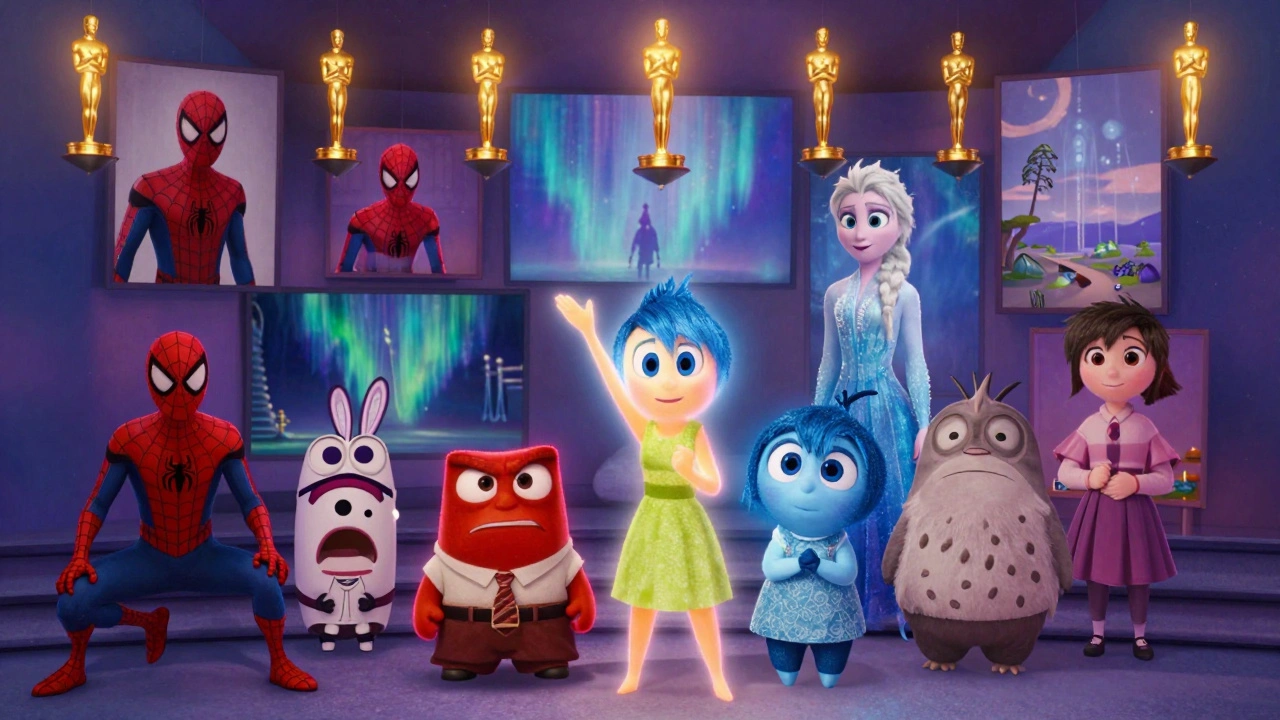
Animated films are no longer just for kids
Twenty years ago, an animated movie hitting $500 million at the box office was a miracle. Today, it’s expected. Animated films aren’t just entertaining-they’re dominating global cinema, shattering financial records, and sweeping up the most prestigious awards in Hollywood. The days of animation being seen as a niche genre are long gone. Now, studios are betting billions on hand-drawn and CGI stories that resonate with audiences of all ages.
How animated films broke the $2 billion barrier
In 2019, Disney’s The Lion King (a photorealistic CGI remake) made $1.65 billion. That was big-but it wasn’t even the top animated film that year. Avengers: Endgame was the highest-grossing movie overall, but it wasn’t animated. The real shocker? Frozen II crossed $1.45 billion. And then came Spider-Man: Across the Spider-Verse in 2023. It didn’t just break records-it rewrote them. With $695 million worldwide, it became the highest-grossing animated film ever made without a Disney or Pixar logo. It did that with a bold, comic-book-inspired visual style that no studio had dared to try at this scale.
By 2025, five animated films had crossed the $1.5 billion mark. Inside Out 2 hit $1.6 billion in its first six months. Why? Because these aren’t just movies for children. They’re emotional, layered stories about anxiety, identity, grief, and belonging. Adults show up-and they bring their friends.
The Oscars no longer ignore animation
For decades, the Academy Awards treated animated features like a consolation prize. The Best Animated Feature category wasn’t even created until 2002. But in 2020, Parasite won Best Picture, and suddenly, the rules around what counted as "cinema" started to change. The same year, Toy Story 4 lost to How to Train Your Dragon: The Hidden World-a film that didn’t even make $300 million globally. The message was clear: artistry mattered more than box office.
By 2024, The Boy and the Heron by Hayao Miyazaki won the Oscar for Best Animated Feature-and became the first non-English-language animated film to win. It also earned over $300 million worldwide. That same year, Spider-Man: Across the Spider-Verse won Best Animated Feature too, making it the first time two animated films from different studios took home top honors in the same year. The Academy didn’t just recognize animation-they celebrated its diversity.
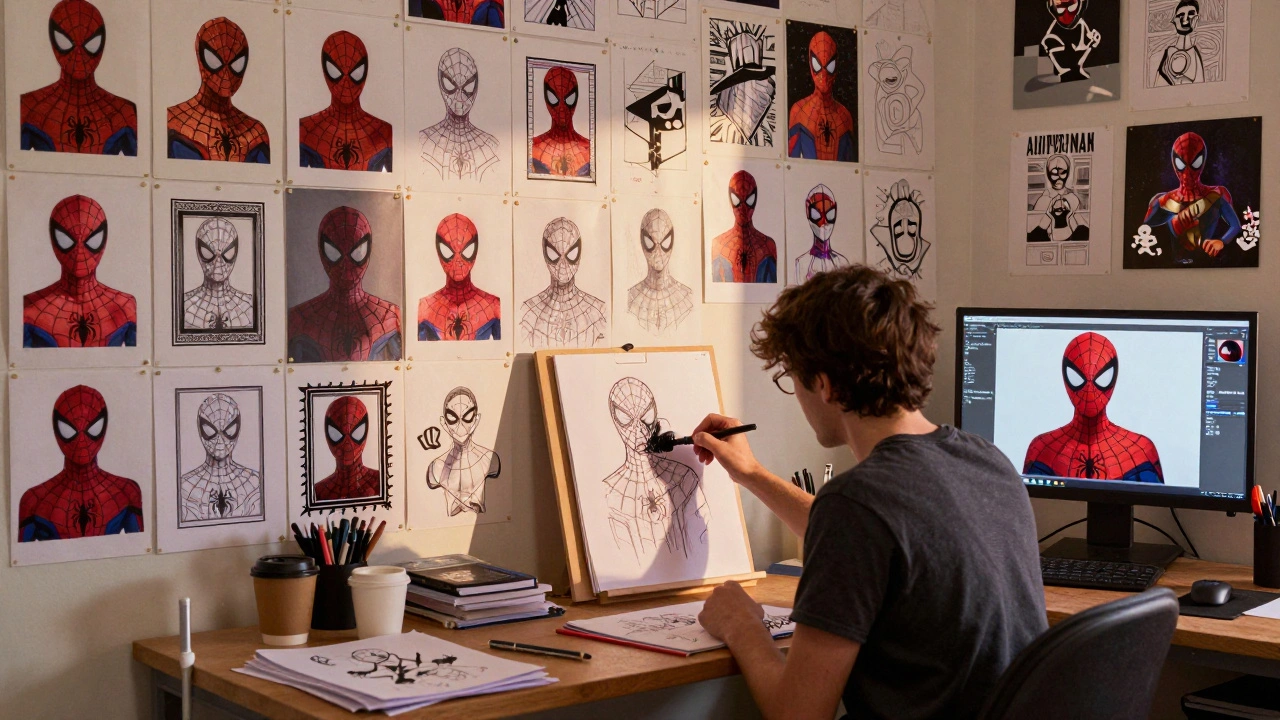
What makes an animated film award-worthy?
It’s not just about the visuals. The best animated films now win because they do what live-action films struggle with: turn abstract emotions into tangible imagery. In Inside Out, joy, sadness, anger, fear, and disgust aren’t just characters-they’re forces that shape a child’s mind. In WALL-E, silence tells more than dialogue ever could. In Spider-Verse, every frame is a different art style: ink washes, comic halftones, pixel art-all working together to show how identity is built from fragments.
Animation studios now hire writers with theater and literary backgrounds, not just cartoonists. Directors study Bergman and Kurosawa. The score for Marcel the Shell with Shoes On was composed by a former cellist from the Berlin Philharmonic. These aren’t cartoons. They’re cinematic experiences built with the same rigor as Oppenheimer or Barbie.
Behind the scenes: how budgets and tech changed everything
Animation used to be cheaper than live-action. Not anymore. Avatar: The Way of Water cost $460 million. Spider-Man: Across the Spider-Verse cost $135 million-and took over eight years to make. That’s longer than most live-action blockbusters. Why? Because every frame had to be hand-designed. Over 1,000 artists worked on it. Each character had 200+ unique poses. The film’s visual language wasn’t just creative-it was engineering.
Netflix spent $200 million on The Sea Beast. Sony poured $120 million into Wild Robot. These aren’t just movies-they’re global cultural events. Studios now treat animation like the crown jewel of their portfolio. The technology has caught up: real-time rendering, AI-assisted in-betweening, and cloud-based collaboration tools mean artists can iterate faster than ever. But the heart of it? Still human. Every tear, every laugh, every quiet moment is crafted by hand.
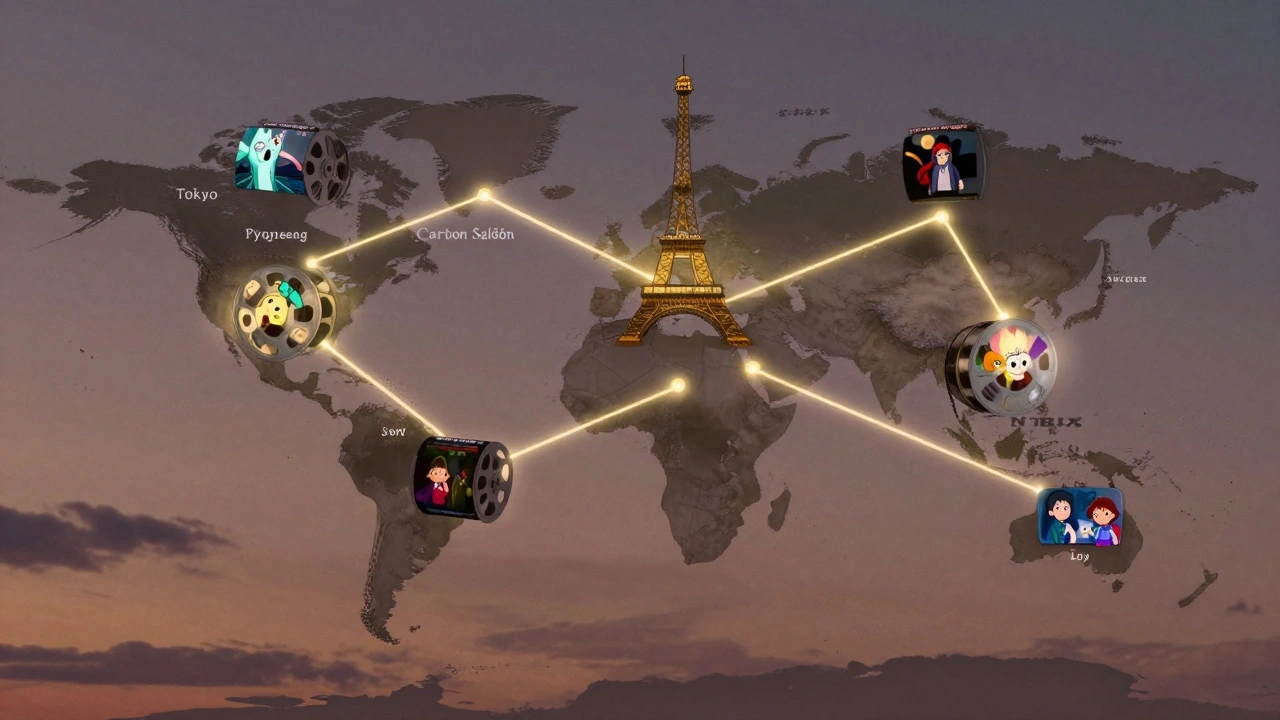
Who’s winning now? The new players
Disney and Pixar still dominate. But they’re no longer the only ones. Studio Ghibli, once a cult favorite, now opens in over 80 countries. Netflix’s Guillermo del Toro’s Pinocchio won the 2023 Oscar and was nominated for Best Picture. A24’s The Mitchells vs. The Machines became a cult hit on streaming and earned over $100 million. Even smaller studios are breaking through.
France’s The Secret of Kells was nominated for an Oscar in 2010. Now, French animation is a powerhouse. My Father’s Dragon from Cartoon Saloon and Netflix earned critical acclaim and a Golden Globe. South Korea’s Pyongyang (2024) became the first animated film from the country to be selected for the Oscars’ shortlist. Animation is no longer American or Japanese-it’s global.
Why audiences keep coming back
People don’t just watch animated films. They rewatch them. They buy the soundtracks. They cosplay the characters. They quote the lines. Moana has over 3 billion streams on Spotify. Encanto’s "We Don’t Talk About Bruno" spent 12 weeks at No. 1 on the Billboard Hot 100. That’s unheard of for an animated movie song.
Why? Because these films speak to universal truths in ways live-action often can’t. They show children that it’s okay to be scared. They show adults that grief doesn’t disappear-it changes shape. They make complex ideas feel simple without dumbing them down. And they do it with color, music, and movement that live-action can’t replicate.
What’s next for animated films
The next wave is blending genres. Animated horror? Wendell & Wild proved it works. Animated documentaries? They Shot the Piano Player won awards at Sundance. Animated musicals? Wish from Disney returned to classic storytelling with modern visuals. And AI? It’s being used to restore old films, not replace artists. Studios are using it to clean up 1940s hand-drawn frames, not to generate entire scenes.
By 2030, half of the top-grossing films will be animated. That’s not a prediction-it’s already happening. The real question isn’t whether animation will keep winning. It’s whether live-action studios can keep up.
What animated film has made the most money?
As of early 2026, Spider-Man: Across the Spider-Verse holds the record for highest-grossing animated film worldwide, earning over $695 million. It surpassed Frozen II and The Lion King (2019 CGI version), both of which earned over $1.4 billion. The key difference? Spider-Verse was made by Sony Pictures Animation, not Disney, proving that non-Disney studios can lead the box office.
Do animated films win Oscars for Best Picture?
No animated film has won Best Picture yet. But in 2024, The Boy and the Heron became the first animated film to be nominated for Best Picture since Up in 2009. The Academy has slowly opened the door-especially after Parasite won Best Picture in 2020. Many critics believe an animated film will win Best Picture before 2030, especially if it’s a non-English-language film with broad emotional appeal.
Why are animated films so popular with adults?
Animated films now tackle themes like grief, identity, mental health, and societal pressure-topics once reserved for serious dramas. Movies like Inside Out, Marcel the Shell with Shoes On, and WALL-E use visual metaphors to express emotions that dialogue alone can’t capture. Adults connect because these stories feel honest, not childish. The animation isn’t a gimmick-it’s the language.
Are animated films cheaper to make than live-action?
Not anymore. While early CGI films like Shrek were cheaper than live-action blockbusters, today’s top animated films cost between $120 million and $200 million. Spider-Man: Across the Spider-Verse cost $135 million and took over eight years to complete. The difference? Each frame is hand-crafted. There are no real actors, sets, or locations-everything is built from scratch. That’s expensive.
Which studios are leading in animated film innovation?
Disney and Pixar still lead in scale, but innovation is happening elsewhere. Sony Pictures Animation pushed boundaries with Spider-Verse’s multi-style visuals. A24 and Cartoon Saloon brought indie storytelling to the mainstream with The Mitchells vs. The Machines and My Father’s Dragon. Netflix invested heavily in global talent, backing films from France, South Korea, and Spain. Studio Ghibli remains unmatched in emotional depth. The future belongs to whoever blends artistry with bold new techniques.




Comments(10)