Ever noticed how a scene in a Pixar movie can make you feel lonely, terrified, or cozy without a single word of dialogue? That isn't magic; it's a calculated use of light. In the world of animation, light doesn't just help us see the characters-it tells us who they are and how to feel about them. Unlike live-action, where a cinematographer works with existing physics, an animator builds light from scratch. This means every single photon in a digital scene is a choice designed to manipulate the viewer's emotions.
Key Takeaways for Visual Storytelling
- Lighting defines the emotional tone (mood) and directs the eye (focus).
- Depth is created through contrast and the layering of light and shadow.
- Global Illumination and Ray Tracing simulate real-world physics for immersion.
- Color temperature shifts a scene from clinical and cold to warm and inviting.
The Psychology of Mood and Atmosphere
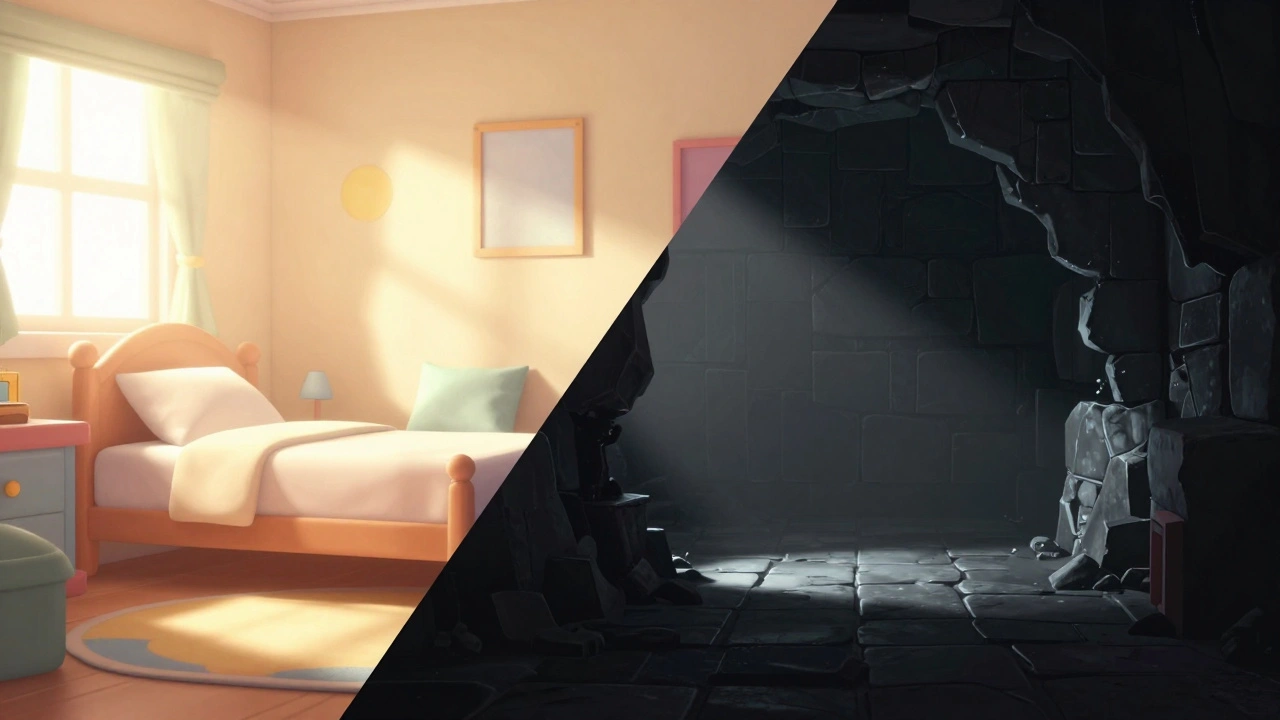
Lighting is the fastest way to communicate a mood. If you want a scene to feel oppressive, you don't just add dark colors; you limit the light sources. Think about the heavy, suffocating shadows in a villain's lair. This is often achieved through Low-Key Lighting, a technique that emphasizes high contrast and deep shadows to create a sense of mystery or tension. By keeping the "key light" strong and the "fill light" almost non-existent, you create a visual void that makes the audience feel uneasy.
On the flip side, a scene that feels safe and hopeful usually employs High-Key Lighting, a style characterized by bright, even illumination with minimal shadows. This is the standard for daytime scenes in children's animation, where the goal is clarity and optimism. But the real pros know that the most impactful mood comes from the transition. Imagine a character moving from a brightly lit hallway into a dim, flickering room. That shift in light tells the audience that the stakes have changed before the character even speaks.
Color also plays a massive role here. A cold, blue light can make a character feel isolated or depressed, while a golden hue evokes nostalgia or warmth. This is based on Color Theory, the science and art of using colors to evoke specific psychological responses. When an animator uses complementary colors-like a warm orange light hitting a cool blue background-they create a visual vibration that makes the scene feel alive and dynamic.
Creating Depth in a Flat Digital Space
Digital animation often suffers from a "flat" look because everything is mathematically perfect. To fight this, artists use lighting to carve out space. The most effective way to do this is through animated film lighting that focuses on "rim lighting." This is a thin sliver of light placed behind the character, separating them from the background. Without it, a dark-haired character in a dark room would simply disappear into the backdrop.
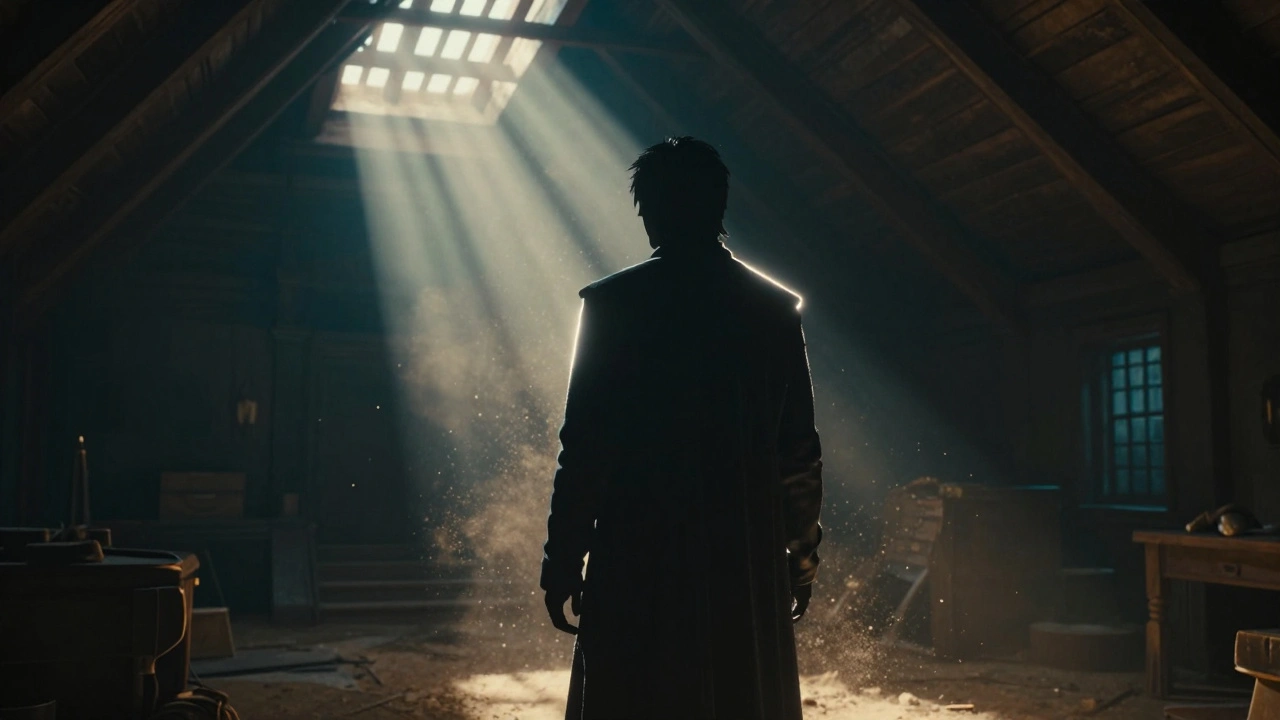
Depth also comes from the concept of "atmospheric perspective." In the real world, air isn't perfectly clear; it's filled with dust and moisture. In high-end 3D animation, this is simulated using Volumetric Lighting, light that is visible as it interacts with particles in the air, creating "god rays" or fog. When you see a beam of sunlight cutting through a dusty attic in a movie, that's volumetric lighting at work. It gives the scene a tangible physical presence, making the space feel three-dimensional and breathable.
| Technique | Visual Effect | Emotional Purpose |
|---|---|---|
| Rim Lighting | Bright outline around the subject | Separation and clarity |
| Volumetric Fog | Hazy beams of light | Scale, mystery, and weight |
| Chiaroscuro | Extreme light and dark contrast | Drama and internal conflict |
| Ambient Occlusion | Soft shadows in corners/crevices | Realism and grounding |
Directing the Eye: The Art of Focus
In a complex 3D scene, there is too much for the eye to process. Lighting acts as a visual guide. If everything is lit equally, nothing is important. Animators use "pools of light" to tell the viewer exactly where to look. By brightening a specific prop or a character's face and letting the rest of the room fall into shadow, they control the narrative flow. This is similar to how a spotlight works in a theater play.
Another trick is the use of contrast. The human eye is naturally drawn to the area of highest contrast. If a character is standing in a dark corridor and a single bright lamp flickers on, your gaze instantly snaps to that spot. This is a powerful tool for revealing plot twists or introducing a new character. It prevents the audience from getting lost in the background detail, which can be incredibly dense in modern 4K animations.
Focus is also handled through the lens of Ray Tracing, a rendering technique that simulates the physical behavior of light in a realistic way. This allows for accurate reflections and refractions. When a character looks into a mirror or a puddle, the light doesn't just "appear"; it bounces. These reflections add a layer of subconscious detail that makes the world feel authentic, allowing the viewer to focus on the emotion of the scene rather than wondering why the lighting looks "fake."
The Technical Engine Behind the Glow
To get these results, studios rely on massive computing power and complex software. The gold standard for modern animation is Global Illumination, a system of algorithms used in 3D rendering to simulate how light bounces off surfaces (indirect lighting). In the old days of CGI, light only hit a surface and stopped. Now, light bounces from a red wall onto a white floor, giving the floor a subtle red tint. This "color bleeding" is what makes a digital room feel like a real place.
Most studios use a combination of tools. Maya and Houdini are often used for the geometry and effects, but the lighting is often polished in specialized render engines like RenderMan, Pixar's proprietary rendering software used to create highly detailed 3D images. These tools allow artists to place "virtual lights"-point lights for bulbs, spot lights for flashlights, and area lights for windows-and then run a simulation that takes hours or even days to calculate a single frame.
One common pitfall for beginners is over-lighting. When you're learning, it's tempting to make everything bright so you can see your hard work. But professional lighting is as much about where you *don't* put light as where you do. The "negative space" of a shadow is what gives a scene its soul. If you remove the shadows, you remove the drama.
Integrating Lighting with Character Arc
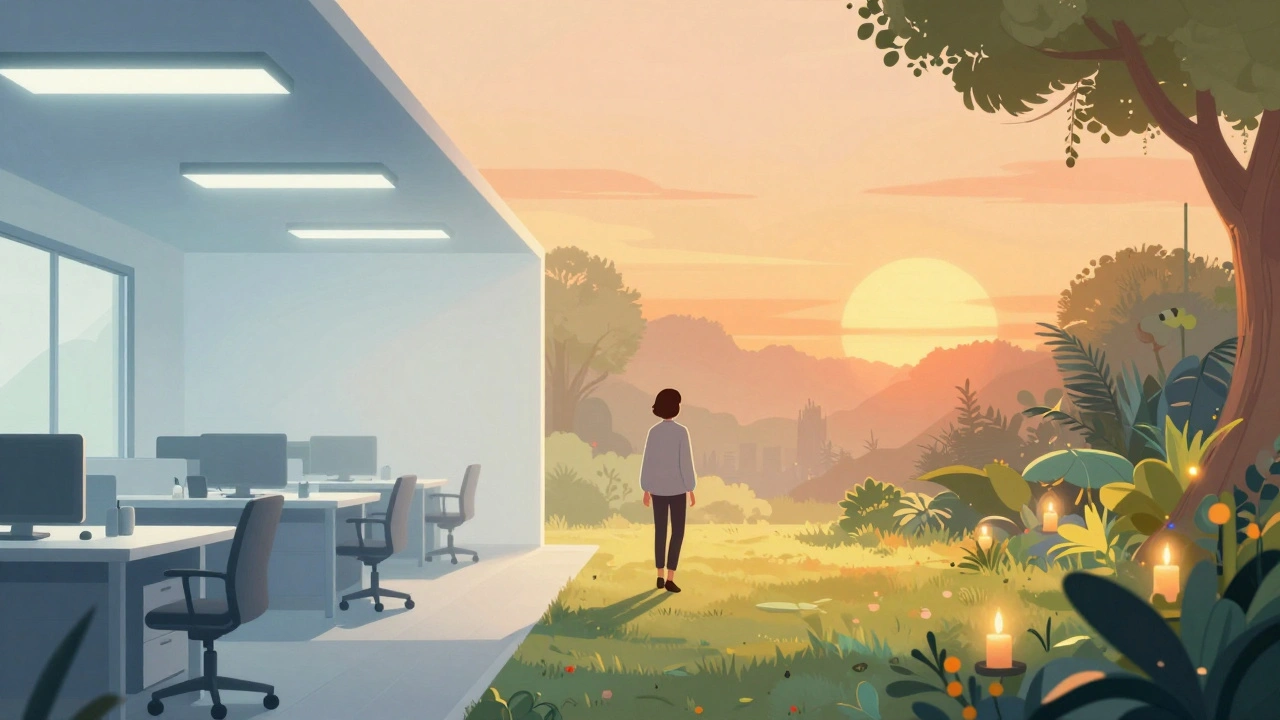
The best animated films use lighting to mirror a character's internal journey. Consider a character who starts the movie in a rigid, corporate world. The lighting is likely sterile, with flat, white fluorescent tones and very few shadows. It feels cold and impersonal. As the character discovers their passion or finds love, the lighting shifts. The colors become warmer, the shadows softer, and the light sources more organic, like candlelight or a sunset.
This visual evolution happens subconsciously. By the time the character reaches their peak emotional state, the lighting has shifted from clinical to cinematic. This is a technique called "visual storytelling." The light isn't just illuminating the scene; it's tracking the character's growth. When a character is lying to themselves, you might see a subtle shadow cutting across their eyes-a visual hint that they are hiding something, even if their words say otherwise.
What is the difference between direct and indirect lighting in animation?
Direct lighting is the light that travels straight from a source to a surface, creating a bright spot and a sharp shadow. Indirect lighting occurs when light bounces off one surface onto another. This is what Global Illumination simulates, filling in the dark shadows with soft, reflected light and making the scene look natural rather than like a sterile 3D model.
Why is rim lighting so important for 3D characters?
Rim lighting creates a thin, bright edge around the silhouette of a character. This is crucial because, in digital environments, characters can easily blend into the background, especially in dark scenes. The rim light separates the character from the backdrop, providing depth and ensuring the audience's focus remains on the subject.
How does color temperature affect the mood of a film?
Color temperature is measured in Kelvins. Lower temperatures (warm oranges and yellows) evoke feelings of comfort, happiness, and intimacy. Higher temperatures (cool blues and whites) suggest coldness, sadness, sterility, or futuristic settings. By shifting these temperatures, animators can instantly change how the audience perceives the environment.
What are "God Rays" in animation?
"God rays," or crepuscular rays, are a form of volumetric lighting. They occur when sunlight is filtered through a gap-like clouds or window blinds-and becomes visible because it's hitting dust, smoke, or moisture in the air. They are used to create a sense of divinity, hope, or a mysterious, atmospheric quality.
Does ray tracing make animation look more realistic?
Yes, because it simulates the actual path of light rays as they bounce and reflect. Traditional rendering often uses "fakes" for reflections, but ray tracing calculates exactly how light hits a surface and where it goes next. This results in pinpoint-accurate reflections, refractions through glass, and realistic soft shadows.
Next Steps for Aspiring Lighting Artists
If you're looking to improve your lighting game, start by studying "real-world" references. Take a photo of a room at noon and then again at 5 PM. Notice how the shadows stretch and the color of the light changes. Try to recreate those exact conditions in a software like Blender or Maya. Focus on one light source at a time rather than adding ten different lights to a scene.
For those moving into professional portfolios, focus on creating a "lighting reel" that shows versatility. Don't just show a beautiful sunny day; show a tense interrogation scene, a cozy bedroom, and a vast, alien landscape. The goal is to prove you can use light to tell a story, not just to make a pretty picture. Remember, the best lighting is the kind the audience doesn't consciously notice-it just makes them feel exactly what the director intended.


Comments(10)