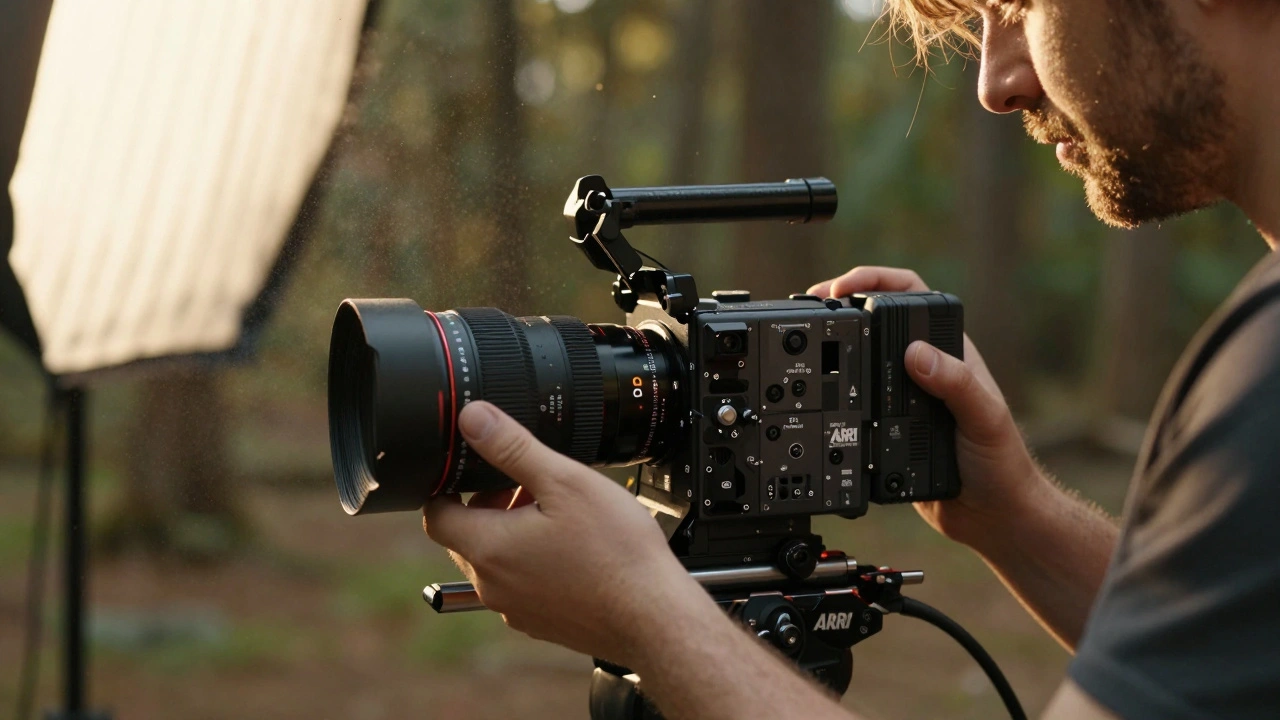
When you watch a movie on a giant screen today, you’re not just seeing a story-you’re seeing pixels. And those pixels are getting smaller, sharper, and more numerous than ever before. The shift from 4K to 8K isn’t just a marketing buzzword. It’s changing how films are shot, how crews work, and even how audiences experience emotion on screen.
What 8K Really Means for Film
8K resolution means 7680 x 4320 pixels. That’s four times the detail of 4K and sixteen times the detail of traditional 1080p HD. But numbers alone don’t tell the whole story. What matters is what that extra resolution unlocks. A camera that captures 8K doesn’t just make things look sharper-it captures textures you didn’t know existed: the individual strands of an actor’s hair catching sunlight, the faint grain of an old wooden door, the moisture on a character’s lips during a quiet moment.
When 8K cameras like the RED V-RAPTOR 8K VV or the Sony FX9 were first introduced, many filmmakers thought they were overkill. But now, with streaming platforms like Netflix and Disney+ pushing 8K as a premium offering, and with home theater systems becoming more affordable, the demand has shifted. Directors aren’t just shooting for today-they’re shooting for archives. An 8K master can be cropped, re-framed, and downscaled for future formats without losing quality. That’s why studios like Warner Bros. and Universal now require 8K capture for all major productions.
How Cinematographers Are Adapting
Shooting in 8K isn’t like upgrading from a point-and-shoot to a DSLR. It changes the entire workflow. A single 8K RAW file can be over 100GB per hour. That means more storage, faster drives, and more powerful editing rigs. Many crews now use dual SSD recorders and RAID arrays just to keep up.
Focus becomes harder too. At 8K, even a slight misfocus is visible. Cinematographers are turning to digital focus assistants like the CineTracer system, which overlays real-time depth maps on the monitor. Some are even bringing back manual focus rings with tactile feedback-because algorithms can’t always read emotion.
Lenses have to keep up too. Older lenses designed for 2K or 4K often can’t resolve 8K detail. That’s why companies like Zeiss, Cooke, and ARRI have released new 8K-optimized glass. The new ARRI Signature Prime lenses, for example, are engineered to handle the extreme resolution without flaring or softening at the edges. They cost over $20,000 each-and studios are buying them in bulk.
Lighting and Camera Movement in the Age of 8K
Lighting has to be more precise. At 8K, shadows aren’t just shadows-they’re textures. A softbox that looked perfect in 4K can now reveal uneven diffusion, hotspots, or even dust particles floating in the air. Many cinematographers are switching to LED panels with tunable color temperatures and micro-diffusion filters. Some are even using handheld LED panels with built-in haze generators to control how light scatters in the frame.
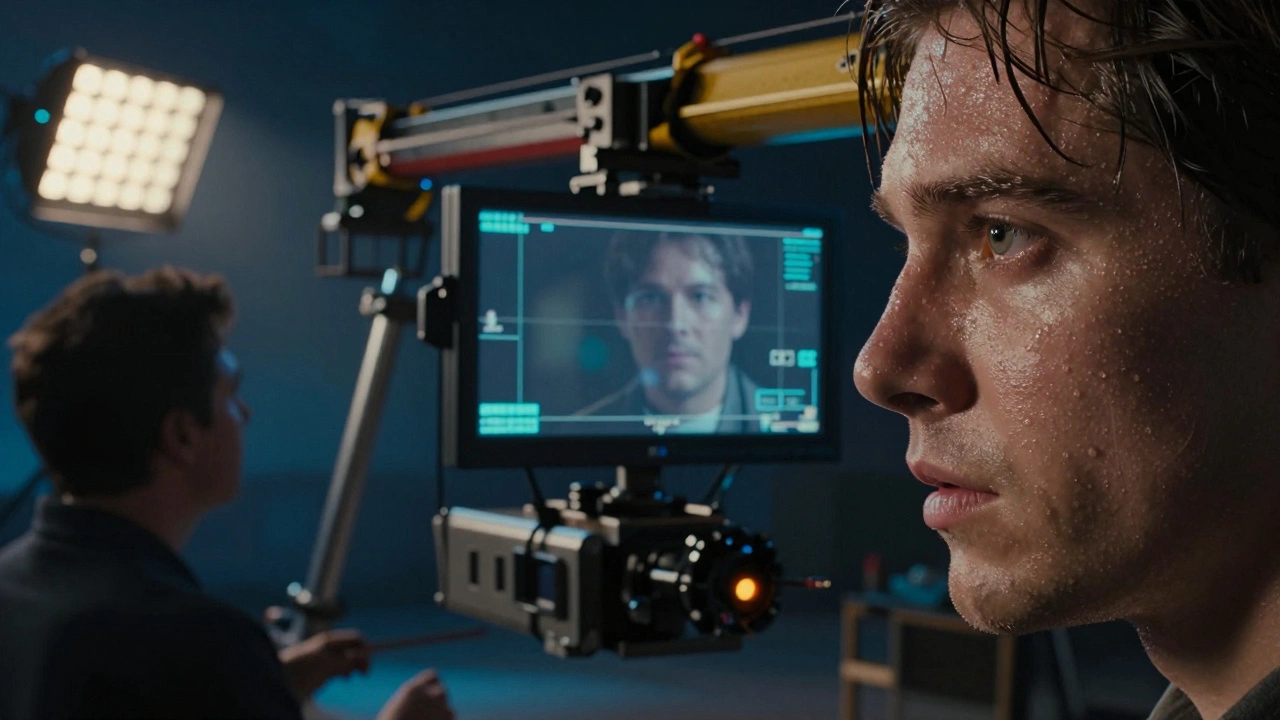
Camera movement has also evolved. Steadicams and drones that were fine for 4K now show every tiny shake in 8K. That’s why you’re seeing more robotic arms like the MoVi M10 and motorized crane systems with sub-millimeter precision. The goal isn’t just smooth motion-it’s invisible motion. Audiences shouldn’t notice the camera. They should feel like they’re in the room.
Why 8K Isn’t Just for Blockbusters
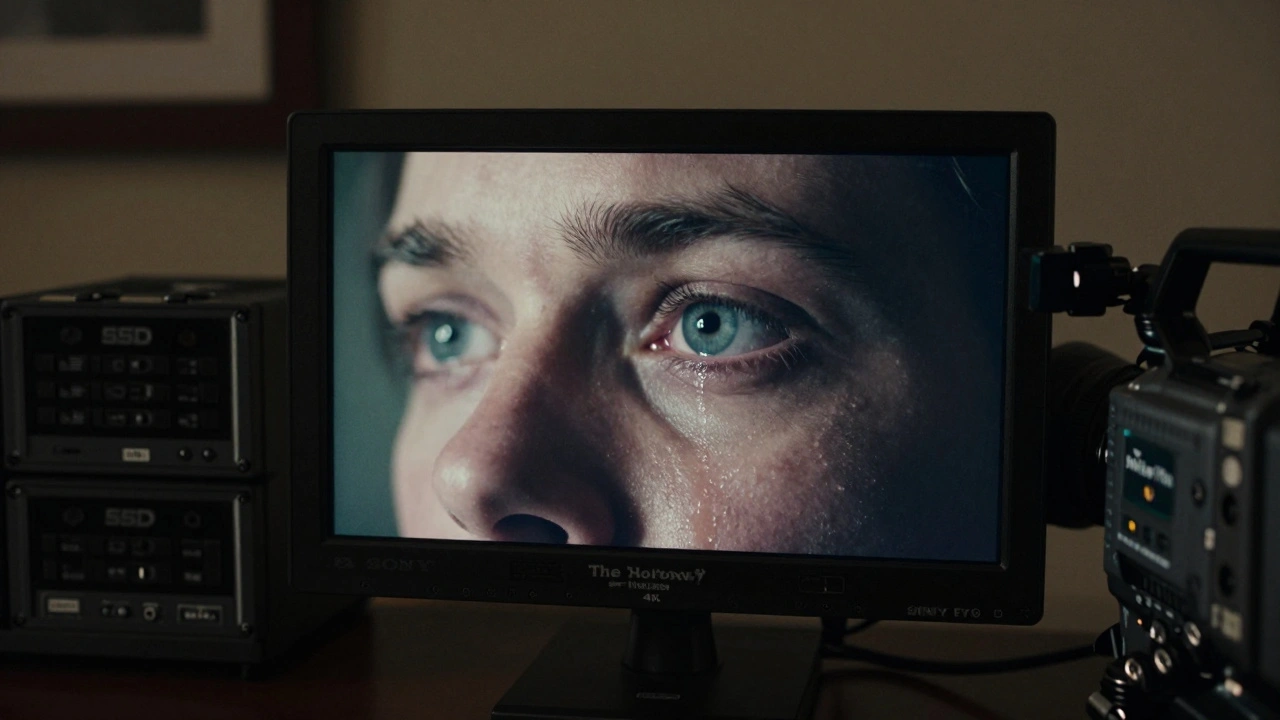
You might think 8K is only for big-budget films. But indie filmmakers are using it too. In 2024, a low-budget horror film called The Hollow House was shot entirely on a Sony FX6 with an 8K upgrade. It didn’t have a $10 million budget-but it had a story that relied on subtle facial expressions. The director said the extra resolution let them capture the flicker in an actor’s eye during a silent scream. That moment went viral on YouTube. Viewers commented: "I felt like I was watching them breathe."
Even documentary crews are switching. National Geographic’s Earth: One Amazing Day used 8K to film coral spawning in the Great Barrier Reef. The footage showed individual plankton drifting in the current-something never captured before in such clarity. That’s the power of 8K: it doesn’t just make things look better. It makes them more real.
The Hidden Cost: Storage, Bandwidth, and Workflow
But 8K comes with trade-offs. A single feature film shot in 8K RAW can generate over 100 terabytes of data. That’s more than a terabyte per day of shooting. Editing stations need 64GB of RAM, dual RTX 6000 GPUs, and NVMe RAID arrays. Color grading takes hours longer. Exporting for streaming means transcoding through multiple formats-each one a potential point of failure.
And then there’s delivery. Most homes still don’t have internet speeds fast enough to stream true 8K without buffering. Netflix and Apple TV+ are using AI upscaling to make 4K look like 8K, but purists say it’s not the same. True 8K streaming requires 50 Mbps minimum. That’s not common in rural areas-even in the U.S.
Some filmmakers are now shooting in 8K but delivering in 4K. They keep the 8K master locked away like a digital heirloom. That way, when 8K TVs become standard in 2030, they won’t have to re-shoot.
What Comes After 8K?
While 8K is still rolling out, the next step is already in development: 12K and even 16K sensors. Panasonic and Canon have shown prototypes. But the real innovation isn’t in resolution-it’s in how that data is used.
AI-driven post-production tools are now able to extract depth maps, motion vectors, and even facial micro-expressions from 8K footage. That means in five years, you might be able to re-light a scene after shooting, change an actor’s expression subtly, or even remove a background without a green screen. The camera isn’t just capturing light anymore-it’s capturing information.
And then there’s virtual production. With 8K resolution, LED volume stages (like the ones used in The Mandalorian) can now display photorealistic environments that match real-world lighting down to the nanometer. A director can walk onto a set, see a mountain range behind the actor, and know that every shadow, reflection, and bloom is accurate. No more compositing. No more guesswork.
Is 8K Worth It for You?
If you’re shooting a YouTube vlog? Probably not. If you’re making a short film for film festivals? Maybe. If you’re telling a story where texture, subtlety, and realism matter? Then 8K isn’t a luxury-it’s a necessity.
The future of cinematography isn’t about more pixels. It’s about more truth. More presence. More connection. And right now, 8K is the only tool that can deliver that at scale.
Is 8K really necessary for indie filmmakers?
It depends on your story. If your film relies on subtle details-like skin texture, eye movement, or environmental realism-then yes. 8K gives you flexibility in post. You can crop, reframe, or zoom without losing quality. But if you’re doing fast-paced action or stylized visuals, 4K is still more than enough. Many indie filmmakers shoot in 8K for the archive, then deliver in 4K to save on storage and editing time.
Do I need new lenses for 8K?
Yes, if you want true 8K resolution. Older lenses, especially those designed for 2K or 4K, can’t resolve the fine detail of 8K. You’ll see softness, chromatic aberration, or reduced contrast at the edges. Lenses like the ARRI Signature Primes, Zeiss Supreme, or Cooke S7/i are built specifically for 8K. They’re expensive, but they’re the only way to capture the full potential of your camera.
Can I shoot 8K on a budget?
You can, but not easily. Cameras like the Sony FX6, Canon C70, and Blackmagic URSA Mini Pro 12K offer 8K at lower price points than RED or ARRI. But you’ll still need fast SSDs, a powerful computer, and a lot of storage. A full 8K workflow on a budget might cost $15,000-$25,000. Many filmmakers start with 4K and upgrade components as needed.
Will 8K replace 4K soon?
Not anytime soon. 4K is still the global standard for streaming, broadcast, and home viewing. Most TVs under $1,500 don’t even support native 8K playback. But 8K is becoming the new master format. Think of it like film negatives: you shoot in 8K to preserve quality, then downscale to 4K for release. In 5-10 years, as 8K TVs become common, that will change.
What’s the biggest challenge with 8K workflows?
Storage and bandwidth. A single 8K RAW file can be 100GB per hour. Editing requires top-tier hardware: 64GB+ RAM, dual GPUs, and NVMe RAID arrays. Exporting and backing up that data takes days. Many crews now use cloud-based dailies and AI-assisted transcoding to manage the load. Still, it’s the biggest barrier for small teams.
As 8K becomes more accessible, the real winners won’t be the ones with the most expensive gear-they’ll be the ones who understand that resolution isn’t about seeing more. It’s about feeling more.




Comments(9)