Quick Takeaways
- Leitmotifs are short, recurring musical phrases associated with specific characters, places, or ideas.
- They act as a storytelling tool to provide subtext, foreshadowing, and emotional continuity.
- The key to a great motif is flexibility-it must evolve as the story and characters change.
- Avoid overusing them, or you risk turning your score into a repetitive checklist.
What Exactly Is a Leitmotif?
At its simplest, a leitmotif is a recurring musical phrase associated with a particular person, place, or idea. While we use them in movies today, the concept actually comes from the world of opera. Richard Wagner used them in his massive 19th-century plays to help the audience keep track of complex mythologies. If a character mentioned a magical ring, Wagner would play the "Ring" motif, even if the ring wasn't on screen.
In modern cinema, this technique allows a composer to communicate directly with the viewer's subconscious. When you hear a specific melody, your brain automatically links it to the character it's attached to. It's essentially a musical shortcut. Instead of having a narrator explain, "This character is feeling conflicted about their past," the composer can play a distorted version of that character's main theme. The audience feels the conflict without needing a single word of dialogue.
The Different Types of Musical Signatures
Not every recurring theme serves the same purpose. Depending on what you want the audience to feel, you might choose different types of motifs. Some are as clear as a bell, while others are barely noticeable.
First, you have the Character Theme. This is the most common. Think of the Imperial March from Star Wars. It doesn't just announce that Darth Vader has arrived; it describes his personality-rigid, powerful, and oppressive. The rhythm is like a military march, leaving no room for doubt about who is in charge.
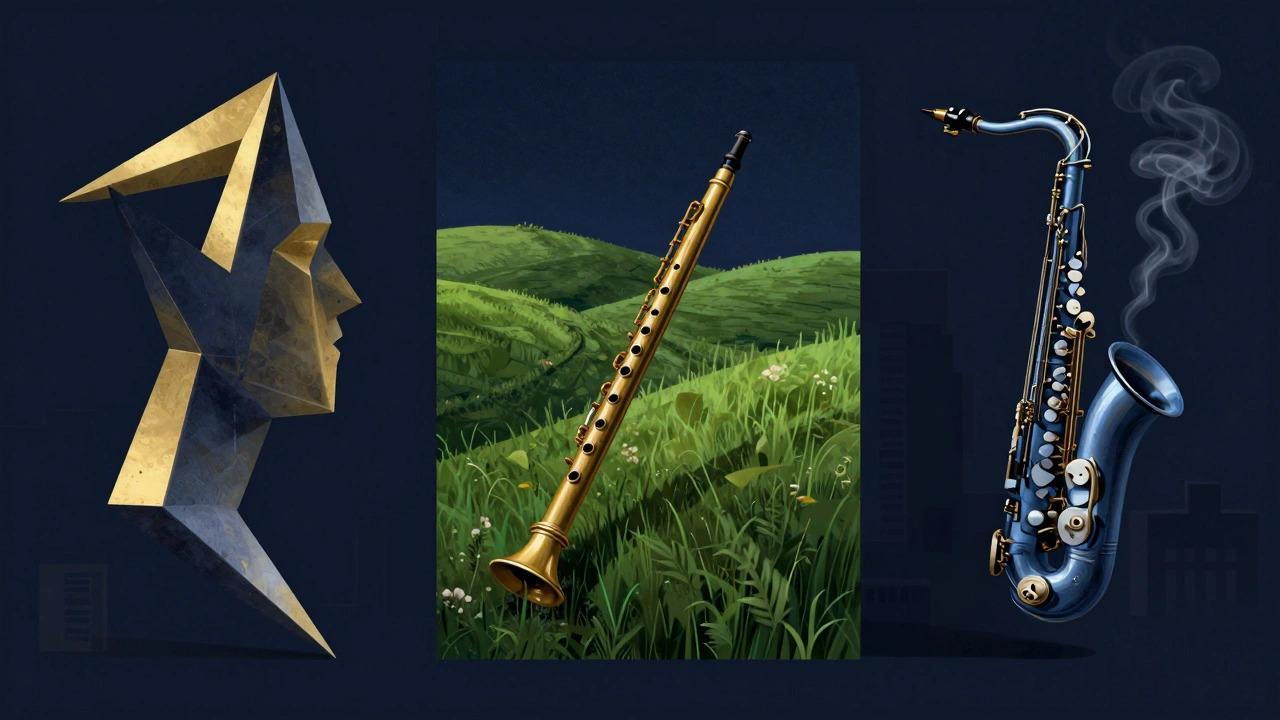
Then there are Location or Atmospheric Motifs. These aren't tied to a person but to a setting. For example, in The Lord of the Rings, the music for the Shire sounds rustic and folk-like, using instruments like the tin whistle to evoke a sense of home and simplicity. When the music shifts to the deep, oppressive brass of Mordor, the environment itself becomes a character through the score.
Finally, there are Abstract or Concept Motifs. These represent an idea, like "fate," "betrayal," or "hope." In many noir films, a lonely saxophone might represent the concept of urban isolation. It's not a person or a place, but a feeling that keeps returning to remind the viewer of the story's bleak tone.
| Motif Type | Associated With | Emotional Goal | Example |
|---|---|---|---|
| Character | Specific Person | Identification & Personality | Jaws Main Theme |
| Location | Setting/Place | Atmosphere & Scale | The Shire (LotR) |
| Abstract | Idea/Emotion | Subtext & Theme | The 'Force' Theme |
How to Compose and Implement a Recurring Theme
Creating a leitmotif isn't about writing a full song; it's about creating a musical seed that can grow. If you write a complex, three-minute melody, you'll run out of room to evolve it. The best motifs are often just three to five notes long. This simplicity gives you the room to manipulate the theme throughout the film.
The first step is defining the core identity. Ask yourself: what is the "essence" of this character? If they are unstable, maybe the motif uses dissonant intervals-notes that clash. If they are heroic, use wide, ascending leaps. Once you have that basic cell of music, you can start applying it to different scenes.
The real skill comes in the variation. This is where you avoid the "checklist" problem. If you play the exact same melody every time a character appears, the music becomes a redundant sound effect. Instead, you should vary the theme based on the character's emotional state:
- Instrumentation change: A theme played by a triumphant trumpet when a character is winning might be played by a solo, weeping cello when they lose.
- Tempo and Rhythm: Slow the theme down to a crawl to create tension, or speed it up to create panic.
- Harmonic Shift: Change the underlying chords. A theme that starts in a bright major key can be shifted into a dark minor key to show a character's descent into madness.
- Fragmentation: Only play the first two notes of the theme. This hints at the character's presence or a memory of them without fully announcing it.
Consider a scene where a hero is remembering a lost loved one. You don't need to play the loved one's full theme. Just a ghostly fragment of it, played softly on a piano, tells the audience exactly who the hero is thinking about without a single line of exposition.
The Psychology of Musical Memory
Why does this work so well? It's because of how our brains handle pattern recognition. When we hear a specific sequence of notes paired with a specific image, our brain creates a neural link. Cognitive psychology suggests that music triggers emotional memory more effectively than almost any other stimulus.
When a composer uses a leitmotif, they are essentially "hacking" the audience's memory. By the third or fourth time a theme appears, the audience has been trained. The composer can then use this to create irony. For example, if the "villain's theme" starts playing while the "hero" is on screen, the music is telling the audience that the hero is actually the one doing something evil, or that the villain is manipulating the situation from the shadows.
This creates a layer of storytelling that exists entirely outside of the script. It allows the director to hide information from the characters while revealing it to the audience, or vice versa. This tension-knowing something the characters don't-is what keeps a viewer glued to the screen.
Common Pitfalls to Avoid
While recurring themes are powerful, they can easily be misused. The biggest mistake is "mickey mousing." This is when the music mimics every single action on screen-a little pluck of a string every time someone blinks or a loud crash every time a door slams. When you combine this with heavy leitmotif use, the movie starts to feel like a cartoon. It becomes too literal, and the audience loses the ability to feel the emotion because they are too busy tracking the musical cues.
Another trap is the "Theme Dump." This happens when a composer is so proud of their melodies that they play them at full volume every chance they get. If the music is constantly screaming "LOOK AT THIS CHARACTER!" the audience will eventually tune it out. The most effective motifs are often the ones that sneak up on you, appearing subtly in the background before hitting a powerful crescendo at the climax of the story.
Lastly, avoid making your motifs too similar. If your hero's theme and your villain's theme both use the same basic chord progression, the audience will get confused. Every major entity in your story needs a distinct musical profile. If the hero is defined by flowing strings, perhaps the villain should be defined by jagged brass or electronic textures.
Advanced Techniques: Inverting and Merging Themes
Once you've mastered the basics, you can use more advanced compositional tricks to deepen the story. One of the most effective is the "Inversion." This is where you take a melody and flip it upside down-where the notes went up, they now go down. This can symbolize a character's fall from grace or a corruption of their original ideals.
Then there is "Thematic Merging." This occurs when two different motifs begin to overlap or blend together. Imagine two characters falling in love; as their relationship grows, their separate musical themes start to share the same rhythm or harmony. By the end of the movie, their themes might merge into a single, new melody that represents their union. This is a musical way of showing growth and change without using a single word.
You can also use "Counterpoint," where two different motifs are played at the same time. This is perfect for conflict. If the hero's theme and the villain's theme are fighting for dominance in the orchestra, the audience can practically hear the power struggle happening on screen. It turns the score into a dialogue between opposing forces.
Does every character in a movie need a leitmotif?
Absolutely not. In fact, giving every minor character a theme usually creates a cluttered and confusing score. Focus on the 3-5 most important elements of your story-usually the protagonist, the antagonist, and perhaps one core concept or location. Use musical motifs only for entities that have a significant emotional arc or a major impact on the plot.
How long should a leitmotif be?
Shorter is generally better. A motif is a building block, not a song. Most effective leitmotifs are just a few notes or a specific rhythmic pattern. This brevity allows the composer to repeat, vary, and hide the theme within the larger orchestral texture without it becoming tedious.
What is the difference between a theme and a leitmotif?
A theme is a broader musical idea or a full melody that defines the mood of a film. A leitmotif is a specific type of theme that is tied to a recurring entity (like a person or an object) and returns throughout the story to signal that entity's presence or influence.
Can a leitmotif be just a sound effect instead of a melody?
Yes. A leitmotif can be a specific instrument, a rhythmic pulse, or even a non-musical sound. For instance, a specific type of electronic hum could represent a high-tech entity. As long as the sound is consistently paired with the entity and recognized by the audience, it functions as a leitmotif.
How do I stop my motifs from sounding repetitive?
The secret is variation. Never play the motif the exact same way twice if you can avoid it. Change the instrument, alter the tempo, shift the key, or only play a fragment of the melody. The goal is to evoke the memory of the theme without simply repeating it.
Next Steps for Composers and Directors
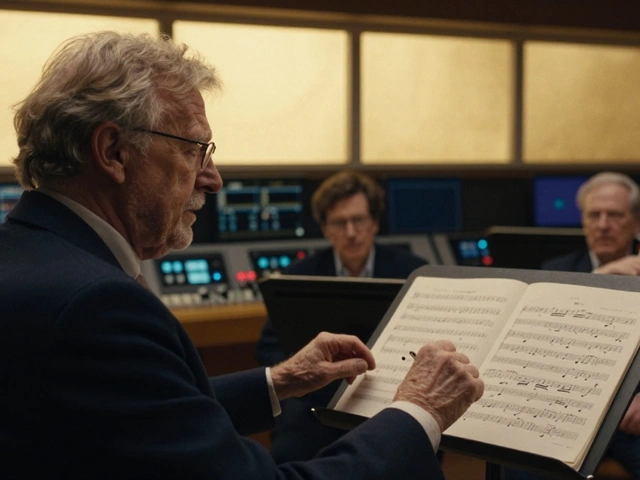
If you're scoring a project, start by mapping out your "Emotional Entities." List the characters and concepts that need a musical identity. Instead of writing a full score, sketch out a few small melodic cells for each. Test these cells against your footage-do they fit the character's movement and mood?
For directors, communication is key. Tell your composer not just who the character is, but how they change. If a character starts as a coward and becomes a leader, the composer needs to know so they can evolve the leitmotif from a tentative woodwind phrase to a bold brass fanfare. The music should follow the character's journey, not just their arrival on screen.



Comments(8)