Every year, hundreds of indie filmmakers sign aggregator contracts thinking they’re getting a fast track to streaming platforms. They upload their movie, collect a few thousand dollars, and assume they’ve made it. But behind the clean interface and quick payout promises are hidden fees, restrictive terms, and traps that can kill their film’s long-term value. If you’re an indie filmmaker considering an aggregator, you need to know what’s really in those contracts - before you click ‘agree’.
What Aggregators Actually Do (And Don’t Do)
Aggregators like Distribber, FilmHub, or CineSend aren’t distributors. They don’t negotiate deals with Netflix, Amazon, or Apple. They’re middlemen who upload your film to platforms that already have open submission portals. Think of them as automated upload bots with a website. You pay them, they push your file to VOD platforms, and then they take a cut - often 15% to 30% - of every dollar earned.
But here’s the catch: most platforms don’t pay aggregators until 60 to 90 days after the end of each quarter. That means if your film drops on Apple TV in March, you won’t see your first payment until August. And if your film earns $500 in its first month, you might get $350 after fees. That’s not a breakthrough - that’s barely a coffee budget.
The Hidden Fees You’re Not Seeing
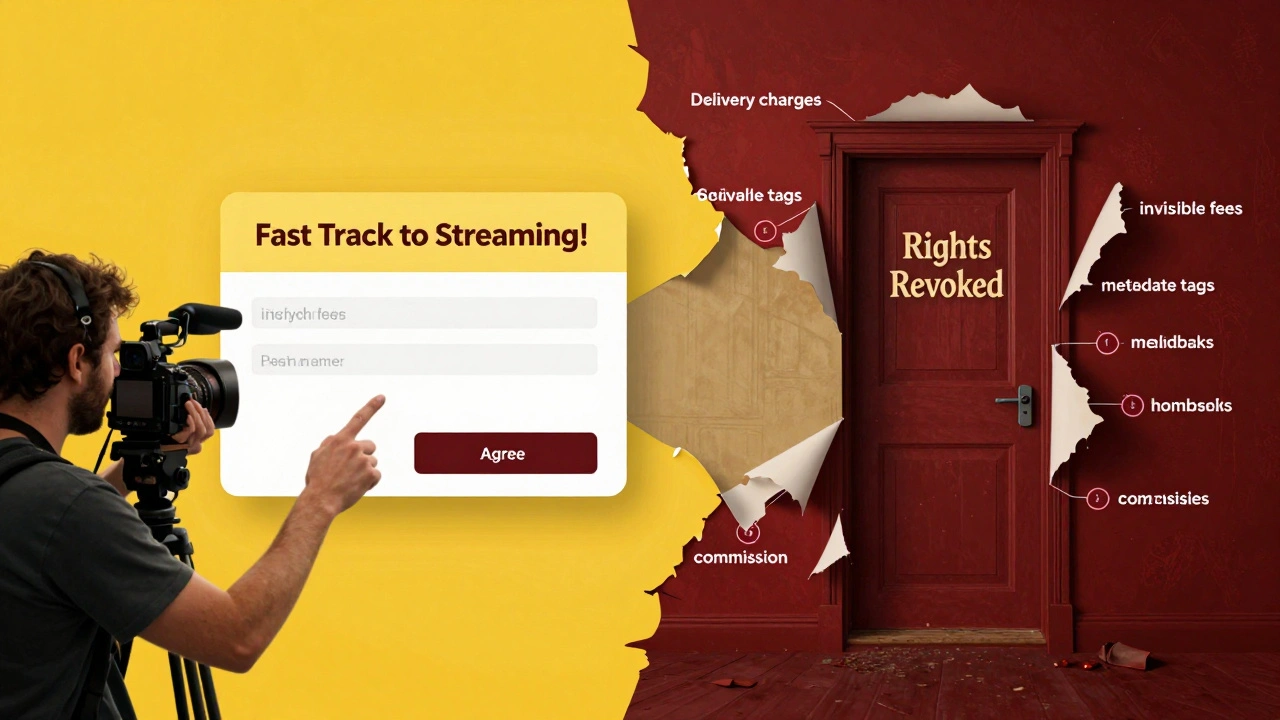
Aggregators love to advertise ‘low upfront costs’ - $50 to $300 to upload your film. That’s the bait. The real cost comes in the fine print.
- Delivery fees: Some charge $50 per platform for HD or 4K delivery. That’s $1,000 if you’re uploading to 20 platforms.
- Metadata fees: If you want accurate titles, descriptions, or subtitles in multiple languages, expect $100-$500 extra.
- Termination fees: Some contracts charge $200-$500 to pull your film off their system, even if you’re unhappy.
- Revenue holdbacks: A few aggregators withhold 10-20% of your earnings for ‘disputes’ - even if no dispute exists.
One filmmaker in Oregon uploaded her documentary through a popular aggregator. She paid $299 upfront. Six months later, she checked her dashboard: $1,800 in earnings. Her payout? $842. The rest? $450 in delivery fees, $200 in metadata, $180 in holdbacks, and $128 in platform commissions. She didn’t realize any of it until she asked for a detailed report - and they charged her $75 to generate it.
Exclusive vs. Non-Exclusive: The Deal Breaker
Most aggregators push you into exclusive contracts. That means you can’t use another distributor, even if you find a better deal. Some even lock you in for 3-5 years. That’s longer than most indie films stay relevant.
Here’s what exclusive means in practice: If your film gets picked up by a real distributor like Magnolia or Oscilloscope, you can’t switch. You’re stuck. And if your film flops on VOD, you can’t re-release it elsewhere. You’ve lost control.
Non-exclusive contracts exist - but they’re rare. Companies like Seed&Spark and IndieFlix offer them. They let you keep your rights, upload to multiple aggregators, or even sell directly through your website. If you’re serious about building an audience, non-exclusive is the only way to go.
How Royalties Are Calculated (And Why You’re Getting Screwed)
Aggregators claim they pay ‘royalties.’ But what does that really mean?
Platforms like Amazon Prime Video pay between $0.01 and $0.05 per stream. Apple TV pays slightly more - up to $0.08 for premium rentals. But here’s the trick: aggregators don’t pay you per stream. They pay you based on what the platform reports - and platforms often report inflated numbers. One filmmaker found his film was listed as having 12,000 views on Amazon. The actual number, from Amazon’s internal analytics, was 3,700. The aggregator paid him on the higher number - then kept the difference.
And don’t assume ‘global’ means worldwide. Most aggregators only report earnings from the U.S., Canada, UK, and Australia. If your film does well in Germany or Brazil, you might never see a dime. Platforms don’t share that data with aggregators unless you pay extra for ‘international reporting’ - which costs $200-$400 per territory.
What Happens When Your Film Gets Popular?
Let’s say your film gets picked up by a festival. Or a YouTube channel shares it. Or a podcast mentions it. Suddenly, you’re getting traction. That’s when the real problems start.
Most aggregator contracts say you can’t change your pricing, add new platforms, or renegotiate terms. If your film starts selling well, you can’t raise the rental price from $3.99 to $5.99. You can’t add a DVD option. You can’t even update your trailer without paying another fee.
And if you want to license your film to a TV network? Good luck. Most contracts say you can’t do that without their permission - and they’ll charge you a 20% licensing fee on top of their 25% cut. That’s 45% gone before you see a penny.
Real Stories From Real Filmmakers
A filmmaker from Austin spent $400 to distribute his narrative feature through a top aggregator. It earned $1,200 over 18 months. He tried to switch to a different service - they charged him $350 to remove his film. He lost $550 total.
Another from New Orleans uploaded his short documentary. It got 200,000 views on YouTube - but the aggregator didn’t report any of it. Why? Because YouTube isn’t a VOD platform they cover. He had no way to claim that revenue.
And then there’s the filmmaker in Asheville who spent $1,000 on an aggregator contract, only to find out years later that his film was still being sold on iTunes - even though he’d asked to remove it. He had to hire a lawyer to get it taken down. Cost: $2,200.
How to Protect Yourself
If you’re still considering an aggregator, here’s how to avoid the worst traps:
- Read the contract - all 12 pages. If they don’t offer a plain-language summary, walk away.
- Insist on non-exclusive - no exceptions. You own your film. Don’t give that away.
- Ask for a fee breakdown - get every charge listed in writing. No vague terms like ‘administrative fees’ or ‘processing costs’.
- Check the payout schedule - if they pay quarterly, ask for the exact date. Some pay on the 15th, others on the 30th. That matters when you’re budgeting.
- Test their customer service - email them with a simple question. If they don’t reply in 48 hours, they’re not worth your time.
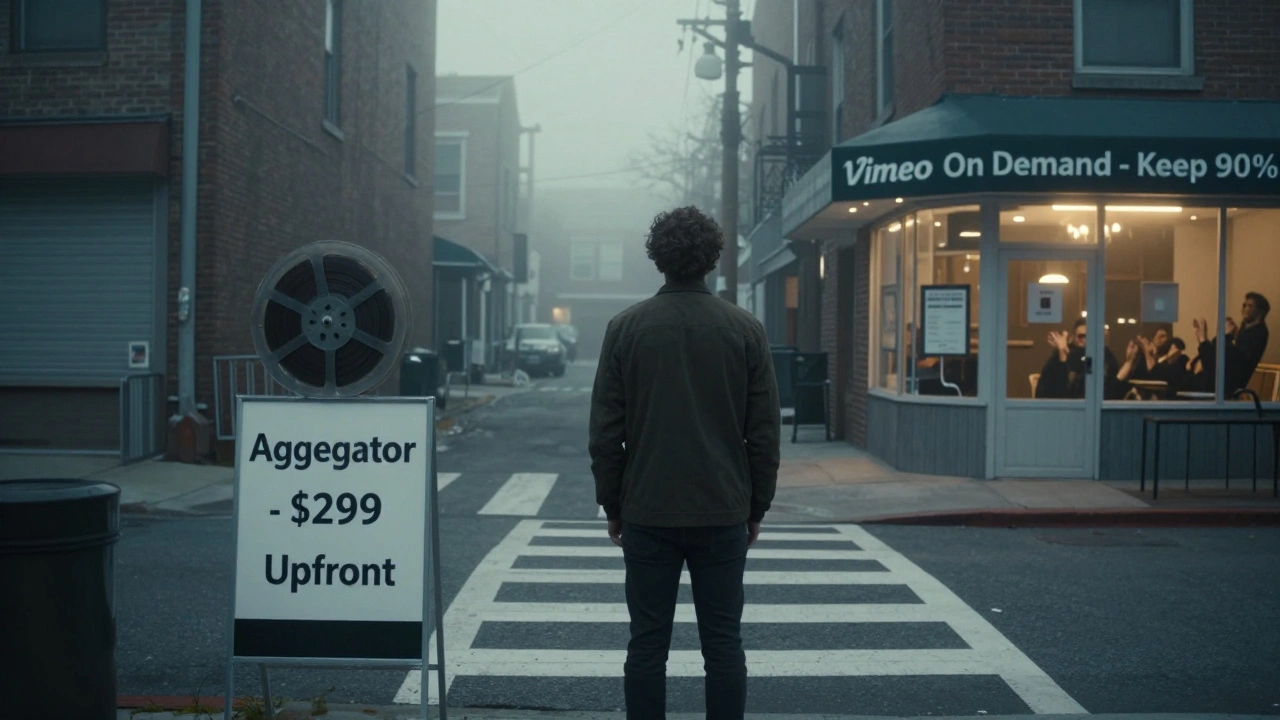
And if you have the budget? Skip aggregators entirely. Use a true distributor. Or self-distribute through Vimeo On Demand, which lets you keep 90% of revenue, control your pricing, and keep your rights. It takes more work - but you own your future.
What You Should Do Next
Don’t rush. Don’t sign anything because ‘it’s easy.’ Your film is your legacy. Aggregators make money whether your film succeeds or fails. You only make money if it works - and only if you understand the rules.
Start by downloading a free copy of the Independent Film & Video Alliance’s Aggregator Contract Checklist. It’s not perfect, but it highlights the 12 red flags most filmmakers miss. Use it. Then talk to at least three other indie filmmakers who’ve been through it. Ask them: ‘What did they hide from you?’
There’s no shortcut to real distribution. But there are ways to avoid getting ripped off. Know the terms. Know your rights. And never, ever sign a contract you don’t fully understand.
Do aggregators really pay filmmakers?
Yes - but often very little. Most indie films earn under $1,000 total after fees. Aggregators take 15-30% upfront, then add delivery, metadata, and holdback fees that can eat another 20-40%. A film that earns $2,000 might net the filmmaker only $800. Real distributors or self-distribution on Vimeo On Demand typically leave filmmakers with 80-90% of revenue.
Can I use multiple aggregators at once?
Only if your contract allows it. Most aggregators require exclusivity - meaning you can’t use another one. Non-exclusive services like Seed&Spark or IndieFlix let you upload to multiple platforms. But if you sign an exclusive contract, you’re locked in. Always check the contract before uploading.
What’s the difference between an aggregator and a distributor?
An aggregator uploads your film to platforms like Apple TV or Amazon. They don’t negotiate deals, market your film, or get you into theaters. A distributor does all that. They secure licensing deals, handle marketing, get your film into festivals, and sometimes even buy your film outright. Distributors take a larger cut (30-50%), but they also invest in your film’s success. Aggregators are passive. Distributors are active.
How long do aggregator contracts last?
Most last 3 to 5 years. Some are lifetime. You might not even realize this until you try to remove your film. Always look for the ‘Term’ section in the contract. If it doesn’t specify an end date, assume it’s permanent. You can usually negotiate a 1-2 year term if you ask - but most won’t offer it unless you push back.
Should I use an aggregator if I’m on a tight budget?
Only if you understand the trade-offs. Aggregators are cheap upfront - $50 to $300. But if your film earns $500 over two years, you’ll likely end up with less than $300 after fees. If you have even $1,000 to invest, self-distributing through Vimeo On Demand gives you more control and more money long-term. Consider crowdfunding a small marketing budget instead. A $200 ad campaign on Instagram could earn you more than a year of aggregator earnings.
Can I cancel my aggregator contract early?
Sometimes - but it’s expensive. Many charge $200-$500 to terminate early. Some require a 90-day notice. Others won’t let you cancel at all. Always check the ‘Termination’ clause before signing. If it’s buried in fine print or says ‘non-cancelable,’ walk away. Your film is your asset. You should be able to control it.
Aggregator contracts aren’t evil. They’re just poorly understood. For filmmakers with no budget, no connections, and no time - they’re a tempting shortcut. But shortcuts in film distribution usually lead to dead ends. The real path to success? Know your rights. Ask hard questions. And never trade control for convenience.





Comments(8)