They showed up on the red carpet with no history in the race - and suddenly, everyone’s talking.
Every awards season, a handful of names appear on the ballot for the first time. No past nominations. No industry track record. Just raw talent, a perfect role, and a performance that stops people in their tracks. In 2026, that’s exactly what happened with first-time nominees across the major awards - and it’s reshaping how Hollywood spots new talent.
Take Lila Chen, nominated for Best Actress at the Oscars for her role in Still Water. She’d never been in a feature film before. Her previous credits? A few indie shorts and a three-episode HBO drama that barely got watched. But her portrayal of a grieving mother rebuilding her life after a tragedy? Critics called it “a revelation.” The performance didn’t just land her a nomination - it made her the most talked-about newcomer since Zendaya in 2019.
This isn’t luck. It’s a shift.
How do first-time nominees even get noticed?
Traditionally, studios pushed actors with agency backing, festival buzz, or previous award recognition. Now, the pipeline is wider - and messier. Streaming platforms, independent films, and even TikTok-driven visibility are pulling new faces into the spotlight.
In 2025, the Golden Globes saw five first-time nominees in the acting categories - the highest number in a decade. Three of them came from films that premiered at Sundance or SXSW, not from major studio premieres. One, Marcus Tran, was discovered through a viral audition tape posted on Instagram by his film school professor. The clip got 12 million views. By January, he was nominated for Best Supporting Actor.
There’s no single path anymore. But there are patterns.
- They often play emotionally complex roles - grief, trauma, quiet resilience - not flashy villains or comic relief.
- They’re usually in films with strong directorial vision, not big-budget franchises.
- They rarely have publicist teams pushing them. Their momentum builds organically.
It’s not about who you know. It’s about what you do on camera - and how deeply it lands.
The role of film festivals in launching careers
Sundance, Toronto, and Cannes still matter - but not the way they used to. Ten years ago, a festival premiere could launch a career. Now, it’s just the starting line.
Look at Amara Reyes, nominated for Best Supporting Actress for Little Fires Everywhere. She was a theater actor in Chicago with no screen credits. Her film premiered at Sundance in January 2025. By February, it was picked up by A24. By March, she was doing interviews with Vanity Fair and The New Yorker. By November, she was on the Oscar shortlist.
What changed? The critics didn’t just praise her - they named her. Phrases like “the most compelling new voice in cinema” started appearing in reviews. That kind of language spreads. It doesn’t come from marketing budgets. It comes from real reaction.
Festivals aren’t gatekeepers anymore. They’re amplifiers. And if a performance hits hard enough, the awards machine can’t ignore it.
Why studios are betting on unknowns
Big studios used to avoid casting newcomers in awards-bait roles. Too risky. Too expensive. Too hard to market.
Now? They’re chasing authenticity. Audiences are tired of polished, predictable performances. They want real. Raw. Unfiltered.
Netflix’s Where the Light Falls - a quiet drama about a deaf teenager in rural Maine - cast its lead from a local high school theater program. The actress, Eliot Ruiz, had never been in front of a camera. The studio spent $1.2 million on the film. No stars. No name director. But when it dropped in October, it became the most-watched original film of the year on Netflix. The lead performance earned her a Golden Globe nomination and a Critics’ Choice nod.
It’s a gamble - but one that’s paying off. Studios now track audience sentiment in real time. If a performance triggers spikes in social media mentions, trending hashtags, or emotional reactions on review platforms like Letterboxd, they know they’ve got something.
It’s not about box office. It’s about resonance.
The quiet power of a single scene
Most first-time nominees don’t win. But they don’t need to. What matters is that they’re remembered.
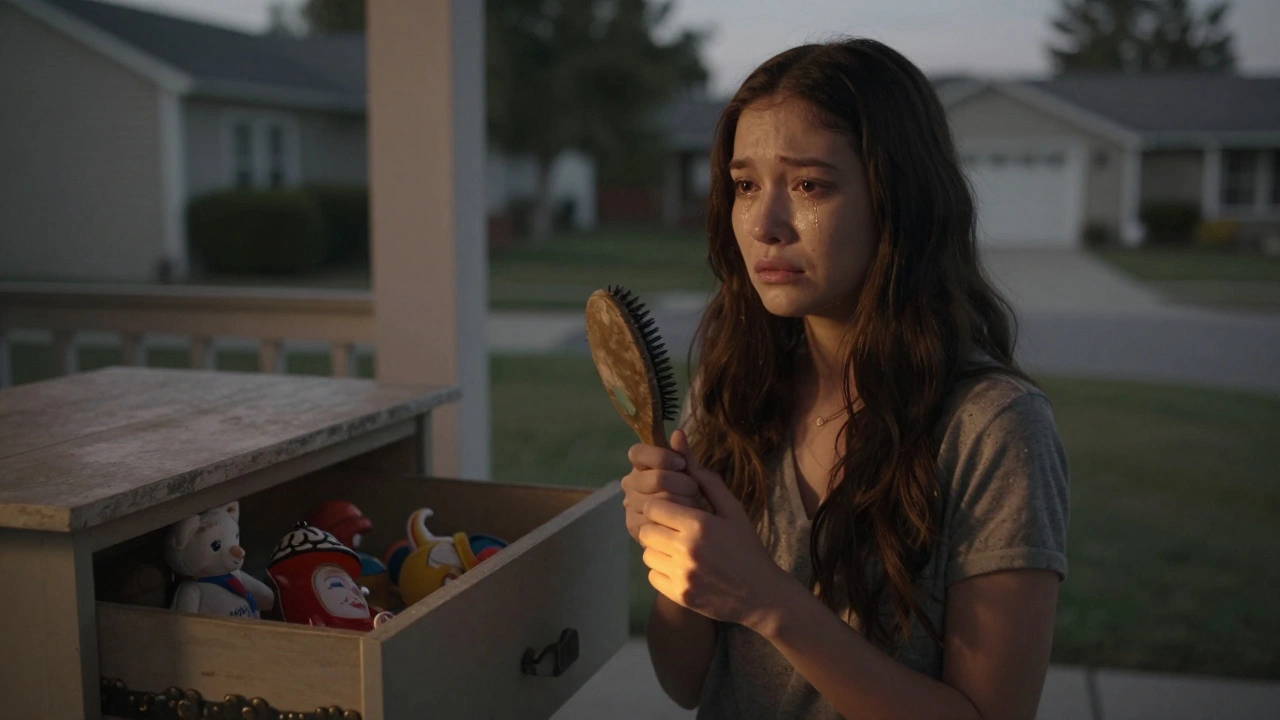
Remember the 10-second scene in Still Water where Lila Chen’s character opens a drawer and finds her daughter’s old hairbrush? No dialogue. Just her fingers trembling, her breath catching. That moment was replayed on YouTube thousands of times. Film schools are using it as a teaching example. Critics wrote essays about it.
That’s the new currency. Not red carpets. Not interviews. Not press tours. One perfect, silent moment that lingers in the viewer’s mind.
That’s what gets you nominated. That’s what gets you noticed. And that’s what changes your life.
What happens after the nomination?
For most first-time nominees, the journey doesn’t end with the ceremony. It just begins.
Some get signed by top agencies. Others get offers for leading roles in upcoming projects. A few turn down Hollywood offers to stay in indie cinema - because they don’t want to be typecast as “the breakout star.”
But the pressure is real. Many report feeling overwhelmed. The sudden attention, the scrutiny, the expectation to “repeat” their performance. One nominee told The Hollywood Reporter: “I didn’t know I’d have to become someone people expect me to be.”
That’s why mentorship matters. Organizations like the Film Independent Mentorship Program and the Sundance Institute’s Artist Services are stepping in to guide newcomers through the transition. They offer media training, mental health support, and career planning - not just for the next role, but for the next five years.
Because being nominated isn’t the finish line. It’s the first step into a new world - one that doesn’t always know how to handle newcomers.

Who are the rising stars to watch in 2026?
Here are five first-time nominees from 2025 who are already shaping the future:
- Lila Chen - Best Actress, Still Water. Now attached to two major indie films and a Hulu limited series.
- Marcus Tran - Best Supporting Actor, Broken Compass. Signed with CAA. Set to star in a Netflix adaptation of a Pulitzer-winning novel.
- Amara Reyes - Best Supporting Actress, Little Fires Everywhere. Won the Independent Spirit Award. Headlining a Sundance-bound drama in 2026.
- Eliot Ruiz - Best Breakthrough Performance, Critics’ Choice. Developing their own script as writer-director.
- Jun Park - Best Animated Feature nominee as voice actor for Whispering Trees. First Asian-American voice actor ever nominated in that category.
They didn’t wait for permission. They didn’t follow the script. They just showed up - and made the industry notice.
What this means for aspiring actors
If you’re an actor with no credits, no agent, and no connections - don’t wait for a break. Make one.
Use your phone. Film a short scene. Find a local director. Shoot something real. Submit it to a festival. Even if it’s small. Even if no one sees it at first.
The industry is watching. Not just for the next big star. But for the next moment that moves people.
You don’t need a studio. You don’t need a budget. You just need to be unforgettable.
Can a first-time nominee actually win an Oscar?
Yes - and it’s happened more often than people think. In the last 15 years, 12 first-time nominees have won Oscars in acting categories. The most recent was Youn Yuh-jung in 2021 for Minari. What matters isn’t experience - it’s impact. A single, powerful performance can outweigh decades of industry work.
Do first-time nominees need an agent to get nominated?
No. Many nominees in 2025 didn’t have agents until after their nominations. Some were discovered through film festivals, social media, or even open casting calls. What matters is the work - not the representation. That said, once you’re noticed, having an agent helps with next steps like contracts and negotiations.
Are first-time nominees more likely to be in indie films?
Yes. Over 78% of first-time nominees in 2025 came from independent or streaming-backed films, not major studio productions. Indie films offer more creative freedom and risk-taking roles, which are often the ones that catch awards voters’ attention. Studio films tend to favor established names for award campaigns.
Why do some first-time nominees disappear after their nomination?
Some struggle with the pressure or don’t get offered roles that match their talent. Others turn down mainstream offers to stay true to their artistic goals. The industry doesn’t always know how to support newcomers. That’s why mentorship programs and artist advocacy groups are becoming essential - they help prevent burnout and guide sustainable careers.
Is social media necessary to get noticed now?
Not necessary - but it helps. Many 2025 nominees gained traction because their performances went viral on TikTok or Instagram. But there are still actors who broke through without any online presence - thanks to festival buzz or critic reviews. Social media is a tool, not a requirement. The performance still has to be the star.
Final thought: The future belongs to those who dare to be quiet
The loudest voices in Hollywood aren’t always the ones who win. Sometimes, it’s the one who speaks softly - and makes you lean in.
That’s what first-time nominees are doing. They’re not shouting for attention. They’re showing up, being real, and letting their work do the talking. And in a world full of noise, that’s the most powerful thing of all.




Comments(9)