Key Highlights
- Shift from niche 'world cinema' to mainstream critical dominance.
- Rise of genre-bending narratives combining social realism with surrealism.
- Increased visibility of female and indigenous directors in top-tier competitions.
- The role of streaming platforms in amplifying festival-winning indie films.
The New Wave of Global Recognition
For a long time, the international film circuit had a very specific idea of what 'Latin American cinema' should be. It usually meant gritty stories of poverty or political turmoil-what critics often called 'misery porn.' But something has changed. Today, Latin American cinema is a diverse movement of storytelling that blends high-art aesthetics with deeply personal, often surreal, narratives. Directors are moving away from the expectation to act as sociology professors and are instead acting as poets and provocateurs.
Take a look at the recent wins at the Cannes Film Festival. We aren't just seeing films from Mexico or Brazil; we're seeing a surge of talent from Chile, Argentina, and Colombia. These filmmakers are winning because they've stopped trying to 'fit in' with European tastes and have started leaning into the specific, chaotic beauty of their own cultures. When a movie like *Roma* or *Parasite* (though the latter is Korean, it triggered a global shift) breaks the barrier, it opens a floodgate for others. Now, the 'foreign language' label is becoming an outdated relic because the stories are too universal to be ignored.
Beyond the Red Carpet: Why Now?
You might wonder why this surge is happening exactly now. It isn't just that the movies are getting better-though they are. It's about the infrastructure. The rise of Netflix and MUBI has created a feedback loop. A film can premiere at the Venice International Film Festival, win a Golden Lion, and be in the living rooms of millions within weeks. This visibility gives filmmakers more leverage when seeking funding from international co-productions.
Moreover, there's a technical evolution. High-quality digital cinematography is more accessible than ever. A director in Bogotá can now achieve the same visual fidelity as someone in Los Angeles without needing a fifty-million-dollar budget. This 'democratization of the image' means the only thing that matters is the strength of the script and the vision of the director. We're seeing a move toward 'slow cinema'-long takes and atmospheric tension-that challenges the fast-paced editing of Hollywood and captures the attention of jury members who are tired of the same old formulas.

The Power Players and Their Impact
To understand the current landscape, we have to look at the specific regions driving this growth. Mexico has long been a powerhouse, but the influence of Alfonso Cuarón and Alejandro González Iñárritu created a bridge. They proved that you could maintain a Latin identity while dominating the Academy Awards. But the real excitement is in the 'New Chilean Cinema' and the resurgence of Brazilian auteur films.
Brazilian filmmakers, in particular, have mastered the art of blending political critique with visceral imagery. They don't just tell you that a system is broken; they make you feel the heat and the dust of the environment. This authenticity is what resonates at festivals like Berlin or Sundance. The juries aren't looking for a polished Hollywood product; they're looking for a pulse, a raw nerve, and a perspective they've never seen before.
| Region | Common Themes | Visual Approach | Key Influence |
|---|---|---|---|
| Mexico | Identity, Class, Memory | Grand scale, sweeping shots | Neorealism |
| Brazil | Urban Decay, Social Struggle | High contrast, raw energy | Cinema Novo |
| Argentina | Psychological Tension, Bureaucracy | Intimate, dialogue-driven | European Art House |
| Chile | Political Trauma, Landscape | Minimalist, atmospheric | Documentary Style |
Breaking the Glass Ceiling for Women and Indigenous Voices
One of the most refreshing parts of this trend is who is holding the camera. For decades, the 'face' of Latin American cinema was almost exclusively male. That is changing rapidly. Women directors are now winning major prizes, bringing a nuanced focus to themes of domesticity, motherhood, and gender violence that were previously sidelined. Their work often avoids the 'macho' tropes of the past, opting instead for a more internal, emotional exploration of character.
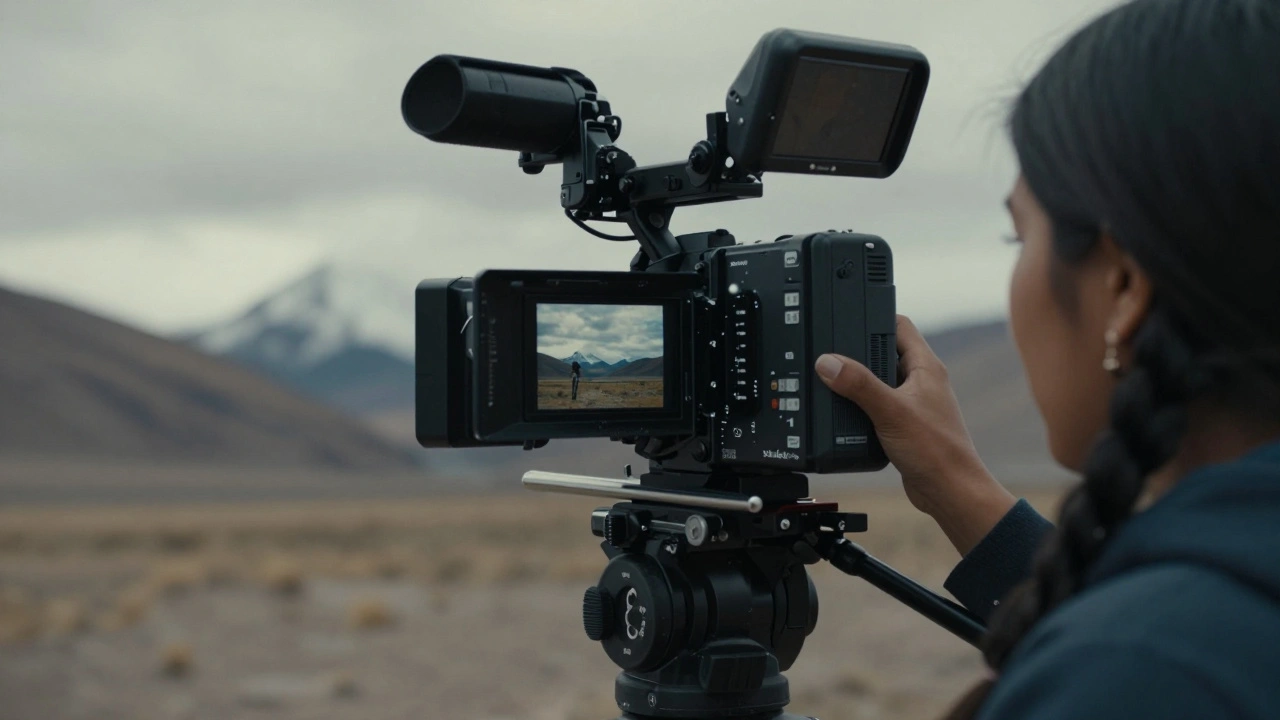
Even more significant is the rise of indigenous-language films. Movies filmed in Quechua or Maya are no longer just ethnographic curiosities; they are competing for the top prizes. When a film in an indigenous language wins a prize at a major festival, it validates the language itself as a medium for high art. It tells the world that these cultures aren't just 'ancient history'-they are living, breathing, and evolving. This shift is forcing festivals to rethink their curation and include a broader spectrum of human experience.
The 'Festival Effect' and Commercial Viability
Does winning a trophy at a festival actually translate to more people watching the movie? Usually, yes, but the path is different now. In the past, a win at Sundance meant a limited release in three theaters in New York and LA. Now, a win acts as a 'seal of quality' that triggers a bidding war among streaming giants. This is a double-edged sword. While it ensures the film is seen, it can sometimes strip the movie of its theatrical experience, which is where cinema is meant to live.
However, this commercial interest is fueling more ambitious projects. Filmmakers are now getting budgets that allow them to experiment with VFX or elaborate set pieces without sacrificing their artistic integrity. We're seeing a hybrid model where a film is an 'art house' project in its soul but a 'commercial' product in its distribution. This balance is exactly what is allowing Latin American cinema to scale up and reach a global audience without losing its essence.
What's Next for the Region?
The momentum is clearly on the side of the South. As we move further into the 2020s, the expectation is that Latin American filmmakers will stop being categorized as 'International' or 'Foreign' and simply be seen as 'Cinema.' The goal is a world where a director from Peru or Uruguay is considered just as likely to win the Palme d'Or as a director from France or the US.
We should also expect to see more cross-continental collaborations. We're already seeing Latin American directors teaming up with Asian or African filmmakers to create a 'Global South' cinematic alliance. By sharing resources and distribution networks, they can bypass the traditional gatekeepers of Hollywood and Europe. This isn't just about winning awards; it's about owning the means of storytelling.
Why are Latin American films suddenly more popular at festivals?
It is a combination of better access to digital technology, the influence of streaming platforms like Netflix and MUBI, and a shift in storytelling that moves away from clichés toward more personal, surreal, and authentic narratives that resonate globally.
Which festivals are the most important for these filmmakers?
The 'Big Three'-Cannes, Venice, and Berlin-remain the gold standard for prestige. However, Sundance and Toronto (TIFF) are crucial for getting the attention of North American distributors and streaming services.
Do these films usually need subtitles to be successful?
While most are in Spanish or Portuguese, the success of films like Roma proved that audiences are increasingly comfortable with subtitles. The strength of the visual storytelling often transcends the language barrier.
What is 'Cinema Novo'?
Cinema Novo was a Brazilian film movement in the 1960s that focused on social inequality and political struggle, using a raw, stripped-down aesthetic. Many current winning filmmakers draw inspiration from its rebellious spirit.
How has the role of female directors changed in the region?
Female directors are moving from the sidelines to center stage, winning major awards by challenging traditional gender roles and focusing on internal emotional landscapes rather than just external political conflict.