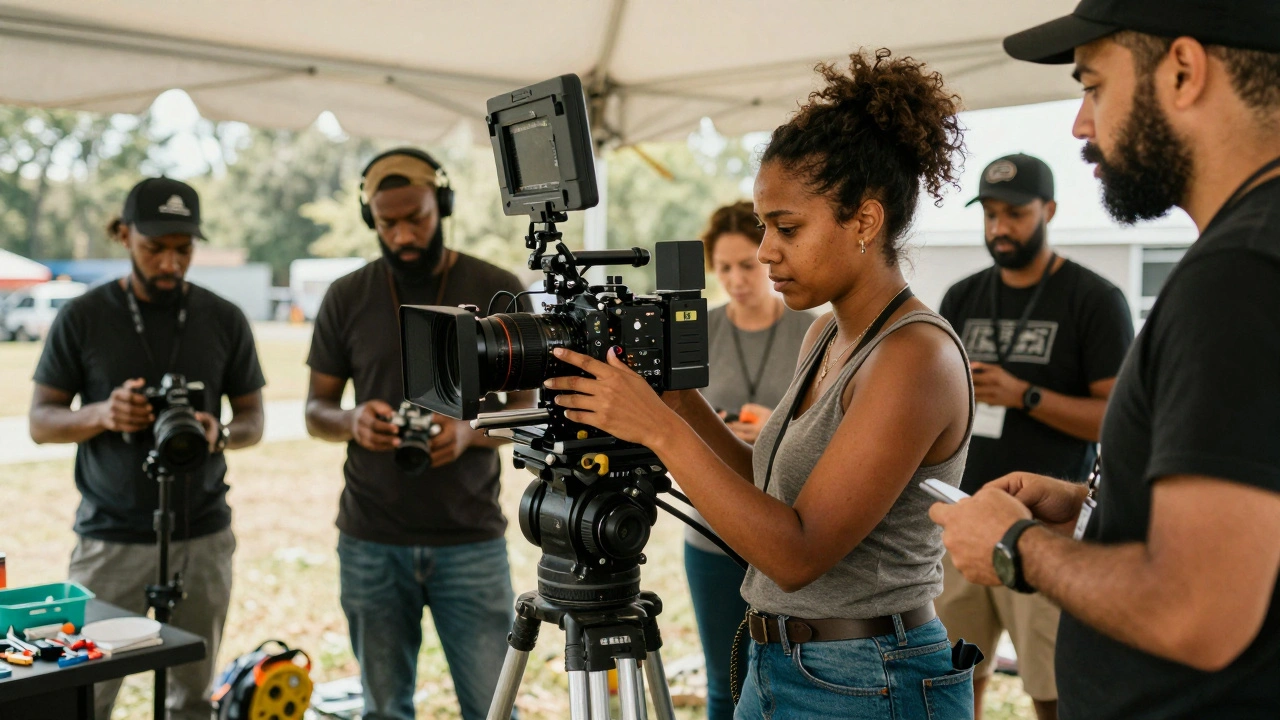
For years, the film industry talked about gender parity like it was a goal waiting to be reached. But behind the scenes, on sets from Los Angeles to Atlanta, the numbers told a different story. In 2015, only 16% of cinematographers on the top 250 domestic films were women. By 2024, that number had climbed to 28%. It’s not a revolution-but it’s not a mirage either. Real change is happening, slowly, unevenly, and with hard-won data to prove it.
Where the Numbers Stand Today
According to the 2024 Celluloid Ceiling Report from San Diego State University, women held 36% of all key crew positions across the top 100 grossing films of 2023. That includes roles like director, producer, writer, editor, and cinematographer. That’s up from 22% in 2012. The biggest gains? In editing, where women now make up 44% of the workforce. In cinematography? Still lagging, but climbing. The 2023 figure was 28%, nearly double what it was a decade ago.
But here’s what the headlines don’t always show: those numbers vary wildly by budget. On films with budgets over $100 million, women held just 24% of key roles. On indie films under $10 million? That number jumped to 51%. The divide isn’t just about money-it’s about who gets access to the pipeline.
Initiatives That Actually Moved the Needle
It wasn’t just talk. Several programs created measurable shifts.
The Women in Film Cinematography Mentorship Program, launched in 2018, placed over 120 women as camera assistants and gaffers on union productions. By 2023, 72% of its alumni were hired for at least one feature film. One participant, Maya Ruiz, went from lighting assistant on a low-budget indie to director of photography on a Netflix thriller in under three years.
Then there’s the Directors Guild of America’s DGA Inclusion Initiative, which started requiring studios to submit diversity data for every project. It didn’t mandate hiring-but it made the lack of diversity visible. Studios that didn’t meet minimum thresholds for female crew representation saw their applications for DGA production assistance delayed. Within two years, the number of female first assistant directors on union films rose by 31%.
And in Canada, the Women in View program tied public funding to diversity metrics. If a film didn’t meet gender parity benchmarks in key crew roles, it lost up to 15% of its grant. The result? In British Columbia, female-led crew teams increased by 47% between 2019 and 2023.
Who’s Still Left Out?
Progress isn’t universal. Black women still hold less than 5% of key crew roles in major studio films. Latina women? Around 3%. Trans and nonbinary crew members? Data is almost nonexistent-because most studios still don’t collect it.
And while women are breaking into editing and producing, they’re still underrepresented in technical roles. Only 13% of production designers in 2023 were women. In the grip department? Just 9%. These aren’t niche jobs-they’re the backbone of every shot. Without them, the film doesn’t get made.
The problem isn’t just hiring. It’s retention. A 2023 survey by the International Cinematographers Guild found that 41% of women who entered the field as camera trainees left within five years. The main reasons? Lack of mentorship, hostile work environments, and being passed over for promotions despite strong performance.

The Role of Unions and Contracts
Change didn’t come from goodwill. It came from pressure.
In 2021, the International Alliance of Theatrical Stage Employees (IATSE) added a new clause to its collective bargaining agreement: studios must report gender and racial breakdowns for all crew hires on union productions. That data became public. And suddenly, studios couldn’t claim they didn’t know.
Some studios responded by creating internal diversity hiring pools. Others partnered with organizations like Women in Film & Television International to pre-screen qualified candidates. One major studio in Atlanta now requires that at least two women be interviewed for every key crew position before a hire is made.
It’s not perfect. But it’s a system. And systems can be improved.
What’s Working in the Indie World
While studios move slowly, independent filmmakers are rewriting the rules.
Groups like Reel Women and She Reels run film labs that guarantee at least 50% of crew positions go to women and nonbinary people. Their 2023 cohort produced 38 short films. Every single one had a female cinematographer, editor, or production designer. Many went on to screen at Sundance and Tribeca.
And here’s the kicker: these films didn’t just get noticed-they made money. One indie film from the She Reels program, Red Line, grossed $2.1 million on a $280,000 budget. Investors noticed. Now, some crowdfunding platforms like Seed&Spark require gender diversity in crew credits to be eligible for their promotional spotlight.
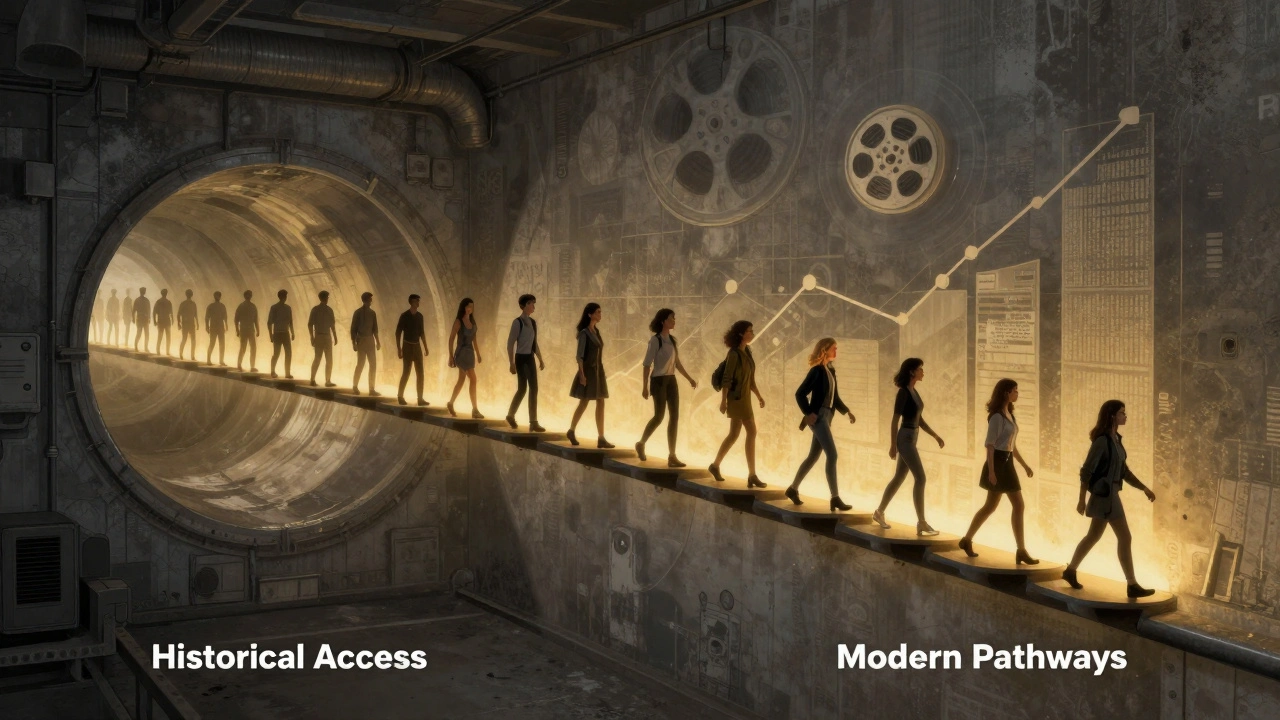
Why Data Matters More Than Intent
Companies say they want diversity. But without data, those claims are just noise.
When the British Film Institute started publishing annual crew diversity reports in 2019, studios suddenly had to answer for their numbers. One major UK studio went from 18% female crew in 2018 to 41% in 2023-not because they had a new mission statement, but because their funding was tied to the data.
Same thing happened in Australia. The Australian Film Commission started requiring gender breakdowns for all publicly funded projects. In three years, the number of female directors of photography on funded films tripled.
Transparency forces accountability. And accountability drives change.
What Still Needs to Happen
Progress is real-but it’s fragile.
First, we need standardized data collection across all major film markets. Right now, the U.S. tracks gender, but not race or gender identity. The UK tracks both. Canada tracks ethnicity. No one tracks disability status. Without consistent metrics, we’re flying blind.
Second, we need to fix the pipeline. Mentorship helps-but only if it leads to jobs. Too many programs train women and then hand them a certificate and say, ‘Good luck.’ What’s missing? Guaranteed internship slots, paid apprenticeships, and clear career ladders.
Third, we need to stop treating diversity as a box to check. It’s not about ticking off a woman for cinematographer. It’s about building a culture where women aren’t the exception-they’re the norm.
That means changing how we hire. It means holding producers accountable. It means rewarding crews that include diverse teams with better funding and distribution deals.
And it means listening to the women who’ve been there. One camera operator in New Orleans told me: ‘I don’t need a program. I need someone to say, ‘You’re ready,’ and then give me the job without making me prove it five times.’
The Road Ahead
Gender parity on film crews isn’t about quotas. It’s about access. It’s about who gets to tell stories-and who gets to make sure those stories look the way they should.
The data shows we’re moving. Not fast enough. Not evenly. But we’re moving.
And every time a woman walks onto a set as the director of photography, or the first assistant director, or the gaffer, she doesn’t just make a film. She makes it possible for the next woman to do the same.
That’s the real metric of progress.
Are gender parity initiatives actually increasing the number of women in film crew roles?
Yes, but progress is uneven. Women now hold 36% of key crew roles on top-grossing films in 2023, up from 22% in 2012. Gains are strongest in editing and producing, but still low in technical roles like cinematography and grip. Programs like Women in Film’s mentorship initiative and Canada’s funding-based diversity requirements have directly increased hiring rates.
Why are women still underrepresented in technical crew roles like cinematography and grip?
Historical exclusion, lack of mentorship, and hiring bias play major roles. Many technical roles require apprenticeships or union pathways that were historically male-dominated. Even when women enter these fields, they’re often passed over for promotions or left out of key networking circles. Data shows 41% of women in camera trainee roles leave the industry within five years due to isolation and lack of advancement.
Do diversity initiatives hurt hiring quality?
No. Studies show that when diversity initiatives are implemented with clear criteria-like requiring qualified women to be interviewed for roles-hiring quality stays the same or improves. The issue isn’t talent-it’s access. Programs like the DGA’s inclusion initiative found that women hired through diversity pipelines performed just as well as their male counterparts in crew evaluations.
How do funding policies affect gender parity on film crews?
They’re one of the most effective tools. In Canada, public funding is tied to crew diversity metrics. If a film doesn’t meet gender parity benchmarks, it loses up to 15% of its grant. In British Columbia, this led to a 47% increase in female-led crew teams between 2019 and 2023. The same model in Australia and the UK produced similar results. Money talks-and when it’s tied to inclusion, studios listen.
What’s the biggest barrier to achieving gender parity in film crews?
The biggest barrier isn’t a lack of qualified women-it’s a lack of consistent systems. Without standardized data collection, accountability, and guaranteed pathways from training to jobs, progress stalls. Many women enter the field but leave because they’re not promoted, not mentored, or not hired again. Real parity requires fixing the pipeline, not just filling a few slots.






Comments(10)