Key Takeaways
- 4DX merges visual storytelling with physical sensations like wind, scent, and motion.
- The technology relies on a complex synchronization between the film's metadata and the theater's hardware.
- While great for action films, it creates a distinct trade-off between immersion and narrative focus.
- It represents a shift from "watching" a story to "experiencing" an event.
How the Magic Actually Works
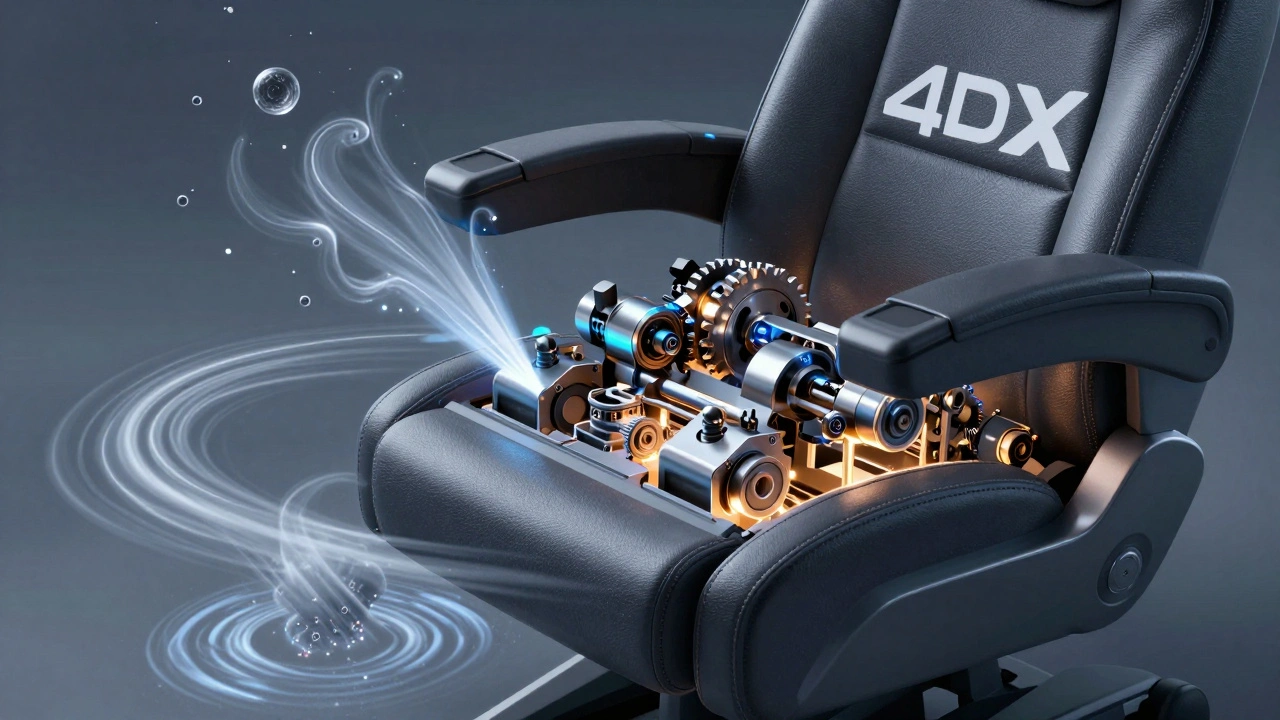
To understand why this feels so different from a standard screen, you have to look at the hardware. A 4DX theater isn't just a room with a projector; it's a massive piece of machinery. Each seat is a robotic platform capable of moving in multiple directions-tilting, shaking, and sliding-to mimic the G-forces of a car chase or the jolt of an explosion. These Motion Seats are programmed to react to specific cues in the movie's timeline.
Beyond the movement, there's a layer of environmental effects. Small nozzles are hidden in the headrests and armrests to spray water or air. Scent dispensers release chemicals to mimic the smell of pine forests or gunpowder. Even the floor gets involved, with "leg ticklers'" that simulate insects or debris brushing against your ankles. This all happens via a specialized software track that runs parallel to the movie's audio and video, ensuring that when a character slams a door on screen, your chair jolts exactly at that millisecond.
The Psychology of Total Immersion
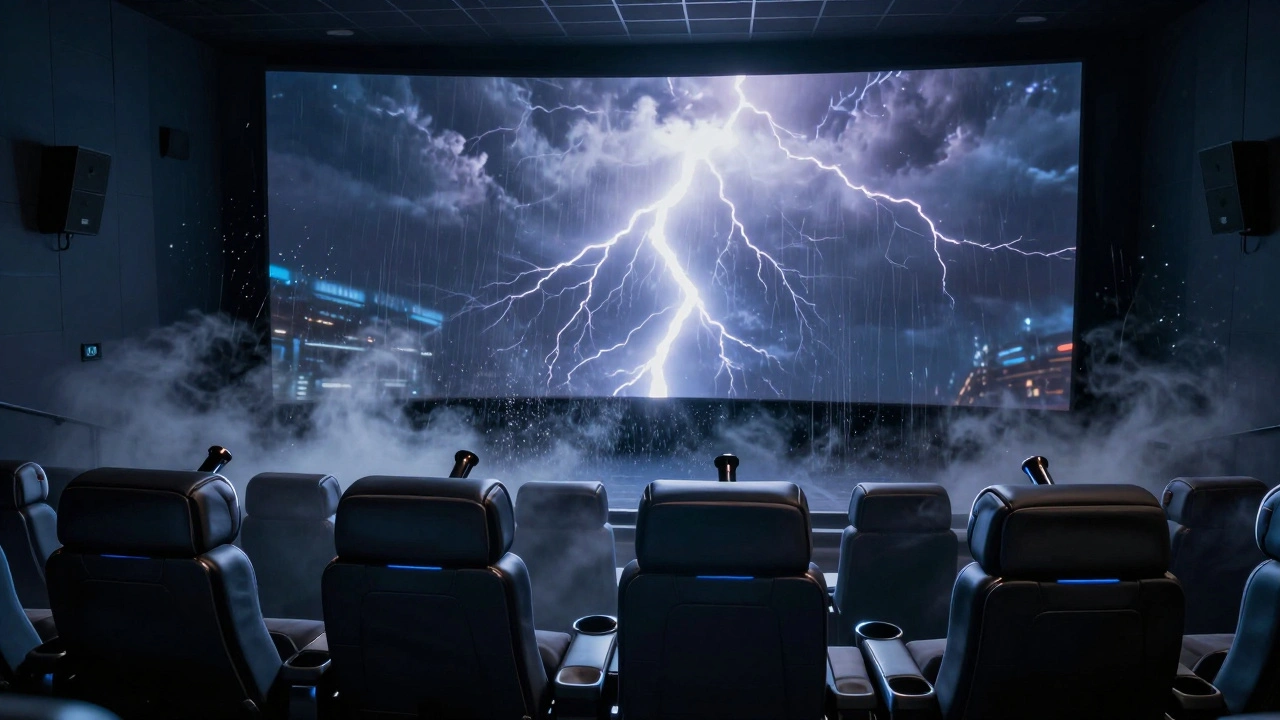
Why do we want this? It comes down to a concept called Sensory Integration. Our brains are wired to believe things more readily when multiple senses are engaged. When you see a flash of lightning and simultaneously feel a vibration in your seat and a puff of air, your brain stops treating the image as a "picture" and starts treating it as a "place." This reduces the cognitive distance between the viewer and the story.
However, there's a fine line between immersion and distraction. If the chair shakes too violently during a quiet, emotional dialogue scene, the technology becomes an obstacle rather than a bridge. The best 4DX experiences are the ones where you forget the machinery exists and simply feel like you're in the scene. It's a delicate balance of timing and intensity that requires precise choreography from the sound and visual engineers.
Comparing the Cinema Tiers
Not all "premium" screens are created equal. You might be confused between 4DX and other high-end formats like IMAX or ScreenX. While IMAX focuses on the scale and clarity of the image, 4DX focuses on the physical sensation. ScreenX expands the view to the side walls, but it doesn't move you. When you combine them-as seen in some 4DX ScreenX theaters-you get a panoramic view and physical movement simultaneously.
| Feature | Standard Cinema | IMAX | 4DX |
|---|---|---|---|
| Visual Scale | Standard | Massive / High Res | Standard to Large |
| Physical Motion | None | None | Full Seat Motion |
| Environmental Effects | None | None | Wind, Water, Scent |
| Primary Goal | Storytelling | Visual Grandeur | Sensory Immersion |
The Cost of Innovation: Is it Sustainable?
Bringing Exhibition Technology like 4DX into a theater is incredibly expensive. A theater owner can't just buy a projector; they have to rebuild the entire seating area and install complex plumbing and electrical systems for the effects. This means tickets are usually more expensive, and the number of screens offering this format remains small compared to standard digital theaters.
There's also the issue of wear and tear. Mechanical seats break down. Water nozzles clog. The maintenance required to keep a 4DX theater running is significantly higher than a traditional cinema. For many exhibitors, the gamble is whether the "event-style" moviegoing experience can drive enough repeat visits to justify the overhead. In an era where streaming services like Netflix offer 4K visuals in the living room, theaters must offer something that is physically impossible to replicate at home.
Does Every Movie Need Motion?
If you've ever seen a slow-burn drama in a 4DX seat, you know it can be awkward. A romantic movie with a random gust of wind or a slight tilt of the chair can pull you right out of the emotion. This is why 4DX is almost exclusively paired with Action Cinema or animated films. The technology is a tool, not a replacement for directing.
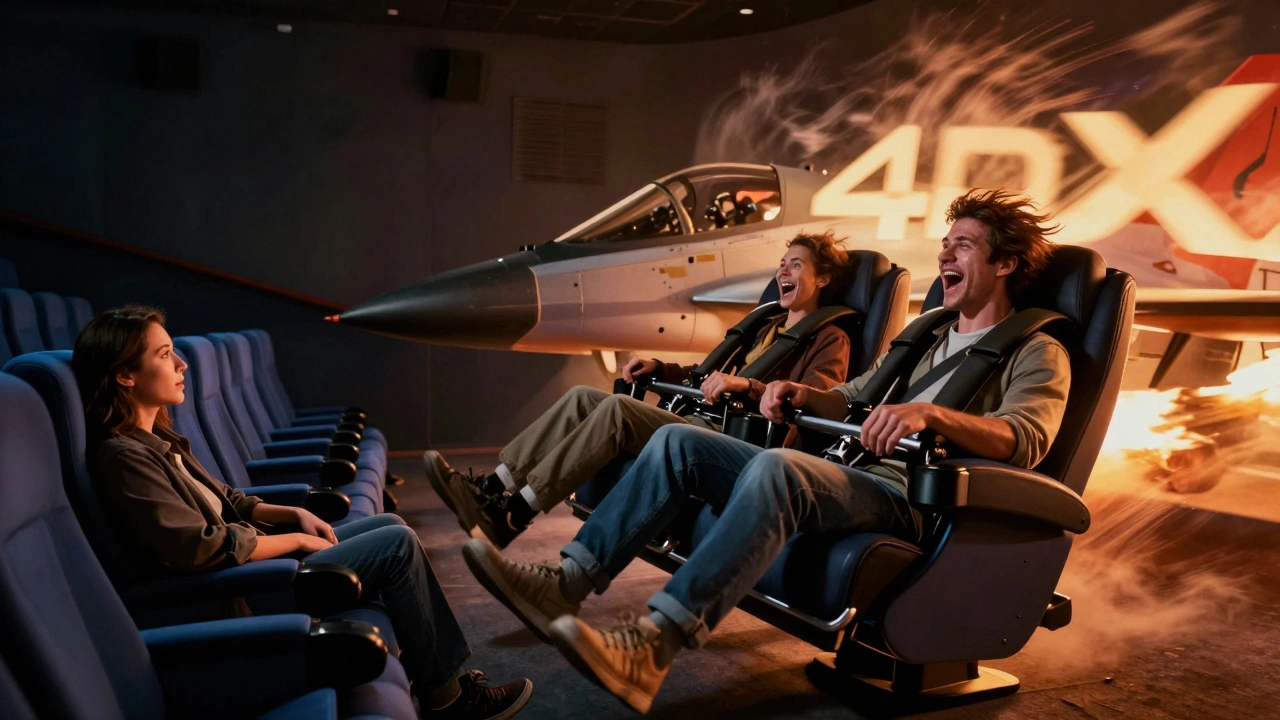
The future likely isn't every movie being 4DX, but rather "tiered experiences." We are seeing a trend where a film is released in multiple formats. A movie like Top Gun might have a 4DX version for those who want the adrenaline of the cockpit, and a standard version for those who want to focus on the acting. This allows theaters to capture both the thrill-seeker and the cinephile.
Pitfalls and User Experience
It's not all sunshine and rainbows. Some people find the movement nauseating, similar to motion sickness in cars. Others find the scents overpowering or the water spray annoying. There's also the "distraction factor"-when you're too aware of the chair moving, you stop paying attention to the plot. To avoid this, the best 4DX productions use subtle cues. Instead of a massive jolt for every single punch, they use micro-vibrations to build tension, saving the big movements for the climax.
Another challenge is accessibility. For people with certain medical conditions or sensory sensitivities, a 4DX theater can be an overwhelming or even dangerous environment. As this technology grows, theaters will need to be more transparent about the intensity of the effects so viewers can make an informed choice.
The Verdict: Future or Fad?
4DX is less about the "future of movies" and more about the "future of the outing." People don't go to 4DX just to see a story; they go for the ride. It transforms the cinema from a place of observation into a destination for an attraction. As virtual reality and haptic suits continue to evolve, the gap between the digital world and the physical world will shrink even further.
Whether it becomes the gold standard or remains a luxury add-on depends on how creators use it. If filmmakers start designing movies *specifically* for 4DX-integrating the motion into the actual storytelling rather than just adding it as a post-production layer-we could see a whole new genre of "sensory cinema." For now, it's a thrilling way to make the theater feel like a place you can't ignore.
Does 4DX cause motion sickness?
Yes, some people experience motion sickness in 4DX because of the disconnect between what your eyes see and what your inner ear feels. However, most modern 4DX systems use carefully calibrated movements to minimize this effect. If you are prone to car sickness, you might find the experience overwhelming.
Is 4DX the same as 4D cinema?
While often used interchangeably, 4DX is a specific brand of technology. Many "4D" theaters use simpler effects like vibrating seats or basic wind, whereas 4DX is a comprehensive system involving synchronized multi-axis motion and a wider array of environmental effects like scents and water.
Will I get wet during a 4DX movie?
You may feel a light mist or a few droplets of water during scenes involving rain or splashes. It is designed to be a sensory cue, not a soak, so you won't leave the theater drenched, but your face and arms might feel damp.
Can any movie be played in 4DX?
Technically yes, but not every movie is "coded" for 4DX. A movie needs a specific synchronization track created by engineers to trigger the seats and effects. If a movie isn't produced for 4DX, it will just play like a regular movie without the motion and effects.
Is 4DX more expensive than a regular ticket?
Yes, 4DX tickets usually carry a premium surcharge. This covers the high cost of the equipment and the ongoing maintenance of the robotic seats and environmental systems.
What to do next
If you're planning your first 4DX visit, start with a high-action movie or a popular animated film-these typically have the most polished effect tracks. If you're sensitive to smells or sudden movements, try a movie with a "mild" rating for effects if the theater provides one. For the ultimate experience, look for "4DX ScreenX" locations to get the full wrap-around view alongside the physical sensations.





Comments(5)