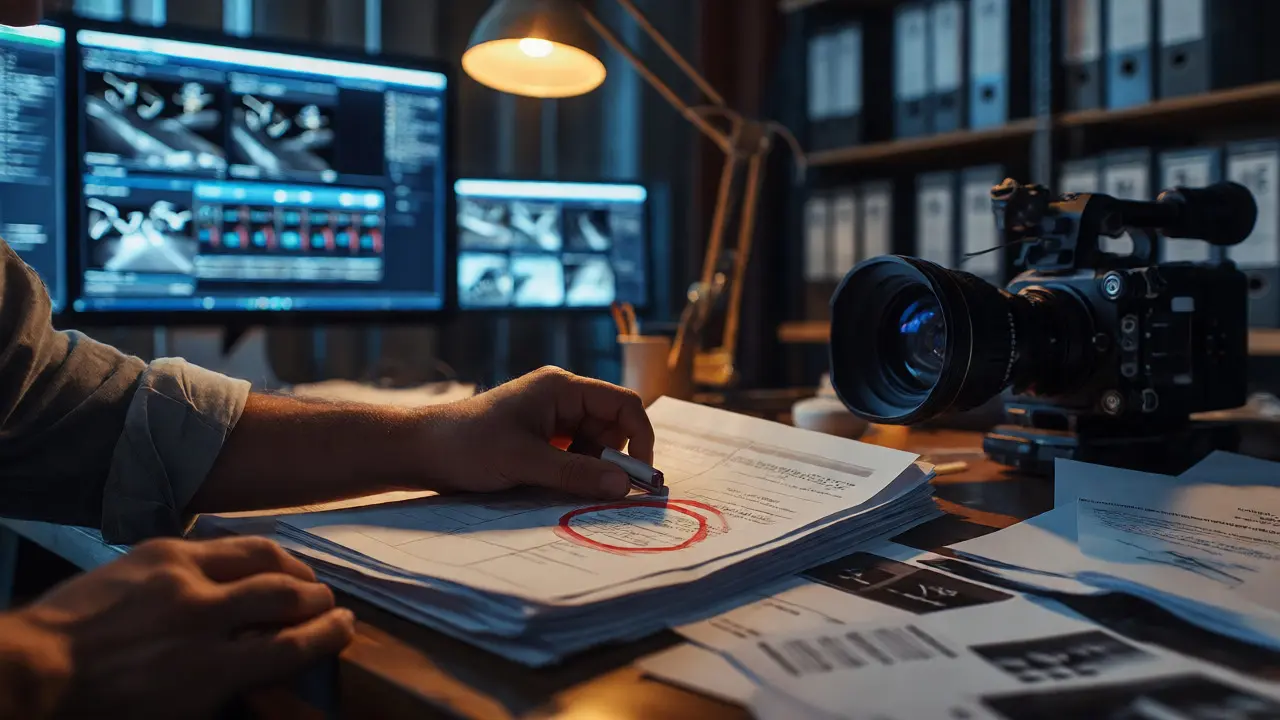
You know that feeling when a documentary hits you with a truth so sharp it lingers for days? It’s not just good cinematography or a catchy soundtrack. It’s the backbone of rigorous investigative documentaries. These films don’t just observe; they interrogate. They borrow their DNA directly from investigative journalism, applying newsroom discipline to the chaotic world of cinema. If you’re a filmmaker wondering how to turn raw footage into a compelling narrative that withstands scrutiny, the answer lies in adopting journalistic rigor.
This isn’t about turning your camera crew into reporters with notepads. It’s about integrating specific methodologies-source verification, adversarial interviewing, and structural accountability-into the filmmaking process. When done right, these methods transform a passive observation into an active investigation, creating content that is both artistically engaging and intellectually robust.
The Core Philosophy: Verification Over Assumption
In traditional documentary filmmaking, there’s often a temptation to edit for emotional impact first, checking facts later. Investigative documentaries flip this script. The central entity here is Verification, which is the systematic process of confirming the accuracy of information before it is presented as fact. This principle dictates every decision, from shot selection to interview questions.
Think about the difference between a vlog and a piece by ProPublica or The New York Times. The latter doesn’t guess. They cross-reference. In film, this means you can’t rely solely on what a subject tells you to camera. You need documents, data sets, and secondary sources. If a subject claims they were at a location at 8 PM, you need the timestamped receipt, the security footage, or the witness statement. Without this layer of proof, your documentary is just an opinion piece with pretty visuals.
Adopting this mindset changes how you shoot. You stop asking "How does this look?" and start asking "Does this prove the point?" This shift ensures that your narrative holds up against critics who might otherwise dismiss your work as biased or incomplete.
Source Management and Triangulation
Journalists live by the rule of triangulation: never trust a single source. For filmmakers, this translates into a complex web of relationships and evidence gathering. You are building a case, not just a story.
Start by categorizing your sources. Not all voices carry equal weight. An anonymous whistleblower provides insider knowledge but lacks public accountability. A government official provides authority but may have political motives. A journalist provides context but might have their own agenda. Your job is to balance these perspectives.
- Primary Sources: Direct participants, victims, perpetrators, or eyewitnesses. Their value is immediacy and detail.
- Secondary Sources: Experts, analysts, or journalists who interpret events. Their value is context and broader perspective.
- Documentary Evidence: Contracts, emails, court records, and financial statements. Their value is objectivity.
When you integrate these elements, you create a semantic network where each claim is supported by multiple independent entities. For instance, if you are making a film about environmental pollution, don’t just show the sludge. Show the sludge (visual), cite the EPA report (documentary), and interview a toxicologist (expert). This triad creates a robust argument that is hard to dismantle.
The Adversarial Interview Technique
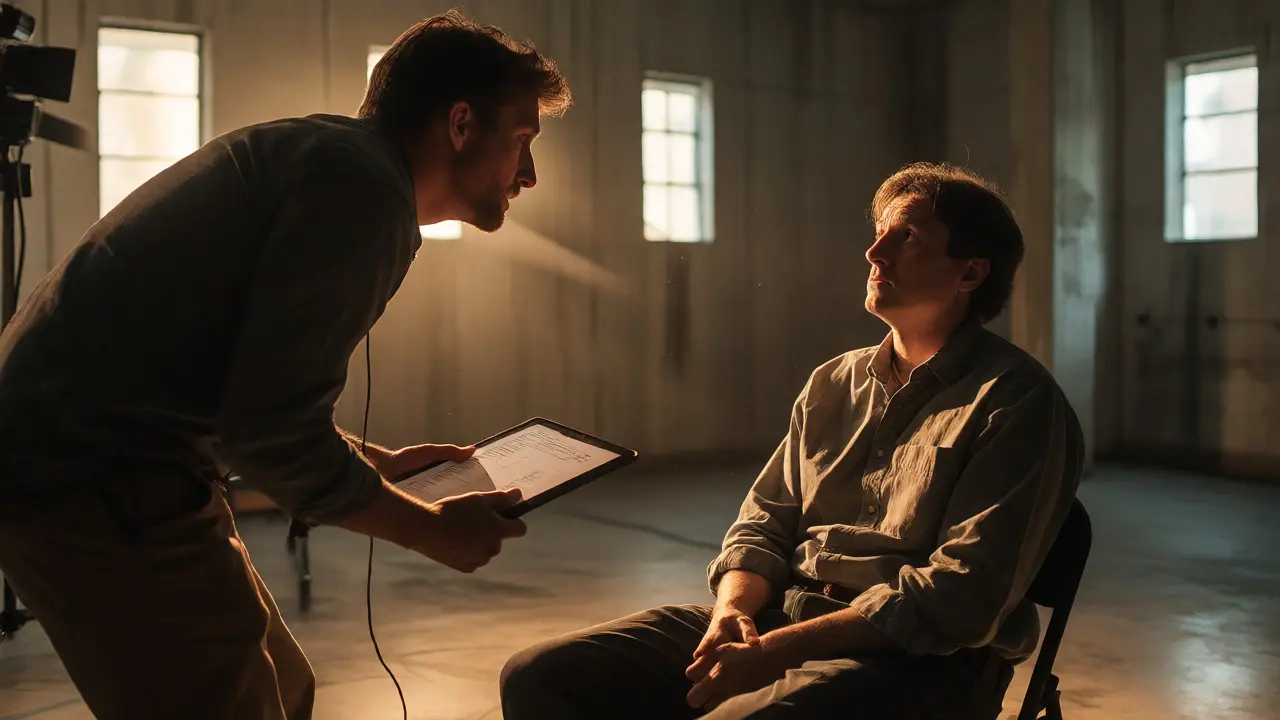
Most documentary interviews are conversational. The director asks soft questions, the subject answers comfortably, and everyone goes home happy. Investigative documentaries demand more. They utilize Adversarial Interviewing, defined as a questioning style designed to challenge inconsistencies, expose contradictions, and elicit unscripted responses.
This doesn’t mean being rude. It means being prepared. Before you hit record, you must know the subject’s history better than they do. You need to identify gaps in their story. If a CEO claims a merger was purely strategic, but leaked emails suggest personal financial gain, you ask about the emails. You press for details. You let silence hang in the air after a vague answer.
Consider the technique used in The Jinx. Andrew Jarecki didn’t just ask Robert Durst about his life; he confronted him with physical evidence and logical inconsistencies gathered over years. The result wasn’t just information; it was revelation. To achieve this, prepare question sequences that escalate in difficulty. Start broad to build rapport, then narrow down to specific, uncomfortable truths. Watch the eyes. Watch the hands. The non-verbal cues often tell the true story.
Data Visualization as Narrative Device
Modern investigative journalism relies heavily on data. From Panama Papers to local budget audits, numbers drive the story. Filmmakers often struggle to translate spreadsheets into screen time. The solution is treating data visualization as a character in your film.
Don’t just show a graph. Animate it. Show the growth of debt over ten years. Highlight the spike that correlates with a specific policy change. Use tools like Tableau or D3.js to create dynamic charts that evolve as the narrator speaks. This keeps the audience engaged while delivering dense information.
| Feature | Traditional Documentary | Investigative Documentary |
|---|---|---|
| Primary Goal | Emotional resonance or aesthetic beauty | Factual accuracy and uncovering hidden truths |
| Source Reliance | Single-source interviews, observational footage | Triangulated sources, documents, data |
| Interview Style | Conversational, open-ended | Prepared, challenging, evidence-based |
| Editing Logic | Narrative flow and mood | Logical progression and proof |
| Risk Factor | Lack of depth | Legal challenges and defamation suits |
This table highlights the structural differences. Notice how the editing logic shifts from mood to proof. This is crucial. If your edit feels manipulative rather than evidentiary, you’ve lost the journalistic thread.
Ethical Boundaries and Legal Safety
Journalism comes with legal armor, but filmmakers often operate in a gray area. When you adopt investigative methods, you inherit the risks associated with them. Defamation, libel, and privacy laws vary by jurisdiction, but the core principle remains: truth is your best defense.
Keep meticulous logs. Every conversation, every email exchange, every document received should be timestamped and archived. If a subject denies saying something, you need the audio file. If a company claims a document is forged, you need the metadata. This archival habit protects you during post-production and potential litigation.
Also, consider the ethical duty to the subject. Investigative journalism balances public interest with individual rights. Just because you *can* reveal a private detail doesn’t mean you *should*. Ask yourself: Does this detail advance the understanding of the systemic issue, or does it merely sensationalize? If it’s the latter, cut it. Ethical integrity builds long-term credibility, which is the currency of any serious documentarian.
Structuring the Investigation for Screen
A research paper has footnotes. A documentary has pacing. How do you structure a complex investigation without boring the audience? Use the "mystery box" approach common in journalism narratives. Start with a hook-an anomaly, a contradiction, or a striking image. Then peel back the layers.
Act I: The Question. What is wrong? Why does it matter? Act II: The Dig. Who is involved? What is the evidence? Where did the trail lead? Act III: The Revelation. What is the truth? What are the consequences?
This structure mirrors the investigative process itself. It allows the audience to follow your thought process. They become investigators alongside you. This engagement is far more powerful than simply presenting conclusions upfront.
Remember, the goal isn’t to make the audience feel smart for knowing the answer. It’s to make them feel unsettled by the reality of the situation. That discomfort drives action, whether it’s voting, donating, or simply talking about the issue at dinner.

Practical Tools for the Journalistic Filmmaker
You don’t need a newsroom budget to apply these methods. Several accessible tools can help streamline the investigative workflow.
- Zotero: A free reference management tool. Use it to organize PDFs, articles, and notes. Tag them by theme or source type.
- Obsidian: A note-taking app that links ideas. Perfect for mapping connections between people, places, and events.
- Descript: Transcribes interviews automatically. Searchable transcripts save hours in the editing room.
- FOIA Requests: Learn how to file Freedom of Information Act requests. Many stories begin with a simple form sent to a local agency.
These tools reduce administrative friction, allowing you to focus on storytelling. The less time you spend hunting for a quote, the more time you have refining the edit.
Common Pitfalls to Avoid
Even seasoned filmmakers stumble when blending these disciplines. Here are three traps to watch out for.
1. Confirmation Bias: Falling in love with your hypothesis early on. You seek only evidence that supports your theory and ignore contradictory data. Force yourself to play devil’s advocate. Hire a researcher whose job is to disprove your thesis.
2. Over-Reliance on Talking Heads: If your film is just people sitting in chairs explaining things, it’s a lecture, not a documentary. Visualize the data. Reenact key moments carefully. Use archive footage to break the monotony.
3. Ignoring the Counter-Narrative: Failing to address the strongest arguments against your position makes your film feel propaganda. Acknowledge opposing views. Refute them with evidence. This strengthens your credibility.
By avoiding these pitfalls, you ensure your film respects the intelligence of its audience. People can smell manipulation. They appreciate honesty, even when it’s messy.
Why This Approach Matters Now
We live in an era of misinformation. Trust in media institutions is fragile. Audiences are skeptical. They want proof. They want to see the work behind the story. Investigative documentaries provide that transparency. They show the receipts. They demonstrate that someone actually looked into the issue, rather than just reacting to headlines.
This methodological rigor also opens doors to funding. Grants from organizations like the Sundance Institute or the International Documentary Association increasingly favor projects with strong research foundations. Showing a clear investigative plan distinguishes your proposal from hundreds of others.
Ultimately, borrowing from journalism isn’t about copying a style. It’s about adopting a mindset. It’s about respecting the truth enough to fight for it on screen. Whether you’re filming a local housing crisis or a global supply chain scandal, these methods elevate your work from content to contribution.
Do I need a background in journalism to make an investigative documentary?
No, you don't need a degree, but you do need to learn the skills. Key competencies include research organization, interview preparation, and basic legal awareness regarding defamation. Many successful documentarians come from pure artistic backgrounds but hire researchers or consultants with journalistic experience to guide their process.
How much time should I allocate to research versus shooting?
For investigative projects, research often takes longer than production. A common ratio is 50% pre-production/research, 20% shooting, and 30% post-production/editing. Unlike narrative films where scripts are locked, investigative docs often require reshoots or additional interviews as new facts emerge during editing.
What is the biggest legal risk in investigative documentaries?
Defamation and invasion of privacy are the primary risks. To mitigate this, maintain thorough documentation of all claims. Ensure that any factual assertion is supported by verifiable evidence. Consulting with a media lawyer during the rough cut phase is highly recommended to review potentially contentious segments.
Can I use anonymous sources in my documentary?
Yes, but handle them carefully. Explain why anonymity is necessary. Visually obscure the source using techniques like voice modulation, silhouettes, or close-ups of hands. Be aware that some broadcasters or festivals may have restrictions on fully anonymous contributors, so check submission guidelines early.
How do I handle subjects who refuse to participate?
Refusal is part of the story. Document your attempts to reach them. Include emails, letters, and phone logs in your film's appendix or mention them in the narration. Showing that you tried to get their side adds fairness and credibility to your narrative.