
Every January, the Academy Awards turn their spotlight toward a category that often flies under the radar for mainstream audiences but remains the holy grail for global cinema: Best International Feature Film. For decades, this award was known as "Best Foreign Language Film," but the rebranding in 2019 signaled a shift in how Hollywood views non-English storytelling. It’s no longer about where a film is from; it’s about who tells the story and how universal that narrative feels.
If you are a filmmaker, distributor, or industry strategist looking to compete in this space, you aren't just making a movie. You are entering a complex diplomatic and marketing gauntlet. The path from a local production to a podium moment in Los Angeles is paved with strict eligibility rules, strategic festival premieres, and high-stakes lobbying campaigns. This guide breaks down exactly what it takes to survive-and thrive-in the world of international film awards.
The Eligibility Game: Rules That Define the Race
Before a single frame is shot, you need to understand the gatekeepers. The Academy of Motion Picture Arts and Sciences has specific criteria that determine whether a film can even enter the conversation. Ignoring these rules doesn’t just hurt your chances; it disqualifies you entirely.
The most critical rule involves language. To qualify for Best International Feature, more than 50% of the spoken dialogue must be in a language other than English. This seems straightforward, but it creates interesting edge cases. A film shot in Paris with half its dialogue in English might still qualify if the French portions dominate. However, if you’re producing an English-language film set abroad, you are competing in the main categories (Best Picture), not the international one.
- Runtime: The film must be at least 40 minutes long.
- Theatrical Release: It must have a theatrical exhibition in its submitting country during the eligibility year (usually September through August).
- Submission Deadline: Countries must submit their official entry by October 1st each year.
- Original Footage: No more than 75% of the runtime can consist of previously released material.
It’s also vital to note that only one film per country can be submitted as the official representative. This means domestic competition is fierce. In countries like Italy, France, or Japan, hundreds of films might vie for the single slot that gets sent to the Academy. If you miss the national cutoff, you’re out-no exceptions.
The Submission Strategy: National vs. Independent Entries
There are two primary paths to get your film into the Oscar race, and choosing the wrong one can derail your campaign before it starts.
The Official Country Submission is the traditional route. Each member country of the Academy selects one film to represent them. This process is usually managed by a national committee or guild. For example, in Spain, the Academy of Cinema Arts and Sciences votes on the selection. Being the official submission carries weight because it implies state-level endorsement and often comes with government funding for marketing. However, it also means you are bound by political considerations and internal politics within your home country’s film community.
The Independent Submission is a newer, more flexible option introduced to democratize the process. Any film that meets the eligibility requirements can be submitted directly to the Academy, provided it pays a fee and secures letters of support from five Academy members who specialize in international film. This route is popular for co-productions or films that don’t fit neatly into one country’s cultural narrative. For instance, a film produced jointly by Germany and Poland might struggle to get picked as either nation’s official choice. An independent submission allows it to bypass that bottleneck. The trade-off? You lose the prestige of being the "official" representative, which can make campaigning harder without state backing.
Festival Premieres: The Launchpad for Prestige
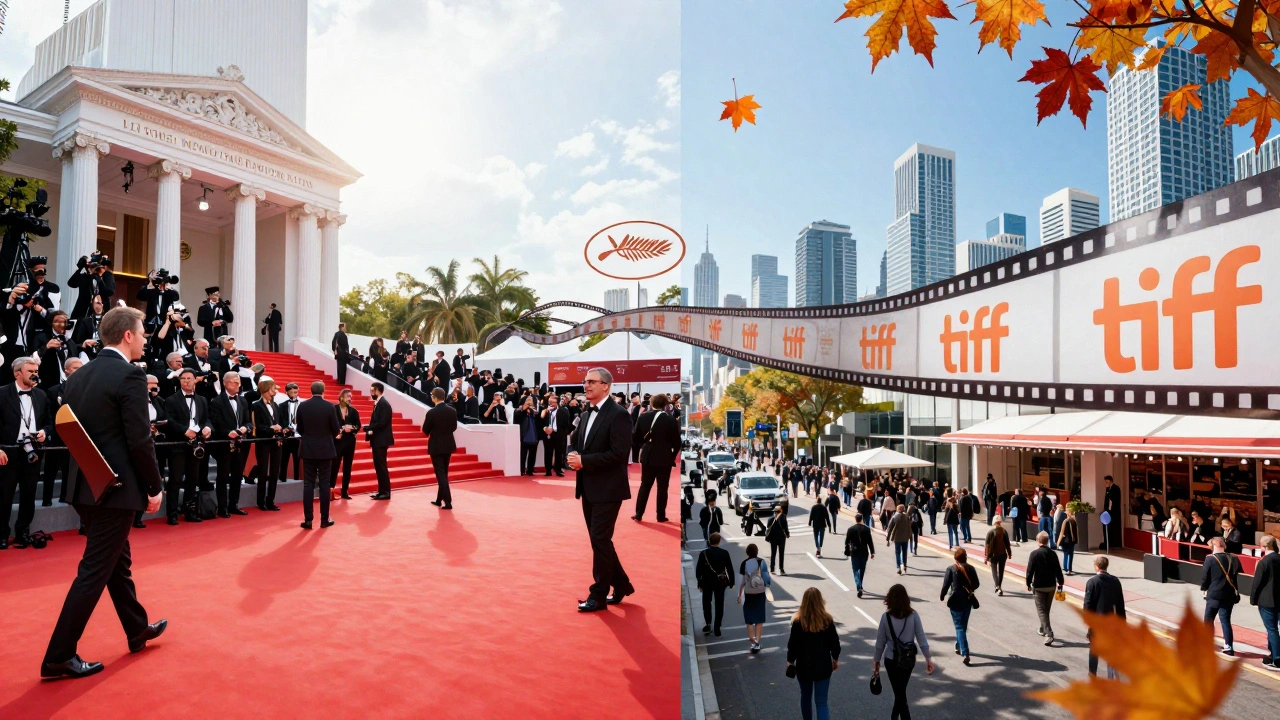
In the world of international awards, where you premiere matters almost as much as what you shoot. The Cannes Film Festival, Venice Film Festival, and Toronto International Film Festival (TIFF) are the three pillars of Oscar strategy for international films.
Cannes is particularly powerful. Winning the Palme d’Or or even receiving a Special Jury Prize there instantly elevates a film’s profile. Recent winners like Anatomy of a Fall (France) and All the Beauty and the Bloodshed (though US-based, it shows the crossover appeal) demonstrate how festival buzz translates to Oscar nominations. Venice is another strong contender, especially for European films aiming for a late-year release window that aligns with Oscar voting.
TIFF serves a different purpose. It’s less about artistic acclaim and more about distribution deals. Many international films use TIFF to secure U.S. distributors, which is crucial because the Academy voters need to see the film. Without a U.S. distributor willing to screen the film for members, your nomination chances drop to near zero. Think of festivals not just as showcases, but as networking events where you sell the dream of your film to the people who control the screens in Los Angeles.
| Festival | Primary Benefit | Best For | Timing |
|---|---|---|---|
| Cannes | Artistic Prestige & Critical Buzz | Auteur-driven dramas, arthouse films | May |
| Venice | Oscar Momentum & Late-Year Release | European productions, serious dramas | August/September |
| Toronto (TIFF) | Distribution Deals & Industry Access | Films needing U.S. partners | September |
| Sundance | Independent Credibility | Non-traditional narratives, debut directors | January |
The Campaign: Lobbying, Screenings, and PR
Once your film is eligible and has premiered, the real work begins: the campaign. Winning Best International Feature is rarely just about the quality of the film; it’s about visibility. The Academy has over 10,000 members, and most of them live in Los Angeles. If they haven’t seen your film, they won’t vote for it.
Your budget for campaigning should be substantial. Top contenders often spend between $500,000 and $2 million on PR alone. This includes:
- Private Screenings: Hosting exclusive viewings for Academy members in LA, New York, and sometimes London. These events allow filmmakers to engage directly with voters.
- For Your Consideration (FYC) Ads: Buying ad space in industry publications like Variety, The Hollywood Reporter, and on social media platforms frequented by voters.
- Press Junkets: Arranging interviews for the director and cast with major outlets to keep the film in the news cycle.
- Lobbying Firms: Hiring specialized agencies that know which voters respond to which types of outreach. These firms track voter engagement and tailor messages accordingly.
Don’t underestimate the power of subtitles. While many voters claim to love subtitled films, data suggests that accessibility matters. Providing high-quality English subtitles, along with promotional materials that highlight the emotional core of the story rather than just its exotic setting, helps bridge the cultural gap. Voters connect with characters, not just locations.
Pitfalls to Avoid in the Awards Race
Even well-funded campaigns can fail if they stumble on common mistakes. Here are the biggest traps that eliminate contenders early:
- Misunderstanding Eligibility: Submitting a film that doesn’t meet the 50% language rule or missing the theatrical release requirement in the home country. Always double-check with Academy legal counsel.
- Poor U.S. Distribution: Relying solely on streaming platforms without a theatrical component. The Academy still favors films that play in cinemas, especially for international entries. A limited theatrical run in key cities like LA and NYC is essential.
- Igoring Early Voting: The Oscar voting process happens in rounds. If you don’t generate buzz by November, you’ll be invisible during the first ballot. Start your campaign months before the nominations are announced.
- Cultural Missteps: Presenting a film as "exotic" rather than human. Voters are increasingly sensitive to orientalism. Frame your film around universal themes-love, loss, justice-rather than relying on stereotypes about the country of origin.

The Changing Landscape of International Films
The definition of an "international" film is evolving. With globalization, co-productions are becoming the norm. A film might be funded by the Netherlands, shot in Morocco, and distributed by a French company. Who submits it? This ambiguity creates opportunities but also confusion. The Academy encourages countries to collaborate, but the final decision rests with the submitting nation.
We’re also seeing a rise in non-Western voices dominating the category. Films from South Korea (Parasite), India (Gangubai Kathiawad), and Brazil (Bacurau) have challenged the traditional dominance of Europe. This shift reflects broader changes in global cinema consumption. Audiences are hungry for diverse stories, and the Academy is finally catching up.
For filmmakers, this means that authenticity is more valuable than ever. Don’t try to make a film that you think Hollywood wants. Make a film that resonates with your local audience first. If it works locally, it will likely resonate globally. The best international features are those that feel deeply personal yet universally understandable.
Next Steps for Aspiring Contenders
If you’re planning your next project with awards in mind, start early. Build relationships with potential U.S. distributors before you finish shooting. Attend festivals not just to show your film, but to network with programmers and journalists. Understand the rules inside and out. And remember, the goal isn’t just to win-it’s to tell a story that transcends borders.
The road to Best International Feature is long and expensive, but for those who navigate it wisely, the reward is immortality in cinematic history. Your film becomes part of a legacy that includes classics like Cinema Paradiso, Amour, and RRR. That’s a prize worth fighting for.
Can an English-language film compete for Best International Feature?
No. To qualify, more than 50% of the spoken dialogue must be in a language other than English. If a film is primarily in English, it competes in the Best Picture category instead.
How many films can a country submit for the Oscars?
Each country can submit only one film as its official representative for Best International Feature. However, multiple films from the same country can be submitted independently if they meet all eligibility criteria.
What is the deadline for Oscar submissions?
The official submission deadline for Best International Feature is typically October 1st each year. Films must also have had a theatrical release in their submitting country between September 1 of the previous year and August 31 of the current year.
Do I need a U.S. distributor to be nominated?
While not strictly required for eligibility, having a U.S. distributor is practically essential for nomination. Distributors handle screenings for Academy members, PR campaigns, and ensure voters can access the film. Without this infrastructure, visibility drops significantly.
How much does it cost to campaign for an Oscar?
Campaign costs vary widely. Smaller campaigns may spend $100,000-$300,000, while top contenders often invest $500,000 to over $2 million. Expenses include PR firms, private screenings, FYC ads, travel for filmmakers, and hosting events for voters.
What is the difference between official and independent submissions?
Official submissions are selected by a country’s national committee and represent that nation. Independent submissions are entered directly by producers who pay a fee and secure support from five Academy members. Independent entries lack the state-backed prestige but offer flexibility for co-productions.