
It’s not uncommon to wake up one morning and find your most anticipated movie has been pushed back-again. A blockbuster scheduled for summer now lands in winter. A sequel you’ve been waiting two years for gets moved to next year. These aren’t random decisions. Behind every delayed release date is a chain of real, often messy, production problems that studios can’t ignore.
What Causes Film Production Delays?
Production delays don’t happen because someone forgot to schedule a meeting. They happen when something breaks. And in filmmaking, things break often.
Cast injuries are one of the most common reasons. Think of Chris Pratt’s back injury during Guardians of the Galaxy Vol. 3-a simple fall on set halted filming for months. No stunt double can replace the lead actor’s performance, especially when the character’s emotional arc is tied to physicality. The studio didn’t rush. They waited.
Weather is another silent killer. Shooting on location means you’re at the mercy of nature. Avatar: The Way of Water filmed in New Zealand for over five years. Rainstorms, high winds, and tidal schedules constantly interrupted shooting. What looked like a 6-month shoot turned into 18 months of delays.
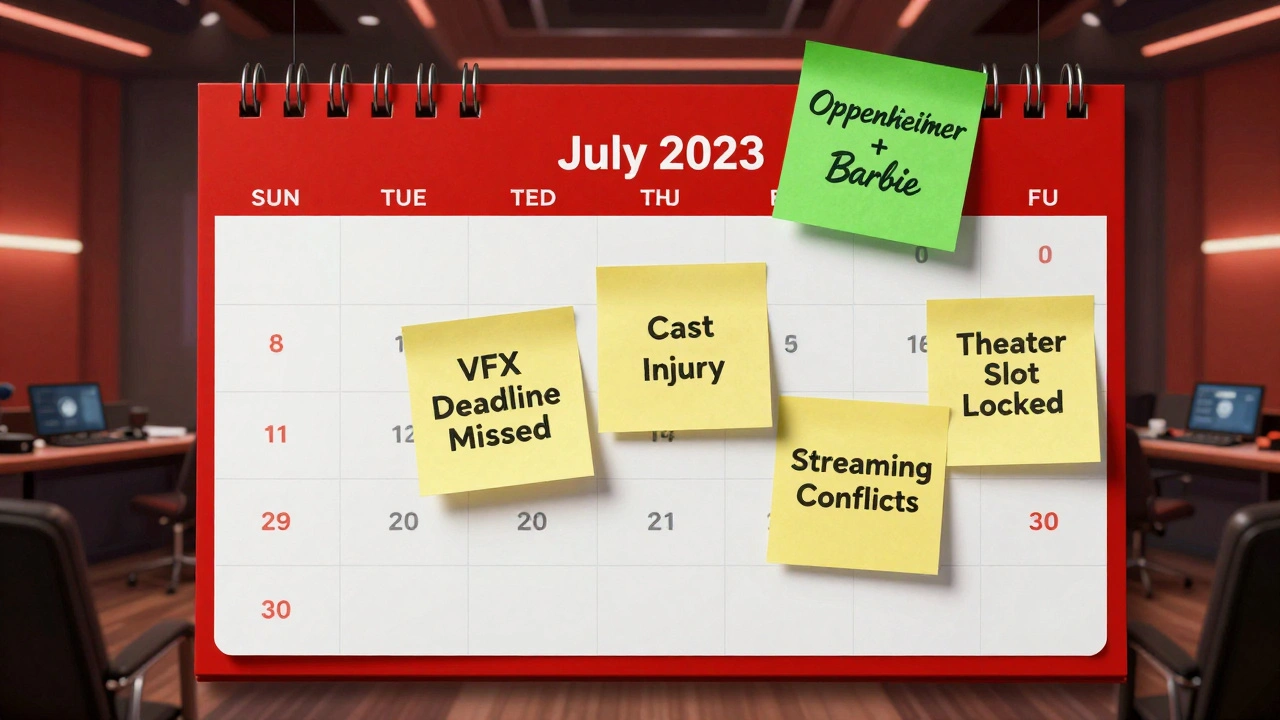
Technical issues also pile up. CGI-heavy films like Avengers: Endgame or The Marvels require months of post-production work. If the VFX vendor misses a deadline, the entire release window collapses. Studios can’t just slap a new date on the calendar-they have to rework marketing campaigns, theater bookings, streaming rollouts, and merchandise timelines.
Why Can’t Studios Just Push the Date Early?
People assume studios delay releases because they’re not ready. But the real reason is often that they’re too ready-or too late to change.
Movie theaters book slots a year in advance. Disney, Warner Bros., and Universal don’t just pick dates-they fight for them. A summer slot might have been reserved for a superhero film since 2023. If your movie gets delayed by six months, you’re not just moving one film-you’re bumping another. That means renegotiating with theaters, rebooking advertising, and losing momentum.
Streaming platforms add another layer. If a film was meant to drop on Disney+ right after its theatrical run, a delay throws off the entire content calendar. Subscribers expect new releases on predictable schedules. Miss one, and engagement drops.
Marketing campaigns are even more fragile. Trailers, TV spots, billboards, social media pushes-they all cost millions. If you delay a film from June to November, you’ve wasted half your campaign budget. You can’t just recycle ads. You need fresh footage, new music, new slogans. And that takes time and money.
How Do Studios Decide When to Reschedule?
It’s not a single person’s call. It’s a spreadsheet with dozens of moving parts.
First, they look at the completion percentage. If the film is 85% done but needs six more weeks of VFX, they’ll delay it. If it’s only 40% done and the director just fired the editor, they’ll delay it longer-or possibly shut it down.
Then they check the competition calendar. If your movie was set to open against Spider-Man, but Spider-Man got pushed to November, you might move up. But if your movie was meant to ride the wave of a holiday season, and now you’re stuck in January, you lose your best chance.
They also track cast availability. If your lead actor is signed for a Broadway show in October, and your film isn’t ready until November, you’re either paying them extra to wait-or recasting. Neither option is cheap.
Finally, they look at external events. A major strike, a global pandemic, a natural disaster-these aren’t just inconveniences. They’re system shocks. The 2020 pandemic didn’t just delay films. It rewrote the entire release model. Studios learned that releasing a $200 million film without theaters isn’t a gamble-it’s a loss.
What Happens When a Film Gets Delayed Too Many Times?
Every delay chips away at public excitement. Fans forget. News cycles move on. Social media trends shift. What was once trending #MovieX2024 becomes a footnote by 2026.
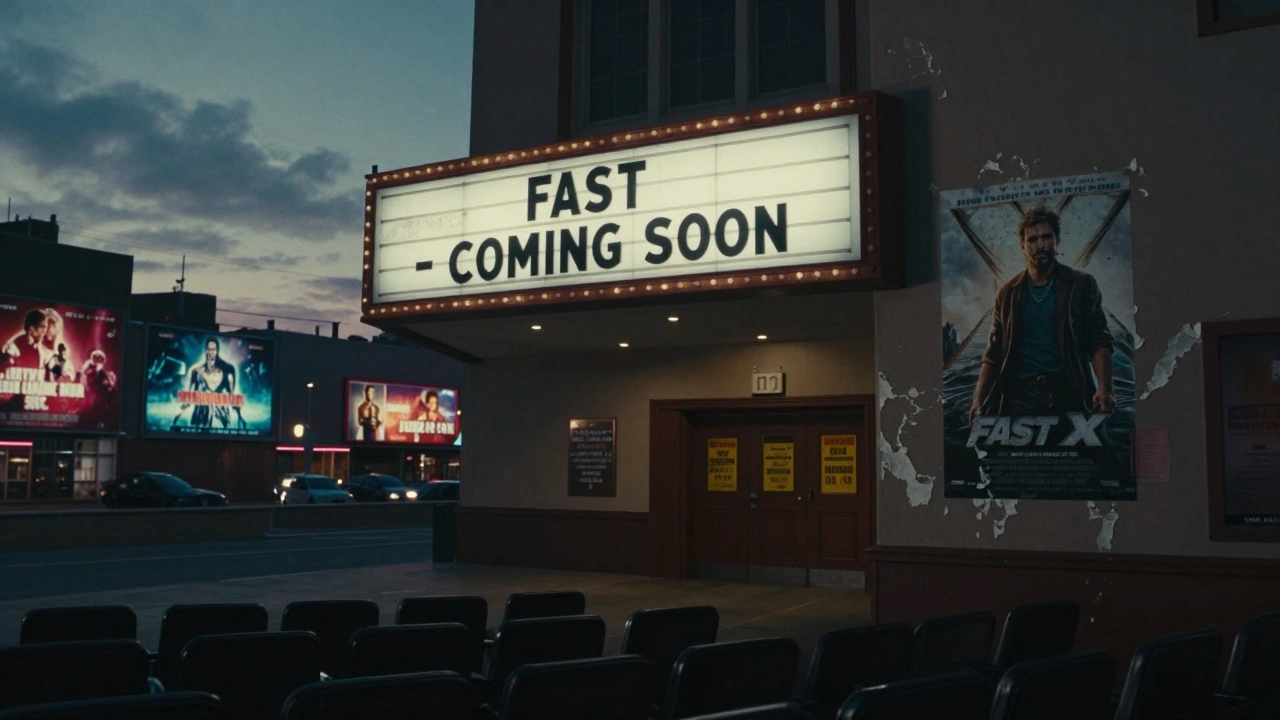
Take Fast X. Originally slated for 2022, it got pushed to 2023. Then it got pushed again. By the time it hit theaters, fans were tired of waiting. The marketing felt stale. The buzz was gone. It still made money-but not nearly as much as earlier installments.
Some films never recover. Superman: Legacy was announced in 2022 with a 2024 release. Now it’s 2025, and the studio hasn’t given a new date. No official reason. No update. Fans assume it’s in trouble. The silence speaks louder than any delay notice.
There’s also a financial toll. Every month a film is delayed, it costs millions. Crew salaries, location rentals, insurance, storage, security-all keep piling up. A film that was budgeted at $150 million can easily balloon to $200 million with delays.
Can Delays Actually Help a Movie?
Yes. Sometimes.
Take Oppenheimer. Originally scheduled for July 2023, it was moved to July 21 to avoid clashing with Barbie. That wasn’t a delay-it was a strategic pivot. The studio knew both films would draw huge crowds. By spacing them out, they turned two blockbusters into a cultural event: “Barbenheimer.” The result? A combined $1.8 billion at the box office.
Another example: John Wick: Chapter 4. It was delayed by six months after the director needed more time to perfect the action sequences. That extra time allowed them to film new stunts in Paris and Berlin, and to polish the editing. The final product earned critical praise and broke box office records for the franchise.
Delays aren’t always bad. Sometimes, they’re the only way to make sure a film isn’t rushed into theaters half-baked. A bad release can kill a franchise. A good one can define a generation.
What Fans Should Know When a Movie Gets Delayed
Don’t panic. Don’t assume the movie is in trouble. Don’t start rumors.
Most delays are logistical, not creative. The script is fine. The cast is fine. The director is fine. It’s just that the VFX team needs three more weeks. Or the studio needs to avoid competing with a Marvel movie. Or the lead actor had to undergo surgery.
Check official sources. Studios rarely lie about delays. If they say the film is being pushed to improve quality, they usually mean it. If they say it’s due to "scheduling conflicts," that usually means another studio’s film got moved up.
And remember: delays don’t mean cancellation. In 2025, over 70% of delayed films eventually released-some even became hits. The ones that vanish? Those are the ones that never announced a new date.
What’s Next for Delayed Films in 2026?
With union agreements now settled and VFX studios back to full capacity, 2026 looks like a reset year for film scheduling. Studios are trying to avoid the chaos of 2023 and 2024. They’re building more buffer time into production calendars. Some are even moving away from rigid summer release windows.
Expect more staggered releases. More films dropping in spring and fall. More direct-to-streaming options for projects that can’t afford the theatrical gamble.
And if your favorite movie gets delayed again? It might not be bad news. It might just mean they’re trying to make it better.
Why do studios delay movies instead of just finishing them faster?
Films aren’t like software updates. You can’t just push a patch. They involve hundreds of people, physical locations, expensive equipment, and complex post-production. Rushing leads to lower quality-bad VFX, poorly edited scenes, mismatched lighting. Studios delay to avoid releasing a product that could damage their brand or franchise.
Are delayed movies more likely to flop?
Not necessarily. Many of the highest-grossing films of the last decade were delayed-Avatar: The Way of Water, Oppenheimer, John Wick: Chapter 4. What matters is how the delay was used. If the extra time improved the film, audiences notice. If it just sat on a shelf, then yes, buzz fades.
Can a movie be delayed because of poor test screenings?
Absolutely. If test audiences hate the ending, or don’t connect with the main character, studios will often reshoot scenes or re-edit the film. This can add months to production. Justice League famously underwent massive reshoots after poor test screenings, which delayed its release by over a year.
Do streaming platforms handle delays differently than theaters?
Yes. Streaming services have more flexibility. A film can be delayed by a few months and still drop without disrupting a global marketing campaign. But they still need to fit into content calendars. If a show is meant to launch alongside a new season of a hit series, delays can mess up audience retention.
How do delays affect actors and crew?
Delays cost them money. Actors are often paid per day or per week. If filming stops unexpectedly, they lose income. Crew members may be laid off temporarily. Some studios offer retention bonuses to keep key staff on standby, but not all do. This is why unions now push for delay clauses in contracts.




Comments(9)