Think about the last time you watched a foreign-language show on Netflix or Disney+. Did you hit 'subtitles' or 'dubbing'? That split-second choice is actually a massive business decision for streaming giants. In 2026, localization isn't just a nice-to-have extra; it's the engine driving global subscriber growth. Without it, a blockbuster film stays local. With it, it becomes a worldwide phenomenon.
Streaming platforms are no longer just distributing content; they are engineering cultural bridges. The shift from passive distribution to active localization has changed how films are made, marketed, and consumed. This article breaks down how dubbing and subtitles expand market reach, the technology powering these changes, and why your next favorite show might sound like it was made in your living room.
The Economics of Going Global
Let's look at the numbers. According to recent industry reports, over 70% of Netflix's revenue comes from outside North America. Disney+ and Amazon Prime Video follow similar patterns. But here's the catch: audiences in many high-growth markets-like Latin America, Germany, and Japan-prefer audio replacement over reading text. If a platform ignores this preference, they lose millions of potential viewers.
Localization costs money. A high-quality dub can cost between $15,000 and $30,000 per episode for a standard TV series. However, the return on investment is staggering. When Squid Game, a South Korean survival drama, was released with professional English dubbing and subtitles, it didn't just attract Korean enthusiasts. It became a global watercooler moment. The localization allowed non-Korean speakers to engage emotionally without the cognitive load of reading while watching complex action scenes.
| Strategy | Avg. Cost Per Hour | Market Preference | Engagement Impact |
|---|---|---|---|
| Subtitles Only | $200 - $500 | UK, Scandinavia, Netherlands | High fidelity, lower mass appeal |
| Professional Dubbing | $2,500 - $4,000 | Germany, Italy, Spain, Latin America | High immersion, broadest reach |
| AI-Assisted Dubbing | $800 - $1,500 | Growing globally (2026 trend) | Fast turnaround, improving quality |
The key takeaway? You cannot sell a global product with a local-only strategy. Localization unlocks the "long tail" of content that might not have traveled otherwise.
Dubbing vs. Subtitles: It's Not Just Language
People often debate which is better: dubbing or subtitles. The truth is, neither is inherently superior. They serve different psychological needs. Subtitles preserve the original actor's performance-their tone, their breath, their exact timing. This is crucial for nuanced performances where silence speaks louder than words.
Dubbing, on the other hand, removes the barrier to entry. For younger audiences, casual viewers, or those multitasking (yes, we all watch TV while scrolling), dubbing allows full emotional engagement. In markets like Germany and Italy, dubbing has been the norm since the mid-20th century. Audiences there don't see dubbing as "cheating"; they see it as accessibility. If you force subtitles on a German audience used to dubs, you're actively alienating them.
Cultural adaptation is where the real art lies. A joke about American football won't land in Brazil. A reference to a specific UK tax law means nothing in India. Localizers aren't just translating words; they are transcreating culture. They rewrite scripts to match lip movements (a technique called "lip-sync matching") and adjust humor to fit local sensibilities. This is why some dubbed versions feel awkward-they failed at the cultural layer, not the linguistic one.
The Rise of AI Voice Synthesis
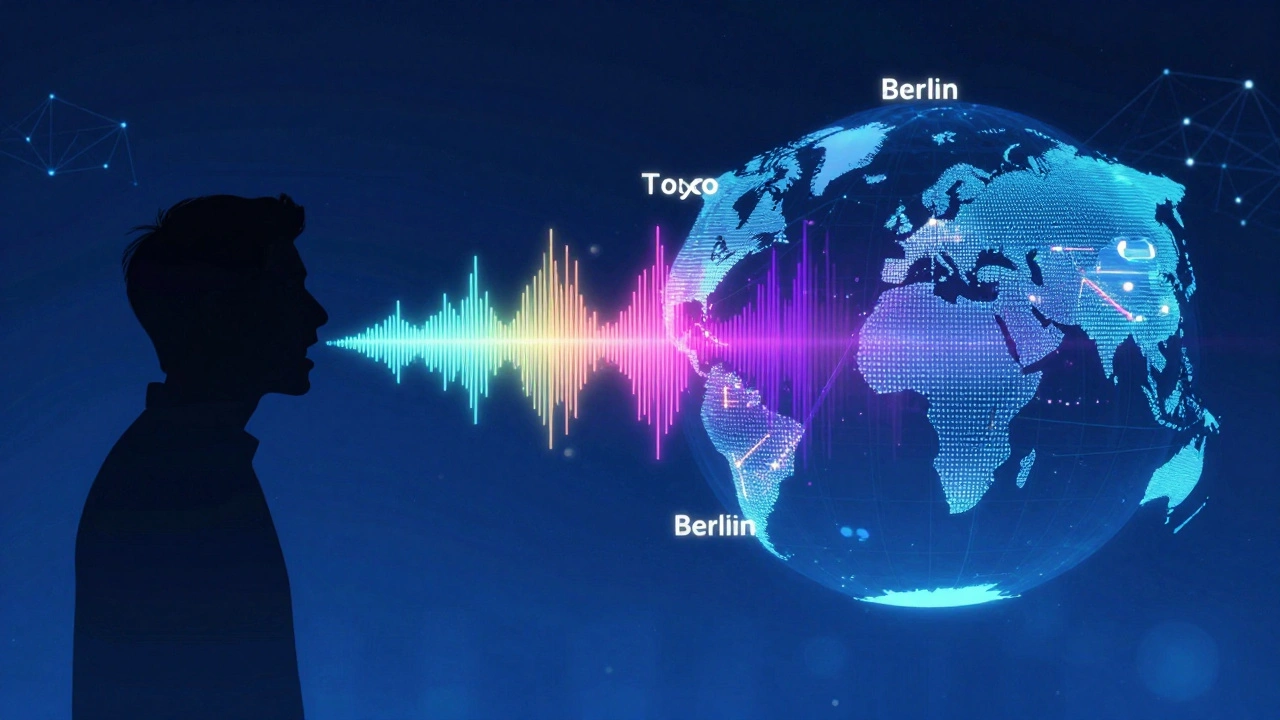
In 2026, the biggest disruption in localization is artificial intelligence. Traditional dubbing requires hiring voice actors, booking studio time, and managing complex scheduling. AI voice synthesis changes the game entirely. Platforms like Netflix and Amazon are investing heavily in deep learning models that can clone an actor's voice and translate speech in near-real-time.
This technology works by analyzing the speaker's facial movements and vocal patterns. It then generates a translated audio track that matches the original speaker's tone, pitch, and even emotional inflection. The result? A version of the film that sounds like the original actor is speaking French, Spanish, or Mandarin.
Is it perfect yet? No. Early iterations sounded robotic. But by 2026, the difference is subtle enough for most viewers. AI dubbing reduces costs by up to 60% and speeds up release times from weeks to days. This allows smaller productions to go global, democratizing access to international audiences. However, there's a backlash. Some unions argue that AI devalues human voice actors. The industry is currently finding a balance, using AI for background characters and reserving humans for lead roles.
How Localization Drives Subscriber Retention
Acquisition is expensive. Retention is cheaper. One of the main reasons subscribers cancel streaming services is a lack of relevant content. If a user in Mexico only sees US-centric shows, they feel disconnected. But if they see telenovelas, local comedies, and dubbed international hits, they stay.
Localization also helps with "binge-watching." When viewers don't have to stop to read subtitles or struggle with understanding accents, they consume more content per session. Data shows that users who engage with localized content have a 20-30% higher retention rate than those who stick to native-language titles. This is because localization signals respect for the viewer's culture. It says, "We made this for you," not "We exported this to you."
Consider the success of Lupin, a French series based on a classic novel. Its global success wasn't just due to the story; it was due to high-quality dubbing that captured the charm of Omar Sy's performance across multiple languages. The localization team worked closely with the directors to ensure the humor and tension translated seamlessly.

Pitfalls in Poor Localization
Not all localization efforts succeed. Bad dubbing can ruin a film. Think back to the infamous "Star Wars" dubs in certain European markets, where the accent choices clashed with the characters' personalities. Or consider when a serious dramatic scene is accidentally paired with a comedic voice actor due to poor casting.
Common pitfalls include:
- Lip-sync mismatch: When the mouth doesn't move with the word, it creates a subconscious distraction.
- Tone deafness: Missing sarcasm, irony, or emotional weight in the translation.
- Cultural insensitivity: Using slang that is outdated or offensive in the target market.
- Rushing the process: Releasing content before the localization is polished, leading to negative reviews.
To avoid these, top studios now involve localization teams early in the production process. They provide scripts and context notes before filming begins. This proactive approach ensures that the final product feels natural, not forced.
The Future: Real-Time Localization
Where do we go from here? The next frontier is real-time localization. Imagine watching a live sports event or a news broadcast and having it dubbed into your preferred language instantly. While still experimental, advancements in edge computing and AI latency reduction are making this possible.
We are also seeing the rise of "hybrid" experiences. Some platforms offer interactive subtitles that explain cultural references on demand. Others allow users to toggle between "faithful" translation (keeping original idioms) and "adapted" translation (localizing idioms). This gives viewers control over their experience, catering to both purists and casual watchers.
As streaming wars intensify, localization will become a key differentiator. It's no longer just about having the biggest library; it's about making that library accessible, relatable, and engaging for every corner of the globe. The future of film is borderless, but only if we speak each other's languages.
Why do some countries prefer dubbing over subtitles?
Preferences vary by culture and history. Countries like Germany, Italy, and Spain have long traditions of dubbing, dating back to radio and cinema eras. These audiences often find subtitles distracting, especially for children or casual viewing. In contrast, countries like the Netherlands, Sweden, and the UK have smaller populations or strong educational systems that encourage foreign language learning, making subtitles more acceptable.
How much does professional dubbing cost?
Professional dubbing typically costs between $15,000 and $30,000 per hour of content, depending on the number of languages, the complexity of the script, and the fame of the voice actors. AI-assisted dubbing is significantly cheaper, ranging from $800 to $1,500 per hour, but may lack the emotional depth of human performers.
Can AI dubbing replace human voice actors?
Not entirely. While AI can replicate voices and handle basic dialogue efficiently, it struggles with nuanced emotions, complex accents, and creative improvisation. Human voice actors bring unique interpretations and emotional authenticity that AI currently cannot match. Most studios use a hybrid approach, employing AI for background characters and humans for leads.
What is lip-sync matching in dubbing?
Lip-sync matching is the process of adapting translated dialogue so that the phonetic structure matches the original actor's mouth movements. This ensures that when a character speaks, their lips appear to be forming the words in the new language, creating a more immersive and believable viewing experience.
How does localization impact subscriber retention?
Localization increases retention by making content more accessible and culturally relevant. Viewers are more likely to binge-watch shows they can easily understand and relate to. Studies show that users engaging with localized content have a 20-30% higher retention rate, as it fosters a sense of inclusion and respect for their cultural identity.