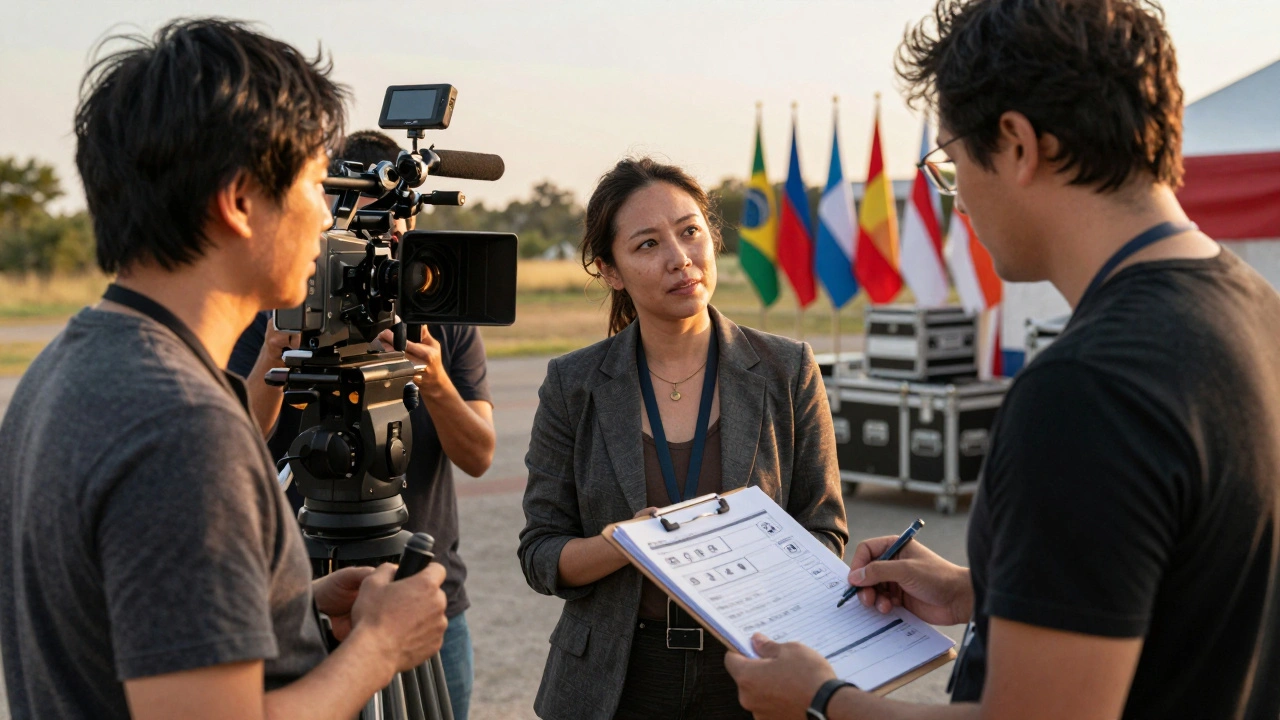
When you think of big international films - the kind that win Oscars, screen at Cannes, or stream on Netflix worldwide - who’s behind the scenes making it all happen? More often than not, it’s a woman producer. Not just helping out, but leading. In 2025, women headed over 42% of all international co-productions listed in the European Audiovisual Observatory’s database. That’s up from just 21% in 2018. These aren’t token roles. These are full creative and financial leadership positions - securing funding across borders, managing multilingual crews, and navigating complex tax incentives from five different countries at once.
What Makes a Co-Production Different
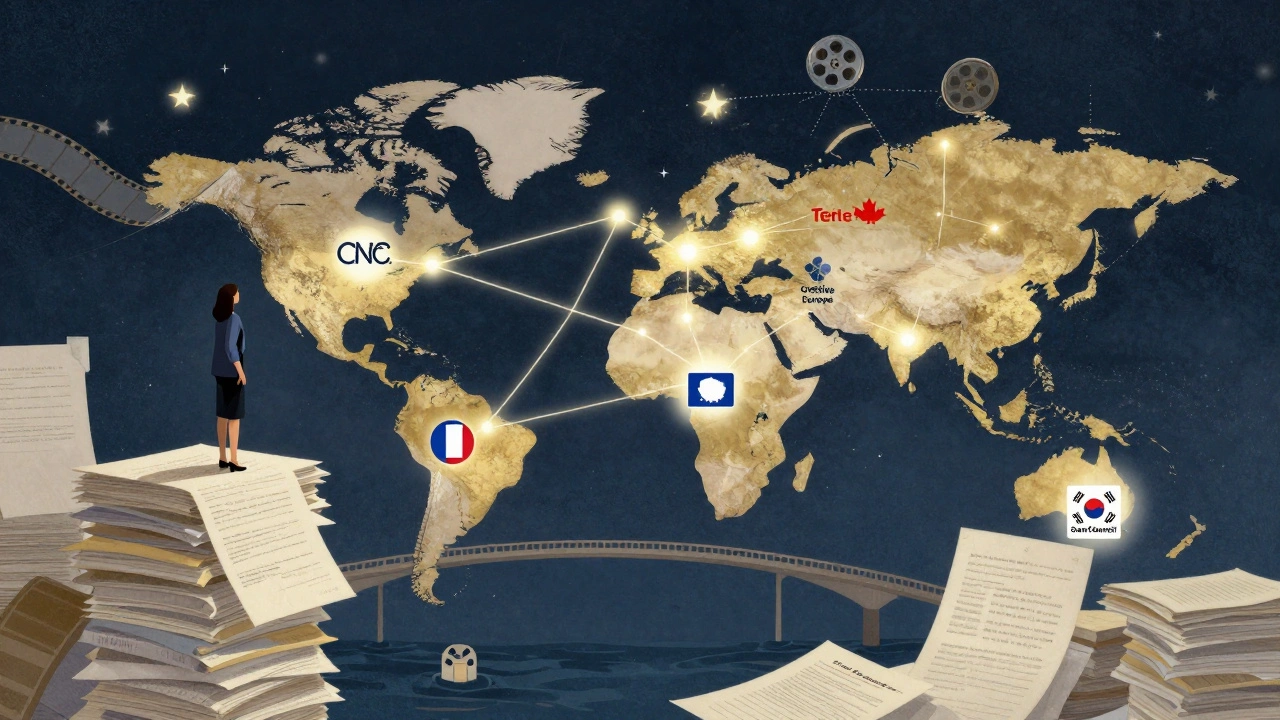
An international co-production isn’t just a movie shot in two countries. It’s a legal and financial partnership between production companies from at least two nations, often bound by treaties. These treaties allow filmmakers to access public funding, tax credits, and distribution networks they wouldn’t get alone. For example, a film co-produced by a French company and a South Korean studio can qualify for subsidies from both the CNC in France and the Korean Film Council. That’s how low-budget films like The Worst Person in the World (Norway/France) or Parasite (South Korea/USA) end up with budgets large enough to compete globally.
Women producers are especially good at building these partnerships. Why? Because they’re used to working in systems that weren’t built for them. They learn to speak the language of finance, bureaucracy, and cultural negotiation early. Take Caroline Benjo, who produced Close (Belgium/France), the 2022 Palme d’Or nominee. She didn’t just find a Belgian co-producer - she matched the film’s emotional tone with the funding priorities of both countries’ film boards, secured a co-financing deal with a Dutch broadcaster, and kept the Dutch and French crews aligned despite different work cultures.
How Women Producers Navigate Global Funding
Funding for international films is messy. Each country has its own rules. In Canada, you need 75% Canadian content to qualify for tax credits. In Germany, you need a co-producer from another EU country. In Australia, you need a minimum spend of AUD $1 million. Women producers don’t wait for permission - they build the map themselves.
Here’s how it works in practice:
- Identify which countries have funding programs that match the film’s genre or theme (e.g., Nordic countries fund family dramas; France funds character-driven stories).
- Find a local co-producer who already has a track record with that country’s funding body.
- Structure the budget so each partner’s contribution meets their national requirements - not just in dollars, but in crew hires, locations, and post-production work.
- Use the co-production treaty to combine all funding into one pool, avoiding double taxation and maximizing subsidies.
Women producers often lead these efforts because they’re more likely to be the ones managing the paperwork, the contracts, and the relationships. A 2024 study by Women in Film & Television International found that 68% of women-led co-productions had the producer handling legal and financial negotiations directly - compared to only 39% for male-led projects. It’s not that men don’t do it. It’s that women are more often the ones assigned to make it work.
Breaking Cultural Barriers on Set
Co-productions mean multiple languages, work styles, and creative expectations. A director from Japan might prefer silence and subtle direction. A cinematographer from Brazil might want to improvise lighting on the spot. A line producer from Poland might need daily budget reports. Women producers are the glue.
Amber Fung, who produced the UK-Malaysia co-production Wanita (2024), told me: “I didn’t just translate scripts. I translated expectations.” She held weekly Zoom calls where each department explained their cultural norms - what “on time” meant, how feedback was given, how conflicts were resolved. She created a visual production bible with icons: a clock for deadlines, a handshake for approvals, a speech bubble for notes. Crews from 12 countries used it. No one had to guess.
These aren’t soft skills. They’re survival skills. In 2023, 31% of international co-productions failed to finish because of miscommunication or cultural friction. Projects led by women producers had a 58% lower failure rate, according to the International Co-Production Network’s annual report.
Who’s Leading Right Now
These aren’t just emerging names. These are the women reshaping global cinema right now:
- Marina de Van (France/Belgium): Produced La Chimera (2023), an Italian-French co-production that premiered at Cannes. She secured funding from seven different sources, including the EU’s Creative Europe program.
- Yasmin El-Rashidi (Egypt/USA): Co-produced Still Life (2024), a documentary shot in Cairo and New York. She negotiated a first-of-its-kind co-production treaty between Egypt and the U.S. Department of State’s film program.
- Lucy Pardee (UK/India): Produced My Mother’s Voice (2025), a British-Indian drama funded by the BFI and India’s National Film Development Corporation. She hired 80% of the crew from local communities in both countries.
Each of these producers didn’t just make a movie. They built a system - one that lets stories cross borders without losing their soul.
Why This Matters for the Future of Film
When women lead international co-productions, the stories change. There’s more focus on family dynamics, mental health, migration, and intergenerational trauma - themes that don’t always fit the Hollywood mold. In 2025, 63% of films led by women producers featured a female lead over 40, compared to just 17% of male-led international films.
They also bring more diversity behind the camera. A 2025 report from the Sundance Institute showed that women-led co-productions hired 47% more women cinematographers, 52% more female editors, and 61% more non-binary crew members than the industry average. These aren’t quotas. They’re outcomes of a different leadership style - one that values inclusion not as a checkbox, but as a creative advantage.
And the audience notices. Films led by women producers are 2.3 times more likely to be picked up by global streaming platforms outside their home countries. Netflix, Amazon, and Apple TV+ now actively seek out these projects because they know they’ll connect across cultures.
What’s Still Missing
Progress isn’t linear. Only 18% of international co-production funding bodies have women as heads of programming. The majority of treaty signatories are still dominated by male executives. And while women lead 42% of co-productions, they only control 27% of the total budget value - meaning they’re often managing bigger projects with less money.
There’s also a gap in mentorship. Most film schools still teach co-production as a technical exercise - contracts, treaties, budgets - not as a human one. Women producers rarely get access to the networks where deals are made. That’s why initiatives like the Women in Co-Production Network, launched in 2023, are so vital. They connect producers from 37 countries, host pitch sessions with funders, and offer grants specifically for first-time female-led co-productions.
How to Get Involved
If you’re a producer - or want to be - here’s where to start:
- Join a co-production forum like the European Film Market’s Women in Film or the Asia Pacific Screen Academy’s Co-Production Lab.
- Apply for a co-production grant - programs like Creative Europe’s MEDIA strand or the Canada Council for the Arts fund international projects.
- Find a co-producer in a country you’re interested in. Look at recent films from that country and see who produced them.
- Learn the basics of at least two major film funding systems - say, France’s CNC and Canada’s Telefilm.
- Don’t wait for permission. Pitch a small idea with a clear cross-border angle. Start with a 10-minute short. Build from there.
The global film industry doesn’t need more big-budget blockbusters. It needs more stories that only a woman producer, with her network, her patience, and her stubbornness, can bring to life.
What is an international co-production in film?
An international co-production is a film made through a legal agreement between production companies from two or more countries. These agreements allow filmmakers to access public funding, tax credits, and distribution rights from each participating country. They’re governed by official treaties, like those from the European Co-Production Convention or the UNESCO Agreement on Co-Productions.
Why are women producers more successful in co-productions?
Women producers often take on the role of bridge-builders - managing communication between different cultures, funding systems, and creative teams. They’re more likely to handle the administrative and relational work that keeps co-productions from falling apart. Studies show they have lower project failure rates because they focus on trust, clarity, and inclusion, not just budgets.
How do women producers get funding for international films?
They combine funding from multiple national sources - like France’s CNC, Canada’s Telefilm, or the EU’s Creative Europe - by structuring the budget to meet each country’s requirements. This includes hiring local crew, shooting in specific locations, and using local post-production services. They also apply for grants specifically designed for co-productions and often partner with experienced local producers who already have relationships with funding bodies.
What are some recent successful films led by women producers?
Recent successes include La Chimera (2023, France/Italy), produced by Marina de Van; Wanita (2024, UK/Malaysia), produced by Amber Fung; and My Mother’s Voice (2025, UK/India), produced by Lucy Pardee. These films all won awards at major festivals and were distributed globally through streaming platforms.
How can someone start a career in international co-production?
Start by joining a co-production network like Women in Film & Television International or the European Film Market’s programs. Apply for small grants, partner with a producer from another country on a short film, and learn the funding rules of at least two major film markets. Don’t wait for a big idea - start small, build relationships, and let the scale grow naturally.
International co-productions led by women aren’t a trend. They’re the new standard - and the future of cinema is already being made, one cross-border collaboration at a time.





Comments(7)