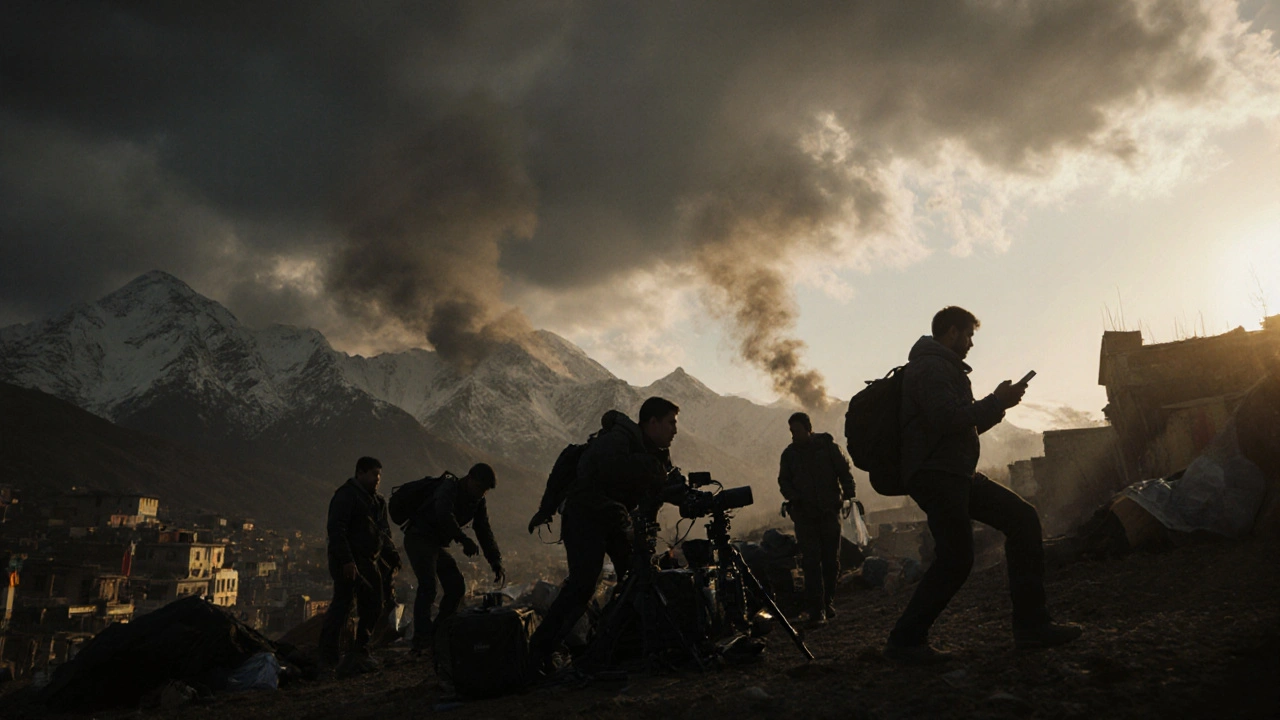
Shooting a movie overseas isn’t just about packing cameras and costumes. It’s about betting on stability you can’t control. One day you’re filming a mountain scene in Nepal under clear skies. The next, a coup shuts down the capital. Or a typhoon cancels your shoot in the Philippines. Or a new tax law freezes your budget. These aren’t plot twists-they’re real risks that can sink a production before it even starts. That’s why insurance for international shoots isn’t optional. It’s the safety net that keeps your project alive when the world outside your set goes sideways.
What Exactly Does International Film Insurance Cover?
Standard film insurance covers equipment damage, cast injuries, or delays from local strikes. But international shoots need more. They need protection against things you can’t predict-and can’t prevent. The big three are political risk, weather disruption, and force majeure. These aren’t just buzzwords. They’re specific policy clauses that determine whether you get paid when things fall apart.
Political risk insurance kicks in when government actions disrupt production. That includes civil unrest, terrorism, expropriation of assets, or sudden visa bans. In 2023, a U.S.-Mexico co-production lost $1.2 million when Mexico suddenly revoked filming permits for foreign crews after a border security crackdown. Their policy paid out because they had political risk coverage. Without it, they had to scrap the entire shoot.
Weather coverage isn’t just about rain ruining a day of shooting. It’s about catastrophic events: hurricanes in the Caribbean, monsoons in India, volcanic ash over Europe. A 2024 shoot in the Canary Islands was halted for 17 days after a lava flow closed access roads. Insurance covered the cost of re-booking locations, crew accommodations, and lost equipment rental days. Without weather-specific coverage, those costs come out of your pocket.
Force majeure is the catch-all clause for acts of God or uncontrollable events. It includes pandemics, war, nuclear incidents, and even diplomatic expulsions. During the 2022 Ukraine invasion, several European co-productions filming in Eastern Europe had to evacuate. Their force majeure policies covered evacuation costs, equipment storage, and script rewrites needed after location changes. This clause is often misunderstood-it doesn’t cover every delay, only those truly beyond your control.
Why Standard Policies Fail on International Shoots
Many producers think their domestic film insurance will cover them abroad. It won’t. Most policies have geographic limits. A policy written for California shoots might only cover production within the U.S. and Canada. Go to Brazil, Nigeria, or Indonesia, and you’re uninsured.
Even if your policy says “worldwide,” it often excludes high-risk zones. Countries like Sudan, Venezuela, or Myanmar are automatically blacklisted. You need a special rider to shoot there-and even then, coverage is limited. A 2024 survey of 87 international productions found that 62% had no idea their insurance didn’t cover their destination until something broke.
Another trap: language barriers. Insurance documents are often written in English. But if a local government issues a shutdown order in Arabic, Russian, or Thai, and your policy requires proof in English, you might be denied. Always get policies reviewed by someone who understands both the legal system of your shoot location and the nuances of your insurer’s fine print.
How Political Risk Insurance Actually Works
Political risk insurance doesn’t cover protests or minor delays. It covers events that make your production impossible-not inconvenient. That means:
- Government bans on foreign crew entry
- Seizure of equipment by customs or military
- War or armed conflict within 50 miles of your location
- Revocation of filming permits without notice
- Embargoes or sanctions affecting payments
Most policies require you to file a notice within 72 hours of the event. Delays can void your claim. Keep local contacts-fixers, legal advisors, embassy staff-who can help you document what happened. A screenshot of a government decree, a signed letter from a local official, or even a video of soldiers blocking your set can make the difference between a payout and a loss.
Some insurers now offer real-time risk alerts. If you’re shooting in Tunisia and a protest erupts near your location, you get a push notification. That gives you time to evacuate, not just file paperwork after the fact.
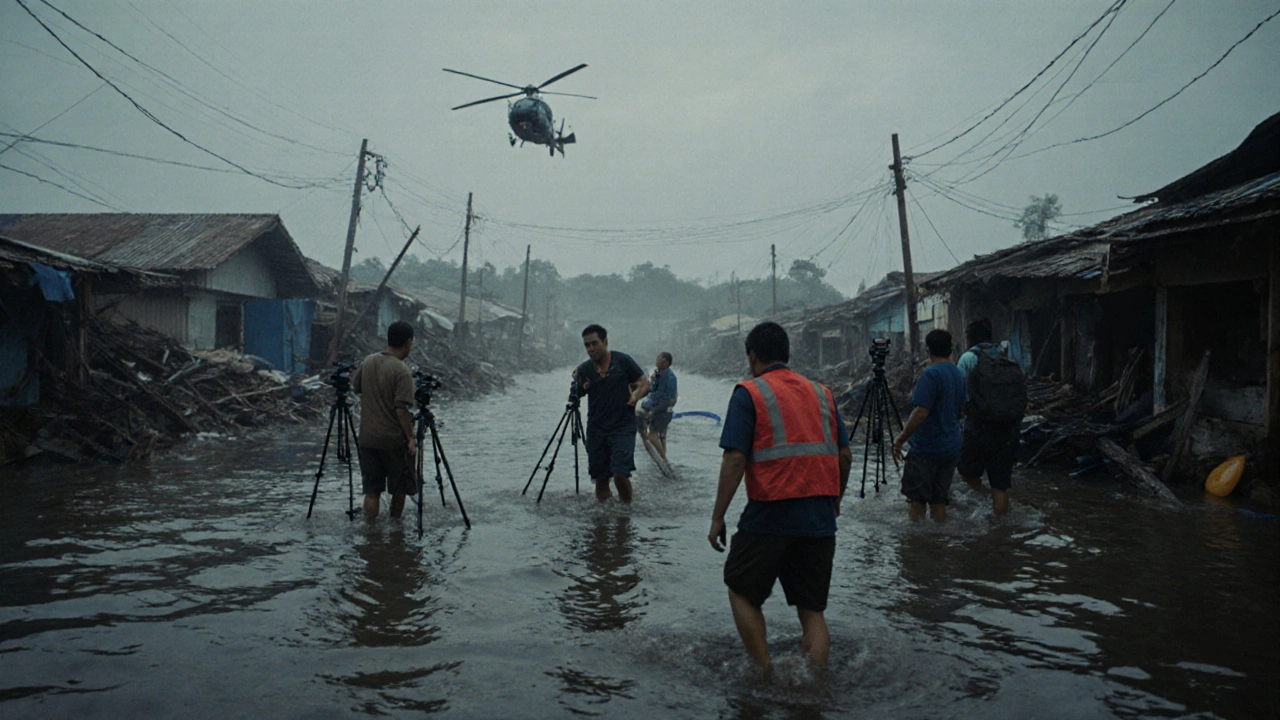
Weather Coverage: Beyond Rain Delay
Weather coverage isn’t one-size-fits-all. You need to specify what you’re protecting:
- Location access (roads blocked by floods)
- Equipment damage (humidity ruining electronics)
- Cast/crew safety (hurricane evacuation costs)
- Permit extensions (lost days due to storms)
A common mistake: assuming “weather delay” means any bad day. Insurers define it as a weather event that makes filming physically impossible-not just uncomfortable. A light drizzle? Not covered. A flood that submerges your set? Covered. You need to prove the conditions were outside normal seasonal expectations. That’s why you need historical weather data for your location. If your shoot is in the Amazon in January, and it rains every January, your claim might be denied.
Some policies now include “weather forecasting” as part of coverage. If a meteorological agency issues a Level 3 hurricane warning 72 hours before your shoot, and you cancel, the policy can reimburse you for non-refundable deposits-even if the storm doesn’t hit. That’s proactive protection, not just reactive.
Force Majeure: The Last Line of Defense
Force majeure is the broadest, and most confusing, part of international insurance. It covers events like:
- Global pandemics
- International sanctions
- Natural disasters beyond local control
- War or military action
- Loss of critical infrastructure (power grids, airports)
But here’s the catch: it only applies if the event is truly unforeseeable. If you’re shooting in a region known for earthquakes, and you ignore warnings, your claim gets denied. Insurers check your due diligence. Did you check travel advisories? Did you monitor local news? Did you have a contingency plan?
After the 2023 Turkey-Syria earthquake, a German-Turkish co-production lost 11 days of shooting. They had force majeure coverage-but only because they’d documented their evacuation plan, filed daily safety reports, and showed they’d moved equipment to a safer location before the quake hit. Without that paper trail, they got nothing.
What to Look for in a Policy: 5 Must-Have Clauses
Not all international film insurance is equal. Here’s what you need to ask for:
- Geographic coverage-Confirm every country on your shoot list is explicitly named.
- Duration of coverage-Does it cover pre-production setup? Post-production delays? Many policies stop when the camera stops rolling.
- Claims process-Is there a 24/7 international claims hotline? Can you file digitally?
- Exclusions-What’s NOT covered? Political unrest in specific cities? Epidemics? Currency collapse?
- Reimbursement limits-Is it capped at 50% of your budget? 100%? Are overhead costs like crew salaries included?
One producer in Georgia told me they saved $300,000 by insisting on “all-risk” coverage for their shoot in Armenia. The insurer initially refused, saying it was too risky. But they brought in a third-party risk analyst who showed the area’s low political volatility. The policy was approved-with full reimbursement for lost days.
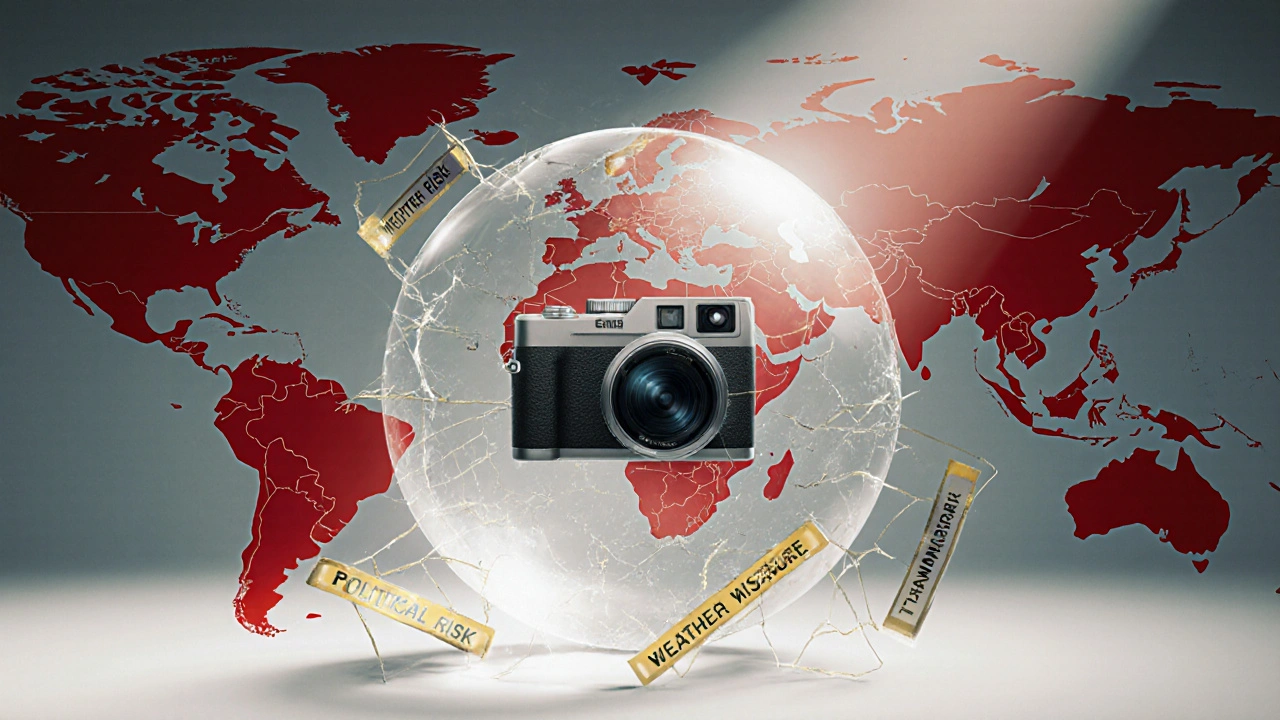
Real Cost of Skipping Insurance
Insurance feels expensive. A full international policy can cost 3-7% of your total budget. But what’s the cost of not having it?
In 2024, a British-Canadian indie film shot in Lebanon. They skipped political risk coverage. Two weeks in, a protest turned violent. The crew had to flee. Equipment was seized. The film was never completed. They lost $1.8 million. No payout. No recourse.
Compare that to a 2023 documentary in Mali. They had full coverage. When a military takeover happened, they evacuated safely, stored equipment, and resumed shooting six weeks later in Senegal. The insurance covered the relocation, rehiring crew, and reshoots. The film won an award at Sundance.
Insurance isn’t just protection. It’s flexibility. It’s the freedom to adapt when the world changes.
Where to Get Reliable Coverage
Not all insurers understand film. Look for companies that specialize in entertainment and have experience with international co-productions. Companies like Chubb, AIG, and Lockton Entertainment have dedicated film divisions with global networks. Some European insurers, like Allianz and AXA XL, are strong in Africa and Asia.
Ask for references. Talk to other producers who’ve shot in your target countries. Don’t rely on a broker’s pitch. Ask: “What’s the worst claim you’ve handled in the last year?” Their answer will tell you more than any brochure.
Also, consider using a local production service company. Many offer insurance packages bundled with fixers, permits, and logistics. It’s not cheaper, but it’s simpler. You’re not juggling five different vendors-you’re working with one.
Final Checklist Before You Ship Your Gear
Before you leave for your international shoot, run through this:
- Is every country on your itinerary listed in the policy?
- Do you have proof of political risk, weather, and force majeure coverage?
- Is your claims contact available 24/7 in your time zone?
- Have you documented your safety plan and evacuation routes?
- Do you have local contacts who can help you gather evidence if something goes wrong?
- Have you confirmed that your bank can receive international insurance payouts?
If you can answer yes to all of these, you’re not just insured. You’re prepared.
Does standard film insurance cover international shoots?
No. Most standard film insurance policies only cover production within the country where they’re issued. International shoots require separate coverage that includes political risk, weather disruption, and force majeure clauses. Always check geographic limits and exclusions before leaving your home country.
How much does international film insurance cost?
Typically, it costs between 3% and 7% of your total production budget. The price depends on the countries you’re shooting in, the length of the shoot, and the level of risk. High-risk regions like conflict zones or areas prone to natural disasters will cost more. Some insurers offer tiered packages based on your specific needs.
Can I get insurance for a shoot in a country with travel warnings?
Yes, but it’s harder. Most insurers automatically exclude countries with U.S. State Department Level 4 warnings or similar advisories. You may need a special rider, higher premiums, or a broker who specializes in high-risk regions. Some insurers will cover you if you have a detailed safety plan and local security support.
What happens if my cast or crew can’t get visas?
If visa denials are due to political actions-like sudden changes in immigration policy or targeted bans on foreign workers-this is covered under political risk insurance. You’ll need documentation from the embassy or government agency. If it’s due to personal issues (like a past criminal record), it’s not covered. Always confirm visa requirements early and build buffer time into your schedule.
Do I need insurance if I’m only shooting for a few days?
Yes. Even a one-day shoot can be derailed by a sudden protest, a storm, or a customs seizure. Short shoots often have tighter budgets, so one unexpected event can wipe you out. Many insurers offer short-term policies for shoots under a week at a lower rate. Don’t assume size matters-risk doesn’t care how long you’re there.






Comments(6)