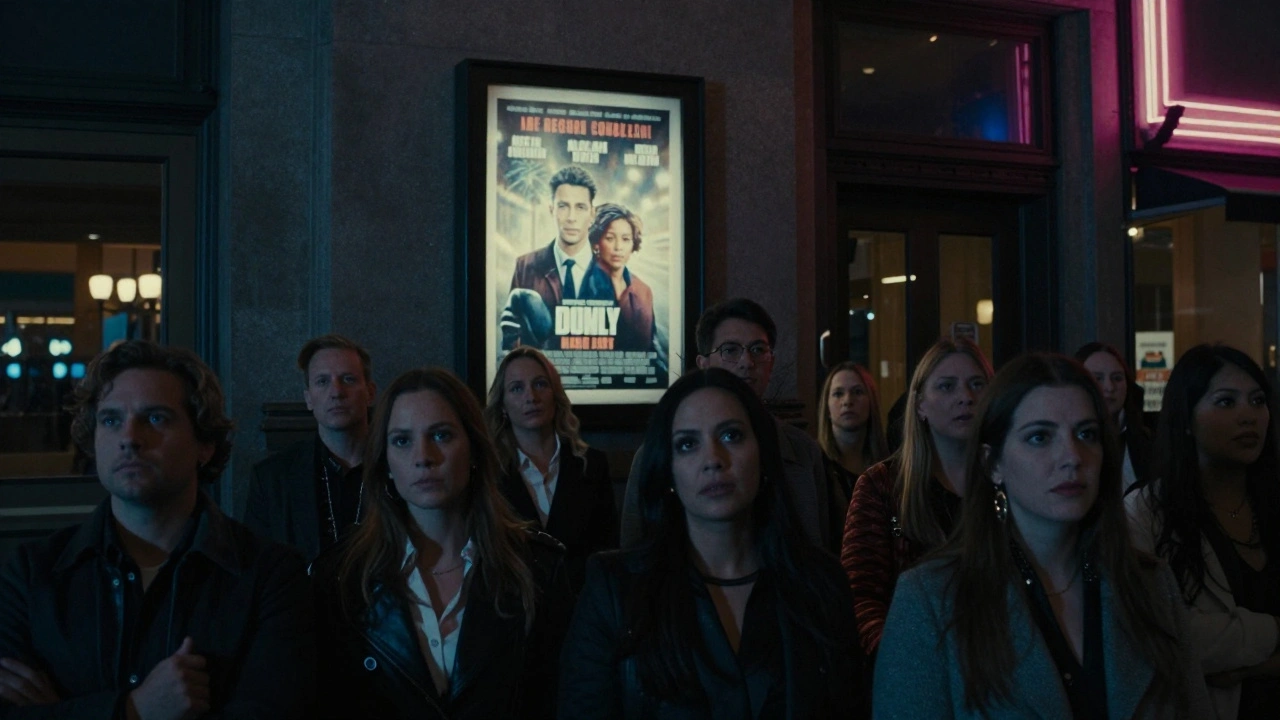
Most people think big movie openings mean big money. But some of the most successful films of the last decade didn’t open in 4,000 theaters. They opened in five. Or ten. Or even just one. Limited release strategy for films isn’t a fallback-it’s a calculated move that can turn a quiet premiere into a cultural moment.
Why Start Small?
Opening a film in just a handful of cities isn’t about saving money. It’s about control. When you release a movie in New York, Los Angeles, and maybe Chicago, you’re not trying to reach everyone. You’re trying to reach the right people.
These are the critics who write for The New York Times and Variety. The film bloggers with 50,000 loyal followers. The cinephiles who tweet about hidden gems and start word-of-mouth chains that ripple across the country. A limited release lets you build credibility before the masses show up.
Look at Parasite. It opened in four theaters in October 2019. It made $125,000 that weekend-$31,000 per screen. That’s more than most blockbusters. The buzz didn’t come from ads. It came from reviews, festival buzz, and audiences telling their friends: ‘You have to see this.’
How a Targeted Release Works
A targeted theatrical release follows a clear pattern:
- Choose 3-5 key markets with strong indie film audiences: NYC, LA, Chicago, Austin, Seattle.
- Open in 5-20 screens total, often in arthouse theaters or premium locations like AMC Lincoln Square or Laemmle Theatres.
- Run for 2-4 weeks, letting reviews and audience scores build.
- Use Rotten Tomatoes and Metacritic scores as leverage when negotiating wider releases.
- Expand gradually-adding 10-50 screens per week based on per-screen performance.
This isn’t random. It’s data-driven. Distributors track per-screen averages religiously. If a film makes $15,000 per screen in its first week in LA, that’s a green light to expand. If it’s $3,000? They might pause and re-evaluate marketing.
For indie films, this is survival. Studios won’t give you a nationwide release unless you prove you can draw a crowd. A strong limited release is your audition.
Who Benefits Most?
Not every film needs a limited release. But these types do:
- Foreign-language films like Drive My Car or The Worst Person in the World-they rely on niche audiences and critical acclaim.
- Documentaries like My Octopus Teacher-they need to build emotional momentum before going wide.
- Mid-budget dramas with awards potential-think Manchester by the Sea or Little Miss Sunshine.
- Debut features from unknown directors-proving you can sell tickets is the only way studios will take you seriously.
Big franchises? No. Blockbusters? Not usually. But for films that live or die by word-of-mouth, this is the playbook.

The Role of Critics and Festivals
Before a limited release even starts, the film usually plays at Sundance, TIFF, or Cannes. These aren’t just prestige events-they’re launchpads.
A standing ovation at Sundance doesn’t guarantee a box office hit. But it gets distributors buzzing. A glowing review from Peter Debruge in Variety after a Toronto premiere? That’s the kind of quote you put on your poster: ‘A masterpiece,’ says Debruge.
When a film opens in a limited release, critics are already primed. They’ve seen it. They’ve written about it. They’re ready to cover the opening weekend. That’s why films like Everything Everywhere All at Once exploded after their limited debut-they had 150+ reviews already published before they hit 100 screens.
Without that pre-release buzz, even great films can vanish. Look at The Lighthouse. It opened in just 12 theaters in October 2019. But because critics loved it and audiences kept showing up, it eventually grossed over $20 million worldwide-on a $4.5 million budget.
Marketing on a Budget
When you’re not spending $50 million on TV spots, how do you get people to show up?
You use what you’ve got:
- Local screenings with Q&As from the director or cast-these create emotional connections.
- Reddit and Twitter threads where fans dissect scenes and share theories.
- YouTube trailers with real audience reactions, not polished ads.
- Partnerships with indie bookstores, coffee shops, or record stores-places where your target audience already hangs out.
For Minari, A24 didn’t run ads on Hulu. They sent free digital passes to film students, film clubs, and Asian-American community centers. That grassroots approach helped it become the highest-grossing indie film of 2021.
It’s not about reach. It’s about resonance.
When Limited Releases Go Wrong
Not every small opening leads to big success. Some films collapse under the weight of expectations.
One common mistake? Opening in too many cities too soon. If you expand to 100 screens before your per-screen average hits $8,000, you’re just bleeding money. The film looks weak, and distributors panic.
Another? Ignoring audience scores. A film can have perfect critic reviews but terrible audience ratings on Rotten Tomatoes. That’s a red flag. People might say it’s ‘brilliant’ but won’t recommend it to friends. That kills word-of-mouth.
And then there’s timing. Opening a quiet drama in November right after a Marvel movie? You’re not competing-you’re getting buried. The best limited releases time their expansions to avoid big studio releases and ride wave of awards season.

The Path to Wider Release
A limited release isn’t the end goal. It’s the first step. The expansion isn’t random-it’s calculated.
Here’s how it usually plays out:
- Week 1: 5-10 screens, $10K-$20K per screen.
- Week 2: Add 15-30 screens, total now 30-50.
- Week 3: If per-screen average stays above $8,000, add 50+ screens.
- Week 4-6: Expand to 200-500 screens, depending on momentum.
- Week 7+: Hit 1,000+ screens if box office holds.
Some films never go wide. And that’s okay. The Florida Project peaked at 575 screens. It made $13 million. That’s a win for a $2 million film.
Others, like Everything Everywhere All at Once, went from 115 screens to over 2,000 in six weeks. Why? Because every week, the per-screen average stayed above $15,000. That’s the magic number.
Why This Still Matters in 2026
Streaming dominates. But theaters still matter-for prestige, for awards, for cultural impact.
Netflix can stream a film to 100 million homes. But it can’t make people talk about it in coffee shops, write think pieces, or get it nominated for Best Picture. That only happens when you give people a reason to leave their couch.
Limited releases create scarcity. They make a film feel special. They turn moviegoing into an event. And in a world where everything is instantly available, that’s priceless.
Independent filmmakers aren’t fighting streaming platforms. They’re playing a different game. One where word-of-mouth beats algorithms, and emotional connection beats volume.
What Comes Next?
After a successful limited release, the next step is usually digital and physical home release. But the theatrical window isn’t just about money-it’s about legitimacy.
Winning an Oscar? You need a qualifying theatrical run. Getting into Criterion Collection? You need a proven audience. Being called a ‘cult classic’? That starts with a packed theater in Austin, and a group of strangers leaving in silence, stunned.
The future of film isn’t just streaming or theaters. It’s both. And the bridge between them? A smart, strategic, limited release.
What’s the difference between a limited release and a wide release?
A limited release opens in fewer than 600 theaters, often starting in just a handful of major cities. It’s designed to build buzz and critical acclaim before expanding. A wide release hits 2,000+ theaters on opening weekend, relying on marketing and mass appeal. Limited releases are for films that need word-of-mouth; wide releases are for films built for immediate, broad consumption.
How long should a limited release last before expanding?
There’s no fixed timeline, but most films stay in limited release for 2-6 weeks. The key is performance. If the per-screen average stays above $8,000-$10,000, expansion begins. If it drops below $5,000, distributors may hold off or re-evaluate marketing. Waiting for strong audience scores on Rotten Tomatoes or CinemaScore is also critical.
Can a film succeed with a limited release without awards buzz?
Absolutely. While awards help, many films thrive on audience passion alone. Minari and The Farewell didn’t win major Oscars but still earned over $10 million each through strong word-of-mouth. The key is emotional impact-films that make people want to tell their friends, even without trophies.
How much does a limited release cost?
Costs vary, but a typical limited release for an indie film runs $500,000-$2 million. That includes prints, marketing, theater rentals, digital promotion, and PR. It’s far cheaper than a $10-$20 million wide release campaign. The goal isn’t to break even-it’s to prove the film has legs so distributors will invest more later.
Why do some films open in just one theater?
Opening in one theater-like the Nuart in LA or the Angelika in NYC-is a statement. It’s a way to control the narrative, generate exclusivity, and create media headlines. Films like Boyhood and La La Land did this to build mystique. It’s not about money that week-it’s about creating a cultural moment that forces the industry to pay attention.




Comments(6)