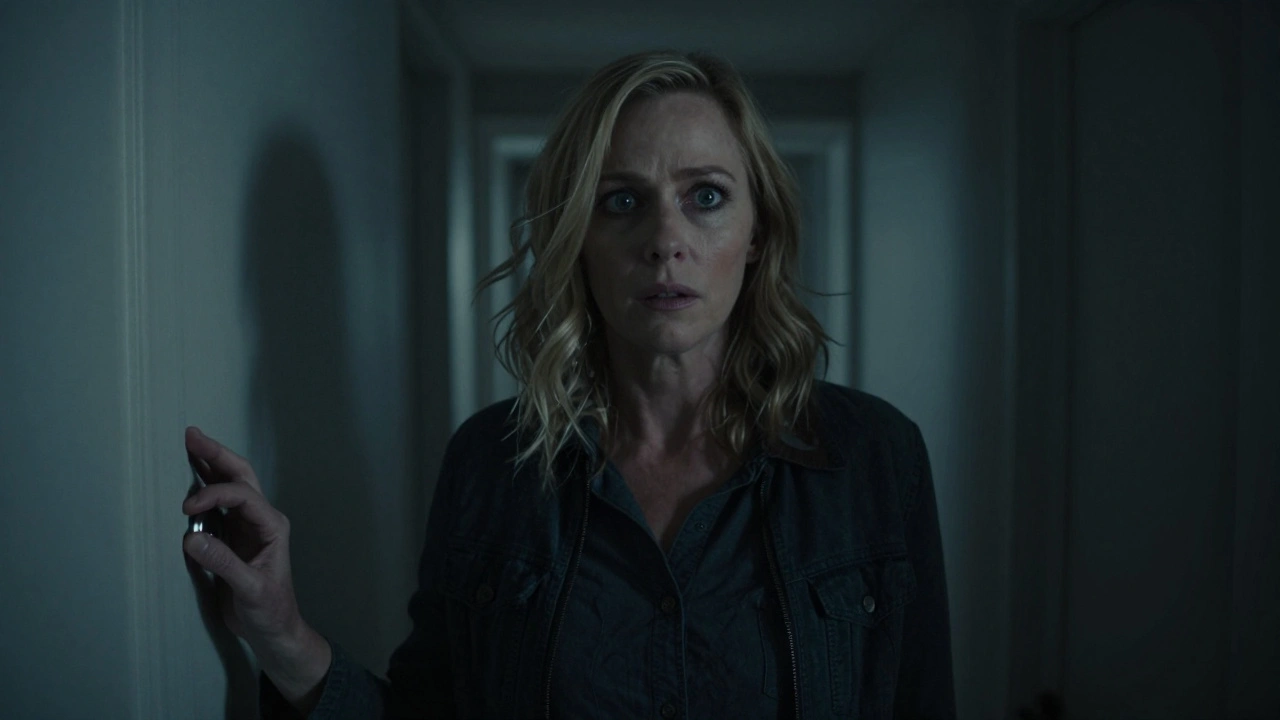
Acting in genre films isn’t just about delivering lines. It’s about mastering a language that changes with every genre. Horror asks you to be terrifying without saying a word. Comedy demands perfect timing, even when the script says nothing funny. Action requires you to sell a punch that never lands. These aren’t just different styles-they’re different crafts. And actors who switch between them without training often look lost on screen.
Horror: The Art of Fear Without Words
Horror acting isn’t about screaming. It’s about silence. Think of the moment in Hereditary when Toni Collette’s character slowly realizes her daughter is gone. No dialogue. Just eyes. That’s the heart of horror acting: showing dread before the monster appears.
Good horror actors understand pacing. They let tension build in the smallest gestures-a hand trembling as it reaches for a doorknob, a breath held too long. The audience doesn’t need to see the ghost. They just need to feel the character’s fear. That’s why many horror performances are understated. Overacting kills suspense.
Physicality matters too. In The Conjuring, Vera Farmiga didn’t just play a medium-she embodied someone who could feel things others couldn’t. Her posture changed. Her voice dropped. Her movements became slower, heavier. That’s not acting. That’s becoming.
And don’t forget the sound design. Horror actors often record their screams and reactions in isolation. The director will play back the eerie music or creaking floorboards to trigger real fear. Some actors even sleep in the set the night before a big scare scene. It’s not gimmick. It’s method.
Comedy: Timing Is Everything, Even When It’s Not Written
Comedy acting looks easy. But it’s the hardest genre to get right. Why? Because laughter isn’t scripted. It’s earned. You can have the funniest lines in the world, but if your pause is off by half a second, the joke dies.
Take Bridesmaids. Melissa McCarthy’s performance as Megan didn’t rely on wild antics. It was the way she held her smile too long after saying something absurd. The pause after “I’m not a lesbian, but I love women” made it unforgettable. That’s comic timing: knowing when to stop.
Physical comedy is even trickier. In Superbad, Jonah Hill’s nervous energy wasn’t just written-it was built. He practiced stumbling, fumbling, and reacting to absurd situations until his body remembered the rhythm. His reactions weren’t reactions. They were instincts.
Comedy also thrives on contrast. Watch how Steve Carell in The Office plays straight-man absurdity. He doesn’t play the joke. He plays the person who doesn’t realize they’re in one. That’s the secret: the funniest actors are the ones who believe their own nonsense.
And here’s the truth no one tells you: comedy actors often improvise. The best jokes in Anchorman weren’t in the script. They came from Will Ferrell and Steve Carell messing around between takes. The director kept them because they felt real. Comedy isn’t about hitting marks. It’s about staying alive in the moment.
Action: Selling the Impossible Without CGI
Action movies look like they’re all explosions and wires. But the best action scenes are sold by the actor’s face. Think of Tom Hardy in The Dark Knight Rises. He doesn’t say much as Bane. But when he takes a punch, you feel it. His neck tenses. His jaw locks. His eyes don’t blink. That’s action acting: making the unreal feel real.
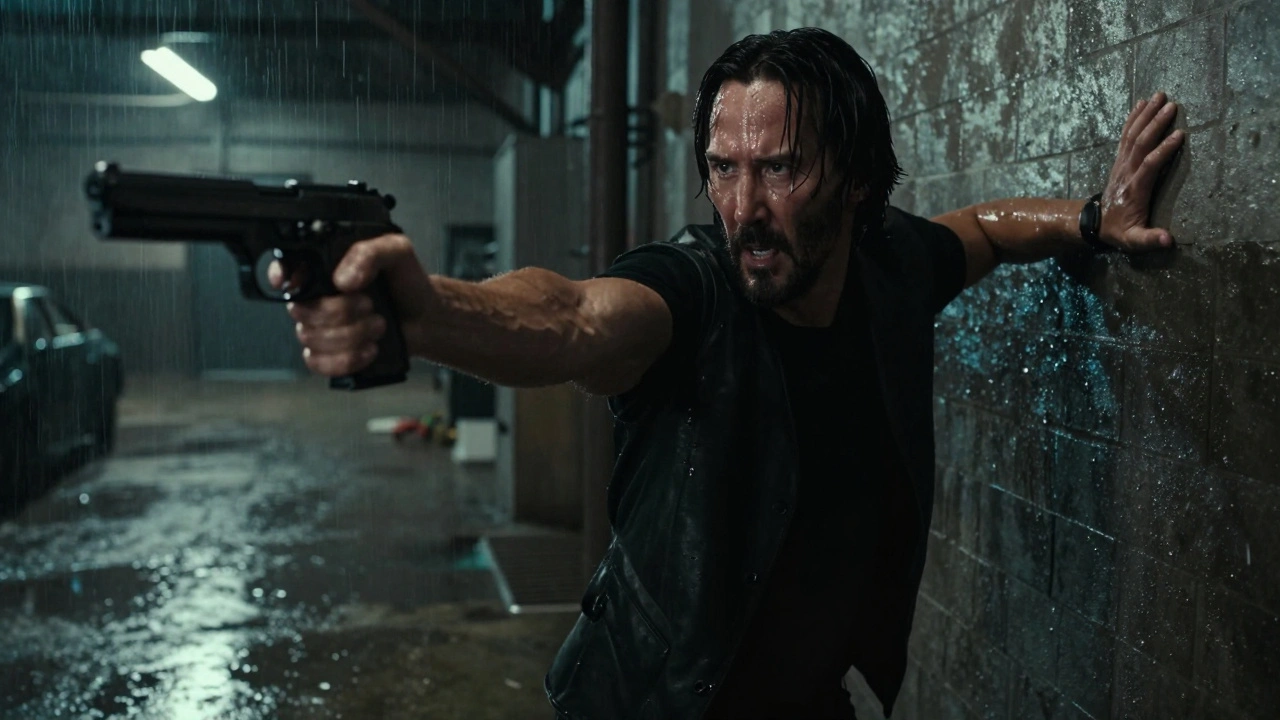
Stunt performers do the flips and falls. But the actor has to sell the impact. In John Wick, Keanu Reeves doesn’t just shoot people-he sells the weight of every bullet. He breathes after each shot. He shifts his stance like he’s exhausted. He doesn’t move like a superhero. He moves like a man who’s been through hell.
Training is non-negotiable. Reeves trained for months in Brazilian jiu-jitsu and gun handling. Charlize Theron spent a year learning hand-to-hand combat for Atomic Blonde. They didn’t hire stunt doubles for the close-ups. They did it themselves. Because audiences can tell the difference. A real sweat. A real wince. A real stumble. That’s what sells the scene.
Even dialogue in action films has rhythm. Think of Arnold Schwarzenegger in Terminator 2. His lines aren’t emotional. They’re mechanical. He doesn’t pause for feeling-he pauses for calculation. That’s the tone of action: controlled, precise, relentless.
And don’t underestimate the importance of stillness. In Mad Max: Fury Road, Tom Hardy’s Max says almost nothing. But every glance, every shift in posture tells you his story. Action acting isn’t about volume. It’s about presence.
Why Most Actors Struggle Switching Between Genres
Many actors train for drama. They study Stanislavski. They dive into emotional memory. That’s great for indie films. But it doesn’t translate to horror, comedy, or action.
Horror needs restraint. Drama encourages release. Comedy needs spontaneity. Drama wants depth. Action needs physical discipline. Drama wants truth. Action wants believability.
That’s why actors like Jamie Lee Curtis and Chris Hemsworth succeed across genres. Curtis started in horror, but she brought the same quiet fear to comedy in True Lies. Hemsworth didn’t just play Thor-he learned how to be funny without breaking character. He’s not a comedian. He’s an actor who understands rhythm.
There’s a myth that genre acting is less serious. It’s not. It’s harder. You have to master a set of rules that don’t exist in drama. You have to control your body like a dancer, your voice like a musician, your timing like a mathematician.
What Works in One Genre Can Kill You in Another
Here’s a rule: if it works in drama, it might ruin your comedy. A slow, lingering gaze that breaks hearts in a romantic film? In a horror movie, it makes the audience laugh. A big, exaggerated reaction that gets laughs in a sitcom? In an action film, it makes you look weak.
Actors who try to bring their drama training into horror often overplay the fear. They scream too early. They cry too loud. They ruin the tension. The same goes for comedy. Trying to be “deep” during a punchline kills it. Action actors who overthink their lines sound robotic.
The trick is to unlearn. You don’t need to be emotionally raw in horror. You need to be physically present. You don’t need to be witty in comedy. You need to be truthful. You don’t need to be powerful in action. You need to be consistent.
How to Train for Genre Acting
If you want to act in genre films, don’t just take acting classes. Take genre-specific training.
- For horror: Study silent films. Watch how actors like Lon Chaney used body language to terrify. Practice holding still while imagining something crawling behind you.
- For comedy: Take improv classes. Learn to listen. Learn to react. Record yourself telling jokes to a mirror. Watch how your face changes when you’re trying not to laugh.
- For action: Get physical. Learn basic martial arts, weapon handling, or parkour. Practice falling safely. Train your breath. Your body needs to remember how to move under pressure.
Watch the masters. Study how Barbara Crampton holds her breath in Re-Animator. Watch Leslie Jones in Ghostbusters turn a simple line into a moment. Observe Jason Statham’s posture in Transporter. They didn’t get there by accident.
Genre Acting Is a Skill, Not a Limitation
Some actors think genre work is beneath them. They want Oscar roles. But the truth? The most respected actors in Hollywood are the ones who can do it all. Daniel Kaluuya went from horror in Get Out to action in Black Panther to drama in Judas and the Black Messiah. He didn’t change who he was. He changed how he used himself.
Genre films demand more discipline than most realize. They don’t give you emotional arcs to hide behind. You have to build your character from the ground up-with your body, your voice, your silence.
So if you’re an actor who wants to work in horror, comedy, or action-stop waiting for the perfect script. Start training like a warrior. Learn the rules. Break them on purpose. And never forget: the best performances aren’t the ones that make people cry. They’re the ones that make them scream, laugh, or hold their breath without knowing why.
Can you use the same acting technique for horror, comedy, and action?
No. Each genre requires different physical, vocal, and emotional tools. Horror relies on restraint and tension, comedy on timing and spontaneity, and action on physical precision. Using a drama-focused technique in any of these can break the illusion.
Why do some actors fail in genre films even if they’re great in dramas?
Because drama rewards emotional depth and internal conflict, while genre films demand external expression. A subtle glance works in a drama but feels flat in a horror film. A long pause might be powerful in a romance but kill a comedy punchline. Genre acting is about matching the rhythm of the film, not just your personal interpretation.
Is physical training necessary for comedy acting?
Yes, especially for physical comedy. Slapstick, falls, exaggerated gestures-all require control, balance, and timing. Even in dialogue-heavy comedies, your body language sells the joke. Actors like Jim Carrey and Melissa McCarthy train their bodies like athletes to make their humor feel real and effortless.
How do actors prepare for horror scenes without being scared?
They don’t try to avoid fear-they use it. Many horror actors rehearse in complete darkness, listen to sound design before filming, or even sleep on set to build real unease. The goal isn’t to be calm-it’s to channel authentic fear into controlled performance.
Do action actors need to do their own stunts?
Not always, but for close-ups and emotional impact, they often do. If your face is on screen during a punch or fall, the audience needs to see your real reaction. Stunt doubles handle dangerous moves, but the actor must sell the consequence. That’s why actors like Tom Hardy and Charlize Theron train for months before filming.




Comments(6)