Walk into any major theater during awards season, and you’ll see the same faces. The blockbusters dominate the billboards. The big studio marketing machines roar to life. But if you look closer, past the red carpets of the Oscars and Golden Globes, there’s a different kind of celebration happening. It’s quieter, grittier, and often more honest. This is the world of independent film awards. These ceremonies don’t just hand out trophies; they validate voices that Hollywood’s algorithm might otherwise ignore.
In 2026, the landscape of independent cinema has shifted again. Streaming giants are buying up indie distributors, and the line between "studio" and "indie" is blurrier than ever. Yet, the need for specific recognition remains vital. For filmmakers working without a $100 million budget, an award isn't just vanity-it’s survival. It’s the difference between a film gathering dust on a hard drive and finding its audience in theaters worldwide.
The Big Three: Where Indie Glory Lives
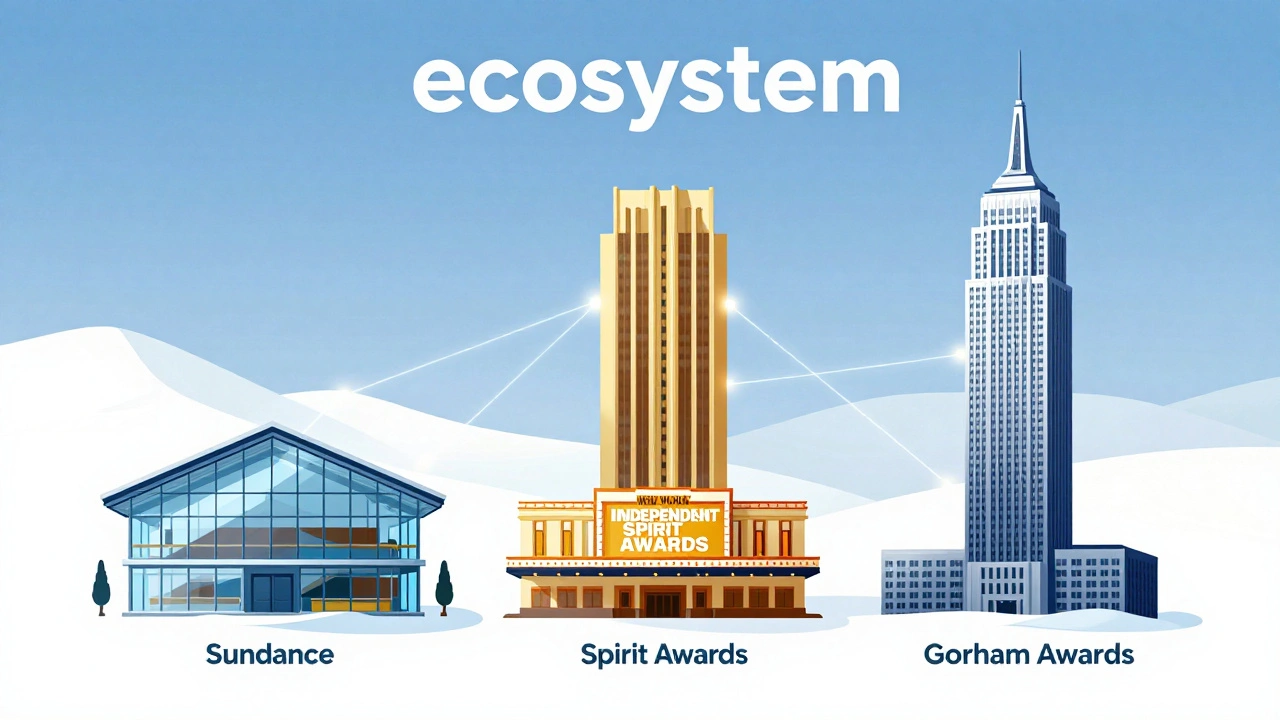
When we talk about independent film awards, three names usually rise to the top. They aren’t just events; they are ecosystems that support the entire lifecycle of an indie project, from script development to global distribution.
The Sundance Institute is the premier nonprofit organization supporting filmmakers at every stage of their careers. Its annual festival in Park City, Utah, is less of a party and more of a marketplace. Directors go there to sell their films, not just to premiere them. A win or even a selection here signals to buyers that the film has cultural relevance. It’s where buzz starts.
Then there’s the Independent Spirit Awards, also known as The Spirits, which are honors presented annually by Film Independent to celebrate outstanding achievements in independent filmmaking. Unlike Sundance, which focuses heavily on discovery, the Spirits focus on merit within strict budget constraints (currently under $20 million). This creates a pure playing field. You’re competing against other indies, not against Marvel movies trying to sneak in a nomination. It’s the closest thing indie filmmakers have to an Oscar equivalent.
Finally, we have the Gotham Awards, which are annual honors celebrating excellence in independent film and television. Based in New York, the Gothams often highlight diverse voices and emerging talent earlier in the year. They serve as a crucial early indicator of awards momentum, often predicting which indie darlings will survive until February.
| Award Body | Primary Focus | Budget Limit | Key Outcome |
|---|---|---|---|
| Sundance Film Festival | Discovery & Market Sales | None (Open) | Distribution Deals |
| Independent Spirit Awards | Critical Merit | Under $20M | Oscar Momentum |
| Gotham Awards | Emerging Talent | Under $20M | Early Season Buzz |
Why Budget Caps Define Independence
You might wonder why budget matters so much. Isn’t art subjective? In the indie world, yes, but logistics dictate reality. The definition of an "independent film" has evolved. Today, it’s largely defined by financial independence from the major studios (Disney, Warner Bros., Universal, etc.).
The Independent Spirit Awards’ $20 million cap is a contentious but necessary rule. It ensures that a micro-budget drama with a $500k production cost isn’t crushed by a mid-tier thriller made for $19 million. Without this cap, the term "independent" loses its meaning. It becomes a marketing label rather than a structural reality. When you watch a film that won a Spirit Award, you know the creators had to be resourceful. They didn’t have infinite reshoots. They didn’t have A-list stars paid $20 million upfront. They had vision, hustle, and maybe a bit of luck.
This constraint breeds creativity. Think about how many iconic scenes were born from lack of money. A single location. Natural lighting. Non-professional actors. These aren’t just aesthetic choices; they are economic necessities that often result in rawer, more authentic storytelling. Awards recognize this ingenuity.
The Ripple Effect: How Awards Save Careers
Let’s get practical. What does an indie award actually do for a filmmaker? It’s not just a statue for the shelf. It’s a currency.
Distribution Leverage: If your film plays at Sundance and wins the Grand Jury Prize, distributors come to you. Instead of begging for a deal, you negotiate terms. You can demand better marketing commitments, wider release dates, and higher backend percentages. The award is proof of concept.
Funding Future Projects: Investors are risk-averse. They want evidence that your voice resonates. An award serves as third-party validation. It tells producers, "This director connects with audiences and critics." It opens doors to grants, foundation funding, and studio attachments for future scripts.
Talent Attraction: Actors want to work on winning projects. Not because they care about the trophy, but because they care about visibility. Being attached to an award-winning indie film boosts an actor’s profile, making them more attractive for larger roles. This creates a virtuous cycle: good films attract good actors, who make better films, which win more awards.
Global Perspectives: Beyond Hollywood
While the US-centric awards get the most press, the independent spirit thrives globally. The Berlin International Film Festival (Berlinale) is one of the world's leading film festivals, showcasing international cinema. Its Berlinale Bear awards often highlight political and social dramas that challenge Western norms. Similarly, the Cannes Film Festival is a prestigious event presenting the Palme d'Or to the best feature film. While Cannes includes big directors, its Un Certain Regard section is dedicated to original and different works, effectively serving as a global indie showcase.
In Asia, the Busan International Film Festival is Asia's largest film festival, focusing on new trends and Asian cinema. It functions similarly to Sundance, acting as a market for Asian independent films to find international buyers. These global platforms ensure that "independence" isn’t just an American concept. It’s a universal struggle for artistic freedom against commercial pressure.
The Streaming Disruption
We can’t talk about indie awards in 2026 without addressing the elephant in the room: streaming services. Companies like Netflix, Amazon Prime, and Apple TV+ now produce and distribute many films that would traditionally be considered "indie." They fund small budgets, hire indie directors, and submit to festivals.
This has created a paradox. Are these films truly independent? Technically, no-they are backed by tech conglomerates. Culturally, yes-they often retain the creative autonomy of indie films. The Independent Spirit Awards have had to adapt their rules to address this. They allow streaming-funded films if they meet the budget cap and creative control criteria.
For filmmakers, this is a double-edged sword. On one hand, there is more money available for risky projects. On the other hand, the traditional path of selling to a boutique distributor (like A24 or Neon) is shrinking. Awards now serve as a filter. They help distinguish which streaming-backed films deserve critical acclaim versus which ones are just content churned out for algorithms. The prestige of an award helps elevate a film above the noise of endless scrolling.

Navigating the Awards Circuit: A Filmmaker’s Guide
If you’re an aspiring filmmaker, how do you approach this ecosystem? Here’s a realistic roadmap.
- Start Early: Don’t wait until your film is finished to think about awards. Research festivals during pre-production. Understand their submission deadlines and fees. Some festivals offer fee waivers for first-time filmmakers or those from underrepresented backgrounds.
- Target Strategically: You can’t submit to every festival. It’s too expensive and time-consuming. Identify 3-5 key festivals that align with your film’s genre and tone. If you’re making a documentary, target IDA (International Documentary Association) members. If it’s a narrative drama, look at Sundance, SXSW, or Tribeca.
- Build Relationships: Festivals are run by people. Attend industry panels, workshops, and networking events. Build genuine connections with programmers and producers. A personal recommendation can sometimes outweigh a cold submission.
- Prepare Your Materials: Your screener link must work flawlessly. Your logline must be sharp. Your poster must be compelling. Programmers watch hundreds of films. Make it easy for them to say yes.
- Embrace Rejection: Most submissions are rejected. It’s part of the process. Use feedback if provided. Resubmit next year. Persistence is the hallmark of successful indie filmmakers.
The Future of Indie Recognition
As we move further into the late 2020s, the role of independent film awards will continue to evolve. With AI-generated content rising, human-curated awards become even more valuable. They certify that a film was made by humans, for humans. They champion empathy, nuance, and complexity-things algorithms struggle to replicate.
Moreover, we’re seeing a rise in niche awards focused on specific communities or formats. Virtual reality film awards, indigenous cinema prizes, and LGBTQ+ specific honors are gaining prominence. This fragmentation is healthy. It allows for deeper recognition within subcultures, ensuring that no story is left behind because it doesn’t fit the mainstream mold.
Ultimately, independent film awards are about more than competition. They are about community. They remind us that cinema isn’t just a product; it’s an art form driven by individual vision. In a world dominated by franchises and sequels, these awards keep the flame of original storytelling alive. They tell us that your story matters, regardless of your budget.
What is the difference between the Oscars and Independent Spirit Awards?
The main difference lies in eligibility and scope. The Academy Awards (Oscars) consider all films released theatrically, regardless of budget or studio backing. The Independent Spirit Awards strictly limit nominations to films with budgets under $20 million and require that the film maintain creative independence from major studios. Essentially, the Spirits celebrate the craft of low-budget filmmaking, while the Oscars celebrate cinematic achievement broadly.
Can a Netflix film win an Independent Spirit Award?
Yes, but with conditions. Film Independent, which runs the Spirits, updated its rules to allow films financed by streaming services if they meet the budget cap (under $20 million) and demonstrate that the filmmakers retained final cut and creative control. However, the film must still qualify for theatrical exhibition in Los Angeles County to be eligible for consideration.
Why is Sundance considered the most important indie festival?
Sundance is pivotal because it combines critical acclaim with commercial opportunity. It is the primary marketplace for independent films in North America. Many distributors use Sundance as their scouting ground. Winning a prize or even being selected for the Premieres strand often leads to high-profile distribution deals, significantly boosting a film’s box office potential and cultural impact.
How much does it cost to submit a film to major indie festivals?
Submission fees vary widely. Early bird rates for major festivals like Sundance or SXSW can range from $75 to $150 per film. Late submission fees can exceed $200. Smaller regional festivals may charge less, often between $25 and $50. Filmmakers should budget accordingly and look for fee waiver programs offered by organizations like the Film Independent Diversity Fellowship or local arts councils.
Do indie awards actually increase box office revenue?
Absolutely. Studies show that festival laurels and award wins can increase a film’s box office gross by 20% to 50%. For example, a film that wins the Audience Award at Sundance often sees a significant spike in ticket sales upon its theatrical release. The award acts as a seal of quality, reducing perceived risk for moviegoers who might otherwise skip an unknown title.