Imagine sitting in a dark theater, the opening credits roll, and you can’t hear the music or understand the dialogue. Or maybe you can hear everything, but the subtitles flicker too fast or disappear too soon. For millions of people, this isn’t just an inconvenience-it’s a barrier to something millions take for granted: the shared experience of watching a movie.
Today, more than 1 in 5 adults in the U.S. live with some form of hearing or vision loss. That’s over 60 million people. Yet until recently, most cinemas offered little more than a single subtitle option-if any at all. The rise of accessibility technology in theaters isn’t just about compliance. It’s about inclusion. And it’s changing who gets to enjoy the big screen.
Closed Captioning: More Than Just Words on a Screen
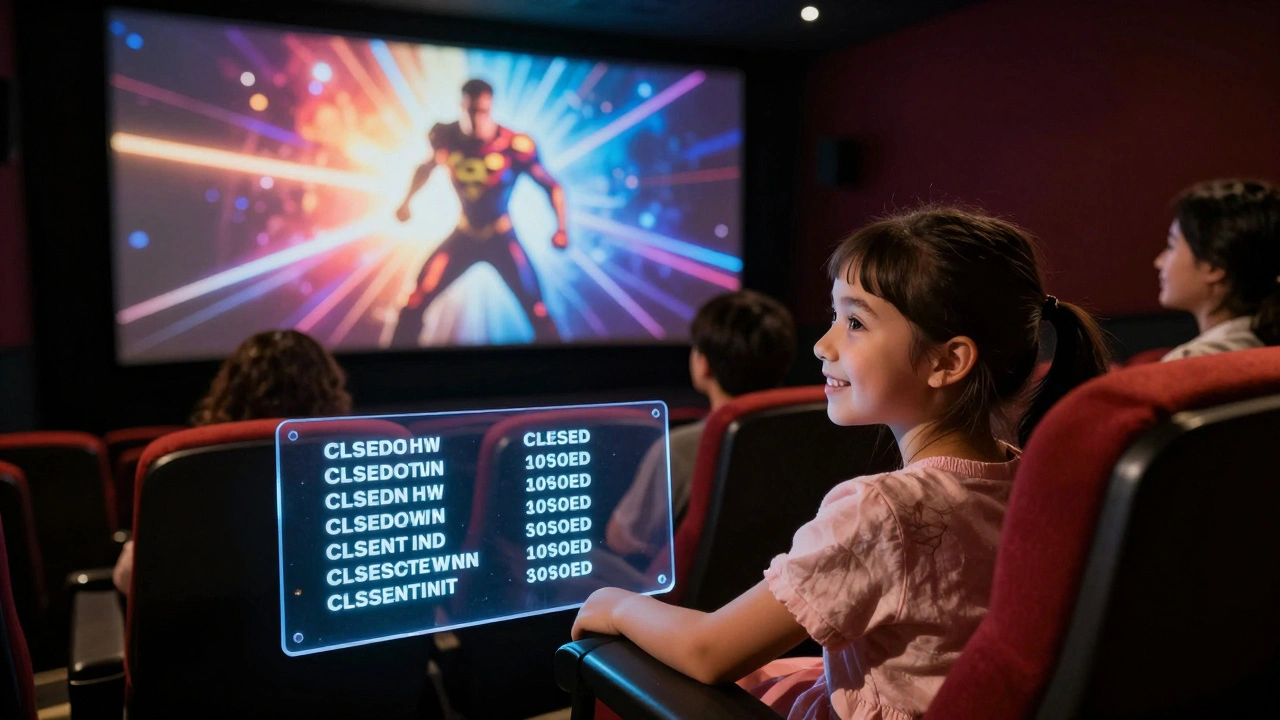
Closed captioning in cinemas isn’t the same as the subtitles you see on streaming platforms. Traditional subtitles assume you can hear the audio-they just translate spoken dialogue. But real closed captioning does more. It describes sound effects, music cues, and even emotional tone. If a character slams a door, the caption says: SLAM DOOR. If a tense score builds in the background, it might read: DRAMATIC MUSIC SWELLS.
Modern cinema captioning uses either rear-window systems or portable devices. Rear-window systems project captions onto a transparent panel mounted on the seat’s armrest. The viewer looks at the screen, then glances down slightly to read the captions. Portable devices, like the CaptionCaddy or CaptionView, are small screens you hold in your lap. Both sync with the film’s audio track using infrared or Bluetooth signals.
These systems aren’t new, but they’ve improved dramatically. Older versions had lag, poor contrast, or blocked the view. Today’s devices are lightweight, battery-powered, and compatible with 4K projection. Major chains like AMC, Regal, and Cinemark now offer captioning at over 90% of their U.S. locations. In 2025, the National Association of the Deaf reported that 72% of deaf and hard-of-hearing moviegoers said they chose theaters based on captioning availability.
Audio Description: Hearing the Unseen
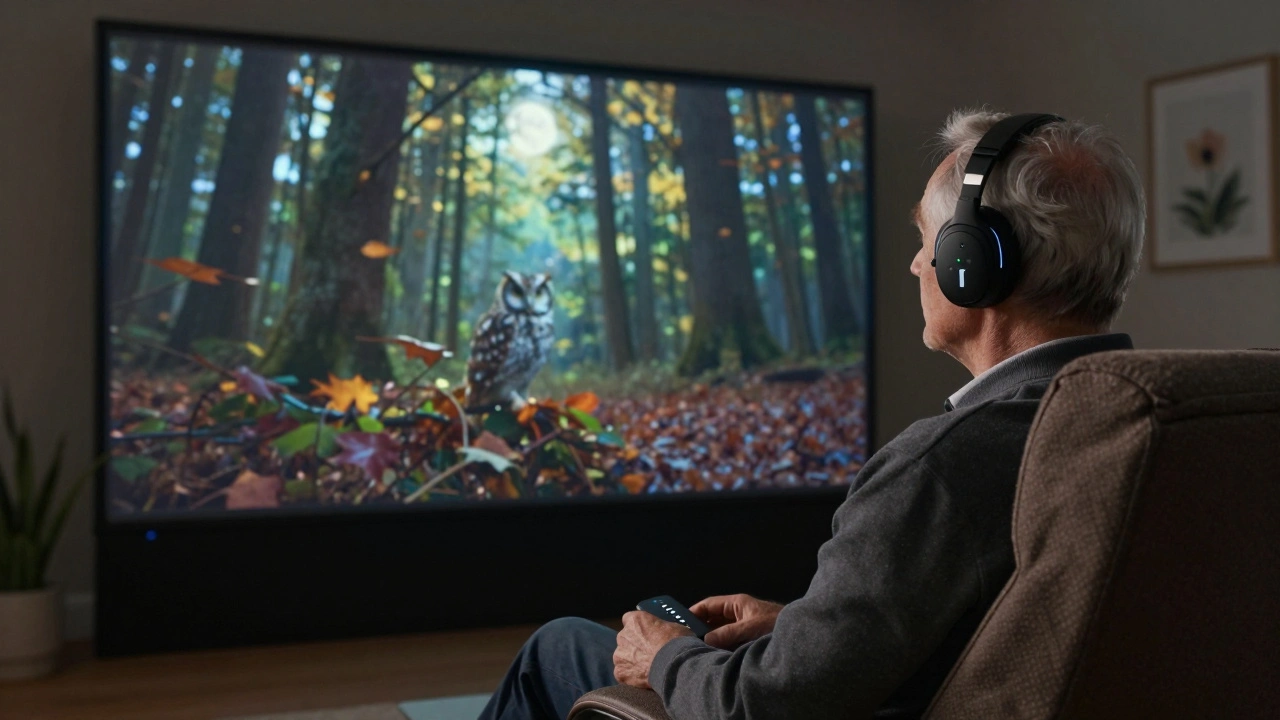
Audio description (AD) is like a second soundtrack-only it’s not music or dialogue. It’s a narrator describing visual elements during natural pauses in speech. Think of it as a live audio commentary on what’s happening on screen: She turns away, tears glistening. The clock ticks 11:47. Outside, lightning flashes.
Before 2020, audio description was rare. Many theaters didn’t have headsets, or the system only worked for select films. Now, nearly every major release in the U.S. includes an AD track. Studios like Disney, Universal, and Warner Bros. require it as part of their theatrical distribution contracts. Even indie films are starting to include AD tracks, thanks to funding from nonprofit groups like the American Council of the Blind.
The technology behind it is simple: wireless headsets, often paired with a small button box that lets you pause or rewind the description. Some theaters now offer smart glasses that overlay text on the lens for viewers with low vision. Others use apps that stream AD via Bluetooth to your own headphones.
One study from the University of Illinois in 2024 found that blind and low-vision viewers who had access to audio description reported a 68% increase in emotional engagement with films. For many, it’s not just about understanding the plot-it’s about feeling the tension, the humor, the beauty.
Why This Matters Beyond Compliance
Accessibility isn’t a legal checkbox. It’s a cultural shift. Before captioning and audio description became standard, families with deaf or blind members often had to skip movie nights. Grandparents couldn’t watch their grandkids’ favorite films. College students with learning disabilities struggled to follow fast-paced dialogue.
Now, entire groups are returning to theaters. Families with deaf children are choosing films based on captioning availability. Seniors with age-related vision loss are rediscovering cinema. Students with dyslexia use captioning to improve reading fluency. And people with autism, who may find sudden loud sounds overwhelming, benefit from predictable visual cues.
It’s also reshaping how films are made. Directors are now factoring in accessibility during production. The 2025 Oscar-winning film The Last Light included synchronized audio description tracks recorded during filming, not added in post-production. That meant the narrator’s tone matched the actor’s performance, creating a seamless experience.
The Tech Behind the Scenes
Behind every caption and audio description is a web of systems working together. Most theaters now use the DCP (Digital Cinema Package), a standardized file format that carries multiple audio tracks. One track is the original soundtrack. Another carries the audio description. A third carries the caption data.
The theater’s server pulls the right track based on the viewer’s device. If someone picks up a captioning headset, the system sends the caption stream to their screen. If they choose audio description, it routes the narrator track to their headphones. No manual switching. No delays. Just plug in and watch.
Some theaters use AI to generate captions in real time, especially for last-minute screenings. While not perfect, AI tools like those from CaptionMax and Rev have reduced the cost of captioning by 40% since 2022. That’s why smaller indie theaters-once unable to afford the service-are now offering it.
What Still Doesn’t Work
Progress is real, but gaps remain. Not every film has captioning or audio description. Independent releases, foreign films, and midnight showings often skip accessibility features. Some rural theaters still use outdated equipment that can’t sync with modern headsets.
There’s also a lack of standardization. A captioning system that works in New York might not function in Nashville. Headsets from one chain aren’t always compatible with another’s. And while most theaters offer captioning, fewer than half provide trained staff to help users set up the devices.
Training is the next frontier. Staff need to know how to troubleshoot a broken headset, explain the difference between open and closed captions, and recognize when a viewer needs help without making them feel singled out.
What’s Next: Smarter, Simpler, More Inclusive
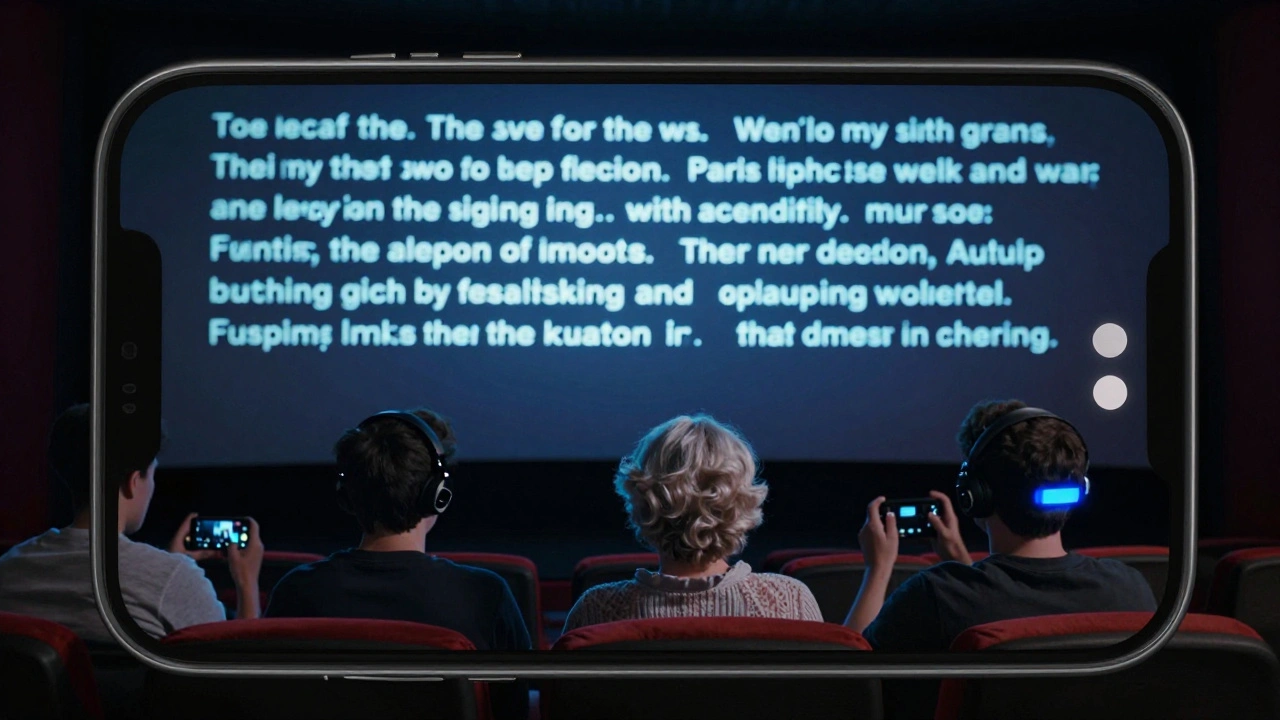
The next wave of cinema accessibility is coming from smartphones and AI. Imagine walking into a theater, opening your phone’s camera, and pointing it at the screen. The app detects the film, pulls the correct caption or audio description track from the cloud, and overlays it on your screen. No headset. No button box. Just your phone and a free app.
Several startups are testing this. One, called CineAssist, launched a pilot in 2025 in 12 cities. Users reported a 90% satisfaction rate. The system even adapts to reading speed-slowing down captions if you pause, or speeding them up if you’re catching up.
Another innovation: personalized audio description. AI can now generate custom narration based on your preferences. Want more detail? Say so. Prefer minimal cues? The system learns. It’s like having a personal guide built into your movie.
These tools won’t replace human narrators overnight. But they’ll make accessibility faster, cheaper, and more personal. And that’s the real goal-not just to let people in, but to make them feel like they belong.
The Bigger Picture
Accessibility tech in cinemas is no longer a niche service. It’s becoming the norm. And it’s changing more than just how films are shown-it’s changing who gets to be part of the audience.
When a child who’s deaf watches Spider-Man and laughs at the same joke as their siblings, that’s not just entertainment. It’s connection. When a veteran with vision loss hears the wind rustle through the trees in a war film, that’s not just sound-it’s memory.
Theaters that invest in accessibility aren’t just doing the right thing. They’re building loyalty. They’re attracting new customers. And they’re proving that cinema isn’t just about what’s on screen. It’s about who gets to see it.
Do all cinemas offer captioning and audio description?
No, not all. Major chains like AMC, Regal, and Cinemark offer these services at over 90% of their U.S. locations. But smaller, independent theaters-especially in rural areas-may still lack the equipment or funding. Always check the theater’s website or call ahead before you go.
Is audio description available for every movie?
Most major studio releases include audio description, especially from Disney, Universal, and Warner Bros. But indie films, foreign-language films, and limited-run screenings often don’t. Some theaters offer AD on request, but it’s not guaranteed. Look for the AD logo on showtimes or ask at the box office.
Can I use my own device for captioning or audio description?
Yes. Many theaters now support Bluetooth headsets and smartphone apps. Apps like CineAssist and CaptionNow let you stream captions or audio description directly to your personal headphones. Just download the app before you arrive and make sure your phone’s Bluetooth is on. Some theaters even offer free loaner headsets if you don’t have your own.
Are these services free?
Yes. Captioning and audio description are always free with your movie ticket. No extra charge. No membership required. If a theater asks you to pay, they’re mistaken-or trying to profit from accessibility. Report it to the theater’s customer service or to organizations like the National Association of the Deaf or American Council of the Blind.
How can I find showtimes with accessibility features?
Most theater websites now have filters for accessibility. Look for icons labeled "CC" for closed captioning and "AD" for audio description. Apps like Fandango and Atom Tickets let you filter by accessibility options. You can also call the theater directly and ask: "Which showtimes have captioning or audio description today?"


Comments(7)