Want to watch a gripping Japanese thriller, a haunting Iranian drama, or a hilarious French comedy-but stuck because you don’t speak the language? You’re not alone. Millions of viewers around the world are turning to international films for fresh storytelling, but many don’t know where to find them legally with reliable English subtitles. The good news? You don’t need to risk shady websites or unreliable apps. There are plenty of legal, safe, and high-quality ways to enjoy foreign cinema with accurate subtitles.
Start with Streaming Services That Specialize in World Cinema
Not all streaming platforms are created equal when it comes to international films. Big names like Netflix and Hulu have some foreign titles, but they’re not the best sources. Instead, look at services built specifically for global cinema.
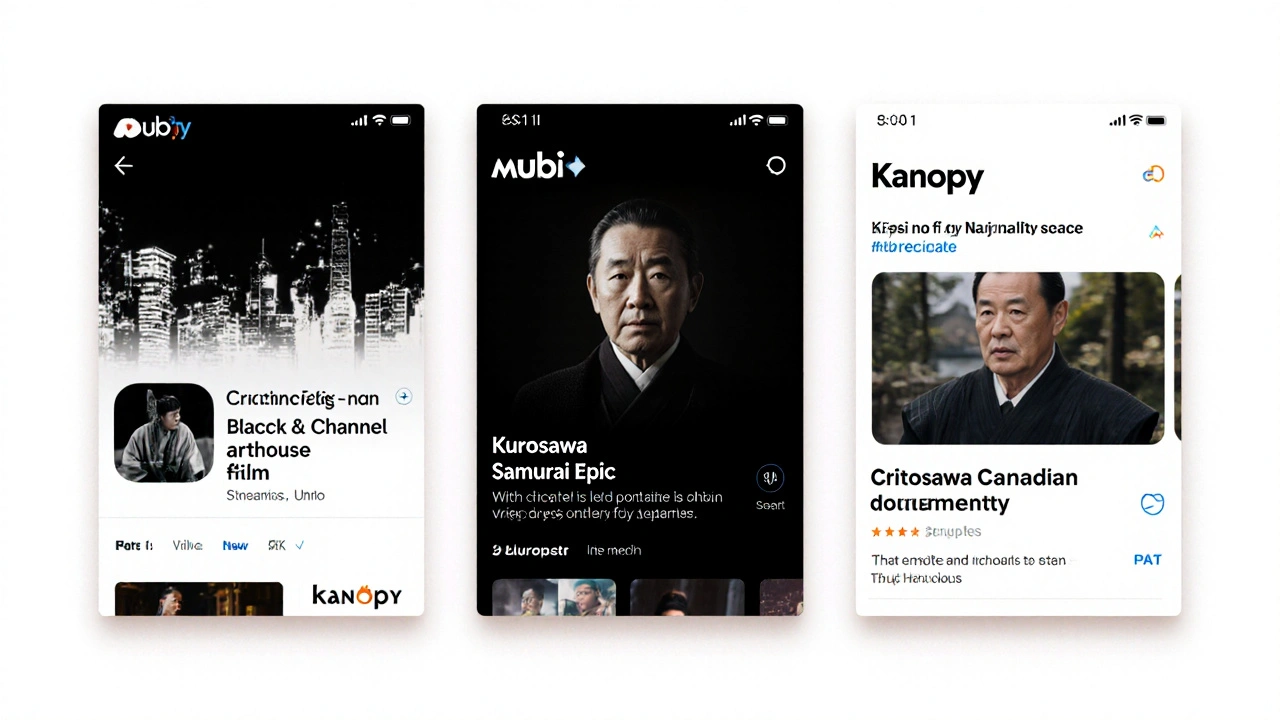
Mubi is one of the top choices. It curates a rotating selection of 30 films at a time, all handpicked from festivals like Cannes, Berlinale, and Venice. Every film comes with professionally translated English subtitles. The library includes classics like Parasite and Shoplifters, plus hidden gems from Bolivia, Senegal, and South Korea. You won’t find blockbusters here, but you’ll find art that moves you.
Criterion Channel is another powerhouse. Owned by The Criterion Collection, it offers over 1,000 films from directors like Ingmar Bergman, Akira Kurosawa, and Agnès Varda. Every title includes subtitles written by film scholars-not machine-generated. The platform also features director commentaries and behind-the-scenes documentaries, giving you context you won’t get anywhere else.
Fandor focuses on independent and international films, with a strong emphasis on documentaries and arthouse cinema. It’s smaller than Mubi or Criterion, but its collection of Latin American, Eastern European, and Southeast Asian films is unmatched. Subtitles are accurate, well-timed, and often include cultural notes.
Use Major Platforms with Dedicated Foreign Film Sections
If you already pay for Amazon Prime Video, Apple TV+, or YouTube Movies, you’re not out of luck. These platforms have deep libraries of international films, but you need to know where to look.
On Amazon Prime Video, go to the "World Cinema" section under "Genres." You’ll find hundreds of films from countries like Spain, India, Turkey, and Norway. Many are available with no extra cost if you have Prime. Look for the "Subtitled" filter to narrow results. For example, the Spanish film The Spirit of the Beehive (1973) is available with crisp English subtitles and no ads.
Apple TV+ has invested heavily in global productions. Shows like My Brilliant Friend (Italy) and The Crown (UK) are obvious, but don’t miss films like Another Round (Denmark) or Drive My Car (Japan)-both Oscar winners with flawless English subtitles. Apple’s interface makes it easy to sort by language and subtitle availability.
YouTube Movies lets you rent or buy foreign films directly. Search for titles like Cold War (Poland) or Shoplifters (Japan). You’ll often find versions with multiple subtitle options, including closed captions for the hearing impaired. Prices range from $3.99 to $14.99, and rentals last 48 hours.
Check Out Free Legal Options (Yes, They Exist)
You don’t always need to pay. Several platforms offer international films for free, supported by ads or public funding.
Kanopy is available through public libraries and universities. If you have a library card, you can stream hundreds of foreign films with English subtitles at no cost. Films from the National Film Board of Canada, the British Film Institute, and the French Cinémathèque are all included. You get 10 free streams per month-enough to watch one foreign film every week.
Internet Archive has a growing collection of public domain and licensed international films. While it’s not as polished as Mubi, you’ll find classics like City Lights (Charlie Chaplin, with international versions) and Soviet-era films from the 1920s. Subtitles vary in quality, but many are professionally done.
PTV (Public Television) in the U.S. occasionally airs international films during fundraising weeks. Check your local PBS station’s schedule. Some episodes are available to stream on PBS.org or the PBS app with English subtitles included.
Why Subtitle Quality Matters-And How to Spot Bad Ones
Not all subtitles are created equal. Machine-generated subtitles on YouTube or random torrent sites often mistranslate idioms, cut off lines, or sync poorly with dialogue. This isn’t just annoying-it changes how you experience the film.
Good subtitles:
- Stay true to the original tone and emotion
- Don’t exceed two lines on screen at once
- Match the timing of speech, not just the words
- Include cultural context when needed (e.g., explaining a local custom)
Services like Criterion Channel and Mubi hire professional subtitlers who work directly with filmmakers. They don’t use AI. If you see subtitles that feel robotic or awkward, skip the film-it’s likely pirated or poorly translated.
How to Find Subtitles for Older or Obscure Films
What if you want to watch a 1960s Polish film or a 1980s Taiwanese drama that’s not on any streaming service? Your best bet is film archives and specialty DVD/Blu-ray releases.
Companies like Arrow Video, Shout! Factory, and Second Run specialize in restoring and releasing rare international films on physical media. These editions often include multiple subtitle options, director interviews, and essays. For example, Arrow’s release of The Spirit of the Beehive includes English subtitles, Spanish commentary, and a 40-page booklet on Franco-era Spain.
Libraries with film collections-like the New York Public Library or UCLA Film & Television Archive-sometimes lend out DVDs of obscure titles. Ask your local library if they can borrow from a state film archive.
What to Avoid: The Risks of Illegal Streaming
It’s tempting to use sites like 123Movies, Putlocker, or Telegram channels for free foreign films. But these platforms are risky. They often:
- Use malware-laden ads
- Steal your personal data
- Offer low-quality, poorly synced subtitles
- Violate copyright laws (and could get you in legal trouble)
In 2024, the U.S. Copyright Office reported a 47% increase in takedowns of illegal streaming sites offering foreign films. Many of these sites are run by overseas criminal networks. You’re not just supporting piracy-you’re funding it.
Plus, the subtitles on these sites are usually auto-translated by bots. A line like “I am not a thief” might become “I not steal person.” That’s not just confusing-it changes the meaning of the scene.
Build Your Own International Film Watchlist
Start small. Pick one country each month and explore its cinema. Here’s a starter list:
- Parasite (South Korea, 2019) - Mubi, Hulu
- Amélie (France, 2001) - Amazon Prime, Apple TV+
- My Neighbor Totoro (Japan, 1988) - HBO Max
- The Secret in Their Eyes (Argentina, 2009) - Criterion Channel
- Waltz with Bashir (Israel, 2008) - Kanopy
Use Letterboxd to track what you watch. You can tag films by country, language, and subtitle availability. Join a film club-many libraries and indie theaters host monthly international film nights.
Final Tip: Turn Subtitles Into a Learning Tool
Watching foreign films with English subtitles isn’t just entertainment-it’s language practice. Try watching a scene twice: first with subtitles, then without. You’ll start picking up rhythm, tone, and even phrases. Many viewers report improved listening skills after just a few months.
And if you’re learning a language? Watch the same film with subtitles in that language. For example, watch Amélie with French subtitles to improve your vocabulary. It’s like having a tutor who never gets tired.
International cinema is richer, deeper, and more human than most Hollywood films. You don’t need to speak the language to feel its power. You just need to know where to look-and how to watch it the right way.
Are English subtitles always available on legal streaming platforms?
Most legal platforms include English subtitles for international films, especially those from major distributors like Criterion, Mubi, and Amazon. However, some very obscure or older films may only have subtitles in other languages. Always check the film’s details page before watching. If subtitles aren’t listed, they’re likely not available.
Can I download international films with subtitles for offline viewing?
Yes, but only on platforms that allow downloads. Criterion Channel, Apple TV+, and Amazon Prime Video let you download films to your phone or tablet for offline viewing. You can’t download from Kanopy or YouTube Movies. Always check the app’s download settings-some require you to be logged in to your library or account.
Is it legal to use third-party subtitle files with legal movie files?
It’s legally gray. If you own a legal copy of the film (like a Blu-ray or digital purchase), adding a subtitle file you downloaded from a site like OpenSubtitles.org is generally tolerated-but not officially allowed. The copyright holder owns the right to distribute subtitles. For safety, stick to platforms that include subtitles by default.
Why do some international films have different subtitles on different platforms?
Different distributors license the same film with different subtitle versions. Criterion might use a scholarly translation, while Netflix uses a more casual one for broader appeal. Sometimes, the original studio creates multiple subtitle tracks for different regions. Always choose the version that matches your preferred tone-poetic, literal, or conversational.
Do any streaming services offer sign language or audio description for international films?
Yes, but rarely. Apple TV+ and Netflix offer audio description for select international titles, especially those that won major awards. Sign language interpretation is extremely rare for foreign films. Check the accessibility settings on the platform’s film page. If it’s not listed, it’s not available.




Comments(7)