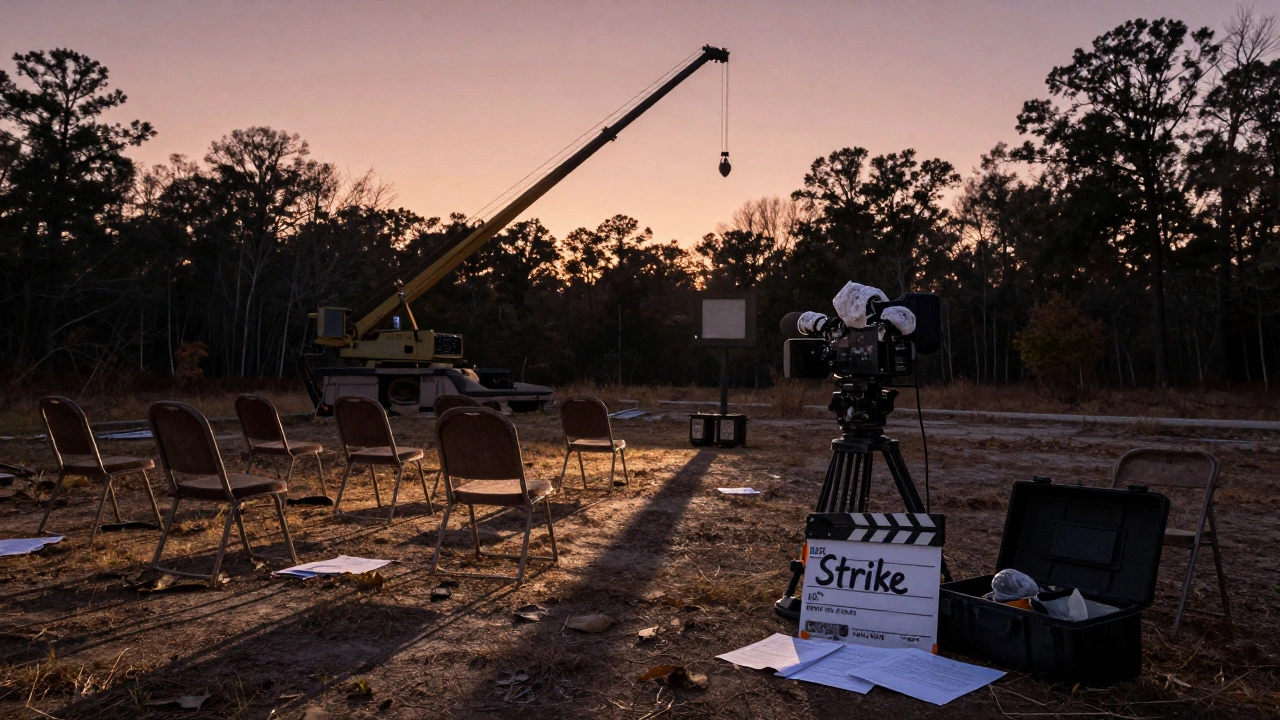
When a strike hits Hollywood, it doesn’t just stop actors from showing up on set-it freezes entire movie machines. Cameras don’t roll. Crews go home. Post-production stalls. And the money keeps burning through the budget, even as nothing gets made. In 2023, the SAG-AFTRA and WGA strikes shut down over 400 film and TV projects. By the time things restarted, studios had lost more than $6 billion in direct production costs. That’s not just a number-it’s a year’s worth of films gone, actors’ careers paused, and theaters left without new releases.
Production schedules don’t just slip-they collapse
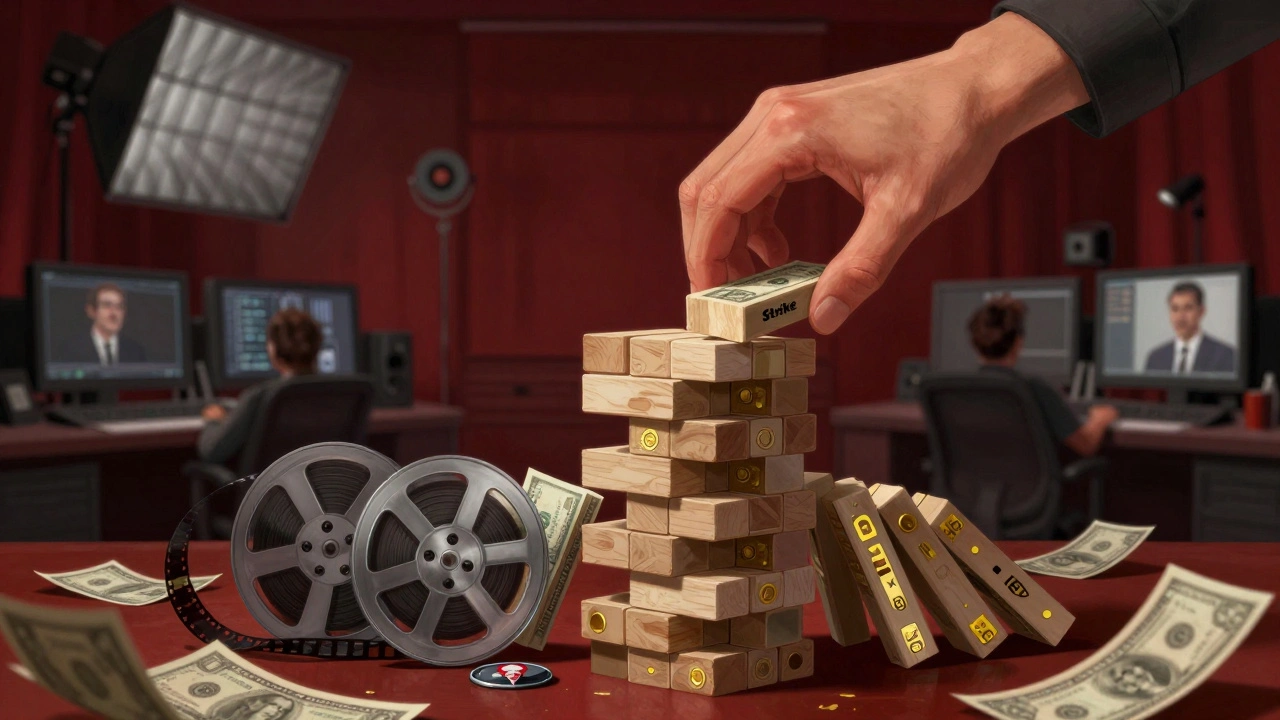
Most film schedules are built like Jenga towers. Every scene, every location, every actor’s availability is stacked with zero room for error. When a strike hits, that tower doesn’t wobble-it falls. Take a mid-budget film shooting in Atlanta. The crew had 45 days to wrap principal photography. They were on day 28 when the strike began. The studio had already booked the location for another project starting in 45 days. No extension. No flexibility. The film had to scrap the entire shoot and restart months later.
Rebooking locations is expensive. Weather seasons change. Cast members move on to other projects. Crews get hired by competing studios. Even if the same actors return, their rates jump. SAG-AFTRA contracts include annual pay increases, and if a project is delayed past the contract’s effective date, the studio must pay the new, higher scale. That’s not a small bump-it’s often 5-10% more per actor, per day.
And it’s not just actors. The strike affects every department. Gaffers, grips, makeup artists, stunt coordinators-they all have union contracts. If the strike lasts six months, the original crew might not be available. Rehiring means training new people. That adds weeks. And training costs money. One indie producer told me they spent $180,000 just retraining a new lighting team after a four-month delay.
Budgets don’t stretch-they snap
Every film has a budget. It’s not a wish list-it’s a hard limit. Most studios plan with 5-8% contingency. That’s for weather delays, equipment malfunctions, or a lead actor getting sick. Not a three-month industry-wide shutdown.
When a strike hits, that contingency evaporates fast. Consider a $25 million film. The studio allocated $1.25 million for unexpected delays. The strike lasted 147 days. The film lost $4.3 million in labor alone-just from idle crew, rescheduling, and rehiring. That’s over 300% over the contingency. The studio had to dip into marketing funds just to keep the film alive. That meant the theatrical release got half the promo budget. Result? Box office came in at 40% below projections.
Post-production doesn’t escape either. Editors, sound designers, VFX artists-all unionized. If the strike hits during editing, the film can’t be finished. Streaming platforms demand delivery dates. Miss them, and you lose the guaranteed payout. One Netflix-backed film missed its Q3 2023 deadline by six months. Netflix cut their payout by $7 million. The producers had to sell international rights just to cover the gap.
Reshoots and rewrites cost more than you think
Strikes often force script changes. Writers can’t work during a WGA strike. But studios still need to fix plot holes, rewrite dialogue, or adjust storylines because of cast changes. Once the strike ends, writers come back-and they charge double. The WGA’s 2023 contract included a 15% increase in minimum fees for rewrite work. That’s not just for new scripts-it applies to every line changed in an existing one.
And reshoots? They’re brutal. A reshoot isn’t just a few extra days. It’s rebooking locations, rehiring crew, re-scheduling actors, reapplying for permits, and paying overtime. One studio spent $2.1 million on a 12-day reshoot after the strike. The original shoot had been planned for 8 days. The delay meant the weather had changed. The location was now in peak tourist season. Permits cost 3x more. The lead actor had gained 15 pounds. They had to hire a new wardrobe team and pay for diet coaches. That reshoot ended up costing more than the original 45-day shoot.
Independent films get crushed
Big studios have cash reserves. They can wait. But indie films? They’re one missed deadline from bankruptcy. A documentary shot in rural Montana had $1.2 million in funding from a single investor. The strike halted post-production for seven months. The investor demanded a return on investment within 18 months. When the film missed the deadline, the investor pulled out. The filmmakers had to crowdfund $300,000 just to finish editing. They lost distribution deals. The film never got a theatrical release.
Small productions don’t have insurance for strikes. Most don’t even know it exists. A few specialty policies cover labor stoppages-but they’re rare, expensive, and often exclude writers. One producer told me they paid $18,000 for a $2 million policy. It covered only 30 days of delay. The strike lasted 147. They got $120,000 back. Lost $1.8 million.
Streaming platforms play a different game
Streaming services don’t care about box office. They care about content pipelines. A delay means a gap in their release calendar. That hurts subscriber retention. Netflix, Amazon, and Apple all have exclusive content deals. If a show isn’t ready by the promised date, they pay penalties to talent or lose exclusivity.
One Amazon series had a 2024 premiere locked in. The strike delayed it by six months. Amazon had to pay $4 million in talent penalties and $1.2 million in marketing reactivation costs. They also lost a $3 million licensing deal with a foreign broadcaster who had signed based on the original schedule. The show eventually premiered, but the studio lost $8.2 million in total value.
Worse, streaming platforms now demand “strike-proof” contracts. They’re pushing for upfront payments for writers and actors, so if a strike hits, they don’t lose the work. That shifts risk from studios to creators. Writers get paid early-but they lose backend points. Actors get a lump sum-but no residuals if the show becomes a hit. It’s a trade-off no one wants.
What happens after the strike ends?
When the strike ends, it doesn’t mean everything goes back to normal. It means chaos. Studios have hundreds of projects waiting. Crews are scattered. Locations are booked. Actors have moved on. The backlog creates a new kind of bottleneck.
Post-production houses are overwhelmed. One VFX studio in Vancouver had a 9-month waitlist after the strike. A film that needed 1,200 VFX shots got bumped to the back of the line. The delay pushed its release to 2025. The studio had to pay 20% more to jump the queue.
And the cost of labor? It’s still high. Union contracts from the strike included raises. Studios now pay more for every day of work. That means fewer films get greenlit. In 2025, Hollywood produced 23% fewer films than in 2022. Budgets are tighter. Risk-averse executives are choosing sequels and adaptations over original scripts.
Can you plan for a strike?
You can’t predict it. But you can prepare. Producers who survived the 2023 strikes did three things:
- They built 10-15% extra into their budgets-not just for delays, but for post-strike inflation.
- They secured location rights for 18 months, not 6, to lock in pricing.
- They hired non-union crew for non-creative roles (like transport, catering, security) to keep some operations running.
Some studios now film in Canada or the UK, where union rules are different. Others use AI tools to pre-edit scripts or generate placeholder VFX to keep post-production moving during a strike. It’s not perfect-but it’s better than waiting.
At the end of the day, strikes aren’t just labor disputes. They’re economic earthquakes. They don’t just delay movies-they change who gets to make them, who gets paid, and what kinds of stories reach audiences. The next time you hear about a film being pushed back, don’t just think of a calendar change. Think of a budget that broke, a crew that lost income, and a story that almost never got told.
How long do film production strikes usually last?
There’s no standard length. The 2023 SAG-AFTRA strike lasted 118 days. The WGA strike lasted 147 days. Some last a few weeks; others stretch over a year. It depends on negotiations, public pressure, and studio finances. Most strikes end when studios agree to key demands around pay, residuals, or AI protections.
Can a film still be made during a strike?
Only if no union members are involved. Non-union productions can keep filming, but they’re rare and often face backlash. Some indie filmmakers use non-union crew for background work or shoot in countries without strong unions. But if actors, writers, or key crew are unionized, the strike blocks them from working-even if they want to.
Do strikes affect streaming shows the same way as movies?
Yes, and sometimes worse. Streaming platforms rely on tight release schedules to keep subscribers engaged. A delay can mean losing a season premiere slot, which affects marketing, licensing deals, and subscriber retention. Studios also face penalties for missed deadlines. Streaming shows often have longer seasons, so delays compound faster than with a 90-minute film.
What happens to crew members during a strike?
They stop working and stop getting paid. Some take temporary jobs in other industries-construction, event tech, retail. Others rely on union strike funds, which typically pay $200-$500 per week. Many go into debt. Union members often report food insecurity and delayed rent payments during long strikes. The financial toll hits hardest for those without savings or secondary income.
Are there any films that benefited from a strike?
Rarely. But some projects gained indirectly. After the 2023 strikes, studios rushed to release older films they had shelved. Netflix re-released several 2021 films with new marketing, which boosted streaming numbers. Some indie films that were already finished got more attention because the market was empty. But these are exceptions-not benefits of the strike itself.



Comments(8)