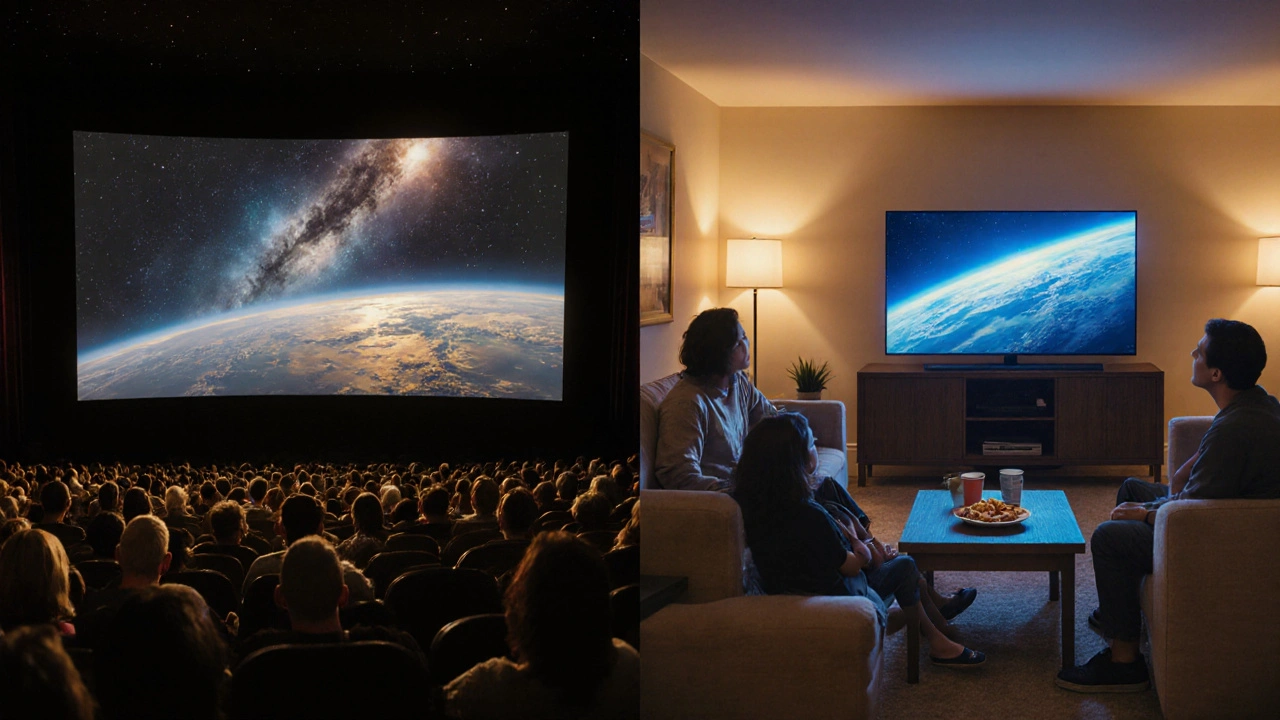
It used to be that if a movie hit theaters, it had a real shot at becoming a hit. People lined up for opening night. Families planned weekends around new releases. Studios counted on box office numbers to fund the next big film. But now? A movie can drop on a streaming service the same day it hits theaters-and sometimes, it makes more money online than in cinemas.
Streaming Releases Are No Longer the Exception
Five years ago, releasing a movie on streaming the same day as theaters was a bold experiment. Now, it’s standard. Studios like Warner Bros., Disney, and Universal have all tested day-and-date releases. In 2021, Black Widow earned $183 million globally in theaters, but Disney reported over $60 million in digital rentals in its first three weeks. That’s not just a side income-it’s a major revenue stream that doesn’t depend on how many seats are sold in a theater.
Netflix, Amazon, and Apple don’t even bother with theaters for most of their films anymore. In 2024, Netflix released 17 original movies. Only three had a limited theatrical run. The rest went straight to streaming. And it worked. Extraction 2 was watched by 112 million households in its first 28 days. That’s more people than saw Avengers: Endgame in theaters during its entire run.
Theatrical Box Office Hasn’t Recovered
Before the pandemic, global box office revenue hit $42.5 billion in 2019. In 2023, it was $32.6 billion. In 2024, it barely climbed to $34.1 billion. That’s still 20% below pre-pandemic levels. Studios expected a bounce back. It didn’t happen.
Why? People got used to watching new movies at home. No traffic. No $18 popcorn. No babysitter. No need to rush to a 7 p.m. show. And when a movie is available on your TV the moment it’s released, why wait?
Even big franchises are struggling. Mission: Impossible - Dead Reckoning Part One made $585 million worldwide in 2023. That sounds like a win-until you realize Avengers: Endgame made $2.8 billion in 2019. The same movie, same franchise, same stars. But the audience behavior changed. People aren’t going to theaters the way they used to.
Why Studios Still Release in Theaters
It’s not that studios don’t want to go all-streaming. They can’t. Theaters still matter-for awards, for brand image, and for international markets.
For example, Oppenheimer made $950 million globally. Most of that came from theaters. Why? Because it was an event. People didn’t just watch it-they went to IMAX. They bought tickets weeks in advance. They talked about it on social media. It felt like something you had to experience in a theater.
Same with The Marvels. It flopped in theaters. But it didn’t get the same buzz. No one felt like they were missing out. And when it hit Disney+, it barely registered in viewership numbers.
So studios now split their strategy: big, cinematic films get theatrical releases. Smaller, character-driven, or niche films go straight to streaming. It’s not about quality-it’s about audience expectations.
What Happens to Mid-Budget Movies?
The biggest casualty of streaming isn’t blockbusters. It’s the mid-budget films that used to be the backbone of Hollywood.
Think of movies like Midnight in Paris, Little Miss Sunshine, or Manchester by the Sea. These were the kinds of films that thrived in theaters. They didn’t need explosions. They just needed a good story and a few weeks to find their audience.
Now? Studios won’t risk $20-40 million on a film that might not make back its budget in theaters. So they either fund it through streaming deals (where the return is based on viewership, not ticket sales) or kill it entirely.
Netflix bought the rights to The Woman King for $30 million after it underperformed in theaters. That’s not a rescue-it’s a pivot. The movie made $78 million globally, but only $22 million in the U.S. That’s not enough for a studio to justify the cost of marketing and distribution. But for Netflix? It was a hit. It was watched by 40 million households in its first month.
What This Means for Moviegoers
If you love the theater experience, you’re seeing fewer options. The movies that get theatrical releases now are either huge franchises, Oscar contenders, or horror films that thrive on word-of-mouth and late-night crowds.
Comedies? Dramas? Romantic films? Most of those are now streaming-only. And they’re not even promoted like they used to be. You won’t see billboards for Anyone But You-it was a hit on Paramount+, but you had to know it was there.
And here’s the twist: people are still going to theaters-but only for the right reasons. Families go for animated movies. Teenagers go for horror. Couples go for romantic dramas. But the average adult? They’re watching at home.
The Future Is Split
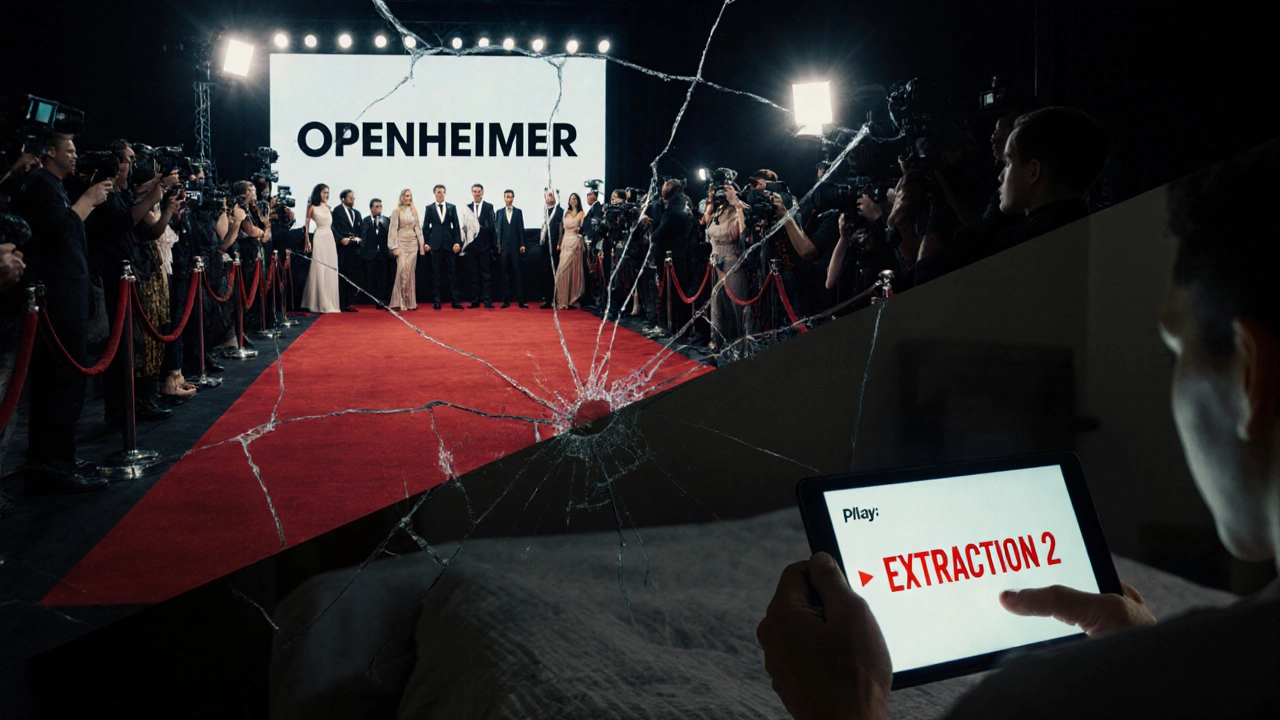
The movie industry isn’t dying. It’s splitting in two.
On one side: the theatrical experience. Big, loud, immersive films made for screens larger than your TV. These films still need theaters to make their full potential. Studios will keep investing in these-but only if they’re guaranteed to draw crowds.
On the other side: the streaming catalog. Quiet, intimate, character-driven stories that don’t need a 70mm screen. These films are cheaper to make, easier to distribute, and profitable based on how many people watch them-not how many seats they sell.
It’s not about which is better. It’s about what people want now. And what they want is convenience, choice, and control.
Will Theaters Survive?
Yes-but not the way they used to.
Theaters that survive are the ones that turned into experiences. AMC’s dine-in locations. Alamo Drafthouse’s themed nights. Regal’s luxury recliners. These aren’t just places to watch a movie. They’re destinations.
Smaller theaters? They’re closing. In 2023, over 300 independent cinemas shut down in the U.S. alone. Many were in towns where people had no other entertainment options. Now, they have Netflix, Hulu, and Apple TV+.
And here’s the reality: even if you love theaters, you might not be enough to save them. The industry needs millions of people to show up every weekend. Right now, it’s getting a fraction of that.
What Comes Next?
Studios are testing hybrid models. Some films get a 17-day theatrical window before streaming. Others go straight to streaming but get a bonus $5 rental fee for early access. Some studios are even experimenting with exclusive streaming premieres followed by a limited theater run a month later.
But the trend is clear: the theatrical window is shrinking. In 2010, it was 90 days. In 2020, it was 45. In 2025, it’s 17-and even that’s being questioned.
Meanwhile, streaming platforms are spending more on original films than ever. In 2024, Netflix spent $4 billion on movies. That’s more than the entire U.S. box office took in that year.
The movie business isn’t broken. It’s just changing. And if you’re still waiting for things to go back to the way they were, you’ll be waiting a long time.
Are movie theaters dying because of streaming?
Theaters aren’t dying-they’re transforming. Big blockbusters still draw crowds, especially in IMAX and premium formats. But smaller, mid-budget films are moving to streaming because audiences prefer watching at home. Theaters that survive are the ones offering more than just a screen: food, comfort, events, and experiences.
Why do studios still release some movies in theaters?
Theaters still matter for awards eligibility, global marketing, and building buzz. A movie like Oppenheimer or Barbie needs theaters to feel like an event. Streaming doesn’t create the same cultural moment. Also, international markets still rely heavily on theatrical releases, especially in countries where streaming access is limited.
Do streaming releases hurt box office numbers?
Yes, for most films. When a movie drops on streaming the same day as theaters, box office numbers drop by 30-50% on average. But for big films with strong marketing, the impact is smaller. The real damage is to mid-budget films, which now rarely get theatrical runs at all.
Can a movie be successful without a theatrical release?
Absolutely. Extraction 2 was watched by 112 million households on Netflix. That’s more viewers than most Hollywood blockbusters ever reach. Success is now measured in views, not ticket sales. A film can make more money through streaming subscriptions and rentals than it ever could in theaters.
What’s the future of movie distribution?
The future is hybrid. Big films will still get limited theatrical runs to build hype. Smaller films will go straight to streaming. The window between theaters and streaming will keep shrinking-possibly to zero. Studios are betting on data: which movies perform best where, and how to maximize revenue across both platforms.


Comments(5)