
The Gap Between Page and Screen
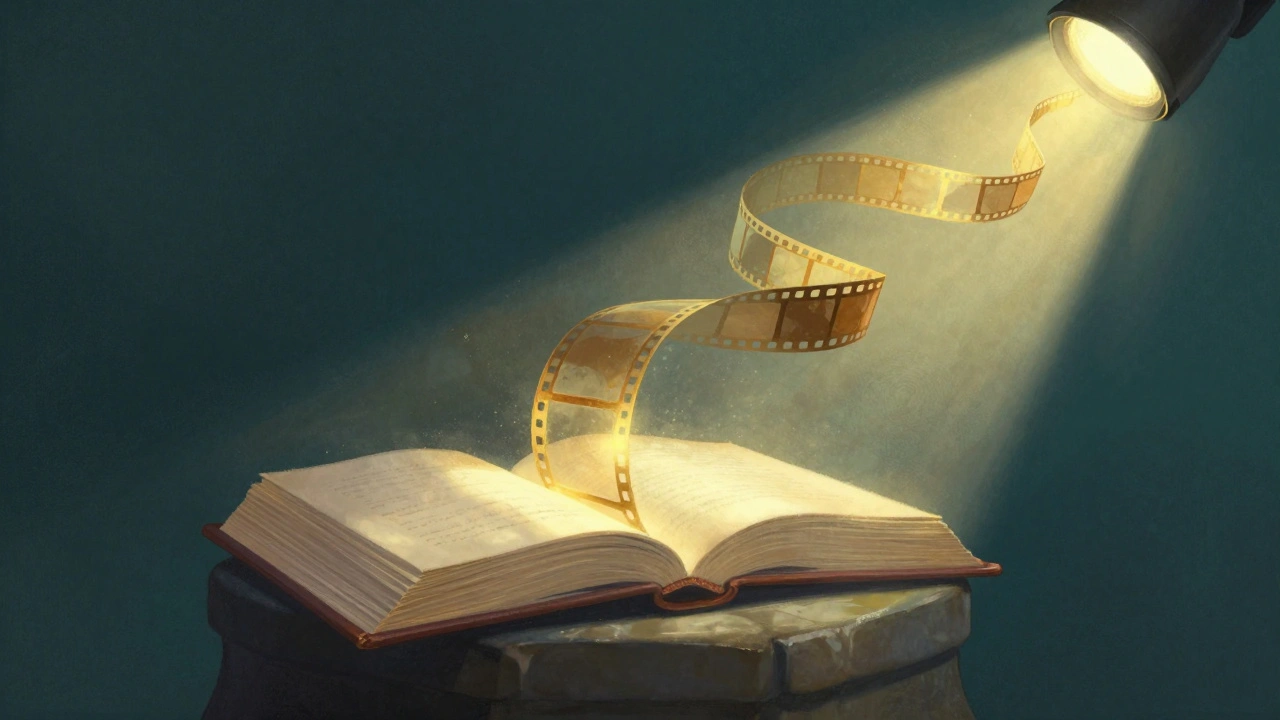
Turning a bestseller into a blockbuster isn't just about reading a few lines and filming them. It requires a complete reimagining of how stories work. When you pick up a novel, you have unlimited space to dwell on a character's internal thoughts, their backstory, or the texture of a rainy Tuesday. You have time. In the cinema, you usually have two hours. A Screenplayis the blueprint for a film, a technical document formatted specifically for production that dictates action, dialogue, and timing. That difference in medium forces hard choices. If you try to translate every sentence of a 400-page novel onto the big screen, you end up with a movie that drags, confuses, or falls apart.
Authors often fight for "faithfulness," but faithful doesn't mean identical. A true adaptation captures the soul of the source material while respecting the rules of visual storytelling. Think of it like moving houses. You might bring the furniture, the photos, and the sofa from the old place, but you can't build new rooms in the new house just because they exist in your memory. You have to fit what works into the new space. Let's look at exactly how writers bridge this gap without losing the magic.
Translating Internal Monologue to Visuals
The hardest hurdle is the protagonist's inner world. In a book, we know why a character is sad because the narrator tells us. We see their memories flash by. On screen, audiences cannot read minds. They only see behavior. This is where the principle of showing versus telling becomes critical. If a character in the book thinks about how much they hate their job for three pages, the scriptwriter can't have them stand around thinking it. Instead, the writer creates a scene where the character ignores a phone call from their boss, spills coffee on their shirt in a panic, or burns out a cigarette too quickly.
This shift demands strong Visual Storytellinga method of communicating plot, character, and mood through images, actions, and movement rather than dialogue or narration.. Writers use props, settings, and physical acting to replace the internal monologue. For example, in adapting a mystery novel, if the detective deduces a clue in their head, the camera needs to show them looking closely at that specific object first. The audience follows the eye line. This visual logic replaces the intellectual logic of the prose. Sometimes, writers will add voice-over narration, but this is often seen as a lazy solution if overused. Better movies find ways to externalize the conflict so it plays out in the room, not just in the head.
Structuring the Narrative for Time Limits
Novels can meander. They can explore subplots that never pay off immediately. They can take five chapters to get to the climax. Films generally run on a tighter clock. Most commercial films fit into a Three-Act Structurea narrative framework consisting of a setup, confrontation, and resolution, typically spanning approximately two hours.. This structure demands a faster pace. A screenwriter has to map the book's major plot points to this timeline. Chapter one of the book often equates to minutes one to ten of the script. This compression means cutting entire subplots that don't serve the main character arc.
You also have to watch the page count. A standard script page equals roughly one minute of screen time. If the book takes twenty pages to describe a journey, the movie might take one scene. Writers often group events. Instead of showing the hero training for six separate months, they might show a montage of training mixed with setbacks that span a year in days. Pacing is the enemy of good pacing; if it feels too fast, you lose emotion. If it feels too slow, you lose engagement. Balancing these elements against the original timeline of the novel is where the real work happens.

Merging Characters and Reducing Cast Size
Books love large casts. A fantasy novel might track twelve siblings plus three mentors. Movies struggle with budget. Each extra character in the script costs money for actors, wardrobe, makeup, and shooting days. Consequently, the adaptation process almost always involves merging characters. One character in the film might take on the functions of two or three from the book.
| Element | In a Novel | In a Film |
|---|---|---|
| Perspective | Deep internal access (first/third person) | Observational (camera angle/movement) |
| Character Count | Can support dozens of named roles | Limited by budget and focus (under 20 lead roles) |
| Time Flow | Can skip years easily via narration | Must show passage of time visually |
| Description | Written details explain everything | Action implies context (set design/costume) |
For instance, a mother and a sister might both give the protagonist advice in the book. In the film, they might become one aunt figure who embodies the wisdom and support of both. This consolidation helps the audience remember the names and the motivations. With fewer faces to keep track of, the emotional connection deepens. It forces the writer to be selective about who matters to the story's outcome.
Rewriting Dialogue for Subtext
Real people rarely say exactly what they mean in conversations, and book dialogue often leans heavily on exposition-characters explaining things to each other that they would already know. In reality, friends don't tell each other their secrets unless forced. Great Dialoguespoken interaction between characters that reveals personality, advances the plot, or establishes tone within a script. relies on subtext. The writer must strip away the explanations. If a couple breaks up in a chapter over a long speech about trust issues, the movie version might be a silence, a slammed door, or walking past each other without speaking.
Writers trim fat words. In a novel, a character can have a paragraph-long thought before speaking. In a script, that pause is awkward. The rhythm of conversation changes. It becomes punchier, sharper. However, you still need to capture the *voice* of the character. If the book has a quirky, poetic protagonist, the script needs to maintain those odd word choices, even if the sentences are shorter. Losing the unique flavor of the author's style is a common pitfall in bad adaptations. Keeping the vocabulary while reducing the volume makes the translation feel authentic.
Navigating Legalities and Rights
Before a single word of the script is typed, there is a legal framework to respect. Authors own their work. Studios must purchase the rights to adapt the book. This process involves buying the option period, during which the studio holds the exclusive right to develop the project. This is governed by Copyright Lawlegal statutes that protect the original creator's exclusive rights to their literary work.. If the author dies, their estate manages the copyright. Screenwriters usually sign agreements acknowledging that they are deriving the work from a pre-existing source. There are no loopholes here. You cannot copy a famous novel just because you think you can make a better version.
Sometimes authors are involved heavily in the process. Some sell the rights early and stay on as consultants, while others disappear once the check clears. Having the original author attached can prevent accusations of betrayal from the fanbase, but it doesn't guarantee the movie works. The author knows the book well, but they may not understand the constraints of film production. The screenwriter has to balance honoring the author's vision with the practical realities of making a movie that sells tickets.
Handling Fan Expectations
Adapting a popular book brings a built-in audience that already knows the ending. These fans act as quality control. If you change a beloved character's fate, the reaction will be immediate and loud. But sometimes the movie needs to deviate to stand on its own. A strict 1-to-1 translation often results in a stiff, boring movie. The goal is to surprise the audience even if they've read the book.
This is especially tricky in genre fiction like Sci-Fi or Fantasy. World-building details matter more here. Fans want to see the magic system or technology work exactly as described. Changing a fundamental rule of the universe can alienate the core fanbase. To mitigate this, writers focus on "spiritual fidelity." They ask themselves: Does this change hurt the heart of the story? If the answer is no, the change is often welcome. The film must eventually satisfy itself as a standalone experience. People will watch a movie alone, without having read the book. They need to understand the stakes without needing a glossary of terms.
Final Considerations for Success
Successful adaptation is less about copying the plot and more about finding the equivalent experience. It requires understanding that cinema is a visual, temporal art form while literature is an abstract, mental one. By focusing on structure, character arcs, and visual representation, screenwriters preserve the essence of the source material. The most memorable adaptations often feel like the story you loved, just told in a new language. They honor the spirit of the book while embracing the unique power of the silver screen.
What is the first step in adapting a book?
The first step is identifying the core themes and character arcs that define the source material. Before writing, you must secure the rights or option to produce the adaptation to avoid legal issues.
Why is internal monologue difficult to adapt?
Movies rely on external action and visuals. Internal thoughts require dialogue or visual metaphors to convey, which often feels unnatural if done incorrectly without proper direction.
Can you change characters in a movie adaptation?
Yes, merging characters or changing minor details is common practice due to budget constraints and the need for tighter pacing. Essential traits usually remain consistent.
How long does a standard script take to read compared to a book?
A standard screenplay page takes about one minute to shoot. This means a full-length movie script is usually 90 to 120 pages, whereas novels vary greatly in length.
Do all book adaptations need to stick to the plot strictly?
No. Faithful adaptations often fail visually. Successful ones capture the spirit and themes of the book while restructuring the plot for effective cinematic flow and viewer engagement.


Comments(6)