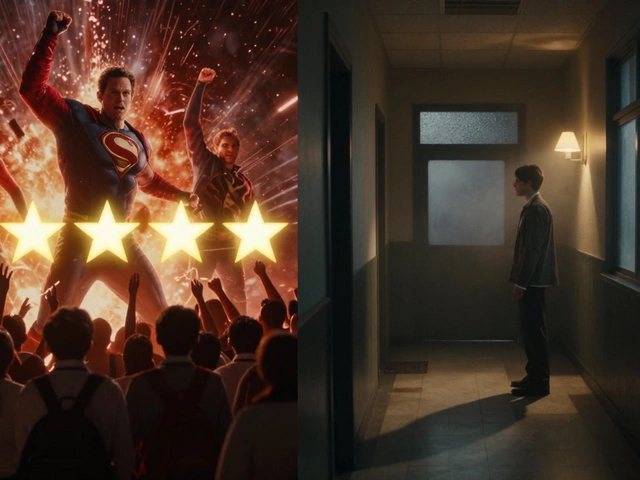
When you walk into a movie theater and get lost in the world on screen - the dusty streets of a 1970s crime drama, the sleek glass towers of a futuristic city, the cluttered attic that tells a family’s whole history - you’re not just watching actors. You’re experiencing the work of a production designer. But no production designer works alone. Their vision only comes to life through deep, messy, beautiful collaboration with the director and the director of photography (DP). This isn’t about following orders. It’s about building a shared language so every frame feels intentional, every space tells a story, and every light hits just right.
Understanding the Director’s Vision
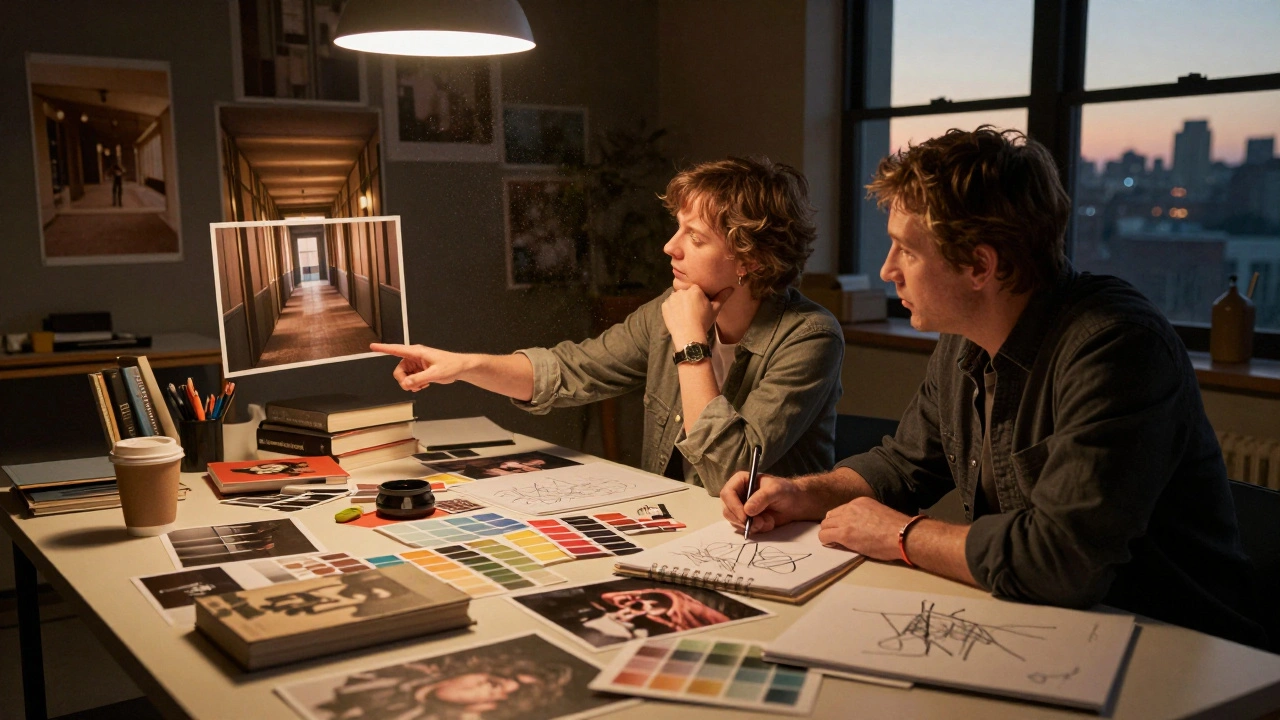
The director holds the overall story. They know the emotional arc, the tone, the rhythm. A production designer’s first job isn’t to sketch sets - it’s to listen. Not just to what the director says, but to what they don’t say. If a director talks about a character feeling trapped, that doesn’t just mean walls. It might mean low ceilings, tight doorways, windows that don’t open. It might mean colors that feel heavy, furniture that’s too close together. One of the most powerful tools a production designer has is the mood board. But it’s not just a collage of pretty pictures. It’s a conversation starter. Show a director three images: one from a Wes Anderson film, one from a Dardenne brothers movie, and one from a 1980s horror flick. Watch their reaction. Do they lean in at the symmetry? Do they frown at the grainy texture? Do they say, “That’s the feeling, but make it colder”? That’s the moment you start building the world together. Directors don’t always know how to describe what they want. That’s where the production designer steps in. Instead of saying, “I want it to feel lonely,” offer options: “Should the hallway be long and empty, or cluttered with forgotten things?” That shifts the conversation from vague to specific. And when the director picks one, you’ve just locked in the visual DNA of the film.Working With the Director of Photography
The DP controls the light, the camera movement, the lens choices. They’re the one who makes sure the set you built doesn’t just look good - it photographs well. And that’s where things can go sideways if you don’t talk early and often. A common mistake? Building a massive, intricate set and then realizing the DP needs to shoot it with a wide-angle lens from 15 feet away. Suddenly, half your detail disappears into the shadows. Or worse - you painted the walls a deep burgundy because it matched the character’s trauma, but the DP says it’s too dark to expose properly under their lighting setup. Now you’re stuck. The fix? Bring the DP into the design process from day one. Walk them through the locations. Show them where the windows are. Ask: “If you had to light this room for a 3 a.m. scene, where would you put the key light?” Their answer might change your entire color palette or force you to move a wall. That’s not a setback. That’s collaboration. Some DPs love practical lights - lamps, candles, neon signs - because they add realism. Others rely on big, soft sources for a painterly look. If your set has a kitchen with a single overhead bulb, and the DP wants to simulate a soft window glow, you need to know that before you install the ceiling. Maybe you build a hidden LED panel behind the fake skylight. Maybe you leave a gap in the roof for a crane rig. Either way, it’s a team decision.Shared Language and Visual Storytelling
Great production design doesn’t just decorate. It reinforces character, theme, and emotion. And that only works if the director and DP are thinking the same way. Think about production designer Hannah Beachler’s work on Black Panther. She didn’t just build Wakanda - she built a culture. The architecture blended African traditions with futuristic tech. The color palette shifted between royal purples and earthy greens depending on the scene’s emotional weight. But none of that would’ve landed without Ryan Coogler’s direction and Rachel Morrison’s lighting. Coogler wanted the palace to feel alive, not sterile. Morrison used practical light sources - glowing crystals, fire pits - to make the digital effects feel real. The result? A world that felt ancient and advanced at the same time. That’s the magic. When the set, the lighting, and the story align, the audience doesn’t notice the design. They just feel it.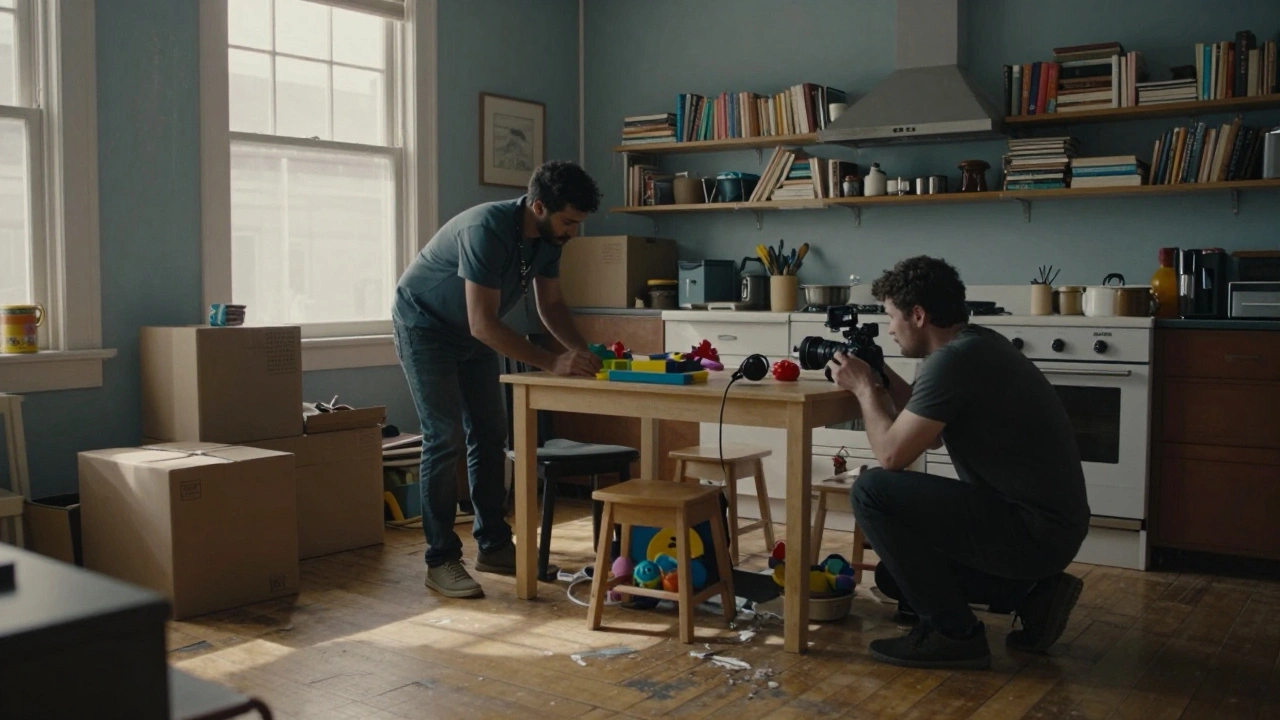
Conflict Is Normal - Here’s How to Handle It
Collaboration doesn’t mean agreement. It means respect, even when you disagree. A director might want a hallway to be 30 feet long for dramatic tension. The DP says it’s too long to light evenly without massive rigs that block the camera. The production designer has to mediate. Do you shorten the hallway? Add a mid-wall light source? Build a false ceiling with hidden LEDs? Each choice has trade-offs: time, budget, visual impact. The key is to bring solutions, not problems. Don’t say, “The DP says it won’t work.” Say, “Here are three ways we can make this work - here’s what each one costs and how it affects the shot.” That turns conflict into problem-solving. Some directors are visual thinkers. They’ll sketch on napkins. Others are verbal - they’ll describe a scene like a dream. Learn their style. If your director draws rough layouts, keep a sketchpad handy. If they talk in metaphors (“I want this room to feel like a forgotten church”), translate that into physical details: cracked stained glass, dust on pews, uneven floorboards.Practical Tools for Smoother Collaboration
You don’t need fancy software to collaborate well. But you do need structure.- Start with a pre-vis meeting. Bring the director, DP, and yourself together before any designs are finalized. Walk through the script scene by scene. Mark which ones need complex sets, which need special lighting, which need to feel claustrophobic.
- Use 3D models - even simple ones in SketchUp or Blender. It’s easier to say “move the wall 2 feet” in a digital model than to rebuild it on set.
- Keep a shared digital folder: mood boards, color swatches, lighting diagrams, reference images. Everyone should have access. No one should be guessing.
- Hold weekly check-ins. Not status reports. Ask: “What’s working? What’s breaking?” Sometimes the biggest issue isn’t the set - it’s that the DP can’t get the camera angle they need because a prop is blocking the path.
Real-World Example: The Apartment in Marriage Story
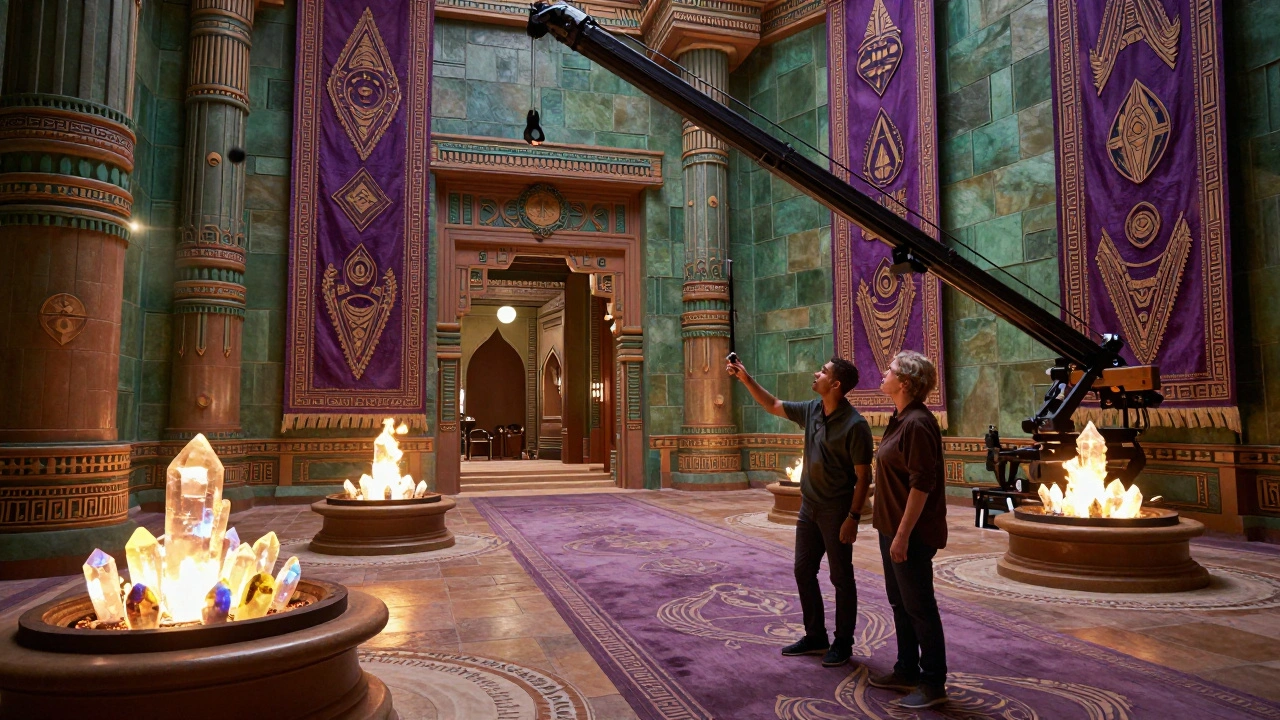
Noah Baumbach’s Marriage Story is a quiet film about a divorce. The apartment where the couple lives becomes a character. It’s not fancy. It’s lived-in. Books everywhere. A child’s toys half-hidden. A kitchen that looks like it hasn’t been cleaned in weeks. Production designer Hannah Beachler (yes, the same one from Black Panther) and DP Robbie Ryan worked together to make the space feel real, not staged. The apartment was shot mostly with handheld cameras. That meant walls couldn’t be too heavy - they had to allow for movement. The color scheme was muted: grays, creams, faded blues. Why? Because bright colors would’ve clashed with the emotional tone. Ryan needed natural light to feel authentic, so windows had to be real, not painted. That meant the set had to be built in a real building with actual windows. The production team found a Brooklyn loft, then stripped it down to the bones and rebuilt the interior to match the script’s needs. The result? A space that feels like a home - not a set. And that’s the goal.What Happens When Collaboration Fails
Bad production design isn’t always about bad art. Sometimes it’s about bad communication. I’ve seen films where the set looks stunning - but the lighting makes it look flat. Or the lighting is perfect, but the set is too busy, distracting from the actors. Or the director wanted a “dark, moody” vibe, but the DP used bright, even lighting because they didn’t understand the tone. These aren’t technical failures. They’re collaboration failures. No one stopped to ask: “What are we trying to say with this scene?” The best films - the ones that stick with you - are the ones where every department is speaking the same language. The production designer doesn’t just build a room. They build a feeling. The DP doesn’t just light a scene. They shape the mood. The director doesn’t just direct actors. They guide the entire emotional journey. When those three lines meet - exactly - you get something that feels real. Not because it’s realistic. But because it’s truthful.Final Thought: It’s Not About the Set
The best production designers don’t want you to notice their work. They want you to feel it. That means listening more than talking. Adapting more than insisting. And knowing when to let go of a perfect idea because it doesn’t serve the story. The set is just the container. The director gives it meaning. The DP gives it life. And together, they turn space into story.What does a production designer actually do on set?
A production designer creates the visual world of the film. That includes designing sets, selecting locations, choosing colors, sourcing props, and overseeing the art department. On set, they ensure every visual element - from wallpaper to furniture - supports the story and matches the director’s and DP’s vision. They’re the bridge between script and screen.
Do production designers work with the DP before shooting starts?
Yes, and they should. The best collaborations start before construction. The DP needs to know where windows are, what materials are used, and how light will bounce off surfaces. A production designer who waits until the set is built to talk to the DP risks costly changes or compromised lighting. Early alignment saves time, money, and creative frustration.
How do you handle creative differences between the director and DP?
Focus on the story, not the ego. Ask: “What emotion are we trying to create here?” Then find a solution that serves that goal. If the director wants a dark, claustrophobic room and the DP says it won’t photograph well, suggest practical lighting - like a single flickering bulb - that keeps the mood but gives the camera something to work with. Compromise isn’t weakness. It’s problem-solving with purpose.
Can a production designer change the script’s setting?
They can suggest it. If a script says “a modern office,” but the production designer knows a converted warehouse with exposed brick and high ceilings better matches the tone, they can propose it. But they need to explain why - how the space enhances character or theme. The final call is the director’s, but a strong creative argument can change the script’s direction.
What’s the biggest mistake new production designers make?
Trying to make everything look beautiful instead of truthful. A messy kitchen isn’t a design flaw - it’s character. A cracked wall isn’t a budget issue - it’s history. The best production design doesn’t shout. It whispers. And that only happens when you listen more than you build.