Not all animated movies feel the same. You can tell a Pixar film from a Studio Ghibli movie in the first five minutes - not just by the characters, but by how the world moves, how light hits a character’s face, how silence is used. Animation isn’t just drawing pictures that move. It’s a language. And each studio speaks it differently.
Pixar: Emotional Engineering
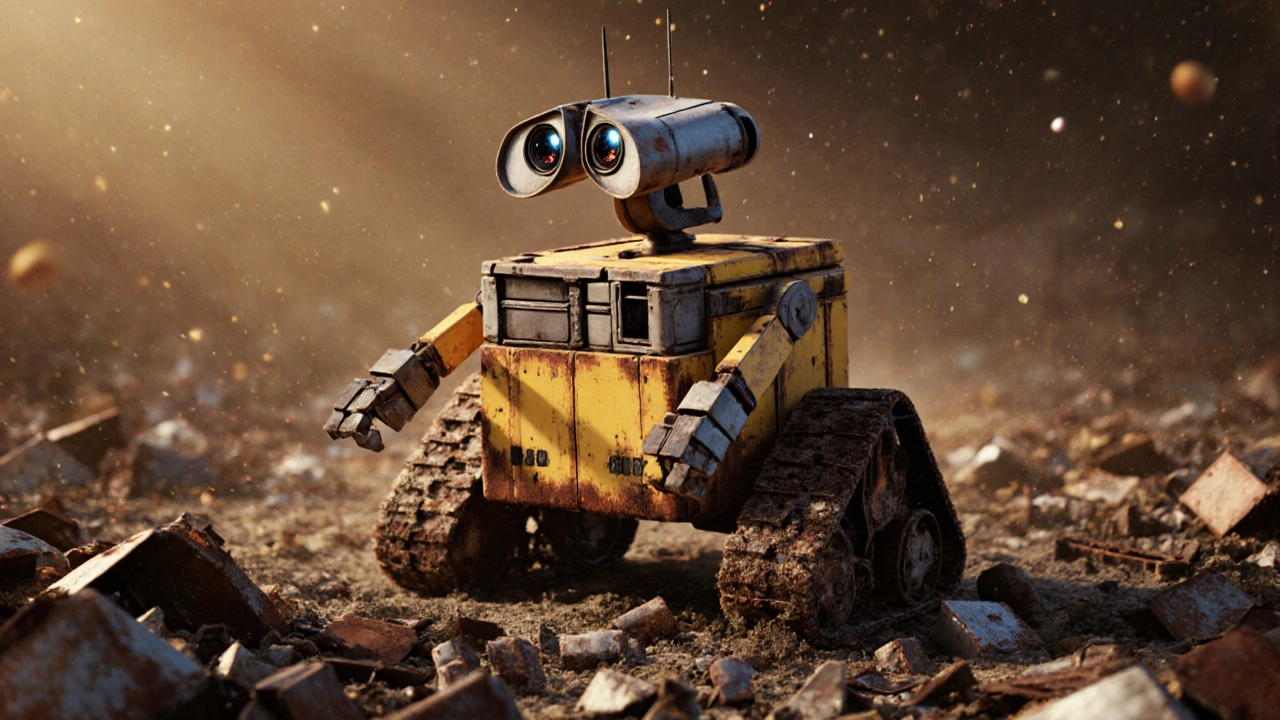
Pixar doesn’t just make cartoons. They build emotional machines. Their films are engineered to make you cry over a robot, mourn a dying house, or cheer for a rat who wants to cook. Their signature style? Realism grounded in feeling. They use physics-based lighting, complex fur and fabric simulations, and micro-expressions that feel human even when the characters are aliens or toys.
Look at Wall-E. The robot’s eyes aren’t just animated - they’re acted. A slight tilt, a pause, a blink - all timed to carry weight. Pixar’s animators study real human movement, then exaggerate it just enough to keep it expressive but believable. Their worlds feel lived-in: dust on the floor, wrinkles in clothes, sunlight filtering through windows. That’s why you believe a trash-compacting robot loves a spaceship.
Pixar’s formula is simple: perfect technical craft + raw emotional truth. No studio does both better. Their films have won 13 Academy Awards for Best Animated Feature - more than any other studio. And they’ve done it by never letting the tech overshadow the story.
Studio Ghibli: Hand-Drawn Soul
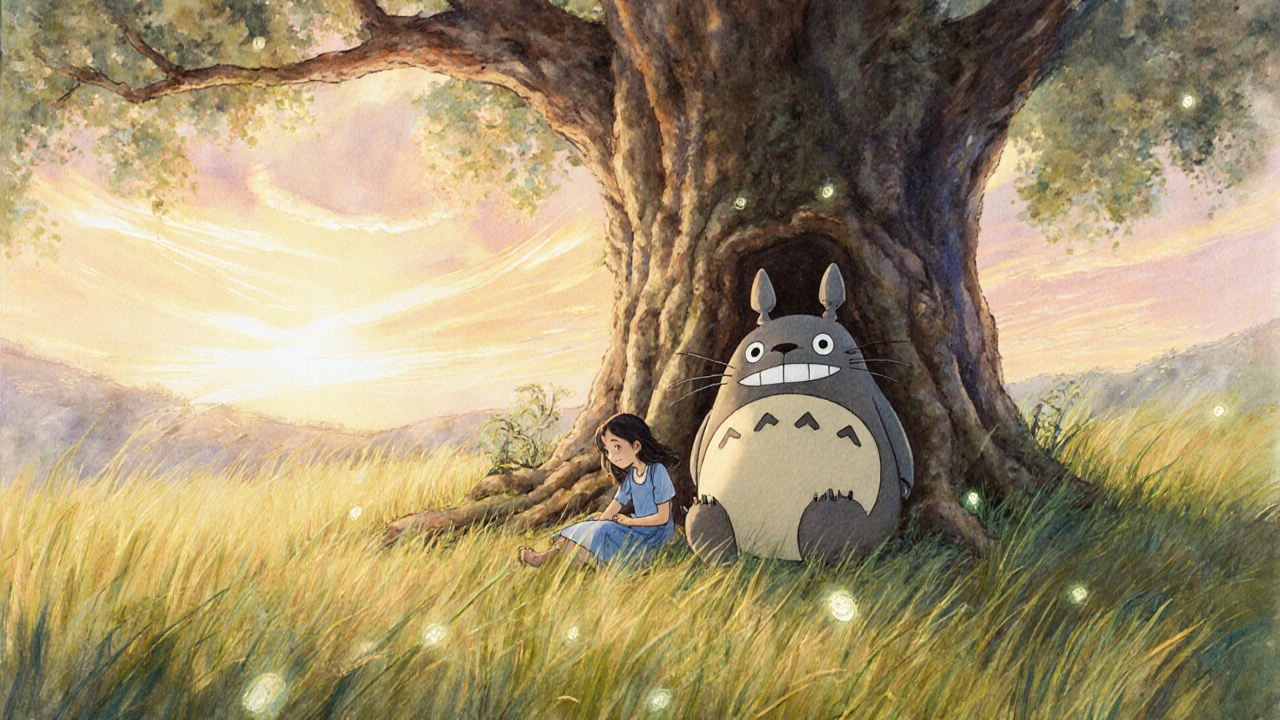
Studio Ghibli films look like watercolor paintings that came to life. Every frame is hand-drawn, with visible pencil lines, textured brushes, and soft edges. There’s no CGI smoothing over the imperfections - and that’s the point. Their style is quiet, poetic, and deeply rooted in nature.
Think of My Neighbor Totoro. The trees breathe. The wind moves the grass in slow, rolling waves. Cats become buses. Dust spirits dance in sunbeams. Ghibli doesn’t explain magic - it lets it exist. Their animation is slow, deliberate. Characters don’t always move fast. Sometimes they just sit, looking out a window, and that moment carries more weight than any action sequence.
Hayao Miyazaki, the studio’s legendary director, refuses to use motion capture or digital rigging. Animators draw every frame by hand, often redrawing entire scenes to get the emotion right. The result? A sense of warmth you can’t replicate with algorithms. Ghibli’s worlds feel alive because they were made by human hands, with patience, and with reverence for the natural world.
DreamWorks: Bold, Brash, and Bouncy
DreamWorks animation is loud, fast, and full of personality. Their style leans into exaggeration - big eyes, wide smiles, limbs that stretch like rubber bands. Think of Shrek’s grumpy snort or the way Jack Frost zooms through the air in How to Train Your Dragon. It’s animated like a comic book brought to life.
DreamWorks doesn’t aim for realism. They aim for energy. Their characters bounce, slap, and explode with motion. Backgrounds are often stylized - bold colors, graphic shapes, minimal detail - to keep the focus on the characters’ wild expressions and movements. Their films are packed with pop culture jokes, rapid-fire dialogue, and visual gags that land like punchlines.
It’s the opposite of Ghibli’s quiet beauty. DreamWorks wants you to laugh, cheer, and feel the adrenaline. Their animation style is built for the big screen, for kids who can’t sit still, and for adults who still love a good silly moment. You don’t watch a DreamWorks movie to feel deep - you watch it to feel alive.
Laika: Dark, Detailed, and Deliberate
Laika is the only studio in the world that still makes stop-motion animated features entirely by hand. Every frame is a physical sculpture moved millimeter by millimeter. Their films - Coraline, ParaNorman, Kubo and the Two Strings - look like dark fairy tales carved out of wood and cloth.
Laika’s signature? Texture. Every surface has grit. Coraline’s button eyes aren’t smooth - they’re stitched. Kubo’s paper armor ripples in the wind. The rain in Missing Link is made of tiny droplets painted on glass. Their characters have visible seams, scars, and weathering. They don’t hide the artifice - they celebrate it.
It’s painstaking work. One second of animation can take days. A single character might have 20,000 facial expressions, each hand-sculpted. But the result is something digital animation can’t replicate: a tangible, eerie beauty. Laika’s films feel ancient, mysterious, and hauntingly real. They’re not for everyone - but for those who see magic in the handmade, they’re unforgettable.
Cartoon Saloon: Folk Art Comes Alive
Cartoon Saloon, based in Ireland, makes films that look like ancient Celtic illustrations turned into motion. Their style is flat, graphic, and rich with pattern. Think stained glass, tapestries, and folk tales drawn with bold outlines and earthy colors.
The Secret of Kells is their masterpiece. Every frame is inspired by the Book of Kells - intricate swirls, ornate lettering, gold leaf effects. Characters move with a rhythmic, almost dance-like quality. Backgrounds are filled with patterns that tell stories on their own. There’s no 3D depth - everything is layered, like a pop-up book.
They use limited animation on purpose. Characters don’t move constantly. Instead, the environment moves around them - swirling leaves, shifting shadows, glowing runes. It’s hypnotic. Cartoon Saloon’s films feel like watching a living manuscript. They’re not trying to be flashy. They’re trying to be timeless.

Why Style Matters
Animation studios aren’t just making movies. They’re defining how we feel about stories. Pixar makes you believe in the invisible. Ghibli makes you feel the wind. DreamWorks makes you laugh until your sides hurt. Laika makes you wonder what’s real. Cartoon Saloon makes you remember that stories used to be sacred.
When you choose an animated film, you’re not just picking a title. You’re picking a worldview. A style. A way of seeing the world. And that’s why these studios matter. They don’t just animate drawings - they animate emotions.
What You’ll See Next
The next wave of animation is blending these styles. Netflix and Apple TV+ are funding studios that mix hand-drawn elements with digital tools. Independent animators are reviving stop-motion with 3D printing. But the core truth remains: great animation isn’t about the tools. It’s about the hand behind them.
What makes Pixar’s animation different from other studios?
Pixar stands out because it combines cutting-edge technology with deep emotional storytelling. Their films use physics-based rendering to simulate real-world lighting and materials - like fur, fabric, and water - but always in service of the story. Characters like Wall-E or Boo from Monsters, Inc. express complex emotions through subtle facial movements, not dialogue. This blend of technical precision and heartfelt writing is what sets them apart.
Why do Studio Ghibli films feel so calm and quiet?
Studio Ghibli films feel calm because they’re made slowly, by hand, with attention to natural rhythms. Animators draw every frame without motion capture or digital shortcuts. Scenes often linger - characters sit, look out windows, or walk through fields - because the story isn’t about action, but presence. The silence, the wind, the rustling leaves - these aren’t empty moments. They’re emotional anchors.
Is stop-motion animation still relevant today?
Yes - and Laika proves it. While most studios use CGI, Laika continues to build physical puppets, sets, and props. Each frame is shot frame-by-frame, making their films uniquely tactile. The texture of clay, fabric, and paint gives their stories a haunting realism that digital animation can’t mimic. Audiences are drawn to that authenticity, especially as CGI becomes more common.
Which studio has the most unique visual style?
Cartoon Saloon has the most distinctive style. Their films look like living Celtic manuscripts - flat, pattern-heavy, and rich with symbolic detail. Unlike other studios that use depth and shading, Cartoon Saloon relies on color, line, and movement to convey mood. In The Breadwinner, even the shadows are drawn as intricate shapes. It’s a visual language all its own, rooted in Irish folk art.
Do animation styles affect how audiences connect with characters?
Absolutely. A character drawn with soft lines and subtle expressions (like in Ghibli films) feels more introspective and real. A character with exaggerated movements and bold shapes (like in DreamWorks) feels energetic and fun. The style shapes your emotional response. You don’t just watch a character - you feel their world through how it’s drawn.


Comments(9)