
Think about the moment in Toy Story when Woody clings to the back of the moving truck, heartbroken and alone. You don’t need to see his face to feel it. The music swells just enough - a quiet, aching melody with strings that ache like a held breath. Then, silence. Just the rumble of tires and the wind. That’s not luck. That’s sound design and music working together to turn a simple scene into a gut punch.
Animated films don’t have real actors breathing, crying, or shifting weight. They don’t have real environments echoing or rustling. Everything you hear - the whoosh of a superhero’s cape, the creak of a haunted house door, the way a character’s footsteps change when they’re scared - is built from scratch. And that’s where music and sound design become the invisible actors.
Music Tells You How to Feel Before the Scene Even Starts
In live-action films, actors bring emotion through facial expressions and body language. In animation, that emotion has to be coded into the audio. A composer doesn’t just write a tune - they write a feeling. When you hear the opening of Up, you know this is going to be about love, loss, and a lifetime of quiet courage. The piano melody is simple, but every note carries weight. It doesn’t just accompany the montage; it *is* the montage.
Disney and Pixar composers like Michael Giacchino, Alan Menken, and Christophe Beck don’t just match the visuals. They anticipate them. They’ll record a cue that starts soft and builds slowly, knowing the animation team will stretch a character’s pause just a half-second longer to let the music breathe. That’s collaboration at its finest.
Compare that to a horror animated film like The Nightmare Before Christmas. Danny Elfman’s score doesn’t just scare you - it makes you feel like you’re walking through a carnival that’s been abandoned for 100 years. The clanging bells, the off-key organ, the way the brass stabs like a sudden gasp - it’s all designed to unsettle you before you even see the ghostly figures.
Sound Design Builds the World You Can’t See
Animation doesn’t have real physics. A character can jump off a cliff and land on a trampoline made of clouds. But if the sound of that landing doesn’t feel right, the whole illusion breaks. That’s where sound designers step in.
They don’t just grab stock effects. They create them. For Shrek, the team recorded mud squelching under boots by stomping in a giant tub of wet clay. For the dragon in How to Train Your Dragon, they layered lion roars, whale calls, and even a recording of a car engine revving through a megaphone. The result? A creature that sounds massive, alive, and strangely emotional - even though it’s made of pixels.
Even small sounds matter. The rustle of a character’s clothes as they turn their head. The way a door creaks when someone’s hiding behind it. The echo in a cave versus the muffled thud in a forest. These details don’t get listed in the credits, but they’re what make the world feel real.
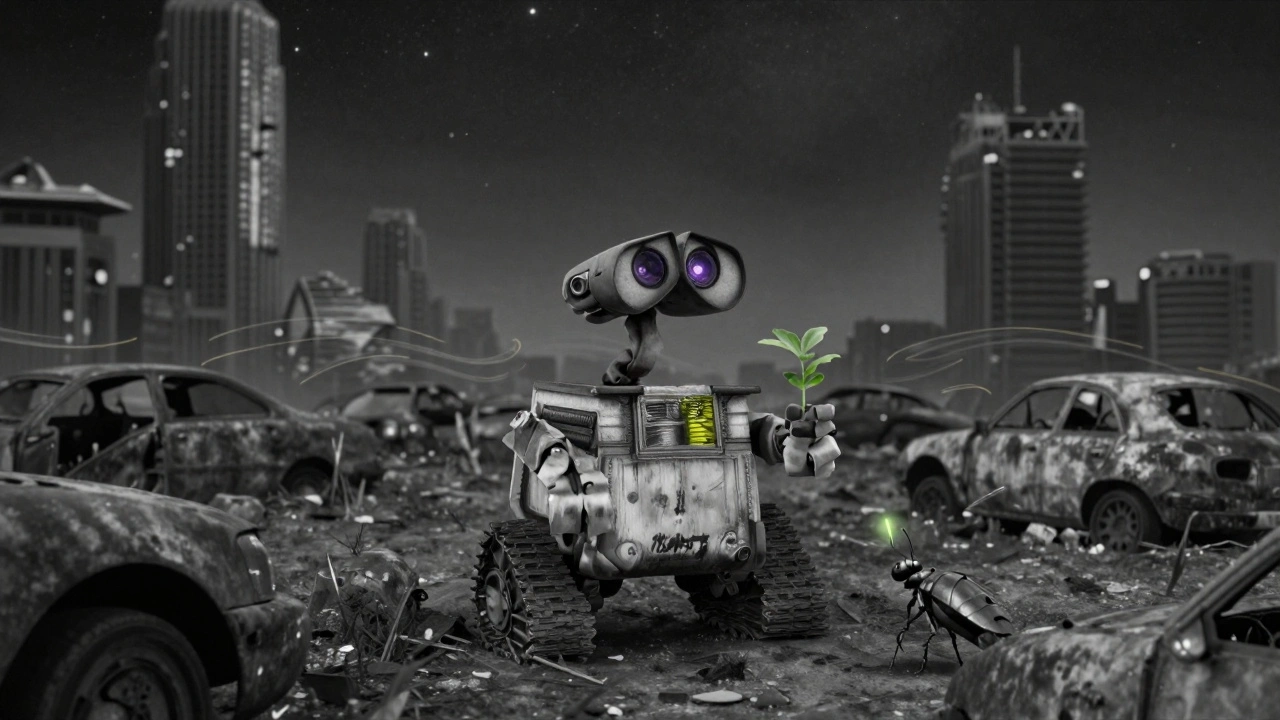
Take Wall-E. For the first 30 minutes, there’s almost no dialogue. The entire story is told through movement, silence, and sound. The hum of Wall-E’s internal mechanics. The chirp of his cockroach friend. The crunch of trash under his treads. The way his voice modulator stutters when he’s nervous. These aren’t random. They’re carefully chosen to make you care about a robot with no face.
The Difference Between Music and Sound Design
People often use the words interchangeably, but they’re not the same.
Music is composed. It has melody, harmony, rhythm. It’s written on a staff. It’s meant to evoke emotion, set tone, and guide the audience’s heart.
Sound design is constructed. It’s made from field recordings, synthesized tones, manipulated samples. It’s meant to ground the story in physical reality - even when that reality is made of talking animals or floating islands.
Think of it like painting. Music is the color palette. Sound design is the brushstrokes. One gives you the mood. The other gives you the texture.
When they work together, magic happens. In Spider-Man: Into the Spider-Verse, the music pulses with hip-hop beats and electronic glitches, matching the film’s graffiti-style visuals. But the sound design? That’s where the real innovation lives. Every time Miles swings, you hear the whip-crack of the web, the slap of his sneakers on concrete, the distant echo of city traffic - all layered so precisely, you feel like you’re hanging off a building with him.
Why Silence Is Just as Powerful as Sound
Some of the most powerful moments in animated films happen when nothing is playing.
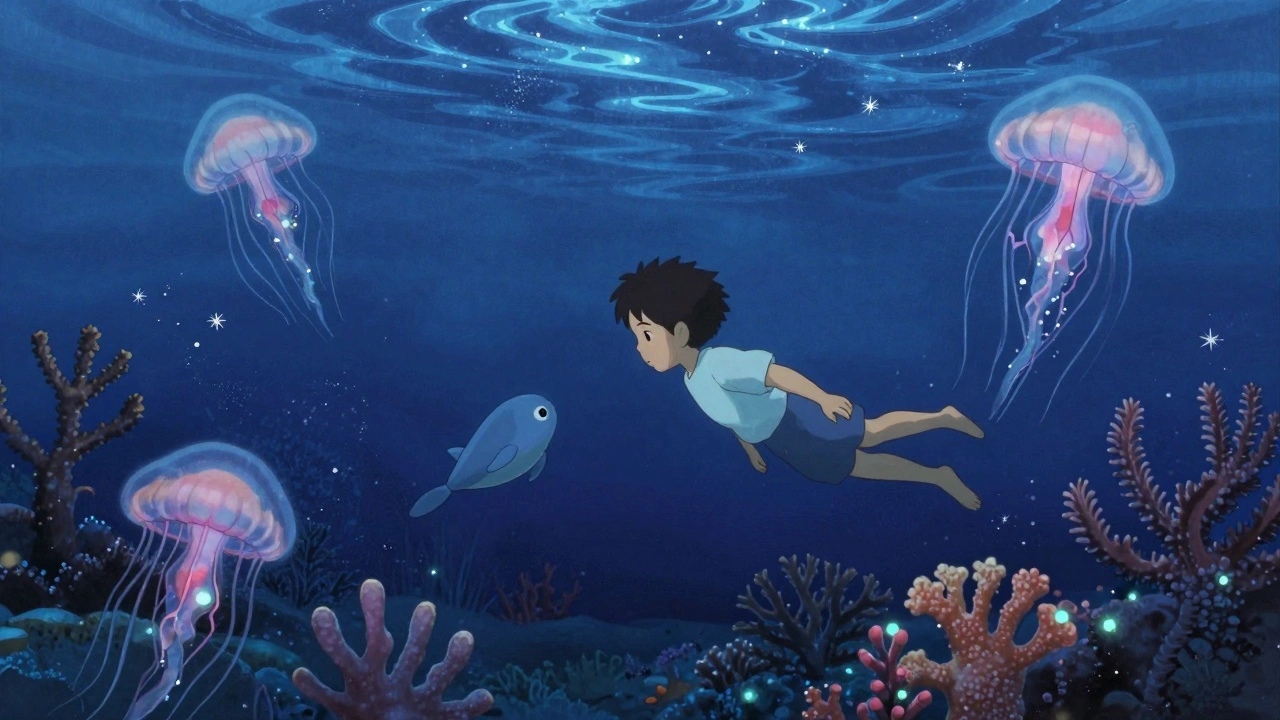
In Grave of the Fireflies, the silence after the bombing is deafening. No music. No birds. No wind. Just the quiet of a world that’s been erased. That silence is more devastating than any orchestral swell.
Even in comedies, silence can land a joke. In The Incredibles, when Mr. Incredible tries to lift a car and it barely moves, the only sound is his strained breathing and the creak of metal. No music. No laugh track. Just the struggle. That’s when you realize how hard he’s trying - and why you’re rooting for him.
Good sound designers know when to turn everything off. A single heartbeat, a distant drip of water, the sigh of a character before they speak - these tiny gaps are where the audience breathes. Where they feel the weight.
How Technology Changed the Game
Twenty years ago, animated films used analog tape machines and physical sound libraries. Today, studios use digital audio workstations with thousands of samples, real-time processing, and AI-assisted tools that can isolate a voice from background noise or generate realistic ambient sounds from a single recording.
But the best studios still rely on old-school methods. For Encanto, the team traveled to Colombia to record traditional instruments like the caja vallenata and guacharaca. They didn’t just sample them - they recorded musicians playing in real rooms, with real acoustics. That authenticity is what makes the music feel alive, not like a computer-generated copy.
Modern tools also allow for dynamic audio. In Luca, the music shifts subtly as the characters move from land to sea. The bass drops, the strings become brighter, the rhythm loosens - all in real time, synced perfectly to the animation. That level of precision wasn’t possible a decade ago.
What Happens When It Goes Wrong
Bad sound design doesn’t just distract - it breaks the spell. You’ve felt it. A cartoon character punches someone, and it sounds like a wet towel hitting a wall. A magical spell zaps with the same sound effect used for a microwave beep. A dramatic moment is ruined by a cheesy orchestral hit that screams "I’m supposed to be sad now."
Some animated films try to copy live-action trends - adding loud, booming bass and constant music to feel "epic." But animation thrives on subtlety. Too much sound becomes noise. Too little feels empty. The balance is everything.
Look at Over the Moon. The music is beautiful, but the sound design is flat. The magical world of the Moon doesn’t feel like a place you can touch. The footsteps are too clean. The wind doesn’t carry. It’s technically polished but emotionally hollow. That’s the danger of prioritizing polish over feeling.
What You Can Learn from the Best
If you want to understand how music and sound design work in animation, watch without sound first. Just watch. Notice how the timing of a character’s blink, the tilt of their head, the pause before they speak - all of it is designed to match a rhythm.
Now watch it again with sound on. You’ll hear how the music doesn’t just follow the action - it leads it. How a creaking floorboard comes a half-second before the character steps on it, making you tense. How a single violin note holds just long enough to make you hold your breath.
Great animated films don’t just tell stories. They make you feel them in your bones. And that feeling? It’s not just drawn. It’s heard.
Why is music so important in animated films compared to live-action?
In live-action, actors’ voices, facial expressions, and real-world sounds carry emotion. In animation, everything is created. Music becomes the emotional anchor - it tells the audience how to feel when there are no real human reactions to rely on. A character’s smile means little without the right melody behind it.
Can sound design make a character feel real even if they’re not human?
Absolutely. Think of Wall-E or Dory. Their voices are synthesized, but their sounds - the whir of gears, the splash of water, the way they move through space - are built from real-world recordings mixed with creative manipulation. These sounds give them physical presence. You don’t just see them; you feel their weight, their movement, their hesitation. That’s what makes them feel alive.
Do animated films use the same sound libraries as live-action films?
Sometimes, but they often modify them heavily. A lion roar might be slowed down and layered with a cello to make a dragon sound ancient. A door slam might be recorded using a metal trash can lid to sound more cartoonish. Animation needs sounds that fit its exaggerated or impossible physics, so standard libraries are just starting points.
Why do some animated films have no music at all?
Silence is a tool. Films like Wall-E or Grave of the Fireflies use silence to create intimacy, loneliness, or awe. When there’s no music, the audience leans in. They focus on the smallest sounds - a breath, a footstep, a sigh - which makes those moments feel more personal and powerful.
How do composers and sound designers work together?
They start early. The composer might write a theme based on early storyboards. The sound designer will record ambient textures that match the composer’s tone - like using wind chimes to match a haunting melody. They often share tracks, so the music doesn’t clash with key sound effects. It’s a constant back-and-forth, not a handoff.



Comments(5)