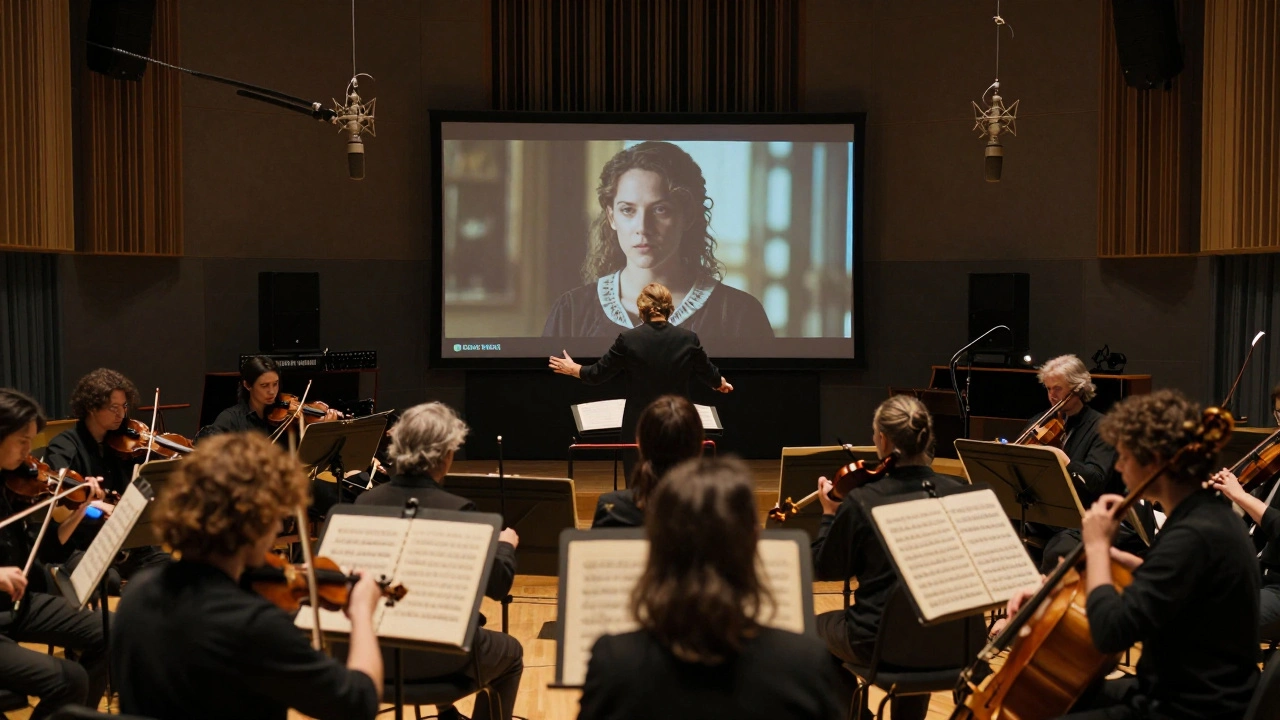
When you record live music for a film, you’re not just capturing notes-you’re freezing a moment in time that will shape how audiences feel. A violin swell during a breakup scene, a drumroll before a reveal, a choir rising under the credits-these aren’t background noise. They’re emotional anchors. And if the audio doesn’t sync perfectly with the picture, that emotion dies. No matter how beautiful the performance, bad sync ruins everything.
Why Live Recording Matters More Than You Think
Most films use pre-recorded scores. That’s fine for action movies or comedies. But when you need raw emotion-think period dramas, indie films, or intimate character pieces-live recording makes all the difference. Musicians react to the visuals in real time. A pianist slows down because the actor’s tear falls just after the chord. A cellist holds a note longer because the camera lingers on the empty chair. That kind of responsiveness can’t be replicated in a studio with a click track.
Look at films like Manchester by the Sea or The Revenant. Their scores weren’t just composed-they were lived. The musicians played alongside edited footage, feeling the silence between lines, the weight of a glance. That’s why the music doesn’t just accompany the scene-it becomes part of the breathing space.
Planning Before You Record
You can’t wing live music recording. It’s too expensive, too time-sensitive, and too delicate. Start with a clear plan:
- Lock the picture first. No more edits after you start recording. Even a 2-frame shift can throw off timing.
- Choose the right ensemble size. A 70-piece orchestra needs a large stage. A solo cello with ambient reverb? A small room works better.
- Work with the composer to mark cue points. Every musical entrance should line up with a visual beat-eye movement, door slam, heartbeat.
- Print a timecode sheet. Every second of music must match the film’s timecode down to the frame.
One mistake I’ve seen too many times: teams start recording before the final cut. They think they can fix it in post. They can’t. A 0.3-second delay between a gunshot and a drum hit makes the scene feel fake. Audiences don’t know why-they just feel something’s off.
Setting Up the Recording Space
Location isn’t just about space-it’s about sound. A church gives you natural reverb. A warehouse gives you echo. A stage with acoustic panels gives you control.
For most film scoring sessions, you want a balance:
- Use a large, untreated room if you need natural ambience-like for a fantasy score with strings and choir.
- Use a treated studio with movable baffles if you need clean separation-like for a thriller with isolated percussion.
- Always place microphones at least 6 feet from the ensemble. Close mics capture detail. Room mics capture space. You need both.
- Record at 96kHz/24-bit. You’ll need the headroom for editing and syncing later.
Don’t forget the conductor’s monitor. They need to hear the film’s audio clearly. If they’re watching a screen with no sound, they’ll play ahead or behind. Use a dedicated video playback system with low-latency audio output. Even a 50-millisecond delay can throw off timing.
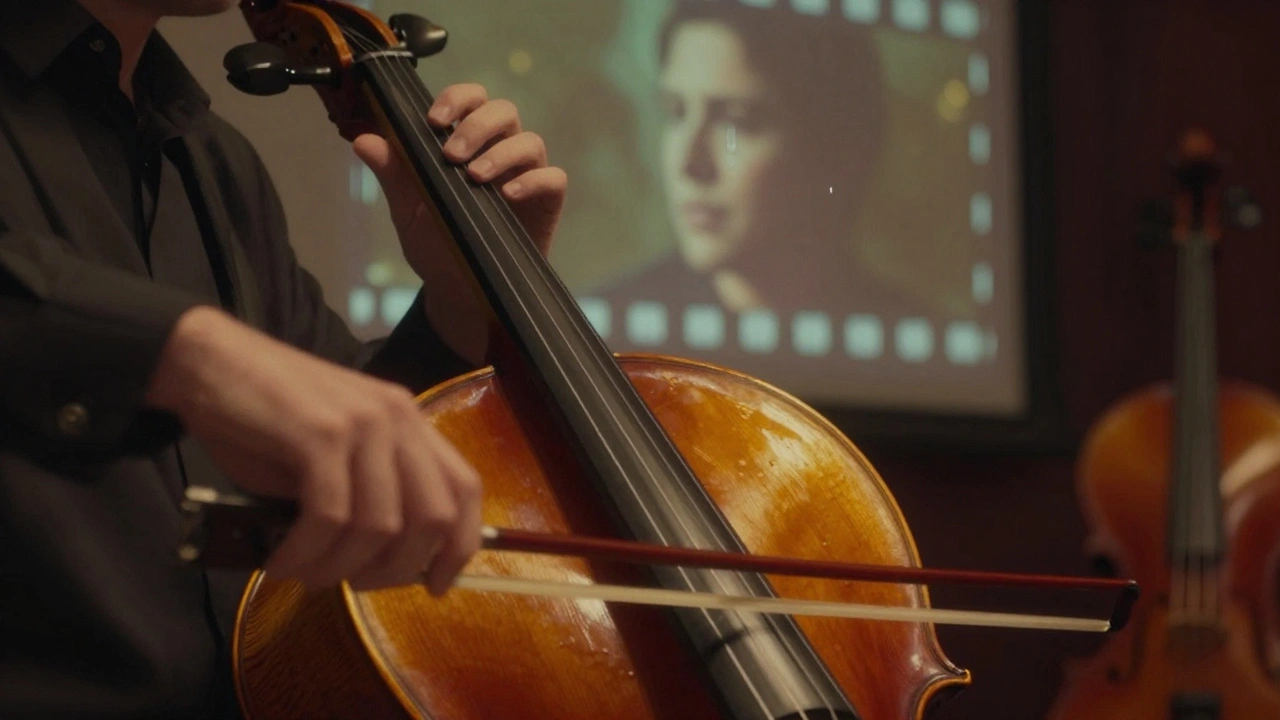
Syncing Music to Picture: The Real Challenge
Synchronization isn’t just hitting the right note at the right time. It’s about matching the rhythm of the scene.
Here’s how it’s done:
- Start with a leader. The film plays for 2 seconds before the music begins. That’s your reference point.
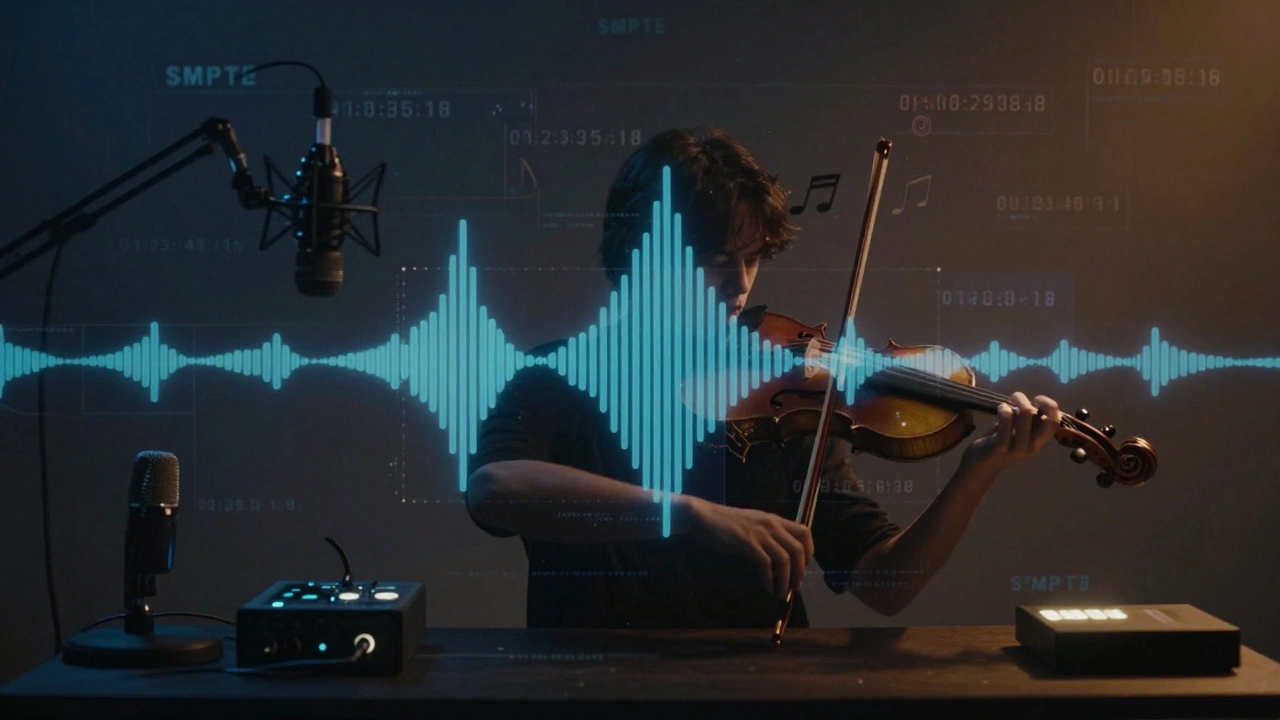
- Use SMPTE timecode embedded in the video. Every frame has a number: 01:23:45:18 means hour 1, minute 23, second 45, frame 18.
- Record the timecode into your audio track. Your DAW must lock to the video’s timecode using a sync box like a Tentacle Sync or Blackmagic UltraStudio.
- Play the film on a high-refresh monitor (120Hz or higher) so musicians can see subtle movements.
- Record multiple takes. Even the best musicians miss a cue once in a while.
After recording, you’ll sync the audio in your editing software. But don’t just drag it to match. Listen for the attack of the first note. Does it land on the exact frame the character turns? If it’s off by 2 frames, nudge it. Don’t rely on auto-sync tools-they’re wrong 30% of the time.
Common Mistakes and How to Avoid Them
Even experienced teams mess this up. Here are the top 5 errors:
- Not locking timecode - If your audio and video aren’t synced before recording, you’re wasting money. Always test with a 10-second clip before the full session.
- Using headphones that delay sound - Some studio headphones add lag. Use low-latency models like Sennheiser HD 280 Pro or Beyerdynamic DT 770 Pro.
- Ignoring the conductor’s cue - The conductor isn’t just waving their arms. They’re watching the screen, counting frames, and adjusting tempo. Give them a clear view.
- Recording in a noisy environment - HVAC systems, traffic, even phones ringing can ruin a take. Shut down everything non-essential.
- Not backing up audio separately - Always record to two drives simultaneously. One fails? You lose the performance.
One team I worked with recorded a 45-minute score over three days. On day two, their main drive crashed. They had no backup. The entire session was gone. They had to re-record from scratch. Cost: $28,000. Time: 11 days. All because they skipped a simple backup step.
Post-Production: The Final Polish
After recording, you’re not done. You still need to clean up and align.
- Use spectral editing tools (like iZotope RX) to remove breaths, coughs, or mic bumps.
- Align each instrument group individually. Strings might need a 1-frame shift. Percussion might need 3.
- Check phase alignment between stereo mics. If the left and right channels cancel each other, the music sounds thin.
- Apply light compression only. You want dynamics preserved. A live performance loses its soul if it’s squashed.
Never use auto-tune on live orchestral recordings. It sounds robotic. And it’s not just wrong-it’s disrespectful to the musicians.
When to Skip Live Recording
Not every film needs it. If your score is electronic, repetitive, or heavily processed, pre-recorded tracks work better. Same if you’re on a tight budget or shooting on location with no control over sound.
But if your film relies on emotion, silence, or subtle timing-go live. It’s the difference between a good score and a haunting one.
Can you sync live music after recording without timecode?
Technically, yes-but it’s a nightmare. Without embedded timecode, you have to manually match audio waveforms to visual cues. That means watching the film frame by frame and nudging each section. It takes 10 times longer and still has errors. Always record timecode with your audio. It’s non-negotiable.
Do you need a conductor for small ensembles?
If you have fewer than 8 musicians, you can get away without one-only if everyone can see the screen clearly. But even then, a conductor helps with timing consistency. One person watching the screen and giving visual cues keeps everyone locked in. It’s worth the cost.
What’s the best microphone setup for live film scoring?
Start with a stereo pair (like Neumann TLM 103 or AKG C414) placed 6-10 feet back for room sound. Add spot mics on key sections: one for cellos, one for brass, one for percussion. Avoid over-miking. Too many mics create phase issues. Three to five mics total is usually enough.
How many takes should you record?
Record at least three full takes. The first is warm-up. The second is usually the best. The third is insurance. If the second take has a flubbed note but the rest is perfect, you can splice in the clean part from take three. Never rely on just one take.
Can you record live music on location?
It’s possible, but risky. You need a quiet, controlled space-no wind, no traffic, no HVAC noise. Most on-location recordings are done in empty halls, churches, or soundproofed trailers. Always test the space first. Record 10 seconds of silence. If you hear anything, it’s not safe.
Final Thought: It’s About Feeling, Not Just Timing
Recording live music for film isn’t a technical checklist. It’s a collaboration between sound, image, and emotion. The best sync isn’t the one that’s perfectly aligned-it’s the one that makes you forget you’re listening to music at all. That’s when you know it worked. The violin didn’t just play on cue. It breathed with the character. The drums didn’t just hit the beat. They echoed the heartbeat of the scene. That’s the magic. And it only happens when you treat the music like part of the story-not an add-on.




Comments(11)