
Most people think a movie’s success is decided on its opening weekend. Big numbers get headlines, trending tweets, and late-night talk show jokes. But that’s just the start. The real story of a film’s success hides in what happens after - the quiet, steady climb, the slow fade, or sometimes, the surprise surge. That’s where box office legs come in.
What Exactly Are Box Office Legs?
Box office legs refer to how long a movie continues to earn money after its opening weekend. It’s not about how much it makes on Friday through Sunday. It’s about how much it makes on Monday, Tuesday, Wednesday - and then again the next weekend, and the one after that. A movie with strong legs doesn’t crash after its debut. It holds on. It keeps drawing people in, week after week.
Think of it like a marathon, not a sprint. The opening weekend is the starting line. Legs are the endurance. Some films explode fast and die fast - like a firework. Others start modestly and grow, like a slow-burning candle that lights up rooms for weeks.
How Do You Measure It?
You don’t just look at total gross. That’s misleading. A movie that makes $100 million over 10 weeks might seem impressive, but if it made $80 million in its first three days, it’s not doing well. The real metric is the drop-off rate.
Here’s the simplest way to calculate it: Take the movie’s opening weekend gross and compare it to its second weekend. If it drops less than 50%, it’s got strong legs. If it drops more than 70%, it’s fading fast.
- Excellent legs: Less than 30% drop from Week 1 to Week 2
- Good legs: 30%-50% drop
- Weak legs: 50%-70% drop
- Dead on arrival: Over 70% drop
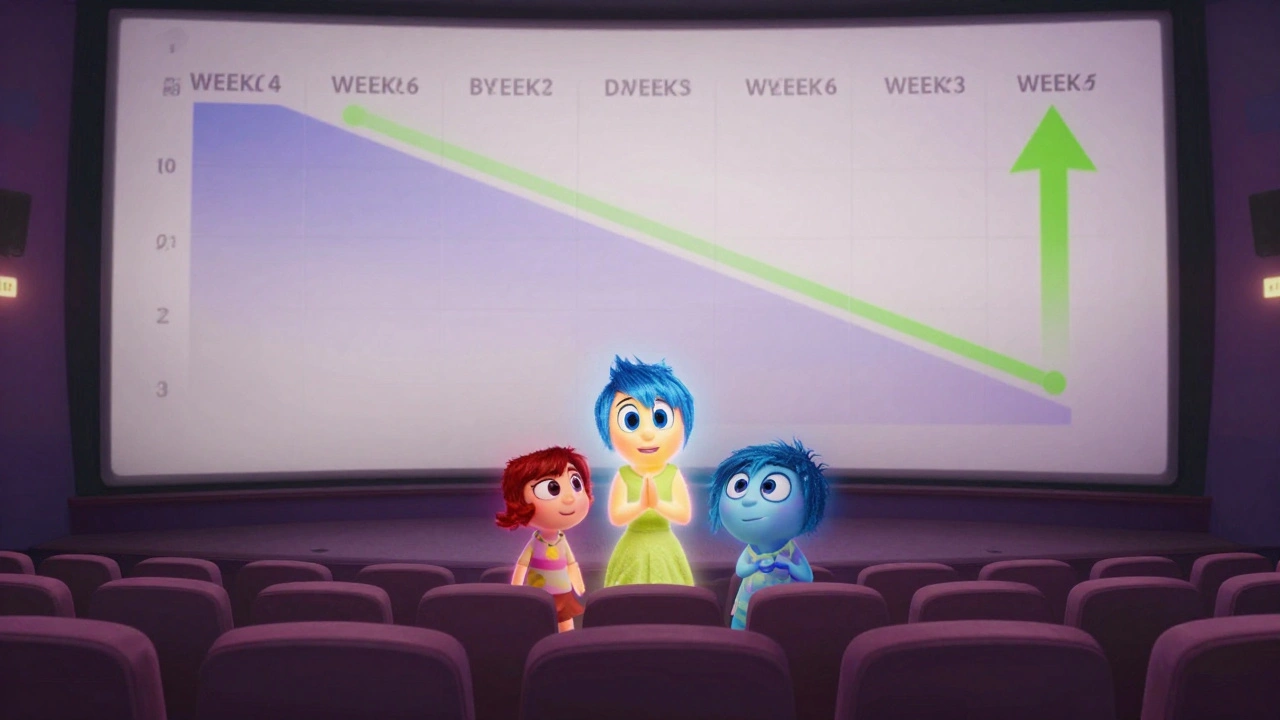
For example, in 2025, Inside Out 2 opened with $148 million. Its second weekend? $82 million. That’s a 45% drop - solid, but not amazing. Then it held steady. Week three: $51 million. Week four: $37 million. By week six, it was still making $15 million. That’s legs. It went on to earn over $1.6 billion worldwide, mostly after opening weekend.
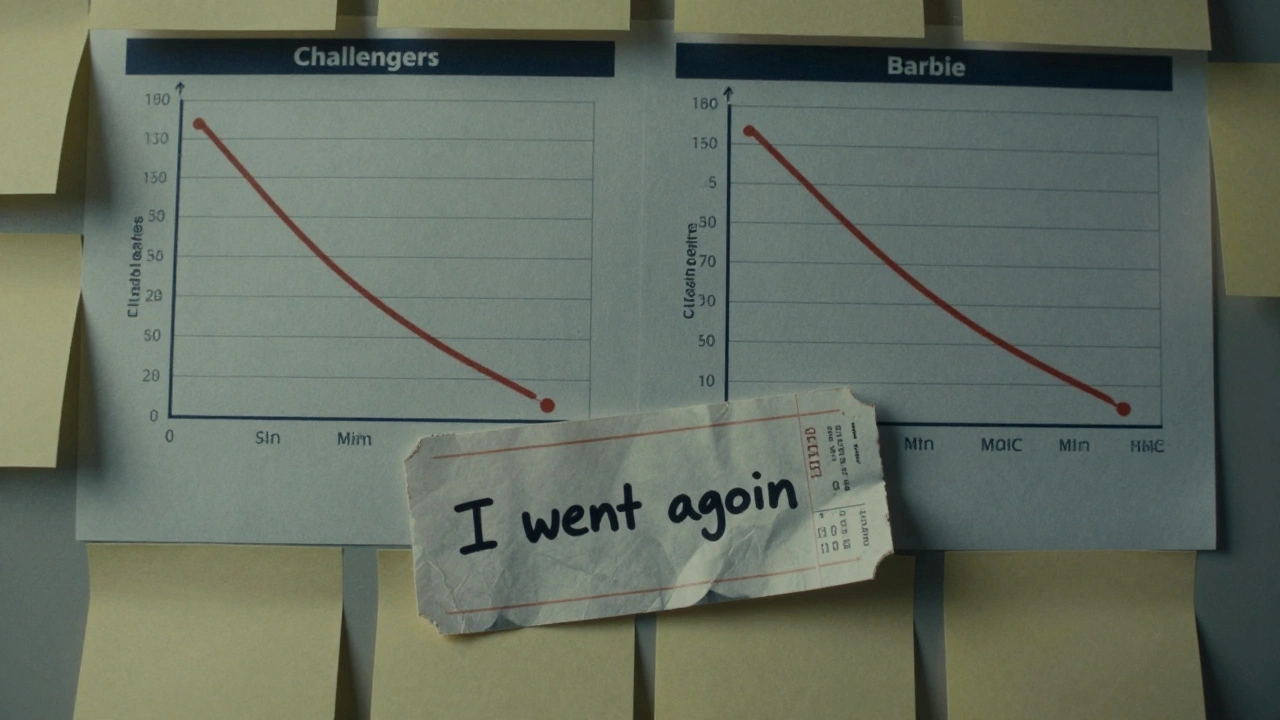
Compare that to Challengers, which opened with $32 million and dropped 68% the next week. It never recovered. Total gross: $85 million. Same budget. Different story.
Why Do Some Movies Keep Going?
It’s not luck. There are patterns.
Word of mouth. If people leave the theater saying, “You have to see this,” that’s the best marketing. Barbie in 2023 had a 41% drop after opening - but it stayed in theaters for 14 weeks because everyone kept recommending it. Families, friends, couples, even coworkers - they all went back.
Timing. Movies that open on holidays or during school breaks often get second wind. The Super Mario Bros. Movie opened in April 2023 and kept pulling in kids and parents through May and June. It didn’t need a sequel announcement - it had school vacations.
Streaming delays. When studios push movies to theaters for 60+ days before streaming, they give legs time to grow. Dune: Part Two stayed in theaters for 11 weeks because HBO Max didn’t add it until late May. That gave it room to build momentum.
Critical love. A movie with 90% on Rotten Tomatoes and glowing reviews from major outlets gets repeat viewings. People go back to catch details they missed. Oppenheimer had a 37% drop after opening - but still made $10 million in week five because critics kept talking about it.
What Hurts Box Office Legs?
Not every movie can hold on. Here’s what kills momentum:
- Bad reviews - especially on social media. One viral tweet saying “waste of time” can scare off entire crowds.
- Too many new releases - if five big movies open in the same week, audiences split. No one sticks with one.
- Weak marketing - if people didn’t know it existed until opening weekend, they won’t come back.
- Streaming too soon - if a movie lands on a platform 14 days after release, why go to the theater? Legs vanish.
- Overhyped - when trailers promise a masterpiece but the movie delivers a trailer, people feel cheated. They don’t return.
Legs vs. Total Gross: The Real Difference
Here’s the truth: Legs determine profitability.
A movie with a $100 million budget needs to make at least $200 million to break even. That includes marketing, theater splits, and studio fees. Opening weekend often covers only 20%-30% of that total. The rest? That’s legs.
Take Twisters (2024). It opened with $78 million. That looked great. But its second weekend? $32 million. That’s a 59% drop - weak. It finished with $175 million. Still profitable? Yes. But barely. If it had held at 40% drop, it could’ve hit $220 million. That’s $45 million more in profit.
Compare that to The Marvels, which opened with $55 million and dropped 72% the next week. It made $110 million total. The budget was $150 million. It lost money. Opening weekend looked fine. Legs told the real story.
How Studios Use Legs to Decide What to Make Next
Box office legs aren’t just for reporters. Studio executives live by them.
If a movie has strong legs, it’s proof that audiences connect with the story, characters, or world. That’s the green light for sequels, spin-offs, and merchandising. Guardians of the Galaxy had a 52% drop after opening - not great. But it held for 12 weeks. Why? Because people kept coming back. That’s why Marvel made two sequels and a holiday special.
On the flip side, if a movie opens big but dies fast, studios avoid repeating the formula. John Wick: Chapter 4 had legs. John Wick: Chapter 5 got the green light. But The Flash opened with $70 million and collapsed. No sequel. No spin-off. No animated series. The numbers told them: this world didn’t stick.
What Fans Can Learn From This
You don’t need to be a studio exec to care about legs. If you love a movie, go back. See it a second time. Bring a friend. That one extra ticket can mean the difference between a sequel and silence.
When you choose to see a movie in theaters instead of waiting for streaming, you’re not just watching a film - you’re voting for more of them. A movie with strong legs gets more marketing, more screen time, more love from studios. A movie with weak legs? It’s forgotten.
So next time you hear, “It’s a box office hit!” - ask: How’s it doing now? That’s the real measure of a movie’s legacy.
Quick Summary: Key Takeaways
- Box office legs = how long a movie stays profitable after opening weekend
- Measure legs by comparing Week 2 gross to Week 1 - drops under 50% mean strong legs
- Word of mouth, timing, and delayed streaming are the top drivers of long-term success
- Weak legs often mean a movie lost money, even if it opened big
- Your theater ticket matters - going back helps studios greenlight sequels
What’s a good drop-off rate for box office legs?
A good drop-off rate is under 50% from opening weekend to the second weekend. Movies that drop less than 30% are considered to have excellent legs. Anything over 70% is a sign the movie didn’t connect with audiences beyond the initial hype.
Can a movie with weak legs still be profitable?
Sometimes, yes - but it’s rare. If a movie has a low budget (under $50 million) and strong international sales, it might still turn a profit even with weak legs. But most big-budget films (over $100 million) need strong legs to break even. Without them, they lose money despite big openings.
Why do some animated films have better legs than live-action movies?
Animated films often have longer legs because they appeal to families and repeat viewers. Kids want to see them again. Parents are willing to pay again. Plus, they often open during school breaks or holidays, which extends their run. Inside Out 2 and The Super Mario Bros. Movie both had legs over 10 weeks because they weren’t just one-time events - they were experiences families revisited.
Does streaming hurt box office legs?
Yes, if it comes too soon. If a movie lands on a streaming platform within 30 days of release, many people wait instead of going to theaters. The ideal window is 60 to 90 days. That gives legs time to grow. Dune: Part Two stayed in theaters longer because HBO Max didn’t add it until 75 days after release - and its box office legs reflected that.
How do critics influence box office legs?
Critics don’t drive opening weekends, but they can extend legs. A movie with high scores on Rotten Tomatoes or glowing write-ups in major outlets encourages repeat viewings. People go back to catch details, analyze performances, or discuss themes. Oppenheimer and Everything Everywhere All at Once both had legs because critics kept talking about them - and audiences followed.
What’s Next?
If you’re a moviegoer, keep watching. Keep talking. Keep going back. Your ticket is a vote. If you want more movies like Barbie or Dune, don’t wait for the stream. Go now. The numbers will show studios you care.
If you’re in the industry - stop chasing opening weekends. Start measuring what happens after. That’s where legacy is built.






Comments(6)