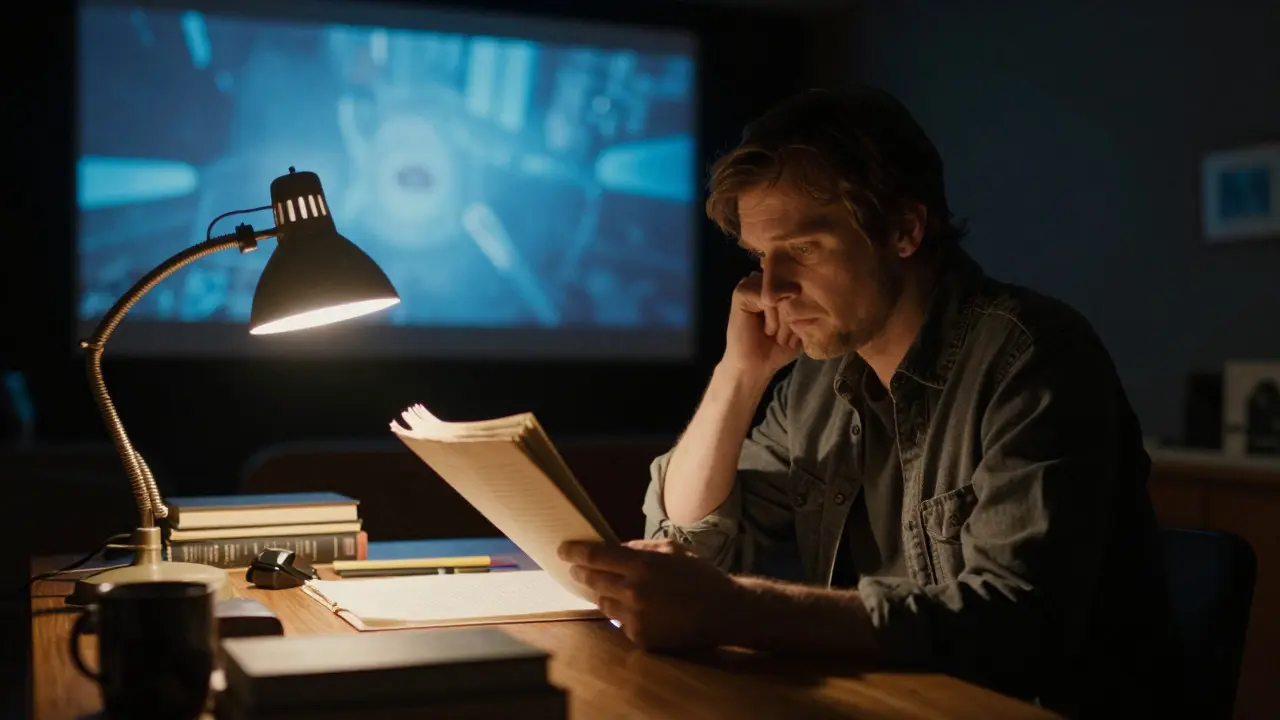
Imagine you spent five years building a world in your head. You know the smell of the rain on the protagonist’s coat. You hear the specific creak of the floorboard in the villain’s office. Then, a studio calls. They want to make it into a movie. Suddenly, that internal monologue is gone, replaced by dialogue, visual shorthand, and a two-hour runtime limit. How do authors actually handle this shift? It’s rarely as simple as "they love it" or "they hate it."
The relationship between a writer and their adapted work is complex. It involves legal rights, emotional attachment, and the practical reality of how stories change when they move from page to screen. For many, the process is a source of anxiety; for others, it’s a second life for their characters. Understanding these dynamics helps readers, fans, and aspiring writers navigate the often-messy intersection of literature and cinema.
The Emotional Rollercoaster of Seeing Your Story Changed
When an author sees their name attached to a film, the first reaction is usually a mix of pride and dread. Pride because their work has reached a wider audience. Dread because Film Adaptation is the process of translating a written narrative into a visual medium, which inherently requires significant structural and tonal shifts. Unlike a stage play, which can run three hours, a feature film typically caps at two. This constraint forces editors to cut subplots, merge characters, and simplify themes.
Consider the case of Stephen King, a prolific American author known for horror and thriller novels who has been involved in dozens of film and television adaptations. King has famously said he doesn’t mind changes if they serve the story. He understands that a novel is an interior experience, while a film is an exterior one. However, not all authors share his leniency. Some feel that changing a character’s ending betrays the spirit of the book. This tension is the core of most author-adaptation conflicts. It’s not just about money; it’s about legacy.
Why Changes Are Unavoidable (And Sometimes Necessary)
Many readers assume that if a movie differs from the book, the director "ruined" it. In reality, adaptation is a translation exercise, not a copy-paste job. Visual storytelling operates on different rules than prose. A sentence describing a character’s grief might take three pages in a book but only ten seconds of facial expression in a film. If the director tries to keep every detail, the movie becomes bloated and slow.
Here are the primary reasons why adaptations differ from source material:
- Runtime Constraints: Most films must fit within 90 to 150 minutes to be commercially viable. Novels can span 400+ pages, requiring substantial cuts.
- Visual vs. Internal Focus: Books excel at internal monologue and backstory. Films rely on action, dialogue, and visual cues. Internal thoughts must be externalized through behavior or voice-over.
- Audience Expectations: Movie audiences often expect a clear arc with a definitive resolution, whereas literary fiction may end ambiguously.
- Budget Limitations: Epic scenes described in text may be too expensive to film, leading to simplified settings or scaled-down effects.
Understanding these constraints helps set realistic expectations. When an author agrees to an adaptation, they are often signing off on the possibility of change. The key question isn't "Will it be exactly like the book?" but "Does it capture the essence of the story?"
Case Studies: From Praise to Public Feuds
To understand the spectrum of author reactions, let’s look at specific examples. These cases illustrate how different personalities and contexts shape the outcome.
| Author / Work | Adaptation Type | Author's Reaction | Key Reason for Stance |
|---|---|---|---|
| J.K. Rowling, British author of the Harry Potter series, one of the best-selling book series in history. | Film Series | Generally Positive | Collaborated closely with directors; believed films expanded global reach of the brand. |
| Douglas Adams, English writer known for The Hitchhiker's Guide to the Galaxy, famous for its comedic sci-fi style. | Film & TV | Mixed / Cynical | Worried about losing the dry, subtle humor of the books in a visual medium; felt jokes were diluted. |
| George R.R. Martin, American novelist known for A Song of Ice and Fire, the basis for Game of Thrones. | Television Series | Cautiously Optimistic | Supported early seasons but expressed concern over pacing and faithfulness in later seasons due to production speed. |
| Ted Chiang, American science fiction writer known for short stories like 'The Life-Boat' and 'Story of Your Life'. | Film (Arrival) | Highly Positive | Appreciated that the film captured the emotional core and philosophical weight of the short story without needing literal accuracy. |
Notice the pattern: authors who focus on the theme rather than the plot points tend to be happier with adaptations. Ted Chiang didn’t care if the linguistics in Arrival were scientifically accurate; he cared if the audience felt the same awe and sadness as the protagonist. Conversely, Douglas Adams was concerned that the visual spectacle would overshadow the witty dialogue, which was the heart of his work.
The Role of Creative Control and Contracts
Money talks, but contracts whisper. The level of influence an author has over an adaptation depends heavily on their negotiating power. Established authors with massive backlists, like Stephen King or J.K. Rowling, often have more say in casting, script approval, or even directing. Newer authors, however, are often handed a check and told to stay out of the way.
Creative Control is the degree of authority an original creator holds over the development, production, and final cut of an adapted work. This is rarely absolute. Even when an author serves as a producer, the final cut usually rests with the studio or director. This power imbalance leads to many public disputes. Authors may tweet complaints about changed endings or missing scenes, hoping to sway public opinion. While this can generate buzz, it also risks alienating the fanbase that supports the film.
For aspiring writers, the lesson is clear: secure your rights before you sign. Understand what "adaptation rights" mean. Do you retain veto power? Do you get credit? Do you receive royalties based on box office performance or flat fees? Legal clarity prevents emotional fallout later.
Navigating Fan Backlash and Public Perception
When an author criticizes their own adaptation, fans often split into two camps. One side agrees with the author, feeling the film betrayed the source material. The other side defends the film, arguing that movies are separate art forms. This debate can last for decades. Think of the ongoing discussions around The Lord of the Rings or Harry Potter. Fans still argue about whether certain scenes were necessary or distracting.
Authors who remain silent during the production phase often find that the backlash is less personal. They can enjoy the cultural moment without being the target of criticism. However, silence can also be interpreted as indifference. There is no perfect strategy. The best approach is to communicate your values early. If faithfulness is crucial to you, state it clearly in press releases or interviews. If you trust the director’s vision, express confidence in their ability to translate the story. Transparency builds trust with both fans and industry professionals.
Practical Tips for Authors Considering Adaptation
If you are an author weighing the decision to sell your rights, here are some actionable steps to protect your peace of mind and your work’s integrity:
- Define Your Non-Negotiables: Identify the three elements of your story that must survive the adaptation. Is it the ending? A specific character trait? A thematic message? Write them down. Share them with your agent and potential buyers.
- Hire a Specialized Agent: General literary agents may not understand film industry nuances. Look for agents with strong track records in Hollywood or international co-productions. They will know which studios respect source material and which ones prioritize star power over story.
- Negotiate Approval Rights: Aim for at least script approval rights. Even if you don’t get final cut, seeing the script allows you to flag major deviations early. It’s better to address issues during pre-production than after the film is released.
- Prepare for Silence: Accept that you may not be consulted on casting or editing. Build a support system of friends and colleagues who understand the industry so you don’t spiral into panic over minor changes.
- Plan Your Public Response: Decide in advance how you will react to the trailer, the reviews, and the release. Will you post on social media? Will you attend the premiere? Having a plan prevents impulsive reactions that could damage relationships.
Remember, an adaptation is a collaboration. It’s not a replacement for your book. It’s a new interpretation. By setting boundaries and maintaining perspective, you can turn a stressful process into a rewarding chapter in your career.
Frequently Asked Questions
Do authors get paid more if their book is adapted into a movie?
Yes, typically. Selling adaptation rights usually involves a lump sum payment upfront, plus potential backend royalties based on box office revenue or streaming deals. However, the initial offer varies widely based on the author's fame and the perceived commercial viability of the property.
Can an author stop a bad adaptation from happening?
Rarely. Once rights are sold, the buyer owns the property. Unless the contract includes specific vetoes (like approval over the director or lead actor), the author has limited legal power to stop production. Their main leverage is public opinion, which can influence marketing but not the final product.
Why do directors change the ending of books?
Directors often change endings to create a clearer emotional resolution for a general audience, to avoid spoilers if the book is still selling, or to align the film with current cultural trends. Sometimes, the original ending feels too ambiguous or depressing for a mainstream theatrical release.
Is it better to adapt a novel or a short story?
Short stories are often easier to adapt because they have fewer plot threads to manage. However, they require expanding character depth and world-building to fill a 90-minute runtime. Novels provide rich material but require significant cutting. Both present unique challenges depending on the director's style.
How long does it take to turn a book into a movie?
On average, it takes 5 to 10 years from optioning the rights to releasing the film. This timeline includes scriptwriting, financing, casting, pre-production, filming, and post-production. Delays are common due to budget issues, creative differences, or market conditions.