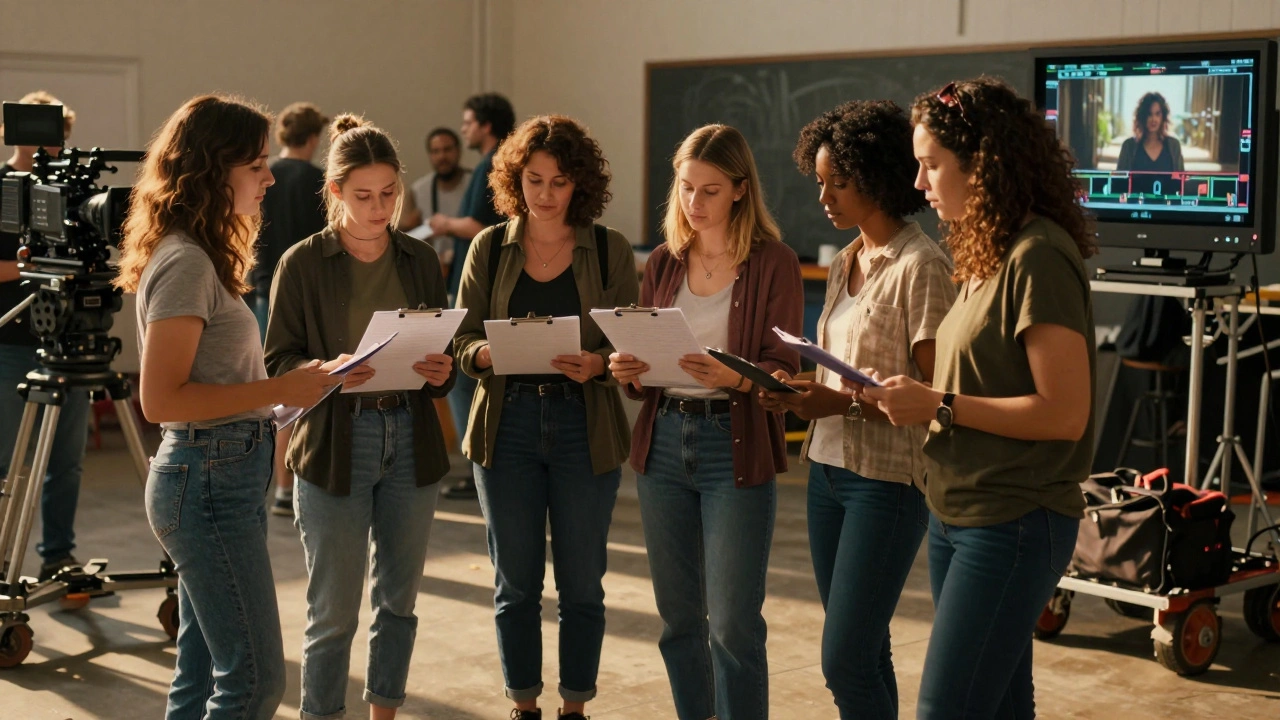
Women directors are no longer the exception-they’re the force reshaping how stories are told.
Just five years ago, only 12% of the top 100 box office films were directed by women. By 2025, that number jumped to 34%. It’s not just a statistical blip. It’s a cultural shift. Women directors are bringing new perspectives, challenging old formulas, and proving that stories centered on women, people of color, and marginalized communities don’t just resonate-they dominate.
Look at the numbers: Women directors led six of the top 10 highest-grossing films of 2024. Greta Gerwig’s Barbie made over $1.4 billion worldwide. Emerald Fennell’s Saltburn became a streaming sensation. Nia DaCosta’s The Marvels outperformed expectations despite studio skepticism. These weren’t niche hits. They were global events.
Independent cinema became the training ground-and now it’s the proving ground.
Before Hollywood opened its doors, women directors found their voice in indie films. Low budgets. No safety nets. Just raw storytelling. Directors like kasi lemmons, kathryn bigelow, and chloé zhao built careers by making films on shoestring budgets, often self-financed or funded through grants. Their work didn’t just survive-it won Oscars, premiered at Sundance, and drew international acclaim.
Today, that indie pipeline is stronger than ever. Films like The Worst Person in the World (directed by Joachim Trier, but co-written and developed with female leads), Past Lives (Celine Song), and Aftersun (Charlotte Wells) didn’t just get noticed-they became cultural touchstones. These weren’t ‘women’s films.’ They were human films. And audiences responded.
What changed? Funding. Organizations like the Sundance Institute’s Women at Sundance program, the Geena Davis Institute on Gender in Media, and the Athena Film Festival now actively fund, mentor, and platform female directors. The result? More women are making their first features-and getting distribution deals without having to beg for permission.
The stories are different. The way they’re told is different.
Men have spent decades telling stories about war, space, crime, and power. Women directors are telling stories about care, connection, silence, and survival. Not because they’re ‘softer,’ but because those are the stories they’ve lived.
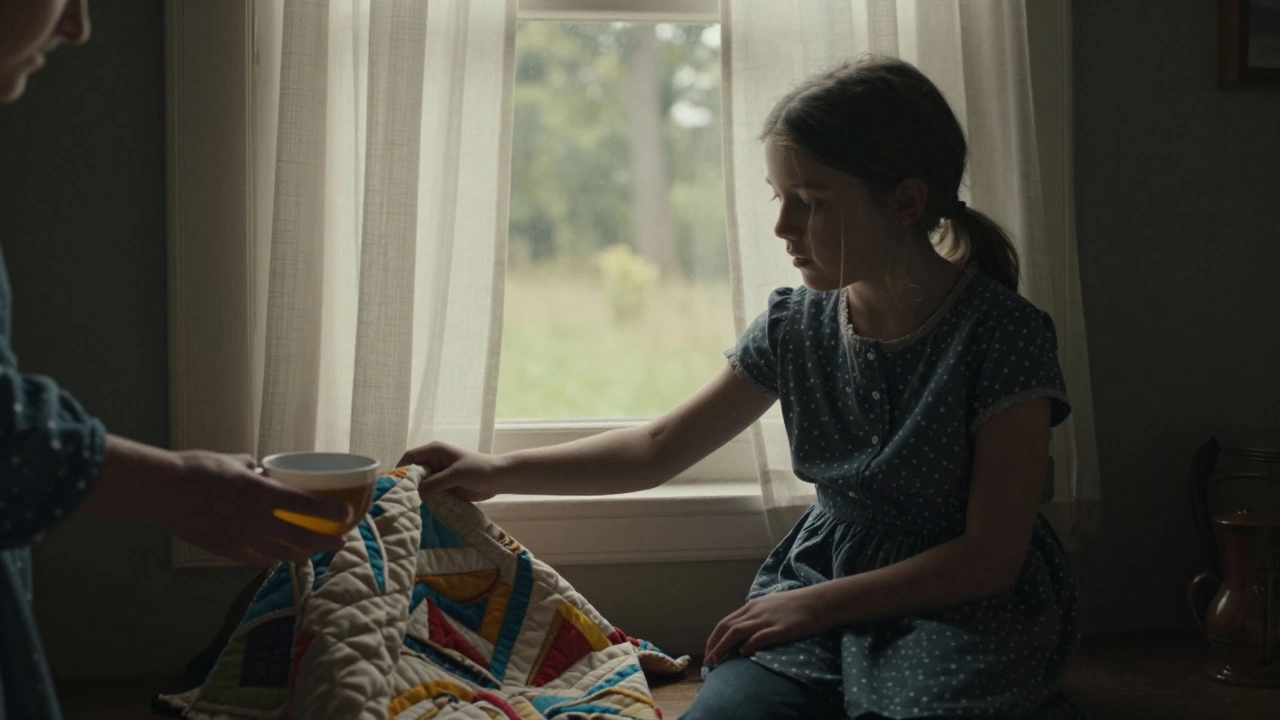
Take The Quiet Girl (2022), directed by Colm Bairéad. It’s about a withdrawn girl sent to live with distant relatives. No explosions. No villains. Just a slow, quiet transformation through kindness. It won the Grand Jury Prize at Sundance and was Ireland’s Oscar submission. No studio would have greenlit it five years ago.
Or The Last Thing He Told Me (2023), directed by Lesli Linka Glatter. It’s a mystery, but the tension isn’t in the crime-it’s in the emotional distance between a stepmother and her teenage stepdaughter. The camera lingers on glances, not gunshots. The pacing breathes. That’s not ‘slow.’ That’s intentional.
Women directors are redefining what a ‘good movie’ looks like. They’re using longer takes. Less music. More natural light. More silence. They’re casting actors who look like real people, not Hollywood ideals. And audiences are noticing.
Hollywood’s resistance is crumbling-slowly.
It’s not all progress. Studios still greenlight fewer films by women than men. Women of color still face the steepest barriers. Only 4% of directing jobs in 2024 went to Black women. Latina directors? 2%. Asian women? 3%.
But the tide is turning because of pressure-from audiences, from unions, from streaming platforms that need fresh content. Netflix, Hulu, and Apple TV+ now have explicit diversity goals for their original productions. Amazon Studios hired more women directors in 2024 than in the previous five years combined.
And when a film like Women Talking (2022), directed by Sarah Polley, gets an Oscar nomination for Best Picture, it sends a message: stories led by women aren’t just worthy-they’re award-worthy.
What’s changed isn’t just who’s behind the camera. It’s who’s in the boardroom. More female producers. More female studio executives. More female agents. They’re not just approving projects-they’re pushing them.
The ripple effect: more jobs, more voices, more change.
When a woman directs a film, she hires women. Not because of quotas-but because she knows talent when she sees it, and she’s been overlooked too often.
In 2024, 58% of the cinematographers on films directed by women were female. That’s up from 11% in 2019. Same with editors, production designers, and costume designers. Women are building crews that look like the world they’re portraying.
And it’s not just about hiring. It’s about mentorship. Directors like Ava DuVernay, Patty Jenkins, and Greta Gerwig now run labs and workshops for emerging female filmmakers. They’re not just making movies-they’re building a pipeline.
Young girls watching these films now see themselves as directors. Not as ‘women directors.’ Just directors. That’s the real win.
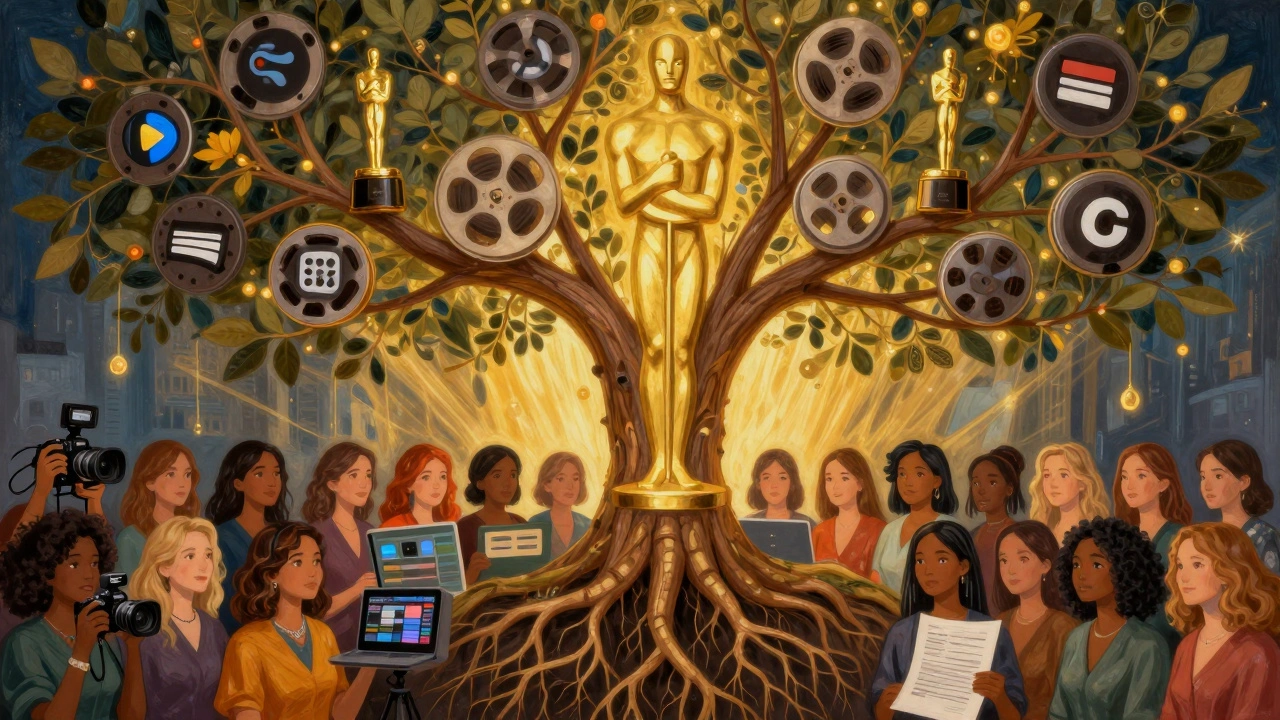
What’s next? More than representation-it’s power.
The goal isn’t just to have more women directing. It’s to have women owning the rights, controlling the budgets, and calling the shots.
Look at Issa Rae’s company, Hoorae Media. She didn’t just direct The Lovebirds. She created a production company that develops, finances, and distributes films by women and people of color. She owns the IP. She controls the release. That’s power.
Same with Regina King’s One Community. Or Reese Witherspoon’s Hello Sunshine. These aren’t vanity projects. They’re studios with real clout.
Independent cinema is no longer a stepping stone-it’s becoming an alternative ecosystem. And it’s thriving.
Why this matters beyond the screen.
When women direct, the stories change. But so do the values. There’s less spectacle. More empathy. Less violence as resolution. More conversation as power.
These films don’t just entertain. They heal. They challenge. They make space for people who’ve spent decades being ignored.
And that’s why this isn’t just about Hollywood. It’s about culture. It’s about who gets to tell the stories that shape how we see ourselves-and each other.
Why are women directors underrepresented in Hollywood?
Historically, Hollywood has been dominated by male executives who favored familiar formulas and male-led casts. Women faced barriers in access to funding, mentorship, and industry networks. Even when they directed successful films, they were often not offered follow-up projects. Systemic bias, lack of representation in decision-making roles, and unconscious assumptions about ‘who makes blockbusters’ kept women out of the director’s chair for decades.
Are women directors making more money now?
Yes-but unevenly. Top-tier women directors like Greta Gerwig and Patty Jenkins now command salaries comparable to top male directors, especially after box office successes. However, mid-level and first-time female directors still earn significantly less than their male peers. The pay gap persists, especially for women of color and those working in independent cinema. Progress is real, but not yet equal.
What’s the difference between women-directed indie films and mainstream films?
Indie films often have smaller budgets, which forces creativity over spectacle. Women directors in indie cinema tend to focus on character depth, emotional realism, and quieter storytelling. Mainstream films, even when directed by women, still face pressure to include action sequences, star power, and franchise potential. But the lines are blurring-many indie directors are now moving into big studios, bringing their style with them.
How can audiences support women directors?
Watch their films in theaters or on streaming platforms. Leave reviews. Talk about them on social media. Support film festivals that highlight women filmmakers. Avoid supporting studios or producers who consistently ignore diversity. Box office numbers speak louder than praise-when audiences show up, studios take notice.
Are there any major studios still resistant to hiring women directors?
Some legacy studios still rely on traditional formulas and have yet to fully embrace change. Major franchises like Marvel and DC still predominantly hire male directors for their biggest releases. However, even these studios have begun to shift-Marvel hired Nia DaCosta for The Marvels, and Warner Bros. hired Patty Jenkins for Wonder Woman 1984. Resistance is fading, but it’s not gone.


Comments(8)