You pick up a thick historical novel, expecting the gritty truth of the past. Then you watch the movie adaptation and wonder if the screenwriters invented half the plot just to make it exciting. This tension between historical novels and their cinematic counterparts is one of the most debated topics in modern media. It’s not just about whether the costumes look right; it’s about whether the soul of the era survives the translation from page to screen.
Filmmakers face an impossible choice. Do they stick to the dry, often fragmented reality recorded by historians? Or do they bend the truth to create a narrative that actually holds your attention for two hours? The answer isn’t simple. Sometimes, strict accuracy makes for a boring film. Other times, too much drama turns history into fantasy. Let’s break down why this happens and how to tell the difference between a lazy shortcut and a necessary artistic choice.
The Unreliable Narrator of History
First, we need to address a big misconception. Historical novels are rarely pure facts. They are interpretations. Authors like Hilary Mantel or Ken Follett spend years researching, but they still have to fill in the gaps where records are silent. If a diary entry says a king was "unwell," the author decides if he had gout, syphilis, or depression. That decision shapes the entire character arc.
When a director adapts these books, they aren’t adapting raw history. They’re adapting another person’s interpretation of history. This creates a game of telephone. The real event happens, the historian records it, the novelist dramatizes it, and the filmmaker visualizes it. Each step adds a layer of subjectivity. So when you complain that a movie got a date wrong, you might be ignoring that the book already took liberties with the timeline to make the pacing work.
Why Filmmakers Cheat (And Why You Should Forgive Them)
Movies operate on different rules than books. A novel can spend fifty pages describing the political intrigue of the Tudor court. A movie has to convey that same tension in five minutes of dialogue and glances. To achieve this, screenwriters use compression. They combine three minor historical figures into one composite character. They move events around so the climax lands at the end of the second act, not randomly in the middle.
Consider Lincoln (2012). Steven Spielberg didn’t show Lincoln’s entire presidency. He focused narrowly on the passage of the 13th Amendment. Was it historically comprehensive? No. Was it dramatically effective? Absolutely. By cutting out the war strategy meetings and focusing on the vote count, the film highlighted the human cost of legislation. If they had tried to include every accurate detail, the audience would have checked their phones within twenty minutes.
| Element | Strict Accuracy Approach | Dramatic License Approach |
|---|---|---|
| Timeline | Events occur exactly as dated; may feel disjointed. | Events compressed or reordered for narrative flow. |
| Characters | All known participants included; can clutter the story. | Composite characters created to streamline conflict. |
| Dialogue | Uses actual letters/speeches; can sound archaic or stiff. | Modernized phrasing for emotional clarity. |
| Visuals | Period-accurate colors/lighting; may look muddy or dark. | Cinematic lighting/color grading; prioritizes mood over realism. |
Case Study: The Braveheart Effect
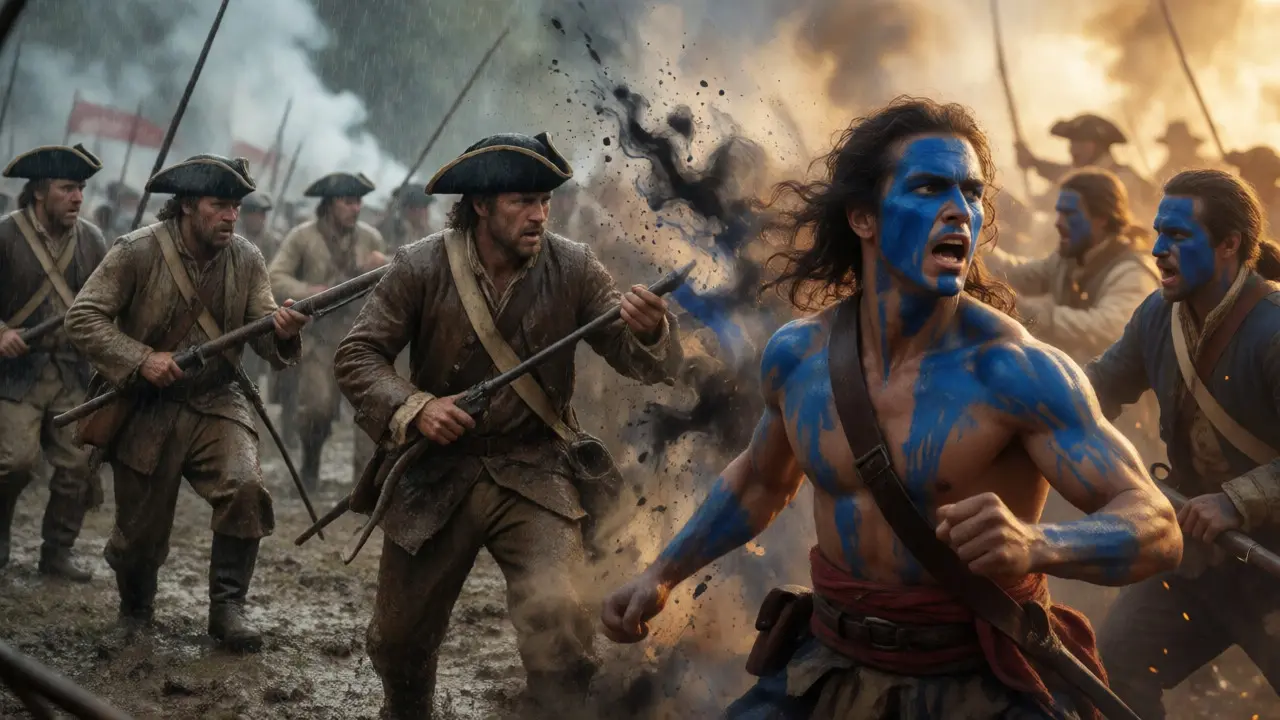
No discussion of historical accuracy is complete without mentioning Braveheart (1995). Mel Gibson’s film is beloved, but historians largely laugh at it. William Wallace didn’t wear blue face paint (that was Picts centuries earlier). He wasn’t a commoner who loved a princess named Murron. The film turned a complex Scottish independence movement into a simple good-vs-evil story.
Yet, Braveheart sparked a massive interest in Scottish history. Tourism in Scotland spiked after its release. Did the movie teach us correct facts? Barely. Did it teach us that there was a struggle worth remembering? Yes. This is the "Gateway Drug" theory of historical cinema. Inaccuracy can sometimes lead to curiosity, which leads people to read the actual books. If the movie had been perfectly accurate, it might have been too obscure to matter.
When Accuracy Matters Most
There are limits, though. When a film deals with recent trauma or sensitive cultural heritage, dramatic license can feel disrespectful. Take Schindler’s List (1993). Spielberg went to great lengths to ensure the depiction of the Holocaust felt authentic. While some individual scenes were dramatized for impact, the core truth-the horror, the scale, the humanity-was never compromised.
In contrast, films that alter the agency of marginalized groups often draw sharp criticism. If a movie changes a black historical figure into a white savior trope, it’s not just a plot change; it’s a distortion of legacy. Recent adaptations of works by authors like Colson Whitehead or Toni Morrison face higher scrutiny because the source material itself is a reclamation of voice. Here, fidelity to the spirit of the text matters more than rigid adherence to textbook dates.
How to Spot Creative License
You don’t need a PhD in history to spot when a movie is bending the truth. Look for these red flags:
- The Composite Character: If one character seems to know everything happening everywhere, they’re likely a blend of three real people.
- Anachronistic Language: Characters using slang that didn’t exist yet. Listen for words like "okay" or "hello" in periods before they were common.
- Impossible Geography: Travel times that defy physics. Crossing Europe in a day? Unless they teleported, it’s a plot device.
- Perfect Hygiene: Everyone looks like they stepped out of a shampoo commercial. Real history smelled bad, and people had teeth issues. If everyone has perfect skin and hair, you’re watching a fantasy.
The Role of the Source Novel
Sometimes, the blame lies with the book, not the movie. Many best-selling historical novels prioritize entertainment over rigor. They are written to sell paperbacks, not to pass peer review. If the source material is loose with facts, the film will inherit those errors. Readers who treat the novel as non-fiction set themselves up for disappointment when the film follows suit.
A smart viewer treats historical dramas as "inspired by" rather than "based on." This mental shift frees you to enjoy the craft of filmmaking without getting hung up on minutiae. Appreciate the cinematography, the acting, and the thematic resonance. Then, if the story grabs you, go find a serious biography. That’s where the real details live.
Final Thoughts on Enjoyment
History is messy. Movies are clean. That’s the fundamental mismatch. We watch movies to feel something, not necessarily to learn a lecture. As long as the film respects the gravity of the events and doesn’t rewrite moral truths for convenience, a little dramatic license is fine. It keeps the past alive in our collective imagination. Just remember: the map is not the territory. The movie is not the history. But both can help us understand what it meant to be human in another time.
Are historical movies generally accurate?
Most mainstream historical movies prioritize narrative engagement over strict factual accuracy. While major events and key figures are usually correct, timelines are often compressed, dialogue is modernized, and minor characters are frequently combined into composites to serve the plot. Viewers should expect approximations rather than documentaries.
Why do filmmakers change historical facts?
Filmmakers change facts to maintain pacing, clarify complex political situations, and heighten emotional stakes. Real life often lacks clear arcs or convenient timing. By altering dates or combining characters, directors create a cohesive three-act structure that keeps audiences engaged during a two-hour runtime.
Do historical novels influence movie inaccuracies?
Yes, significantly. Films are often adapted from novels that have already taken creative liberties with history. If the source material invents a romantic subplot or alters a character's motivation, the film inherits these changes. The movie reflects the author's interpretation, not necessarily the primary historical record.
Is it better to watch a historically accurate film?
Not always. Highly accurate films can sometimes feel dry or episodic because real life doesn't follow standard dramatic structures. A film with slight inaccuracies but strong storytelling may leave a deeper emotional impression and spark more interest in the subject than a strictly faithful but dull adaptation.
What is a composite character in historical films?
A composite character is a fictional person created by blending traits, actions, and histories of several real individuals. Filmmakers use them to reduce cast size and simplify subplots. For example, a single advisor in a movie might represent the ideas and conflicts of three different real-life council members.