You know the feeling. You see a trailer for Fast X, the tenth installment in the Fast & Furious saga, and instead of excitement, you feel a heavy sigh. It’s not that the movie is bad; it’s just… too much. Too many characters, too many explosions, too many years since we cared about Dominic Toretto’s family tree. This is franchise fatigue.
We are living in an era where studios bet billions on known quantities. But audiences are pushing back. We aren’t just tired of specific movies; we are exhausted by the machine that produces them. The question isn’t whether sequels will disappear-they won’t-but why the old formula stopped working so suddenly.
The Math Behind the Magic (and Why It Broke)
Hollywood loves data. For decades, the logic was simple: if Movie A made money, Movie A Part 2 will make more money because people already like it. This worked when there were fewer options. In the 1980s and 90s, going to the theater was a major event. You had limited choices, so sticking with a familiar brand felt safe.
Then came the streaming wars. Suddenly, you have Netflix, Hulu, Amazon Prime, Disney+, Max, Peacock, and Apple TV+ all fighting for your attention. The MCU, Marvel Cinematic Universe, flooded the market with content. When every other weekend brings a new "must-see" blockbuster, the urgency to see one specific sequel evaporates. You can wait three months and watch it at home. The risk of buying a $15 ticket drops significantly.
Studios tried to compensate by making movies bigger. If one explosion doesn’t sell tickets, use ten. But bigness has diminishing returns. Transformers: Rise of the Beasts, a film attempting to reboot the franchise while continuing previous storylines, struggled to connect emotionally despite massive visual effects. Audiences realized they weren’t watching stories; they were watching products designed to sell toys and theme park rides.
Superhero Saturation: The Canary in the Coal Mine
No genre illustrates this better than superheroes. From 2008’s Iron Man to roughly 2019’s Avengers: Endgame, these films dominated global box offices. They became cultural events. But then, the cracks appeared.
The Marvels, the third Captain Marvel film released in late 2023, underperformed significantly. Critics praised its fun tone, but audiences stayed away. Why? Because the stakes felt fake. When heroes can destroy planets casually, nothing feels real. Plus, the interconnected universe required homework. If you missed two Disney+ series, you couldn’t understand the movie. That barrier to entry alienated casual viewers who just wanted a good night out.
| Franchise Entry | Release Year | Audience Score (RT) | Primary Complaint |
|---|---|---|---|
| Avengers: Endgame | 2019 | 94% | N/A (Peak hype) |
| Black Panther: Wakanda Forever | 2022 | 84% | Pacing issues, grief focus |
| The Flash | 2023 | 64% | Tone inconsistency, CGI quality |
| The Marvels | 2023 | 79% | Lack of urgency, confusing plot |
| Madame Web | 2024 | 11% | Generic dialogue, poor editing |
This table shows a clear trend. High production value no longer guarantees high scores. The drop in Madame Web’s rating wasn’t just about bad writing; it signaled that audiences stopped giving benefit of the doubt to the brand name alone.
The "Same Movie" Syndrome
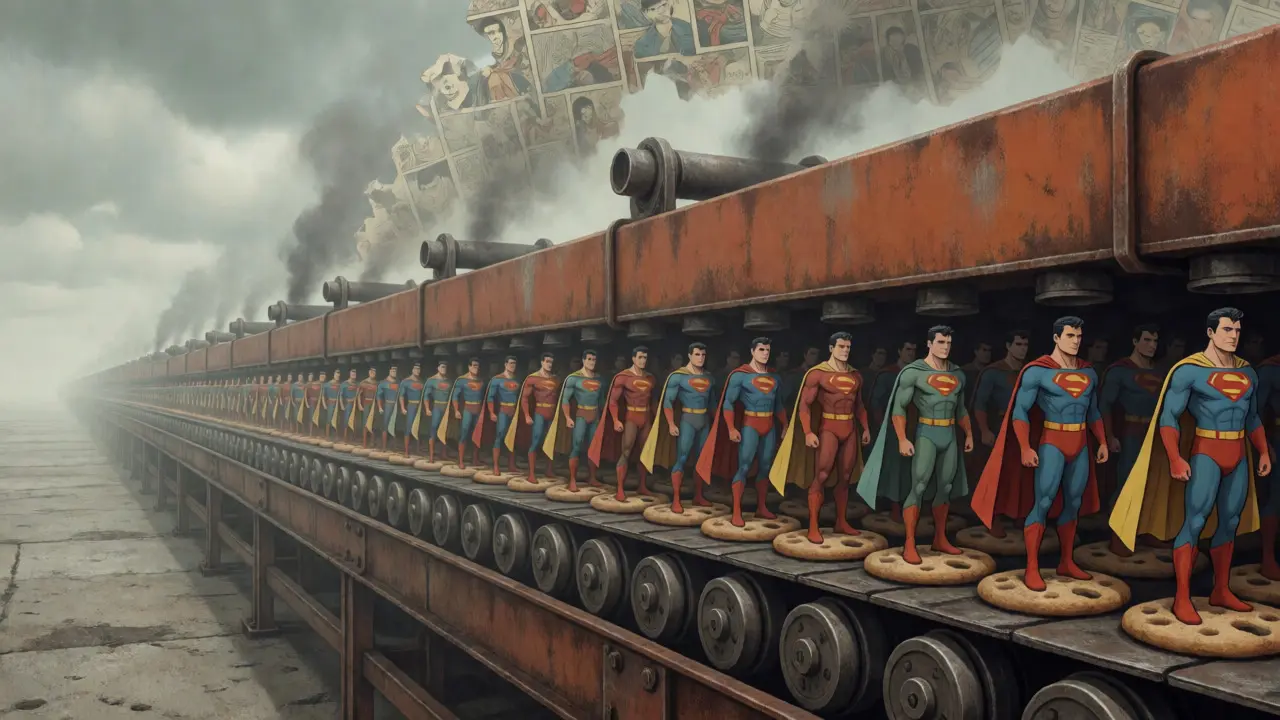
Have you ever watched a sequel and thought, "I’ve seen this before"? That’s structural fatigue. Many franchises rely on a rigid template. Hero starts normal -> inciting incident -> training montage -> big fight -> emotional sacrifice -> sequel hook. Rinse and repeat.
Indiana Jones and the Dial of Destiny, the fifth film in the Indiana Jones series, faced backlash not because Harrison Ford looked old, but because the script didn’t evolve. It felt like a nostalgic cover band playing their greatest hits rather than a new song. Audiences crave growth. If a character hasn’t changed in twenty years, why should we care?
Compare this to Top Gun: Maverick, the 2022 sequel to Top Gun. It worked because it respected the original’s spirit but updated the technology and emotional stakes. Pete Mitchell aged; his relationships matured. It didn’t try to be a modern action movie disguised as a nostalgia trip. It was a genuine continuation. That distinction matters.
Real World Examples of Breakdowns
Let’s look at non-superhero examples to prove this isn’t just a comic book problem.
- Star Wars: After the Disney acquisition, the pace accelerated rapidly. Three films in three years, plus multiple spin-offs. Fans grew divided over canon and direction. The Rise of Skywalker attempted to wrap up nine films in two hours, leaving fans frustrated rather than satisfied.
- Terminator: The franchise has rebooted itself four times. Each attempt to fix the timeline confused audiences further. By Dark Fate, even loyal fans were asking, "Which version is real?"
- Jurassic World: The first sequel revived interest, but subsequent entries relied heavily on dinosaur spectacle without compelling human drama. Dominion tried to cram too many plots into one runtime, resulting in a disjointed experience.
In each case, the core issue wasn’t lack of effort. It was a lack of fresh perspective. Studios treated these properties as assets to be mined rather than stories to be told.
Why Original Films Are Fighting Back
Interestingly, some of the biggest hits of recent years weren’t sequels. Everything Everywhere All At Once, an absurdist sci-fi adventure film, won Best Picture. Barbie was a standalone hit driven by marketing and cultural conversation, not a pre-existing cinematic universe. Oppenheimer succeeded through star power and director reputation, not IP recognition.
These successes sent a shockwave through studio boardrooms. If an original idea can make $1 billion, maybe we don’t need another Fast & Furious part eleven. This shift suggests audiences are ready to invest in new worlds again, provided the execution is strong.
How Franchises Can Survive (And Thrive)
Does this mean sequels are dead? Absolutely not. But the rules have changed. Here’s what works now:
- Time Gaps: Let the audience miss the characters. Waiting five or ten years between entries creates anticipation rather than exhaustion. Look at Top Gun: Maverick or Creed III.
- Genre Shifts: Don’t be afraid to change the tone. Logan worked because it was a western, not a typical superhero movie. Birds of Prey tried this but lacked cohesive vision.
- Respect Intelligence: Trust the audience to follow complex narratives without holding their hand. Avoid excessive exposition dumps.
- Character First: Plot happens to characters. If you don’t care about the person, you won’t care about the explosion.
Studios must treat franchises like living organisms, not assembly lines. They need pruning, nurturing, and sometimes, letting things go dormant for a while.
What This Means for Your Next Movie Night
As a viewer, you have more power than you think. Every ticket bought is a vote. If you skip a hollow sequel and rent a quirky indie film instead, you’re telling Hollywood what you value. The current landscape is messy, yes. There are still plenty of cash-grab reboots. But the tide is turning toward quality over quantity.
Next time you see a trailer for "Part 8" of something you forgot existed, pause. Ask yourself: Do I want this story, or do I just recognize the logo? Your answer might save you twenty dollars and two hours of your life.
Is franchise fatigue permanent?
No, it's cyclical. History shows audiences return to franchises after breaks. For example, horror franchises often revive after periods of dormancy. The key is allowing the brand to rest and reset expectations.
Why do critics often dislike sequels while audiences enjoy them?
Critics evaluate films based on artistic merit and novelty, whereas general audiences often prioritize comfort, familiarity, and entertainment value. A sequel can be technically mediocre but still provide a satisfying communal experience for fans.
Do remakes count as franchise fatigue?
Yes. Remakes contribute to the sense of creative stagnation. When studios recycle ideas instead of generating new ones, it reinforces the perception that Hollywood lacks imagination, exacerbating audience fatigue.
Which genres are most susceptible to fatigue?
Action and superhero films are currently the most affected due to their reliance on large-scale VFX and serialized storytelling. Comedy and romance franchises tend to suffer less because they are lower-stakes and easier to produce independently.
Can streaming services help reduce franchise fatigue?
Streaming can both help and hurt. It allows for niche storytelling without box office pressure, which helps. However, the sheer volume of content on platforms can also overwhelm viewers, leading to subscription churn and decision paralysis.



Comments(6)