There is a specific kind of heartbreak reserved for fans of international cinema. You watch a masterpiece from South Korea, Japan, or Mexico, marveling at its unique cultural texture and storytelling rhythm. Then, five years later, you see the same plot on a billboard in Times Square, starring A-listers and featuring a soundtrack that sounds like it was composed by committee. This is the era of the Hollywood remake, a practice that has shifted from occasional curiosity to industrial strategy.
In 2025 and 2026, the trend isn't just about copying plots; it's about navigating a fractured global market. Studios are looking for 'pre-proven' stories because original scripts are risky bets. But when a story moves from Seoul to Los Angeles, or from Mumbai to New York, something always gets lost-and sometimes, surprisingly, something new is gained. Let’s look at why this happens, which films survived the journey, and which ones didn’t.
The Economics of Borrowed Stories
To understand why Hollywood keeps reaching overseas, you have to look at the balance sheet. Original screenplays are expensive to develop and uncertain in their appeal. A script written in English might resonate with audiences in London but fall flat in Tokyo. However, a story that has already conquered the world-like Parasite is a 2019 South Korean black comedy thriller that broke barriers at the Academy Awards-has done the heavy lifting of audience validation.
When a film succeeds internationally, it signals to executives that the core narrative beats work across borders. The risk is mitigated. If Squid Game is the South Korean survival drama series that became a global phenomenon can captivate millions worldwide, an American adaptation might capture the domestic share that the original missed due to language barriers or distribution limits. It’s not necessarily laziness; it’s financial hedging. Studios bet on familiar emotions packaged in a way that feels accessible to the widest possible demographic.
However, this economic logic often clashes with artistic integrity. The 'global blockbuster' model assumes that emotional resonance is universal in a very specific, standardized way. It ignores the fact that humor, grief, and social tension are deeply rooted in local context. When you strip away the context to make a story 'universal,' you often end up with a generic product that satisfies no one.
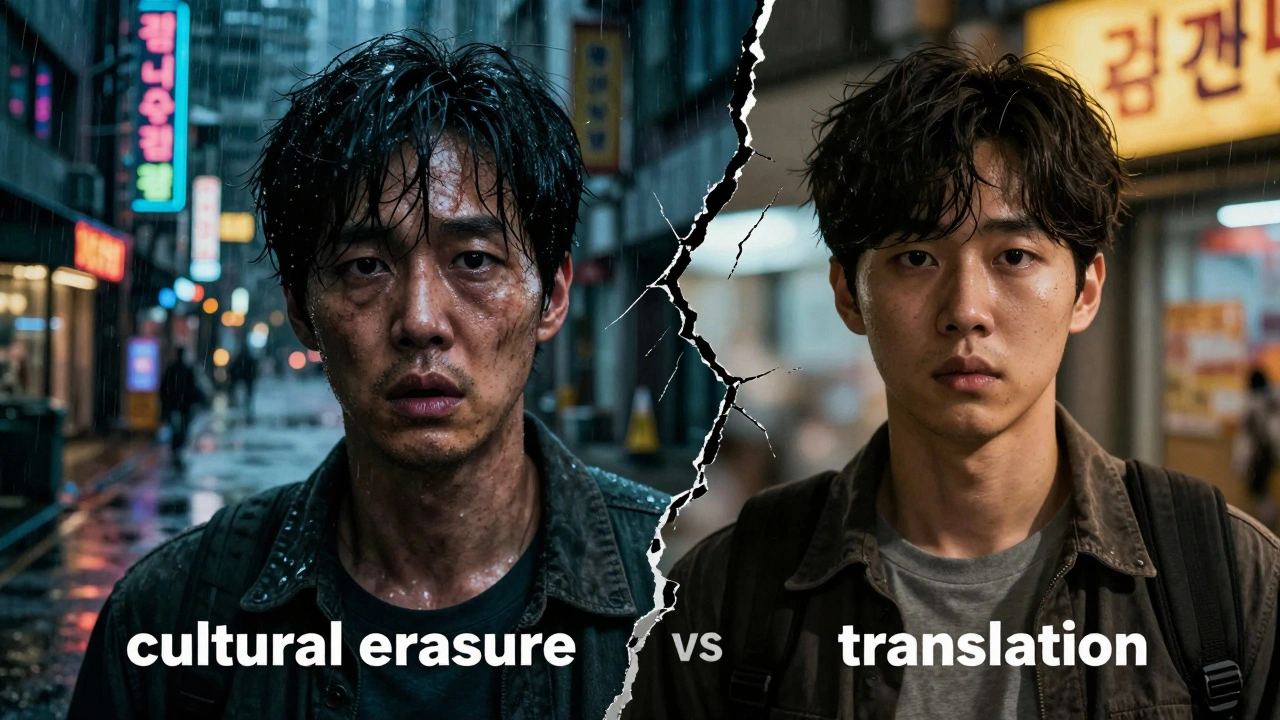
Cultural Translation vs. Cultural Erasure
The biggest hurdle in any international adaptation is what experts call 'cultural translation.' This isn't just about swapping names; it's about swapping values. A story about filial piety in China doesn't translate directly to a story about individual independence in the United States without changing the fundamental moral argument of the film.
Consider the horror genre, which is the most common playground for these adaptations. Horror relies on fear, and fear is culturally specific. Japanese horror, or J-horror, often focuses on spiritual possession and inescapable fate, rooted in Shinto beliefs. American horror tends to focus on psychological trauma or slasher mechanics. When The Ring is the 2002 American remake of the Japanese film Ringu was adapted, it kept the cursed tape concept but changed the ending to be more ambiguous and less spiritually absolute. It worked commercially because it respected the source material’s atmosphere while tweaking the resolution for Western expectations.
But when studios fail to do this delicate dance, we get 'cultural erasure.' This happens when the original film’s social commentary is removed because it’s too 'niche' or 'political' for a general audience. For example, many K-drama romances rely on class disparity and corporate hierarchy as central plot drivers. When these are remade in Hollywood, the class struggle is often flattened into simple romantic misunderstandings. The result is a film that looks like the original but feels hollow, lacking the stakes that made the first version compelling.
Case Studies: Successes and Failures
Not all remakes are created equal. Some become classics in their own right, while others serve as cautionary tales. Here is how the major players stack up.
| Original Film | Hollywood Adaptation | Year | Verdict |
|---|---|---|---|
| Oldboy (South Korea) | Oldboy (USA) | 2013 | Failed to capture the psychological depth; criticized for tonal inconsistency. |
| Memories of Murder (South Korea) | Zodiac (Inspired, not direct) | 2007 | Different story, similar DNA. David Fincher understood the procedural grind. |
| Let the Right One In (Sweden) | Let Me In (USA) | 2010 | Respectful adaptation; shifted setting to 1980s Maine, maintained mood. |
| A Separation (Iran) | Jiro Dreams of Sushi (No direct remake) | N/A | Example of a film that resisted adaptation due to deep cultural specificity. |
| Train to Busan (South Korea) | Train to Busan (Planned/Halted) | TBD | Shows the difficulty of adapting high-stakes ensemble dramas. |
The success of Let Me In lies in its restraint. Director Matt Reeves didn't try to improve the Swedish original; he tried to transplant it. He moved the story from snowy Stockholm to snowy Maine, keeping the isolation and the bleakness intact. He understood that the vampire metaphor was about loneliness, not just bloodlust.
In contrast, the American Oldboy struggled because it treated the source material as a checklist of cool scenes rather than a cohesive psychological study. The original Oldboy is a 2003 South Korean neo-noir revenge film directed by Park Chan-wook is brutal and poetic. The remake was brutal but confused, losing the philosophical weight of the protagonist’s journey. It serves as a reminder that style cannot substitute for substance.
The Streaming Effect on Global Adaptations
The rise of streaming platforms has complicated the remake landscape. Netflix and Amazon Prime are now producing content in multiple languages simultaneously. They don't always need to remake a hit; they can simply distribute it globally. This has reduced the urgency for Hollywood to adapt foreign hits for theatrical release.
However, streaming has also increased the volume of adaptations for television. Series allow for deeper character development, which helps bridge cultural gaps. A two-hour movie might rush through cultural nuances, but a ten-episode series can take time to explain why a character acts a certain way based on their background. This format allows for a more nuanced 'translation' of the source material.
We are seeing a shift where the 'remake' is becoming a 'reimagining.' Instead of shot-for-shot copies, studios are buying the rights to the underlying IP and asking writers to find the American equivalent of the theme. This approach is still risky, but it offers more creative freedom than the rigid remakes of the 2000s.
What Makes a Good Candidate for Adaptation?
If you’re trying to predict which international films will be remade successfully, look for three key factors:
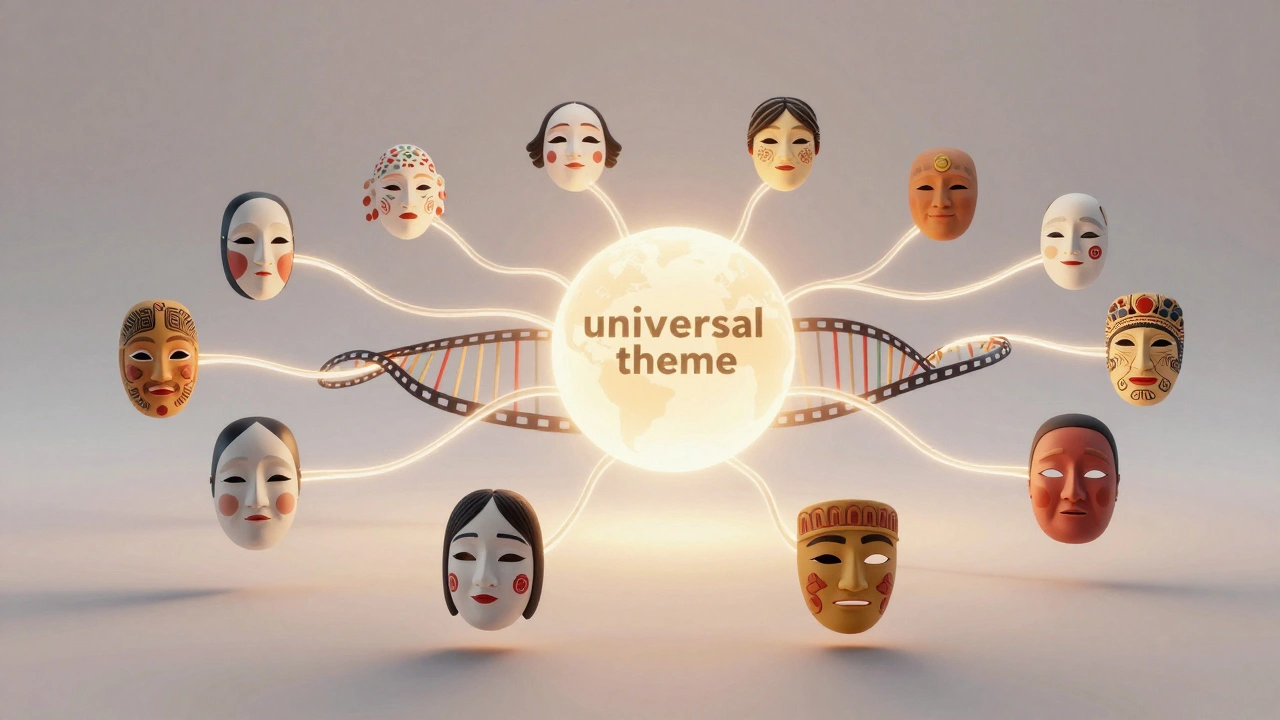
- Universal Themes: Love, loss, survival, and family conflict transcend borders. Stories heavily reliant on specific legal systems, religious dogmas, or historical events that only locals know tend to fail.
- Visual Spectacle: Action and horror films rely on visual language, which is easier to translate than dialogue-heavy dramas. A chase scene in Mumbai works in New York if the choreography is good.
- Emotional Core Over Plot Mechanics: Films where the plot serves the emotion are better candidates than films where the plot is a complex puzzle. Audiences connect with feelings, not just twists.
For instance, Burning is a 2018 South Korean mystery drama film directed by Lee Chang-dong is a masterpiece of ambiguity and class tension. It would be incredibly difficult to remake because its power comes from what is *not* said, a nuance deeply tied to Korean social dynamics. On the other hand, a disaster film like 2012 (inspired by various global anxieties) works because the threat is physical and immediate.
The Future of Cross-Border Storytelling
As we move further into 2026, the line between 'original' and 'remake' is blurring. Co-productions are becoming more common, where Hollywood studios partner with international companies from the start. This means the script is written with both markets in mind, avoiding the awkward 'retrofitting' process of traditional remakes.
We may also see fewer direct remakes and more 'spiritual successors.' Directors who love a foreign film might make a new film that captures its essence without copying its plot. This honors the original artist’s vision while allowing for new creativity. It’s a healthier ecosystem for global cinema, one where influence flows freely without the pressure of commercial replication.
Ultimately, the best remakes are those that respect the original enough to learn from it, but trust themselves enough to change. They don't ask, 'How do we make this American?' They ask, 'What is the human truth here, and how does it speak to us now?' When studios remember that question, the results can be magical. When they forget, we get another empty shell of a blockbuster, reminding us why we fell in love with the original in the first place.
Why does Hollywood keep remaking foreign films?
Hollywood remakes foreign films primarily to mitigate financial risk. A story that has already succeeded internationally has proven audience appeal, making it a safer investment than an untested original screenplay. Additionally, global streaming platforms seek familiar narratives that can easily cross language barriers.
What is the difference between a remake and a reboot?
A reboot restarts an existing franchise, usually within the same country and language, ignoring previous continuity. A remake retells a specific story from another culture or language, adapting the plot and characters to fit a new cultural context. Remakes involve significant cultural translation, while reboots focus on brand revitalization.
Which genres are most commonly remade from international sources?
Horror, action, and romance are the most frequently remade genres. Horror relies on visual scares that translate well across cultures. Action films depend on spectacle, which is universally understood. Romance deals with universal emotions like love and heartbreak. Drama and political thrillers are harder to adapt due to their reliance on specific social and historical contexts.
Can a remake ever be better than the original?
Yes, though it is rare. A remake can surpass the original if it improves pacing, clarifies confusing plot points, or updates themes to be more relevant to contemporary audiences. Examples include The Thing (1982), which is often considered superior to the 1951 original due to its practical effects and atmospheric tension. However, this requires exceptional direction and respect for the source material.
How does cultural translation affect the quality of a remake?
Cultural translation is the make-or-break factor for remakes. If the adaptation fails to translate the underlying cultural values, humor, or social norms, the film feels hollow and inauthentic. Successful remakes identify the universal human emotions in the original and express them through the lens of the target culture, rather than just swapping locations and names.