
Key Takeaways for Funding Your Film
- Diversify your sources: Don't rely on a single grant; mix private funds, public grants, and crowdsourcing.
- Focus on a strong "impact statement": Funders want to know how your film changes the world, not just how it looks.
- Prepare for a long game: Grant cycles can take 6 to 12 months from application to payout.
- Tailor every application: A generic copy-paste application is the fastest way to get a rejection.
The Landscape of Non-Profit Grants
When you're looking for documentary grants, the first place to look is usually the non-profit sector. These organizations aren't looking for a return on investment in terms of box office tickets; they care about social change, education, and human rights.
Sundance Institute is a non-profit organization that provides creative support and funding for independent filmmakers through its various labs and grants. Known for its rigorous selection process, Sundance doesn't just give you a check; they provide mentorship and a network of peers that can help a project scale from a rough concept to a festival premiere.
Another heavy hitter is the International Documentary Association (IDA), a global membership organization that supports the documentary community through grants, advocacy, and professional development. The IDA often partners with other foundations to offer grants specifically for filmmakers from underrepresented backgrounds or those covering specific global crises.
The key here is alignment. If your film is about climate change, applying to a general arts grant might work, but applying to a foundation dedicated to environmental justice will yield a much higher success rate. You have to prove that your film is the best tool to achieve the funder's specific mission.
Government Funding and Public Arts Councils
Depending on where you live, the government might be your best bet for early-stage development. In the United States, the National Endowment for the Arts (NEA) is an independent federal agency that constitutes the largest funder of the arts in the United States. While highly competitive, an NEA grant is a badge of prestige that makes other private funders more likely to trust you.
If you're working in Europe, the landscape is different. The Creative Europe program is the European Union's cultural program that provides financial support to the audiovisual sector to promote diversity and circulation of European works. They often fund co-productions, meaning if you partner with a filmmaker from another EU country, your chances of securing a grant increase significantly.
Public funding usually comes with strings attached-specifically, strict reporting requirements. You'll need to track every penny and provide detailed progress reports. It's less about the creative freedom and more about the administrative accountability.
| Funding Source | Primary Goal | Typical Amount | Key Requirement |
|---|---|---|---|
| Non-Profit Grants | Social Impact | $5k - $50k | Detailed Impact Plan |
| Govt. Councils | Cultural Preservation | $10k - $100k | Strict Budget Audits |
| Private Equity | Profit/ROI | Variable | Distribution Plan |
| Crowdfunding | Community Support | $1k - $20k | Active Social Following |
Private Foundations and Corporate Philanthropy
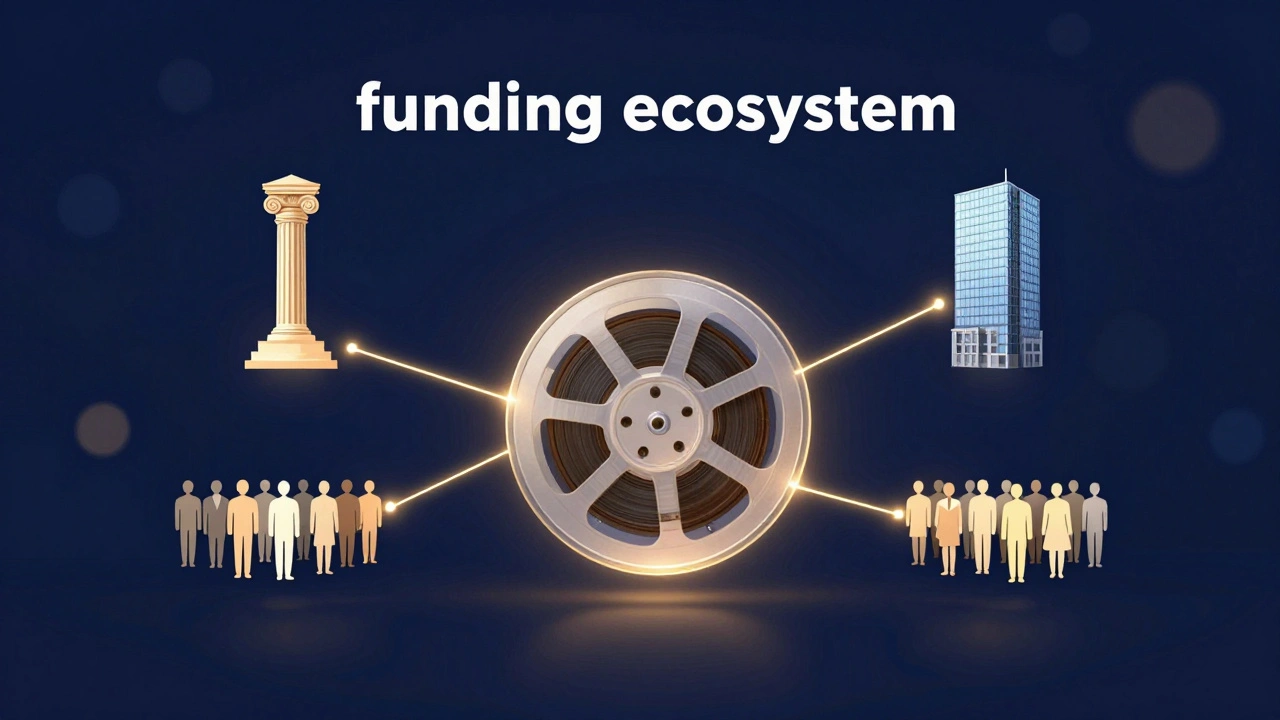
Some of the largest sums of money in the documentary world come from private family foundations. These are often the "black boxes" of funding because they don't always have a public application portal. You often have to be referred or find a connection to the foundation's program officer.
The Ford Foundation, for instance, focuses heavily on social justice and inequality. They don't just want a movie; they want a catalyst for systemic change. If you can show that your documentary will be used in classrooms, protests, or legislative hearings, you're speaking their language.
Then there are corporate grants. Companies like Google or Amazon sometimes offer grants for tech-driven storytelling or creators using their platforms. These are less about "art" and more about "innovation." If you're using VR or AI in your documentary, these corporate entities are your primary targets.
The Art of the Application: What Actually Works
You can have the most important story in the world, but if your application is messy, you won't get funded. Funders look for three things: feasibility, urgency, and authenticity. Feasibility means "Can this person actually finish this movie?" This is why a detailed production timeline and a professional budget are non-negotiable.
Urgency answers the question "Why now?" If your film is about a dying language, explain why it must be filmed this year and not in five years. If you're documenting a political movement, explain the current window of opportunity. If the funder feels they can wait, they will wait-and by then, your budget will have run out.
Authenticity is about your relationship with the subject. Avoid being the "outside observer" who just happens to have a camera. Funders want to see that you have the trust of the people you're filming. Including letters of support from your subjects or community leaders is a pro move that separates winners from losers.
Crowdfunding and Hybrid Models
While grants are the gold standard, Kickstarter and Indiegogo are crowdfunding platforms that allow creators to raise small amounts of money from a large number of people. Crowdfunding isn't just about the money; it's about proving there is an audience for your story. A filmmaker who has raised $20,000 from 500 different people is a much lower risk for a grant foundation than someone with no track record.
The most successful filmmakers use a hybrid model. They might use a small grant for development (writing the script and shooting a teaser), use Kickstarter to fund the primary production, and then apply for a larger completion grant to handle color grading and sound mixing. This approach spreads the risk and creates a safety net.

Common Pitfalls to Avoid
One of the biggest mistakes filmmakers make is the "spray and pray" method. This is when you send the exact same PDF to twenty different foundations. Experienced reviewers can spot a generic application in seconds. If the grant is for "Women in Cinema" and you don't mention your female crew or the female-centric perspective of your story, you're out.
Another trap is underestimating the "indirect costs." Many filmmakers ask for exactly what the camera rental costs, forgetting that they need to eat, pay for insurance, and handle legal clearances. If your budget looks unrealistic, the funder will assume you are inexperienced and won't trust you with their money.
Finally, don't ignore the "post-production' phase. Many grants are specifically designed for finishing a film. If you've already shot all your footage but can't afford a professional editor, look for post-production grants. They are often less competitive than production grants because the project is already a "proven' asset.
Do I need a finished teaser to apply for grants?
While not always mandatory, a teaser is almost always expected. It proves that you have a visual style and that the subject is engaging. Even a 2-minute rough cut can be the difference between a "maybe" and a "yes." If you don't have a teaser, use your own personal funds or a small micro-grant to shoot some "proof of concept" footage first.
What is a "fiscal sponsor" and do I need one?
A fiscal sponsor is a non-profit organization that allows you to apply for grants that are only available to 501(c)(3) entities. Since most individual filmmakers aren't non-profits, a sponsor "hosts" your project, takes the grant money, and distributes it to you after taking a small administrative fee (usually 5-10%). This is essential if you want to access large-scale philanthropic funding.
How do I handle the budget section of a grant?
Be specific. Don't just write "Equipment: $5,000." Instead, break it down: "Camera rental (Sony FX6) for 10 days: $3,000; Lighting kit: $1,000; Hard drives and backup: $1,000." Detail shows professionalism. Also, make sure to include a "Contingency" line item of about 10% to cover unexpected costs, which shows the funder you are a realist.
Can I apply for multiple grants at once?
Yes, and you should. However, be transparent. If a grant asks if you have other funding or have applied elsewhere, tell the truth. Funders often like to see that other organizations are also interested in your project-it acts as a form of validation. Just make sure your budget reflects the total amount needed, not just the amount requested from that specific grant.
What happens if I don't finish the film after receiving a grant?
This is a nightmare scenario, but it happens. Most grants have a contract. If you fail to deliver, you may be asked to return the funds or be blacklisted from future grants from that organization. The best move is to communicate early. If production hits a wall, tell the funder immediately and propose a new timeline. They would rather have a delayed film than a disappeared filmmaker.
Next Steps for Your Funding Strategy
If you're just starting out, don't try to land a $100,000 grant on day one. Start by building a "funding ladder." First, create a mood board and a a short treatment. Then, seek out micro-grants or use a platform like Kickstarter to raise a few thousand dollars. Use that money to shoot a high-quality 3-minute teaser.
Once you have the teaser, identify five organizations whose missions align perfectly with your story. Spend a week researching each one-read their previous grant winners and see what themes they love. Write a tailored application for each. If you get rejected, ask for feedback. Some program officers are surprisingly open to telling you exactly why your project didn't fit, which is the best way to improve your next application.




Comments(5)