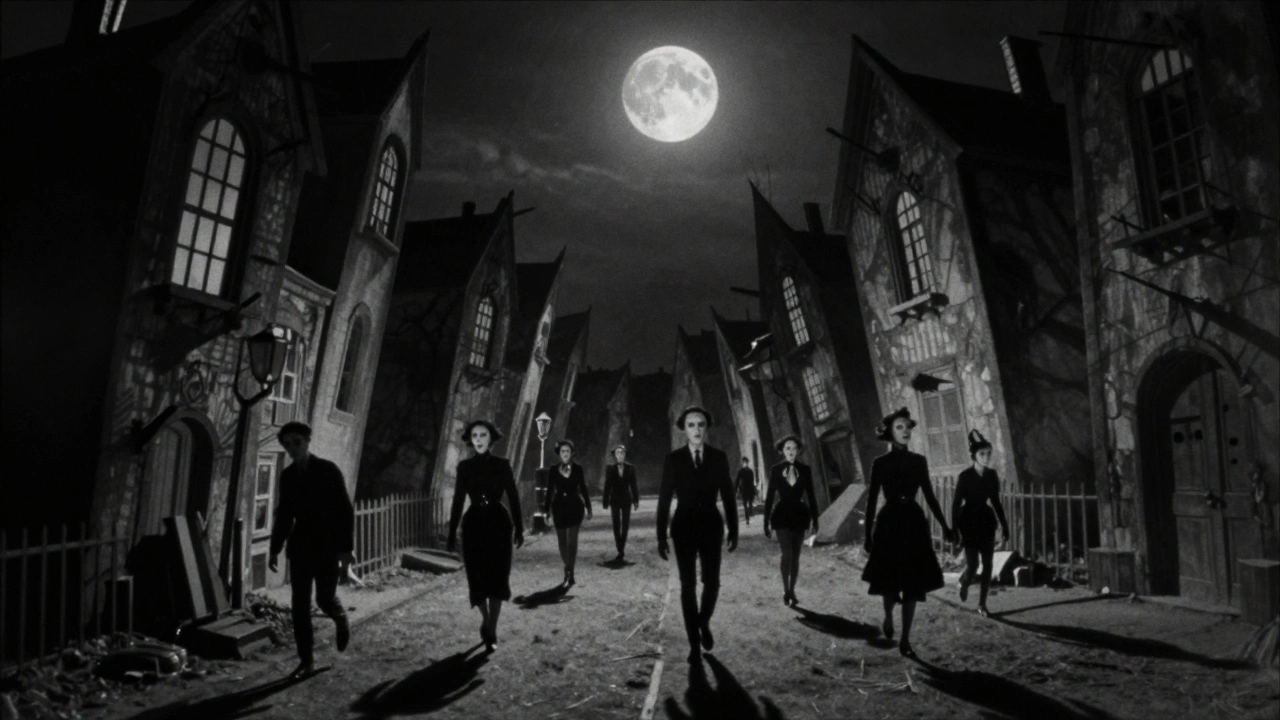
German Expressionism didn’t just change how movies looked-it rewired how fear, madness, and emotion could be shown without a single word. In the years right after World War I, when Germany was broken, hungry, and haunted, filmmakers turned away from realism. Instead, they painted nightmares on screen using twisted walls, sharp shadows, and actors who moved like ghosts. This wasn’t art for art’s sake. It was the visual language of a nation’s trauma.
The World That Built It
After 1918, Germany had no money for grand sets or location shoots. Studios were cheap, lights were limited, and actors weren’t trained in naturalism. But these limitations became strengths. Directors like Robert Wiene and F.W. Murnau realized they could build emotion with paint, wood, and light. They didn’t need real streets-they painted streets that bent and leaned like they were collapsing under the weight of guilt. They didn’t need real forests-they built jagged trees that reached like claws.
It wasn’t just about aesthetics. The style matched the mood. People were afraid of the future. The old order had collapsed. The Treaty of Versailles had humiliated the country. And in that uncertainty, filmmakers asked: What if the world isn’t rational? What if madness is the only truth?
The Cabinet of Dr. Caligari and the First Nightmare
In 1920, The Cabinet of Dr. Caligari stunned audiences. Its sets looked like they’d been drawn by a feverish hand-walls tilted at impossible angles, windows like gaping mouths, shadows that moved on their own. The story was simple: a hypnotist uses a sleepwalker to commit murders. But the way it was told made it feel like a hallucination.
The twist? The whole film turns out to be the delusion of a madman in an asylum. That ending didn’t just shock-it changed everything. It told viewers: you can’t trust what you see. Reality is fragile. That idea became the backbone of horror cinema for the next century.
Actors didn’t walk-they glided. Their faces were painted with thick white makeup, eyes darkened, mouths twisted into silent screams. They weren’t pretending to be people. They were embodiments of fear.
Light, Shadow, and the Language of Dread
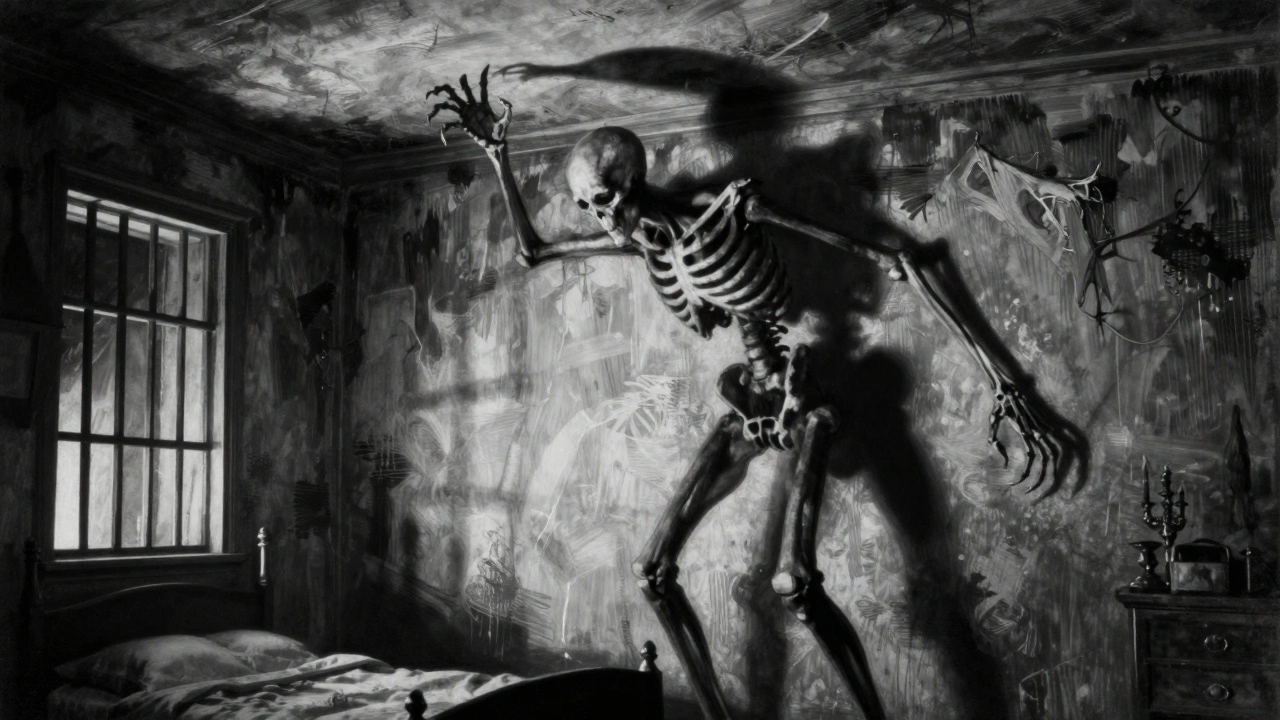
Expressionist films didn’t use natural lighting. They carved space with light and shadow. In Mabuse, the Gambler (1922), shadows stretched across walls like prison bars. In Nosferatu (1922), Count Orlok’s silhouette didn’t just creep-it consumed the light. His long fingers, his bald head, his skeletal frame-none of it was realistic. But it felt more real than any vampire ever could.
These filmmakers didn’t rely on jump scares. They built dread slowly. A door creaks. A shadow shifts. A face appears in a window-no music, no sound, just silence and shape. That’s the power of expressionism: it makes the unseen feel heavier than the seen.
One technique they perfected was chiaroscuro-the extreme contrast between black and white. It wasn’t just a style. It was a metaphor. Good and evil weren’t mixed. They were split apart, like a knife through flesh. The characters didn’t struggle with morality-they were pulled apart by it.
From Silent Screens to Hollywood Shadows
By the late 1920s, German Expressionism began to fade. Sound films arrived. Studios in Hollywood started hiring German directors, cinematographers, and set designers who’d learned how to turn fear into visuals. Those people brought the style with them.
James Whale’s Frankenstein (1931) didn’t just copy Nosferatu-it inherited its soul. The lab scenes, the heavy shadows, the way the monster moved-all of it came from German studios. Even Psycho (1960) owes its most chilling moments to Caligari. The shower scene? It’s not about blood. It’s about the sudden collapse of order, just like the walls in that asylum.
Modern horror directors still use these tools. David Fincher’s Se7en uses the same oppressive shadows. Tim Burton’s Edward Scissorhands has the same twisted architecture. Even Hereditary (2018) leans on expressionist silence-the way a character stands in a doorway, frozen, while the room around them feels alive with dread.
Why It Still Matters
German Expressionism didn’t die. It went underground. It became the hidden grammar of horror. You don’t need a haunted house to scare someone. You need a room that feels like it’s breathing. You need a character who doesn’t look human. You need shadows that move when they shouldn’t.
Today, when you watch a horror film and feel something crawl under your skin, you’re feeling the ghost of 1920s Berlin. These filmmakers didn’t have CGI. They didn’t have budget. They had paint, glass, and raw emotion. And they turned that into something timeless.
The Legacy in Color
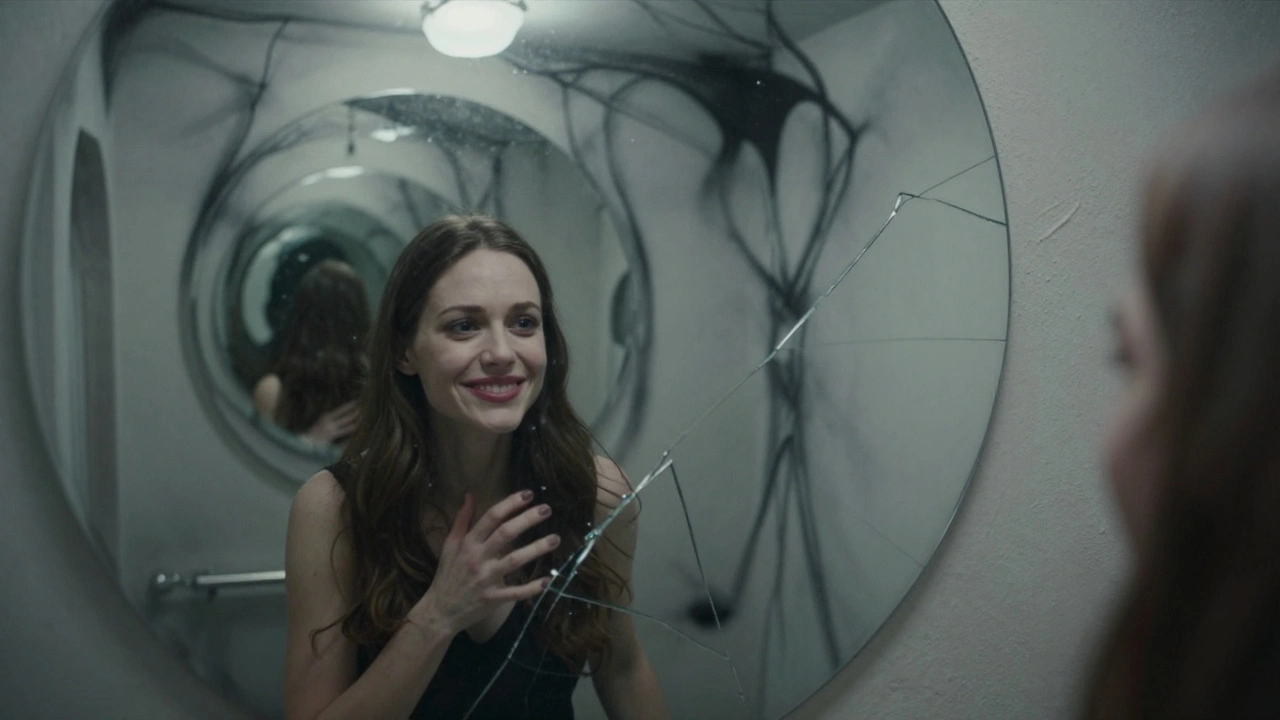
Even color films carry the DNA of expressionism. Think of The Nightmare Before Christmas-the skewed buildings, the exaggerated faces, the way the town feels like it’s alive with unease. Or Black Swan (2010)-the distorted mirrors, the spiraling camera movements, the way Nina’s mind fractures visually before it does emotionally.
These aren’t homages. They’re continuations. Expressionism taught filmmakers that the outside world can reflect the inside. A twisted hallway isn’t just a set-it’s a mind unraveling. A dark room isn’t just empty-it’s full of what you’re too afraid to name.
What You Can Still Learn
If you’re making a film-or even writing a story-expressionism offers one simple rule: show emotion through environment. Don’t tell us the character is scared. Show us the walls closing in. Don’t say they’re losing their mind. Show us their reflection smiling when they aren’t.
It’s not about realism. It’s about truth. And sometimes, the truth looks nothing like the world we know.
What films are considered classic German Expressionism?
The three most essential films are The Cabinet of Dr. Caligari (1920), Nosferatu (1922), and Mabuse, the Gambler (1922). Other key titles include The Golem: How He Came Into the World (1920), Waxworks (1924), and Metropolis (1927). These films share distorted sets, high-contrast lighting, and psychological themes centered on control, madness, and alienation.
Was German Expressionism only about horror?
No. While horror is the most visible legacy, expressionism was used in dramas, thrillers, and even science fiction. Metropolis is a dystopian sci-fi epic with expressionist sets. The Blue Angel (1930) uses expressionist lighting to show emotional collapse in a love story. The style was a tool for inner turmoil, not just monsters. Any story about isolation, guilt, or fractured identity could use it.
Why did German filmmakers use such strange sets?
They didn’t have the money for real locations or elaborate props. But more than that, they wanted to show emotion, not facts. A real room feels safe. A room with leaning walls and sharp shadows feels dangerous. The sets were designed to make the audience feel the character’s anxiety, not just see it. The art direction was psychological, not decorative.
How did German Expressionism influence modern cinema?
It gave horror its visual vocabulary. The use of shadows to hide threats, the way characters are framed in doorways to show isolation, the distortion of space to suggest madness-all of these came from German films. Directors like Alfred Hitchcock, Tim Burton, David Fincher, and Ari Aster all use expressionist techniques. Even video games like Silent Hill and Resident Evil borrow their atmosphere directly from Nosferatu and Caligari.
Are there any modern films that use German Expressionism?
Yes. Black Swan (2010) uses mirrored hallways and distorted reflections to show mental breakdown. Hereditary (2018) uses tight, claustrophobic framing and unnatural lighting to create dread. The Lighthouse (2019) mimics the high-contrast lighting and surreal architecture of 1920s German sets. These aren’t recreations-they’re evolutions. The style still works because it speaks to the part of us that fears what we can’t explain.
Where to Go Next
If you want to see how far this style has traveled, watch The Cabinet of Dr. Caligari next to Black Swan. Notice how the same fear-of losing control, of being trapped inside your own mind-is still being told with the same tools. The paint is gone. The sets are digital. But the feeling? That’s unchanged.
German Expressionism didn’t end. It just learned to speak in new languages. And it’s still whispering in the dark.





Comments(10)