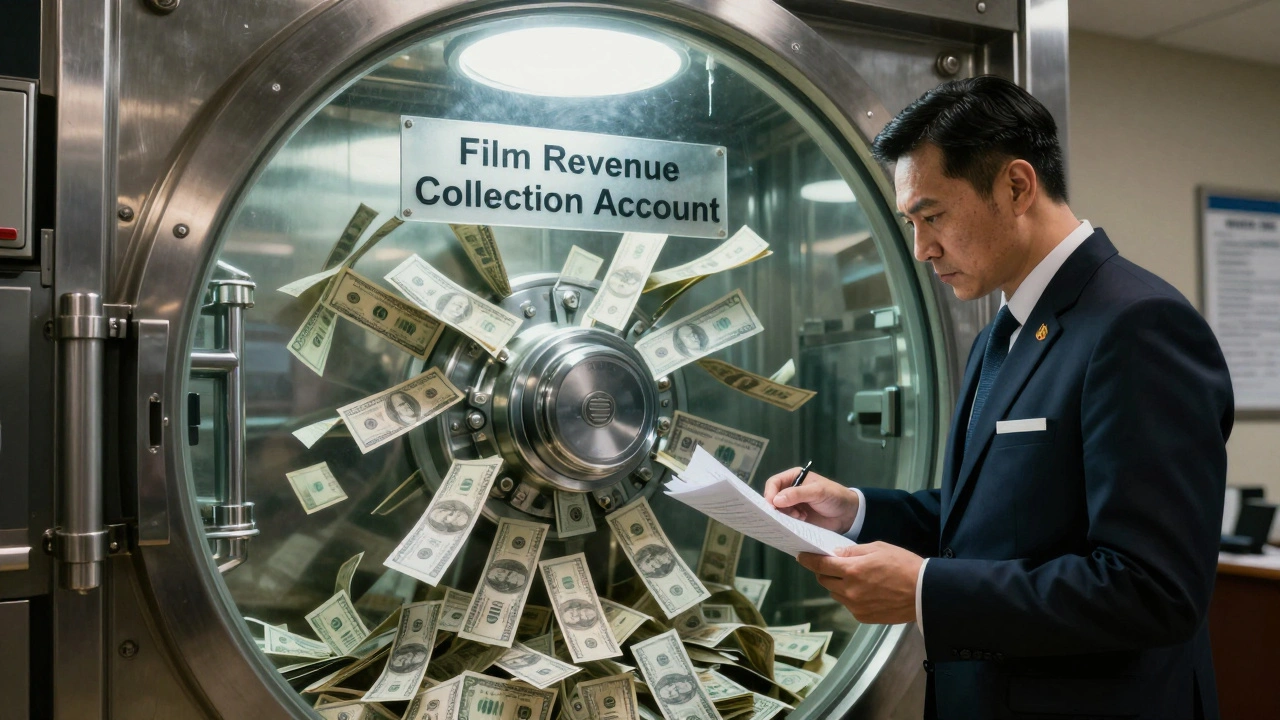
When a film gets greenlit, the money doesn’t just flow from a studio’s wallet into production. There’s a whole financial architecture behind it-especially when outside investors are involved. And one of the most critical pieces of that architecture? Collection accounts. These aren’t just bank accounts. They’re legal, tightly controlled mechanisms designed to make sure investors actually get paid back-and paid first-when the movie starts earning money. If you’re putting money into a film, you need to understand how these accounts work. Because without them, your investment could vanish into thin air.
What Exactly Is a Collection Account?
A collection account is a separate bank account, controlled by a third-party agent, that holds all the money a film earns from its release. This includes box office receipts, streaming deals, TV rights, DVD sales, international licensing-you name it. The moment a distributor cuts a check for $500,000 from Netflix, that money doesn’t go to the producer’s personal account. It goes straight into the collection account.
This isn’t optional. It’s standard practice in films that raise money from private investors. The account is usually managed by a trusted financial institution or a specialized film finance company. The rules are written into the investment contract. Investors don’t just trust the producer. They demand this control.
Think of it like a locked box. Only the contract says who can open it, when, and how much comes out. No one-not the director, not the producer, not the studio-can touch the money without following the agreed-upon payout sequence.
Why Do Investors Need This Level of Control?
Films are risky. A $20 million movie might earn $5 million at the box office. Or it might earn $150 million. But no one knows which until it’s released. Investors know this. They’re not betting on creativity. They’re betting on a financial structure that gives them a fighting chance to get their money back.
Without collection accounts, a producer could theoretically take the first $10 million in revenue and use it to fund their next film-or buy a yacht. Or worse, the money could disappear if the production company goes bankrupt. That’s not hypothetical. In 2019, a mid-budget indie film raised $8 million from private investors. The distributor paid out $6.2 million in first-run revenue. But because there was no collection account, the producer diverted the funds to cover personal debts. Investors lost everything.
Collection accounts fix that. They create a firewall between the film’s income and the people who made it. The money is held until every legal obligation is met, in order.
The Payout Chain: Who Gets Paid First?
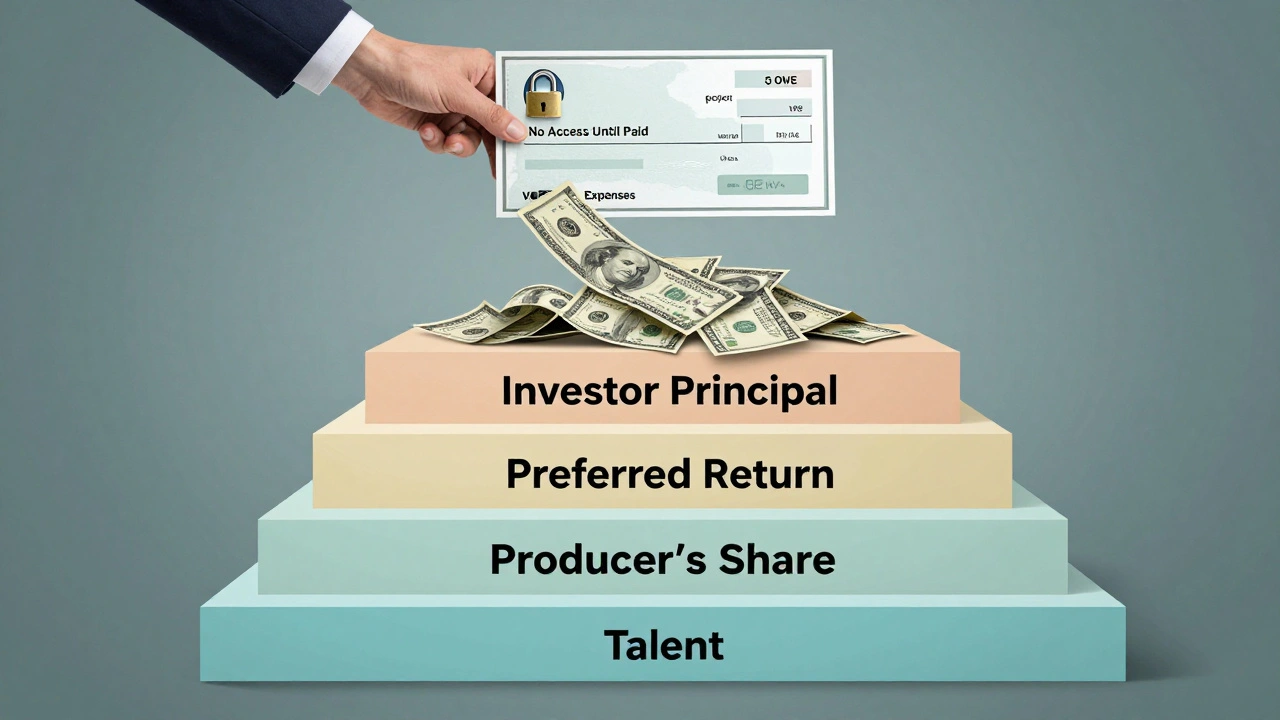
Money doesn’t just pour out of the collection account. There’s a strict order, written into the financing agreement. Here’s how it typically breaks down:
- Expenses - Distribution fees, bank fees, accounting costs, and other administrative charges are paid first. These are usually small but mandatory.
- Repayment of Investor Principal - This is the big one. All investors get their original investment back before anyone else sees a dime. This is non-negotiable in most deals.
- Preferred Return - After principal is repaid, investors often get a set percentage return-usually between 8% and 12% annually-on their investment. This is their reward for taking the risk.
- Producer’s Share - Only after investors are fully paid does the producer get their cut. This might be 10% of remaining profits, or a negotiated percentage.
- Other Participants - Directors, writers, and talent with profit participation get paid last, if there’s anything left.
This structure isn’t just fair-it’s necessary. If investors don’t get paid first, no one will fund films anymore. Collection accounts make that sequence enforceable.
How Are Collection Accounts Monitored?
It’s not enough to have an account. You need transparency. Most collection accounts come with quarterly reporting. Investors receive detailed statements showing exactly how much came in, what was paid out, and what’s left.
These reports are usually audited by a third-party accounting firm that specializes in film finance. The firm doesn’t work for the producer. They’re hired by the investors or the lender. Their job is to verify every transaction. If a distributor says they paid $3.4 million, the auditor checks the bank records. If there’s a mismatch, it’s flagged immediately.
Some deals even include a right of inspection. Investors can request to see the original distribution contracts, bank statements, and royalty reports. This isn’t common in small indie films, but for films over $5 million, it’s standard.
And if something goes wrong? The collection account agreement often includes a clause that lets investors appoint a replacement manager. If the producer becomes unresponsive or mismanages funds, investors can step in and replace them-without going to court.
What Happens If a Film Doesn’t Earn Enough?
Not every film makes money. Some lose money. But even then, collection accounts still protect investors.
If a film earns $1 million but owes $3 million in production costs and investor principal, the account pays out the $1 million to investors first. It doesn’t pay the producer. It doesn’t pay the director. It doesn’t pay the distributor’s fee. It pays investors until the money runs out.
That means if you invested $500,000 and the film only earned $200,000, you get $200,000 back. You lost $300,000. But at least you didn’t lose $500,000. Without the collection account, the producer might have spent the $200,000 on marketing for their next project-and you’d have gotten nothing.
This is why investors look for collection accounts before signing anything. It’s not about profit. It’s about loss mitigation.
How to Spot a Film Without Proper Collection Accounts
Not every film has them. And that’s a red flag.
If you’re considering investing, ask:
- Is there a third-party collection account in place?
- Who manages it? (A bank? A film finance firm?)
- Can I see the account’s operating agreement?
- Will I get quarterly reports with audit trails?
- What happens if the producer defaults?
If the answer to any of these is “We don’t do that” or “It’s not necessary,” walk away. You’re not investing in a movie. You’re gambling on someone’s honesty.
Even major studios use collection accounts when they bring in outside equity. Look at Django Unchained. It raised $40 million from investors. Every dollar of box office revenue went into a collection account managed by a New York-based finance firm. Investors got their principal back within 14 months. Then they got their 10% preferred return. The producer didn’t see a cent until after that.
Why This Matters Beyond Just Money
Collection accounts aren’t just about protecting cash. They’re about trust.
Film is a creative industry. People want to believe in the vision. But creativity alone doesn’t pay bills. Investors need to know their money won’t be misused. Collection accounts turn vague promises into enforceable contracts.
They also make it easier to raise money for future films. If investors know their money is safe in one project, they’re more likely to fund the next one. That’s how sustainable film financing works-not through hype, but through structure.
For producers, it’s not a burden. It’s a signal. It says: “I’m serious. I’m professional. I’m not here to take your money. I’m here to make a movie-and make sure you get paid.”
Final Thought: It’s Not About Control. It’s About Clarity.
Collection accounts don’t stop filmmakers from being creative. They don’t micromanage casting or editing. They simply ensure that when the film earns money, the right people get paid in the right order.
For investors, that’s everything. For producers, it’s a badge of credibility. And for the industry as a whole, it’s the only thing keeping private money flowing into films.
If you’re investing in a movie, don’t ask if it’s good. Ask if it has a collection account. Because no matter how brilliant the story, if the money isn’t protected, it’s not a film-it’s a gamble.
Do all films have collection accounts?
No. Collection accounts are standard in films that raise money from private investors, especially those over $1 million in budget. Many low-budget indie films funded by a single producer or through personal savings skip them. But if you’re an investor, you should insist on one. Without it, you have no legal guarantee of repayment.
Who controls the collection account?
It’s usually controlled by a third-party financial institution or a specialized film finance company-not the producer. The account manager acts as a neutral party, releasing funds only when the contractual payout order is met. Investors often have the right to audit the account and approve changes to the manager.
Can a producer access money from the collection account?
Only after every investor has been paid in full according to the contract. That means principal and preferred return are fully satisfied before the producer gets anything. In most agreements, the producer can’t even touch the account until the film has earned enough to cover all investor obligations.
What if the distributor doesn’t pay into the account?
Distribution contracts are legally binding. If a distributor fails to deposit revenue into the collection account, the account manager can take legal action. Most agreements include a clause requiring distributors to send payments directly to the account. Any deviation is a breach of contract and can lead to lawsuits or termination of distribution rights.
Are collection accounts used outside the U.S.?
Yes. In Canada, the UK, Australia, and parts of Europe, collection accounts are standard in private film financing. The structure might vary slightly by country due to tax laws, but the principle remains the same: investor funds are protected by a third-party-controlled account that enforces payout priority. International distributors are often required to route payments through these accounts as part of the financing deal.







Comments(10)