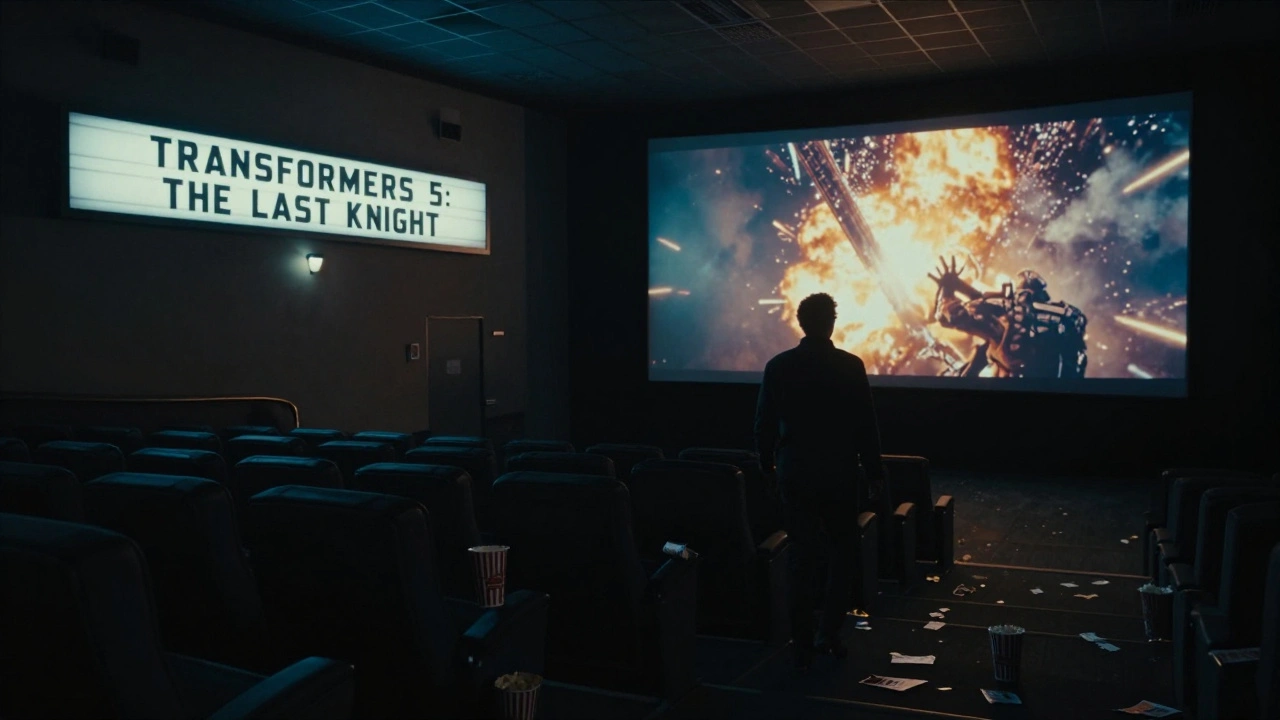
Remember when every studio thought slapping a number at the end of a movie title was a guarantee for box office gold? That era is over. Franchise fatigue isn’t just a buzzword-it’s a financial reality. Audiences aren’t just bored; they’re walking out. Studios are finally listening. And the ones surviving aren’t doubling down on sequels-they’re rebuilding.
Why Franchises Broke
It started with quantity over quality. Between 2015 and 2022, Hollywood released over 120 sequels, reboots, and spin-offs. The result? A flood of movies that felt like assembly-line products. Audiences didn’t just dislike them-they stopped trusting them.
Take Transformers. After four films, the series had grossed over $4 billion worldwide. But critics panned the last three. Fans called them noise-heavy, soulless. The fifth film, The Last Knight, lost $120 million despite a $217 million budget. The problem wasn’t the budget-it was the story. No character arc. No emotional stakes. Just explosions.
Same with Alvin and the Chipmunks. Three sequels in six years. Each one felt like a toy commercial with a plot. The audience didn’t just stop showing up-they stopped caring.
Franchises failed because studios treated them like license plates, not stories. They reused the same formula: more action, more cameos, more CGI. But audiences aren’t dumb. They know when they’re being sold a rerun.
The New Rules for Reviving a Franchise
Studios that survived the crash didn’t just make another sequel. They hit reset.
1. Kill the formula. The old playbook-return the same cast, same director, same tone-doesn’t work anymore. Audiences want something different. Not just a sequel. A reinvention.
Look at Mad Max: Fury Road. It wasn’t a direct sequel to Mad Max: Beyond Thunderdome (1985). It was a spiritual reboot. Same world. Same name. But a new director, a new cast, a new visual language. It earned $375 million and seven Oscars. Why? Because it didn’t feel like a cash grab. It felt like art.
2. Let new voices lead. Studios are finally letting directors who grew up on these franchises-not just studio veterans-take the reins.
Spider-Man: Into the Spider-Verse didn’t come from Sony’s old animation team. It came from a group of indie animators who loved comics but hated how superhero films had become predictable. The result? A $375 million hit. An Oscar. And a new standard for animated films.
3. Story over spectacle. The best franchises now start with character, not CGI.
John Wick didn’t have a billion-dollar budget. It had one thing: a clear, emotional core. A man loses his dog. He snaps. The rest is revenge. Simple. Human. The sequels didn’t add more guns-they added more layers to John’s grief. That’s why people keep showing up.
4. Kill the franchise if it’s dead. This is the hardest lesson. Some series shouldn’t be revived. But studios used to keep them alive like zombies. Now, they’re letting go.
Terminator: Genisys (2015) tried to reboot the series with a time-loop twist. It flopped. Audiences didn’t want a new timeline-they wanted closure. So in 2019, Terminator: Dark Fate ignored every sequel after Terminator 2 and treated it like a direct follow-up. It didn’t make money. But it respected the audience. That’s progress.
What Works Now: Real Examples
Here’s what real recovery looks like-not theory, but results.
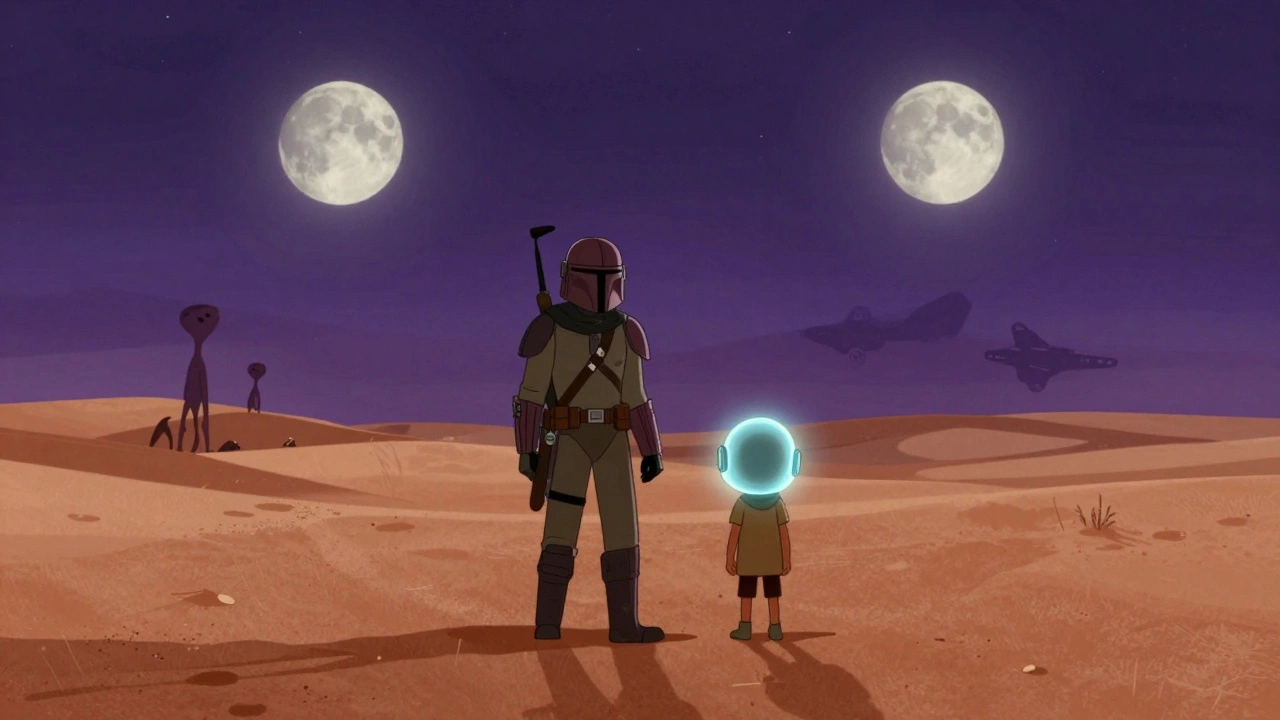
- Star Wars: The Mandalorian (2019): No Jedi. No Skywalker. Just a lone bounty hunter and a child. It didn’t try to replace the original trilogy. It expanded the world. It made Star Wars feel alive again.
- Shrek 2 (2004) was the last great sequel. But after that, the franchise kept going. In 2024, DreamWorks quietly shelved Shrek 5 after three years of development. Why? The team realized they had nothing new to say. That’s maturity.
- Indiana Jones and the Dial of Destiny (2023): Harrison Ford was 80. The movie didn’t pretend he was 30. It made his age part of the story. He was tired. The world had moved on. And so had he. That honesty resonated.
These aren’t flukes. They’re blueprints.
The Role of Streaming and Audience Feedback
Streaming platforms changed everything. Netflix, Disney+, and Amazon don’t need box office numbers. They need retention. And audiences tell them, in real time, what they hate.
When She-Hulk premiered on Disney+ in 2022, fans criticized the tone. Too silly. Too disconnected from the MCU’s darker tone. The studio listened. Season 2 shifted direction. The humor stayed-but the stakes got higher. The result? A 37% increase in viewer retention.
Studios now track comments, Reddit threads, and TikTok reactions like weather reports. They’re not ignoring backlash. They’re using it to course-correct.
What Still Doesn’t Work
Not every attempt at recovery succeeds. And the failures still follow the same old mistakes.
- Reboots with no reason to exist. Ghostbusters: Afterlife (2021) worked because it honored the original. Ghostbusters: Frozen Empire (2024) tried to force a new team into the old world. Critics called it “a nostalgia trap.”
- Forced crossovers. Trying to link every franchise into one universe is exhausting. DC Studios spent years trying to connect Batman, Superman, Wonder Woman, and Aquaman. The result? Confusion. And declining ticket sales.
- Recasting without context. Star Trek (2009) rebooted with younger actors and worked because it was a parallel timeline. But Planet of the Apes (2001) rebooted with a human protagonist and confused fans. Why? Because it didn’t earn the right to change the story.
The Future: Franchises as Living Worlds
The smartest studios now treat franchises like living ecosystems-not product lines.
Marvel used to be the king of forced continuity. Now, they’re experimenting. What If…? on Disney+ lets characters live in alternate realities. Agatha All Along turned a side character into a lead. They’re not just making sequels-they’re building branches.
That’s the future. Not endless sequels. Not endless reboots. But stories that evolve, change, and sometimes, end.
Franchise fatigue isn’t about too many movies. It’s about too many lazy ones. The studios that survive won’t be the ones with the biggest budgets. They’ll be the ones with the most respect-for the audience, for the story, and for the characters.
It’s not about making more. It’s about making better.
What causes franchise fatigue in movies?
Franchise fatigue happens when studios release too many sequels, reboots, or spin-offs without adding new ideas. Audiences grow tired of the same characters, same plot structures, and same CGI-heavy action. When stories stop evolving and start repeating, viewers lose interest-and stop showing up.
Can a failed franchise be saved?
Yes, but only if the studio is willing to reset. That means hiring new creators, changing the tone, focusing on character over spectacle, and sometimes ignoring past sequels. Mad Max: Fury Road and Spider-Verse succeeded because they didn’t try to fix the old formula-they built a new one.
Why do reboots often fail?
Reboots fail when they’re done for profit, not passion. If the new version doesn’t bring a fresh perspective, honor the original’s spirit, or justify its existence, audiences see it as a cash grab. Ghostbusters: Frozen Empire failed because it didn’t offer a reason to return-just familiar faces in new costumes.
How do streaming services influence franchise recovery?
Streaming platforms rely on viewer retention, not box office numbers. That means they pay attention to real-time feedback-Reddit threads, social media reactions, watch time. If fans complain, studios adjust. She-Hulk changed its tone in Season 2 after audience backlash, and retention improved. Streaming turns feedback into a tool for improvement.
Is killing a franchise ever the right move?
Yes. Sometimes the most respectful thing a studio can do is let a franchise end. Shrek 5 was shelved because the creators had nothing meaningful to add. Terminator: Dark Fate ignored later sequels to honor the original two films. Ending a franchise can preserve its legacy better than a weak sequel.
Studios are learning: audiences don’t want more. They want meaning. And when a story still matters, they’ll come back-even after the last one flopped.




Comments(10)