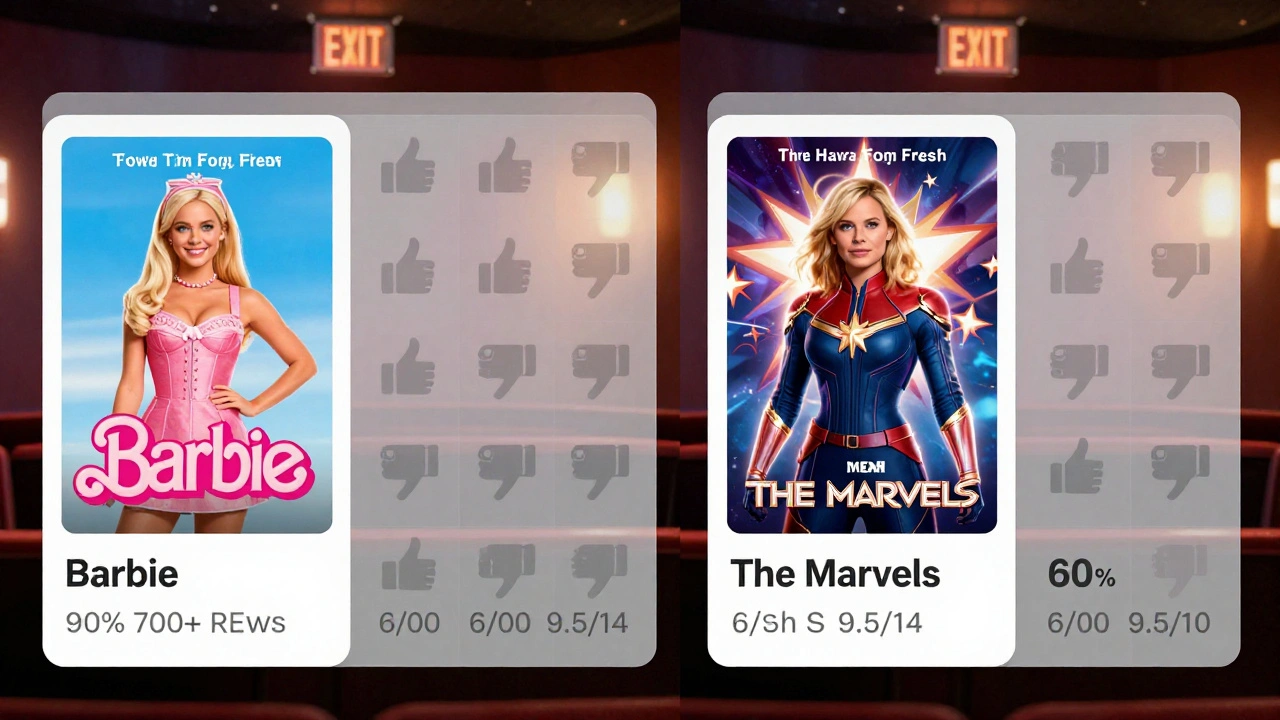
Ever opened Rotten Tomatoes to check a movie’s score and wondered why a film with 90% on the Tomatometer feels like a mess, while a 60% movie somehow became your favorite? You’re not alone. Rotten Tomatoes isn’t a single rating - it’s a system built on hundreds of individual opinions, and most people don’t know how it actually works. This isn’t about whether critics are right or wrong. It’s about understanding the math behind the percentage you see before you click "Watch Now."
What the Tomatometer Actually Measures
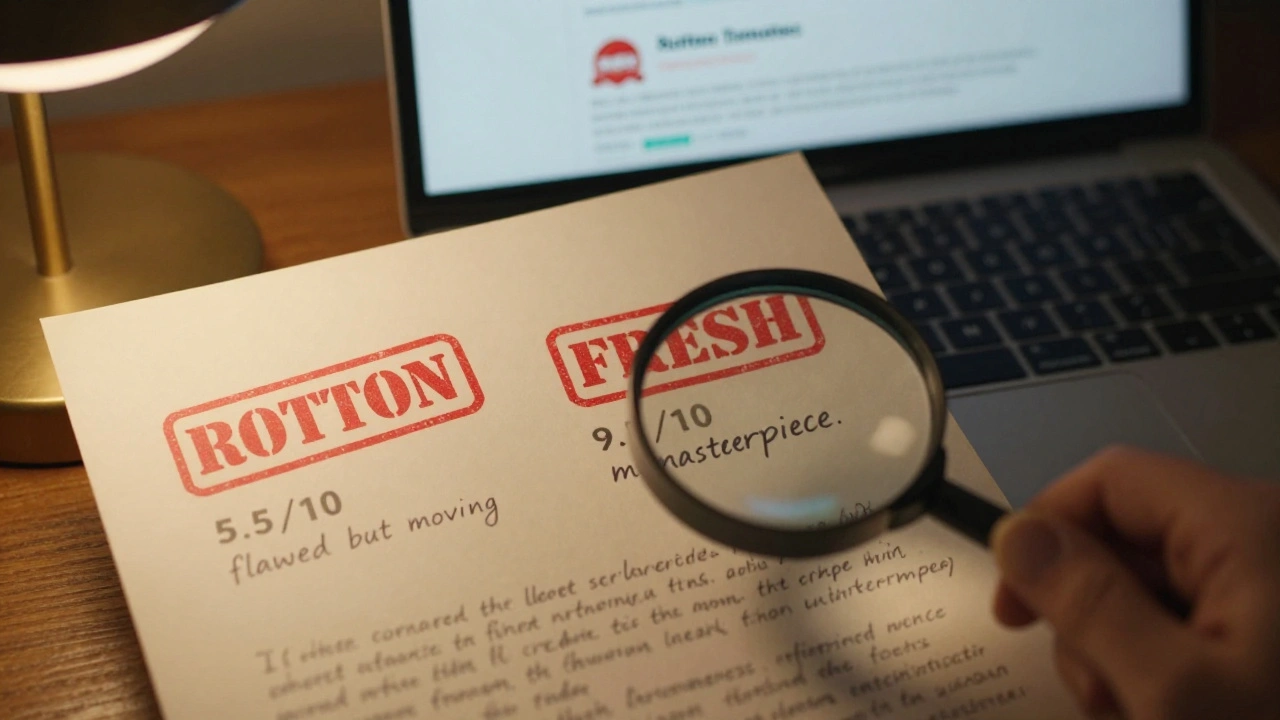
The Tomatometer isn’t an average. It’s a percentage of critics who gave the movie a positive review - and "positive" here means a rating of 6/10 or higher. That’s it. A 7/10 and a 9.5/10 count the same. A 5.5/10? That’s a rotten score, even if the reviewer said, "This is flawed but deeply moving."
For example, Barbie (2023) had a 90% Tomatometer based on 700+ reviews. That means 630 critics gave it a 6/10 or better. The other 70 gave it a 5.9 or lower. But those 70 could’ve all given it 1/10, or 5.5/10 - the score doesn’t tell you which.
This is why you’ll see movies with identical Tomatometer scores that feel totally different. Oppenheimer (94%) and The Marvels (60%) both have scores based on aggregated reviews, but the distribution of ratings behind them is wildly different. One has a cluster of 8s and 9s. The other has a mix of 5s and 7s. Rotten Tomatoes hides that.
The Difference Between Critics and Audience Scores
Below the Tomatometer, you’ll see an Audience Score. That’s not a critic rating - it’s a simple average of user ratings on a 5-star scale. A 4.0/5 from 10,000 users equals an 80% Audience Score. No threshold. No binary pass/fail. Just a straight average.
That’s why you often see huge gaps. John Wick: Chapter 4 had a 91% Tomatometer but a 93% Audience Score. Meanwhile, Ghostbusters: Afterlife had a 73% Tomatometer but a 90% Audience Score. Critics liked it. Fans loved it. But why? Because critics were judging it as a film. Fans were judging it as an emotional experience.
The Tomatometer is a gatekeeper. The Audience Score is a love letter.
How Reviews Get Included - And Who Gets Left Out
Not every review counts. Rotten Tomatoes only includes reviews from approved critics. These are journalists, editors, or contributors from outlets they’ve vetted - like The New York Times, Rolling Stone, Variety, or major local newspapers. Independent bloggers? Usually not. YouTube reviewers? Rarely. Podcasters? Almost never.
That means the score reflects a specific slice of film criticism: professional, print- or broadcast-based, and often tied to legacy media. In 2024, over 80% of approved critics worked for outlets that have been around for more than 20 years. The platform has been criticized for favoring traditional gatekeepers over newer voices, especially as TikTok and Instagram film reviews grow.
Also, reviews must be published before the movie’s wide release. A glowing review that comes out a week after opening day? Doesn’t count. That’s why some films see their scores drop after release - because the early reviews were overly optimistic, and later ones (which don’t count) were more honest.
The "Certified Fresh" Label - What It Really Means
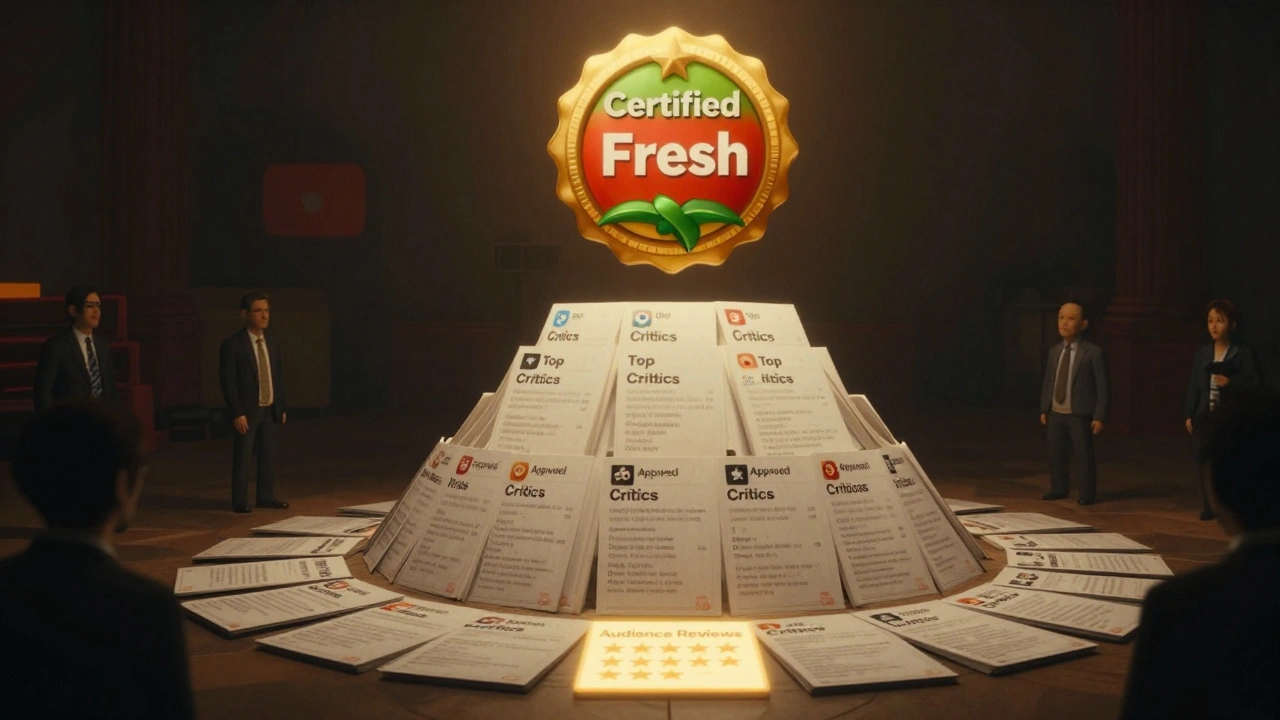
You’ve seen it: a little badge that says "Certified Fresh." It sounds official. Like a stamp of quality. But here’s the fine print:
- The movie must have at least 5 reviews from top critics (not just any approved critic).
- It must hold a 75% or higher Tomatometer.
- At least 5 of those reviews must be positive, and the average rating must be 7/10 or above.
- And it must have a minimum of 80 reviews total - yes, 80.
So a movie with 80 reviews, 76% Tomatometer, and an average rating of 6.9/10? Not Certified Fresh. A movie with 100 reviews, 75% Tomatometer, and an average of 7.1/10? Certified Fresh. The difference between 6.9 and 7.1 is tiny - but it changes the badge.
This system rewards volume over nuance. A blockbuster with 200 reviews will almost always get Certified Fresh. An indie film with 75 reviews, even if every critic loved it, might not.
Why Rotten Tomatoes Skews Toward Blockbusters
Here’s the hidden truth: Rotten Tomatoes is most accurate for wide-release Hollywood films. Why? Because those movies get reviewed by the largest number of approved critics. A big studio film might get 150 reviews on opening weekend. An indie film? Maybe 20.
That means the Tomatometer is statistically more reliable for blockbusters. But for smaller films, 20 reviews isn’t enough to represent public opinion. A single harsh review from a major critic can tank a film’s score - even if 19 others loved it.
Take The Lighthouse (2019). It had a 92% Tomatometer - but only 46 reviews. That’s a tiny sample size. If one critic had given it a 5/10 instead of a 7/10, the score would’ve dropped below 90%. It’s not a flaw - it’s a limitation of the system.
That’s why you should treat scores under 50 reviews with caution. They’re snapshots, not surveys.
What Rotten Tomatoes Doesn’t Tell You
There’s no context. No breakdown. No weighting. A review from a Pulitzer-winning critic counts the same as one from a blogger who’s never reviewed a film before. A review from a critic who specializes in horror doesn’t get more weight just because the movie is a horror film.
It also doesn’t account for bias. Critics who cover mostly action films may be harder on dramas. Critics who focus on indie cinema may be more forgiving of slow pacing. Rotten Tomatoes doesn’t filter for that.
And it doesn’t tell you if a critic changed their mind. A film might get a glowing review on opening day - and then a follow-up piece a month later saying, "I was wrong." That second review? Not counted. The score stays frozen.
How to Use Rotten Tomatoes Wisely
Don’t use it as a yes/no filter. Use it as a starting point.
- If the Tomatometer is below 60% and the Audience Score is above 75%, the movie might be a hidden gem - critics didn’t get it, but audiences did.
- If the Tomatometer is above 85% and the Audience Score is below 60%, the film might be pretentious or overly niche.
- If both scores are above 80%, it’s likely a crowd-pleaser with critical backing - think Everything Everywhere All At Once.
- If both are below 50%, walk away unless you’re a fan of the director or genre.
Also, read the reviews. Click on the "Critics Consensus" section. It’s often more helpful than the percentage. It summarizes the tone - "A visually stunning but emotionally hollow spectacle" - and that’s worth more than any number.
Is Rotten Tomatoes Still Relevant in 2026?
Yes - but not the way you think. It’s not the final word on quality. It’s a cultural barometer. It tells you what critics agree on - not what you’ll enjoy.
Platforms like Letterboxd and IMDb are better for personal taste. Letterboxd lets you see how users rate films with stars and notes. IMDb lets you filter reviews by age, gender, or viewing habits. Rotten Tomatoes still wins for quick, broad consensus.
The real power of Rotten Tomatoes isn’t in the number. It’s in the conversation it starts. That 82% score? It’s a signal - not a verdict. Use it to ask questions, not make decisions.
Why do some movies have different scores on Rotten Tomatoes and Metacritic?
Rotten Tomatoes uses a binary system - critics either give a movie a "fresh" (6/10 or higher) or "rotten" (below 6/10) rating. Metacritic takes actual scores (like 7.5/10, 8/10) and calculates a weighted average. So a movie with 10 reviews of 7/10 would be 70% on Rotten Tomatoes but a 7.0 on Metacritic. Metacritic gives more nuance; Rotten Tomatoes gives clarity.
Can a movie’s Rotten Tomatoes score change after release?
Yes - but only if new reviews come in from approved critics before the wide release. After opening day, no new reviews count toward the Tomatometer. However, Audience Scores update daily as more users rate the film. That’s why some movies climb in Audience Score weeks after release - people are watching it at home and changing their minds.
Why do some critics’ reviews not show up on Rotten Tomatoes?
Rotten Tomatoes only includes reviews from outlets it has approved. Many independent critics, bloggers, podcasters, and YouTube reviewers aren’t on the list. Also, reviews must be published before the film’s wide release. If a critic writes a follow-up review a month later, it won’t be counted - even if it’s insightful.
Is a 100% Tomatometer score always a sign of a great movie?
Not necessarily. A 100% score can happen with as few as 5 reviews - and all of them could be 6/10. That’s barely above average. Some films get 100% because they’re niche or polarizing, and only critics who love that style reviewed them. Look at the number of reviews. A 100% with 200+ reviews is rare and meaningful. A 100% with 6 reviews? Probably luck.
Do studios manipulate Rotten Tomatoes scores?
Studios can’t directly change scores, but they can influence them. They often screen films early for critics they know will be favorable. They may avoid sending copies to critics known for harsh reviews. They also time reviews to drop right before opening day - so negative reviews that come later don’t count. This is why early buzz can be misleading.



Comments(10)