
Think about the last horror movie that gave you chills. Was it the jump scare? Maybe. But more likely, it was the silence right before it. The creak of a floorboard. The distant hum of a refrigerator. The way the music didn’t play at all-until it did, in a way that made your heart stop. That’s not luck. That’s sound design.
Why Sound Beats Visuals in Horror
Visuals show you what’s there. Sound makes you imagine what’s coming. Your brain fills in the gaps faster than your eyes can process them. A shadow on the wall? Maybe nothing. But the sound of breathing behind you? Your body reacts before your mind catches up. Studies from the University of California, Berkeley show that fear responses triggered by audio cues activate the amygdala-your brain’s fear center-up to 20% faster than visual ones. Horror filmmakers know this. That’s why the best horror films don’t just scare you with monsters. They scare you with silence, texture, and timing.The Two Pillars: Tension and Release
Every great horror sound design follows the same rhythm: build tension, then release it. But the release isn’t always a scream or a jump. Sometimes, it’s just quiet again. And that’s even scarier. Tension is the slow crawl of dread. It’s the sound of something moving where it shouldn’t. It’s low-frequency rumbles that you feel in your chest more than hear. It’s the faint drip of water in an empty house, repeated just often enough to make you check the clock. Release is the payoff. It’s the door slamming. The scream. The sudden orchestral stab. But if the tension wasn’t built right, the release feels flat. Like a balloon that pops without being blown up first.Building Tension: The Tools of Dread
There are five core techniques used in professional horror sound design to create unease:- Low-frequency sounds (infrasound)-Below 20 Hz, you can’t hear them, but your body feels them. They cause unease, nausea, even paranoia. Films like The Conjuring and Hereditary use sub-bass tones under dialogue to make audiences feel watched without knowing why.
- Non-linear sounds-These are sounds that break normal patterns. A child’s laugh that suddenly drops an octave. A whisper that glitches like a corrupted file. Our brains expect music and voices to follow rules. When they don’t, we feel danger.
- Reverse audio-Playing a sound backward creates something familiar yet wrong. A door closing in reverse. A voice saying “help” backwards. It triggers a primal sense of wrongness. Used in The Exorcist and It Follows.
- Layered silence-It’s not just no sound. It’s the absence of expected sound. In A Quiet Place, silence isn’t empty-it’s heavy. You hear the characters breathing, their footsteps, the rustle of clothes. That’s the tension. When the silence is broken, it’s not a jump scare-it’s a violation.
- Unexpected textures-Think wet, sticky, organic sounds. The squelch of a creature moving through flesh. The crackle of bones twisting. These sounds tap into disgust and fear of bodily violation. They’re not loud. They’re intimate. And that’s what makes them stick.
Release: When the Horror Hits
The release isn’t always loud. But it’s always sudden. And it’s always shaped by what came before. In Insidious, the jump scare isn’t the ghost appearing. It’s the sudden cut from a slow, ambient drone to a single, high-pitched violin note. That note lasts less than half a second. But because the previous 45 seconds were filled with deep, rumbling tones and near-silence, your body doesn’t have time to recover. Here’s how professionals time releases:- Start with a long, slow build-30 to 90 seconds of subtle, evolving sound.
- Drop out all sound for 1-2 seconds. Not just quiet. Complete absence. Even the room tone is removed.
- Hit with a sharp, high-energy sound: a scream, a crash, a bass drop.
- Immediately cut back to silence or a single sustained tone.
Music vs. Sound Effects: Know the Difference
A lot of people think horror music is about scary melodies. It’s not. It’s about control. Music tells you how to feel. A slow cello line says, “Something bad is coming.” A dissonant chord says, “Something is wrong.” Sound effects tell you what’s happening. The drip of blood. The scrape of claws on wood. The whisper that isn’t coming from the speaker. The best horror films use music sparingly. In The Witch, there’s no score for the first 40 minutes. The tension comes from wind, fire crackling, and the sound of a child humming a lullaby in a language no one recognizes. When music does appear, it’s often wrong. Instruments tuned slightly off-key. Notes played too slow or too fast. A piano that sounds like it’s underwater. These aren’t accidents. They’re tools.Real-World Sounds, Unnatural Results
The most terrifying sounds aren’t made in studios. They’re recorded in the real world-and then twisted. Sound designers use everyday objects to create horror:- Crunching celery = breaking bones
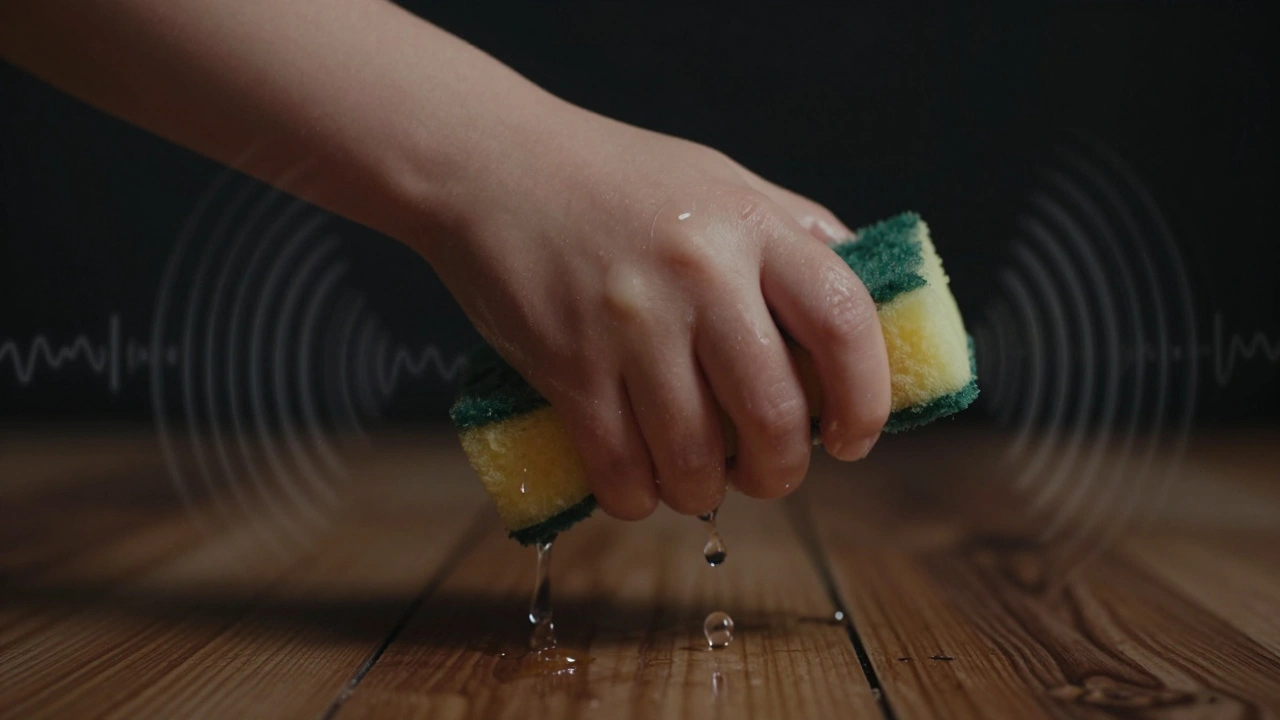
- Wet sponge being squeezed = flesh tearing
- Sliding a wet towel across glass = skin dragging
- Recording a child’s voice through a metal funnel = ghostly whispers
- Playing a dog’s whine backward = supernatural cries
What Not to Do
Bad horror sound design is loud. Constant. Predictable. Avoid these mistakes:- Using the same jump scare sound in every scene. (You’ll desensitize the audience.)
- Layering too many sounds at once. If everything is screaming, nothing stands out.
- Using stock sound libraries without modifying them. (That squeaky door? It’s been used in 300 horror films. Your audience will recognize it.)
- Letting music carry the fear. If the score tells you when to be scared, you’re not scared-you’re instructed.
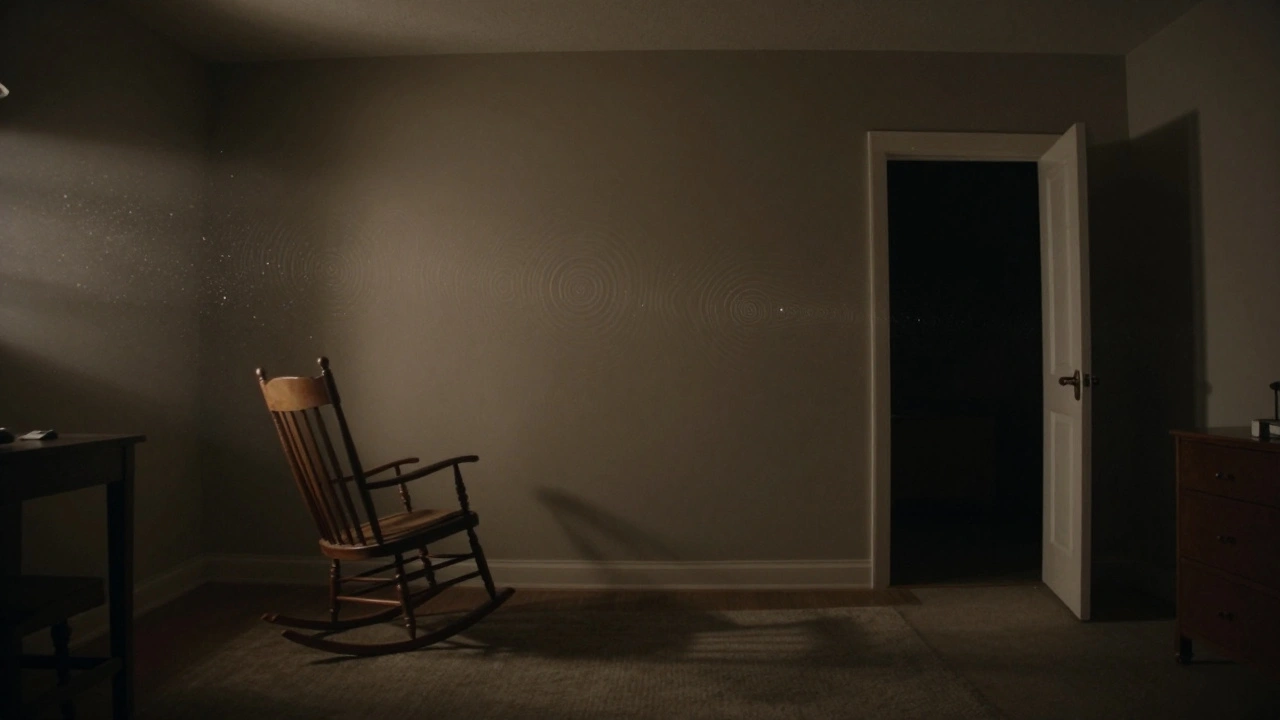
- Ignoring room tone. A room with no background noise feels fake. Even silence has texture.
The Psychology Behind the Sound
Horror sound design works because it taps into ancient survival instincts. Our ancestors didn’t need to see a predator to know it was near. They heard a rustle in the grass. A breath too close. A cry that didn’t belong to their tribe. Those sounds triggered fight-or-flight responses before the brain had time to analyze. Modern horror sound design hijacks that same system. It doesn’t show you the monster. It makes you feel like you’re being hunted. That’s why the most effective horror sounds are:- Unfamiliar but plausible
- Close in space (like someone whispering in your ear)
- Irregular in timing
- Embedded in silence
How to Start Designing Horror Sound
If you’re making your own horror short or indie film, here’s how to begin:- Watch your favorite horror scene. Mute the video. Listen only to the sound. Write down every sound you hear-even the quiet ones.
- Record your own sound library. Walk around your house at night. Record creaks, drafts, dripping faucets, appliances turning on. Use your phone. No fancy gear needed.
- Take one everyday sound. Play it backward. Slow it down. Speed it up. Layer it with another sound. Now you have a new horror element.
- Build a 30-second sequence using only tension: no jump scares. Just slow, creeping sound. Then add one release. See how it feels.
- Test it on someone. Watch their body. Do they lean in? Hold their breath? That’s success.
Final Thought: Silence Is the Weapon
The most powerful sound in horror isn’t a scream. It’s the moment before the scream. It’s the breath you didn’t know you were holding. It’s the quiet that makes you wonder if you’re alone. The best horror films don’t fill the silence. They weaponize it.What’s the most important sound in a horror film?
The most important sound is the one that isn’t there. Silence creates anticipation. When the audience expects sound and gets nothing, their minds start imagining threats. That’s when fear becomes personal.
Can you make horror sound with just a smartphone?
Yes. Many horror films, including indie hits like The Blair Witch Project and Unfriended, used basic recording gear. What matters is creativity, not equipment. Record door creaks, footsteps on gravel, wind through trees. Modify them with free apps like Audacity. A well-placed, manipulated sound beats a professional sample used poorly.
Why do horror sounds often use low frequencies?
Low frequencies below 20 Hz are felt, not heard. They trigger physical unease-chills, nausea, a sense of being watched. Films like The Conjuring and It Follows use sub-bass tones to make audiences feel threatened before they know why. It’s a biological response, not a musical one.
Is music necessary in horror films?
No. Some of the most terrifying horror films-like The Witch and A Quiet Place-have little to no music. Sound effects and silence do the work. Music can help, but it’s often used as a tool to manipulate emotion, not create it. Too much music makes fear feel scripted.
What’s the difference between horror sound design and regular film sound?
Regular film sound supports the story. Horror sound design *is* the story. It doesn’t just accompany the action-it drives the fear. It manipulates the audience’s psychology. Where a drama might use music to highlight emotion, horror uses it to trigger primal fear. The goal isn’t realism-it’s unease.
If you’re trying to scare someone, don’t show them the monster. Make them hear it coming. Then, let the silence do the rest.


Comments(8)