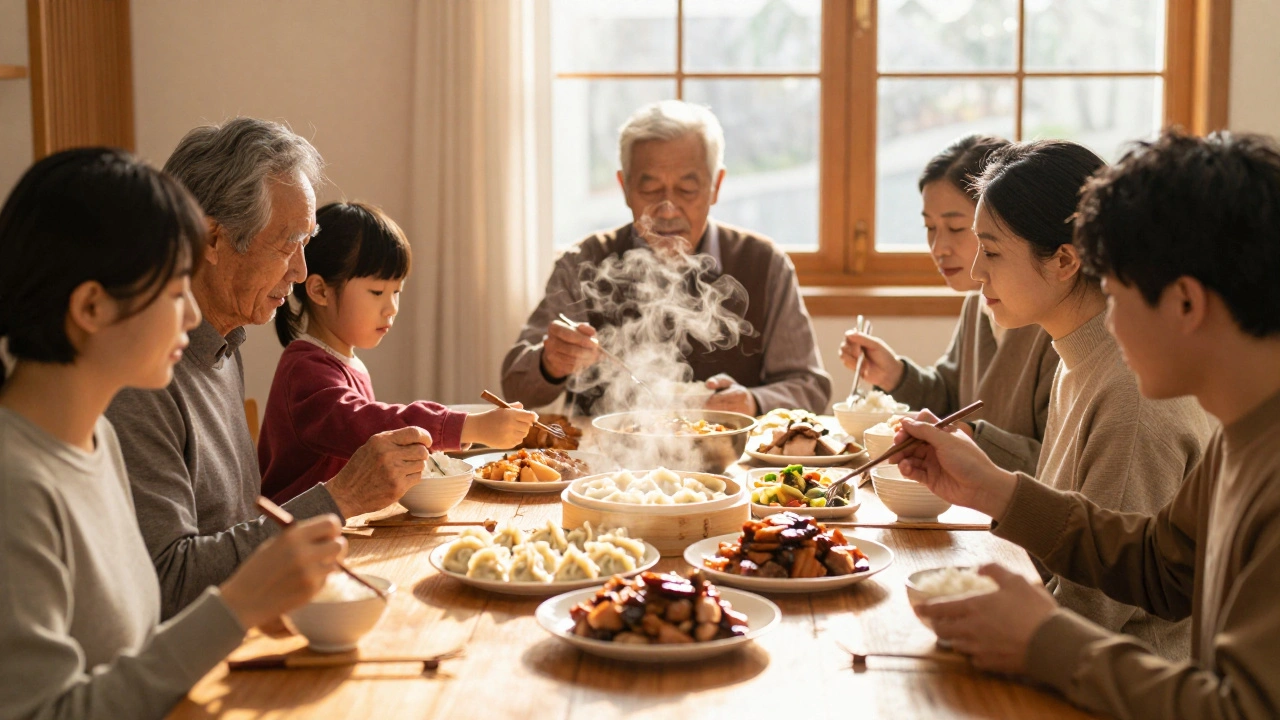
Think about the last time a movie made you hungry. Not because of a flashy burger or a perfectly plated pasta, but because the food on screen felt real-like it was tied to something deeper. In films, food isn’t just set dressing. It’s a silent character. A shared meal can tell you more about a family than a dozen lines of dialogue. A broken plate, a silent dinner, a last meal before goodbye-these moments carry the weight of culture, loss, love, and identity.
Meals as Emotional Anchors
In The Godfather, the opening scene isn’t about power or violence. It’s about a wedding. Vito Corleone sits at the head of a long table, surrounded by family, eating, laughing, listening to requests. The food is abundant, the mood warm. But the moment he steps away to handle a request-"I’m gonna make him an offer he can’t refuse"-the meal becomes a bridge between personal life and brutal reality. The pasta, the wine, the clinking glasses aren’t just props. They’re symbols of tradition, loyalty, and the cost of belonging.
Compare that to Jiro Dreams of Sushi. The quiet rhythm of preparing sushi isn’t about technique alone. It’s about a son trying to earn his father’s approval, one piece at a time. The food is the language they never speak aloud. When Jiro’s son finally serves a perfect piece, the silence speaks louder than any praise.
These scenes work because they tap into something universal: we all know what it feels like to sit at a table with people who matter. The way someone pours the tea, who gets the last piece of bread, whether the soup is too salty-it all adds up. Film uses food to show what’s unsaid.
Cultural Identity on the Plate
Food in film often carries the weight of heritage. In Bend It Like Beckham, the British-Indian family’s kitchen is a battleground of tradition and assimilation. The scent of cumin and turmeric fills the house. The mother insists on homemade roti, while the daughter just wants a sandwich. The tension isn’t about food. It’s about belonging. Is she English? Is she Indian? Can she be both? The answer isn’t spoken-it’s served on a plate.
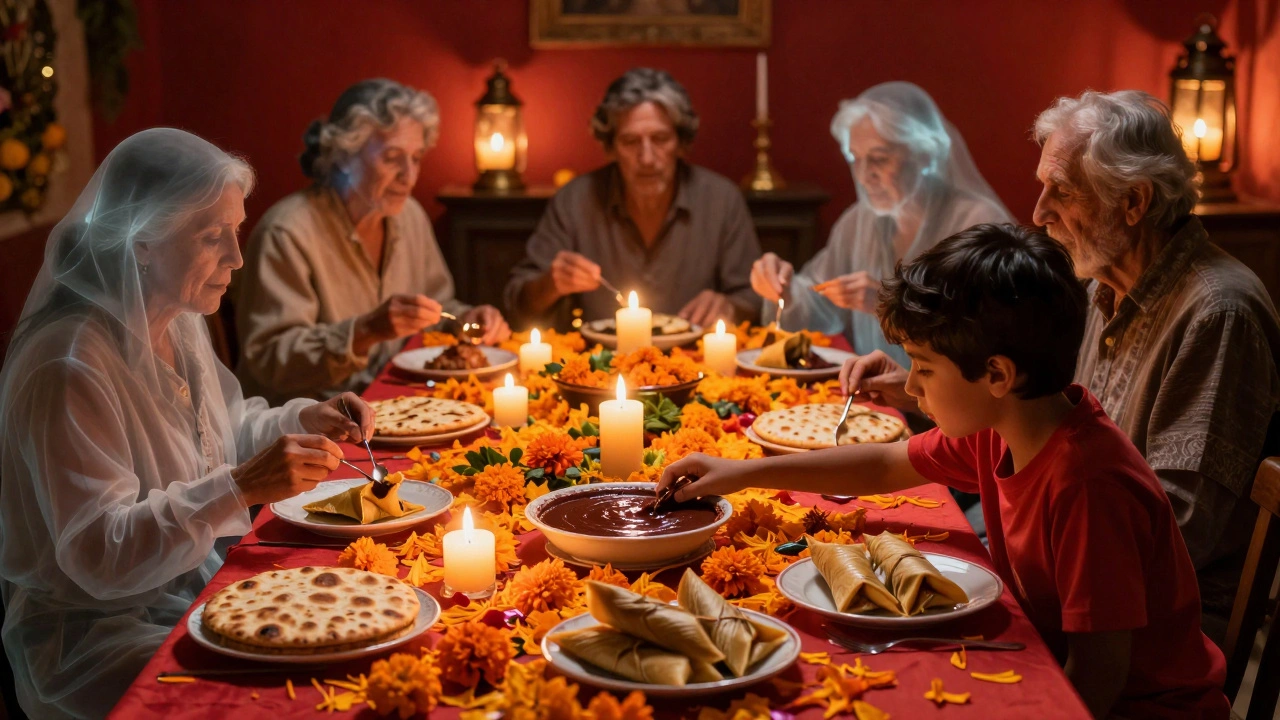
In Coco, the ofrenda isn’t just a shrine. It’s a feast. Marigold petals, pan de muerto, mole, tamales-each item has meaning. The scene where Miguel sees his ancestors eating together isn’t fantasy. It’s memory made tangible. Food becomes a way to keep the dead alive, not through words, but through taste and smell.
These aren’t exotic set pieces. They’re acts of preservation. When a film shows a family cooking a recipe passed down for generations, it’s not just showing culture. It’s defending it. In a world that pushes homogenization, these scenes say: "This is who we are. And we won’t let it disappear."
Food as Conflict and Healing
Not all meals are peaceful. Sometimes, the table is where fights happen.
In Little Miss Sunshine, the family eats fast food in a diner after hours of silence. No one talks. Then, someone drops a fry. Someone else picks it up. Then another. Soon, they’re all eating with their hands, laughing. The food doesn’t fix them. But it gives them a moment to breathe. No speeches. No therapy. Just grease, ketchup, and a shared mess.
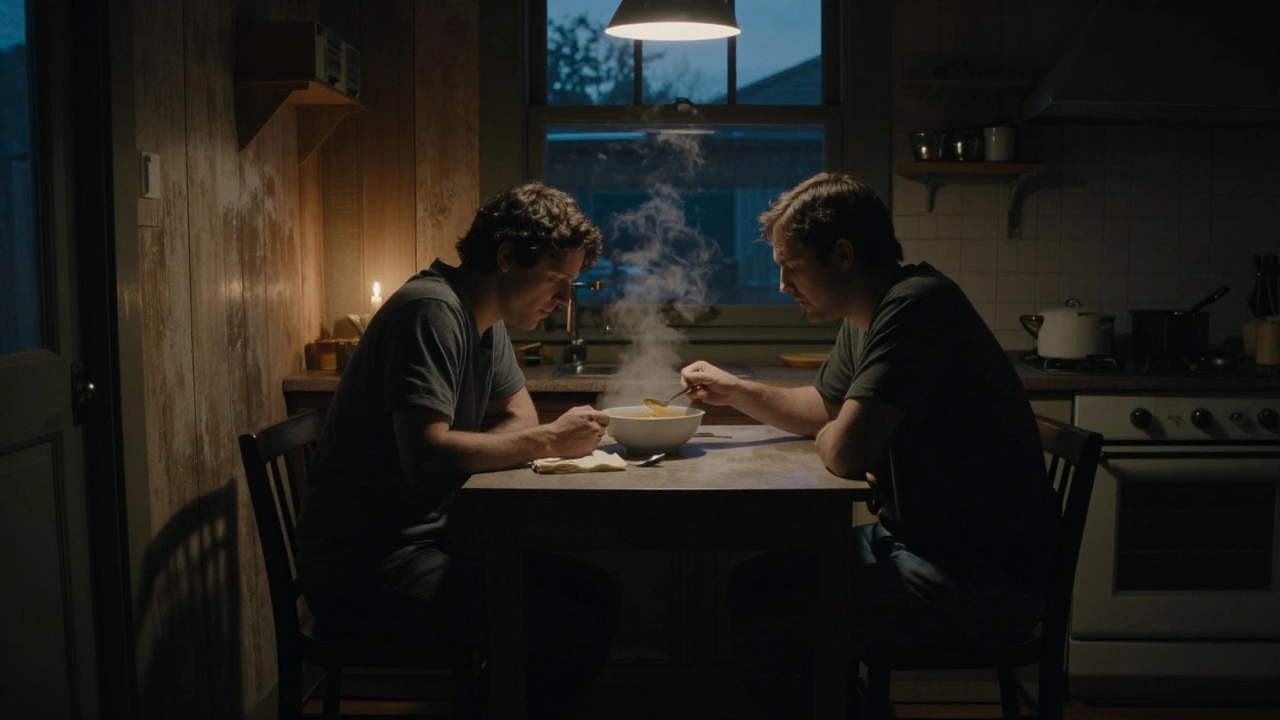
Contrast that with Paris, Texas. The reunion scene between husband and wife ends with her serving him a bowl of soup. He doesn’t eat it. He stares at it. The steam rises. The silence stretches. The soup is cold by the time he leaves. That bowl holds everything they can’t say-regret, distance, the impossibility of going back.
Food doesn’t always heal. Sometimes, it reminds you of what’s broken. A child refusing to eat. A widow setting an extra plate. A father cooking his daughter’s favorite dish after she moves out. These aren’t clichés. They’re rituals. And rituals, even failed ones, keep us connected to what we’ve lost-or what we’re afraid to lose.
Generational Shifts and Changing Tables
When families change, so do their meals.
In The Farewell, the Chinese-American family gathers in China for a fake wedding-to hide the grandmother’s terminal diagnosis. The table is filled with dishes: steamed fish, dumplings, braised pork. But the younger generation doesn’t know how to eat them properly. They use forks. They don’t finish their rice. The older folks watch, silent. The food is the same. The meaning? It’s slipping.
Meanwhile, in My Big Fat Greek Wedding, the family’s kitchen is chaos. Greek food is everywhere-olives, baklava, lamb. But the daughter brings home a non-Greek man. The father’s reaction? He learns to make pasta. Not because he wants to. But because he wants her to feel at home. The food changes. The love doesn’t.
These films show that culture isn’t frozen in time. It evolves. Sometimes, it’s through a new ingredient. Sometimes, it’s through a new way of sitting at the table. The key isn’t tradition-it’s intention. The act of sharing food, even if it’s not the "right" way, still holds the connection.
Why These Scenes Stick With Us
We remember these moments because they’re real. Not because they’re beautiful. But because they’re messy.
A 2024 study from the University of California’s Center for Media and Culture found that scenes of family meals in films trigger stronger emotional responses than scenes of dialogue or action. Viewers reported feeling more connected to characters after watching them eat together-even if the food was unappetizing. Why? Because we’ve all sat at a table where nothing was said, but everything was felt.
These scenes work because they’re sensory. You smell the garlic. You hear the sizzle. You feel the weight of the silence. You remember your own kitchen. Your own mother. Your own brother who always stole the last piece of pie.
Film doesn’t need to explain the culture. It doesn’t need to lecture. It just needs to show a pot simmering on the stove, a child licking a spoon, an elderly hand pouring sauce over rice. That’s all it takes.
What These Stories Teach Us
Food in film isn’t about recipes. It’s about relationships. It’s about who we are when we’re not pretending.
When a character cooks for someone they love, they’re not just feeding them. They’re saying: "I see you. I remember you. I’m still here."
When a family gathers around a table, even if they’re quiet, even if they’re angry, even if they’re broken-they’re still together. And that’s the most powerful story of all.
Why do movies use food to show family dynamics?
Food is one of the few universal human experiences that doesn’t require language. A shared meal creates a natural setting where emotions surface without dialogue-tension, love, grief, joy. In film, it’s a visual shorthand for relationships. A character refusing to eat says more than a monologue. A hand passing a bowl shows care without words. Directors use food because it’s honest. It’s messy, real, and deeply personal.
Which films best capture cultural identity through food?
Films like Bend It Like Beckham, The Farewell, and Coco use food as a core part of cultural storytelling. In Bend It Like Beckham, roti and curry represent the tension between tradition and modern life. In The Farewell, the family’s Chinese dishes reflect generational shifts in identity. Coco ties Mexican Day of the Dead traditions directly to food-pan de muerto, mole, tamales-as living connections to ancestors. These films don’t just show culture; they let the food carry its meaning.
Can food scenes in films be too cliché?
Yes-if they’re used as decoration. A montage of a mother cooking while the camera lingers on steam rising from a pot can feel empty if there’s no emotional weight behind it. But when food is tied to character change, cultural conflict, or unspoken history, it becomes powerful. The difference is intention. A cliché shows food. A meaningful scene uses food to reveal truth.
How do food scenes differ between Western and non-Western films?
Western films often use meals to show personal growth-think Jiro Dreams of Sushi or Big Night, where food is tied to individual mastery. Non-Western films, like Coco or Shoplifters, often use food to show collective identity. In Japanese cinema, shared meals reinforce duty and silence. In Latin American films, food is a form of resistance and memory. It’s not about the food itself-it’s about what the act of eating together represents in that culture.
Do real-life family meals influence how filmmakers portray food?
Absolutely. Many directors draw from personal memory. Ang Lee’s Eat Drink Man Woman was inspired by his own father’s Sunday dinners. Lulu Wang based The Farewell on her family’s real-life secret. These scenes aren’t invented-they’re remembered. The smell of burnt rice, the way your grandmother always served the fish head to the eldest, the silence after a fight-those details make the scenes feel authentic. Filmmakers use what they know.







Comments(10)