1970s Cinema: Why This Decade Produced the Greatest Films Ever Made

Joel Chanca - 22 Feb, 2026

When people talk about the golden age of cinema, they often point to the 1970s. Not because of big budgets or special effects, but because of raw storytelling, bold ideas, and filmmakers who refused to play it safe. This wasn’t just a decade of movies-it was a revolution. The studios were broken. The rules were gone. And in the chaos, something incredible was born.

When the System Broke, Art Broke Through

In the early 1970s, Hollywood was stuck. The old studio system had collapsed. The Production Code, which had dictated what could and couldn’t be shown on screen for decades, was dead. Audiences were changing. Vietnam, Watergate, and the counterculture made people hungry for truth, not fairy tales. Studios, desperate to survive, handed control to young directors who had grown up watching European films and studying film school. These weren’t just directors-they were auteurs.

Francis Ford Coppola, Martin Scorsese, Robert Altman, Steven Spielberg, and George Lucas didn’t wait for permission. They walked into studios with scripts that scared executives. 1970s films didn’t have happy endings. They had moral gray zones, flawed heroes, and endings that left you sitting in the dark long after the credits rolled.

The Films That Changed Everything

Think of the movies that still define cinema today. Godfather I and II didn’t just tell a mob story-they painted a portrait of America’s soul. Al Pacino’s Michael Corleone didn’t become a villain overnight. He was slowly consumed by power, and the camera didn’t look away. That film didn’t win Oscars because it was polished. It won because it felt real.

Taxi Driver showed a man unraveling in real time. Scorsese didn’t use music to tell us how to feel. He let silence scream. Chinatown buried its mystery under layers of corruption, where the detective didn’t win, and justice didn’t exist. It was a film that trusted the audience to sit with discomfort.

And then there was Star Wars. A space opera made with a $11 million budget that redefined blockbusters. But it wasn’t just about lightsabers. It was about myth, hope, and rebellion-told in a way that felt ancient and fresh at the same time. Spielberg’s Jaws didn’t need CGI. It used a mechanical shark that barely worked, and that made it scarier. The fear wasn’t in the monster-it was in what you didn’t see.

Directors Who Took Risks

These filmmakers didn’t follow formulas. They broke them. Robert Altman’s MASH turned war into dark comedy. He used overlapping dialogue, handheld cameras, and no traditional structure. Critics called it messy. Audiences called it genius.

John Carpenter made Halloween with $300,000 and a black-and-white film stock. He didn’t have a big cast. He didn’t have fancy effects. He had silence, a mask, and a sense of dread that stuck in your bones. That film birthed the slasher genre-not because of gore, but because of atmosphere.

And what about Apocalypse Now? Coppola spent years, millions, and nearly lost his mind making it. The set was a war zone. The lead actor, Martin Sheen, had a heart attack on location. The film wasn’t supposed to work. But it did. It wasn’t about Vietnam. It was about the madness inside every war.
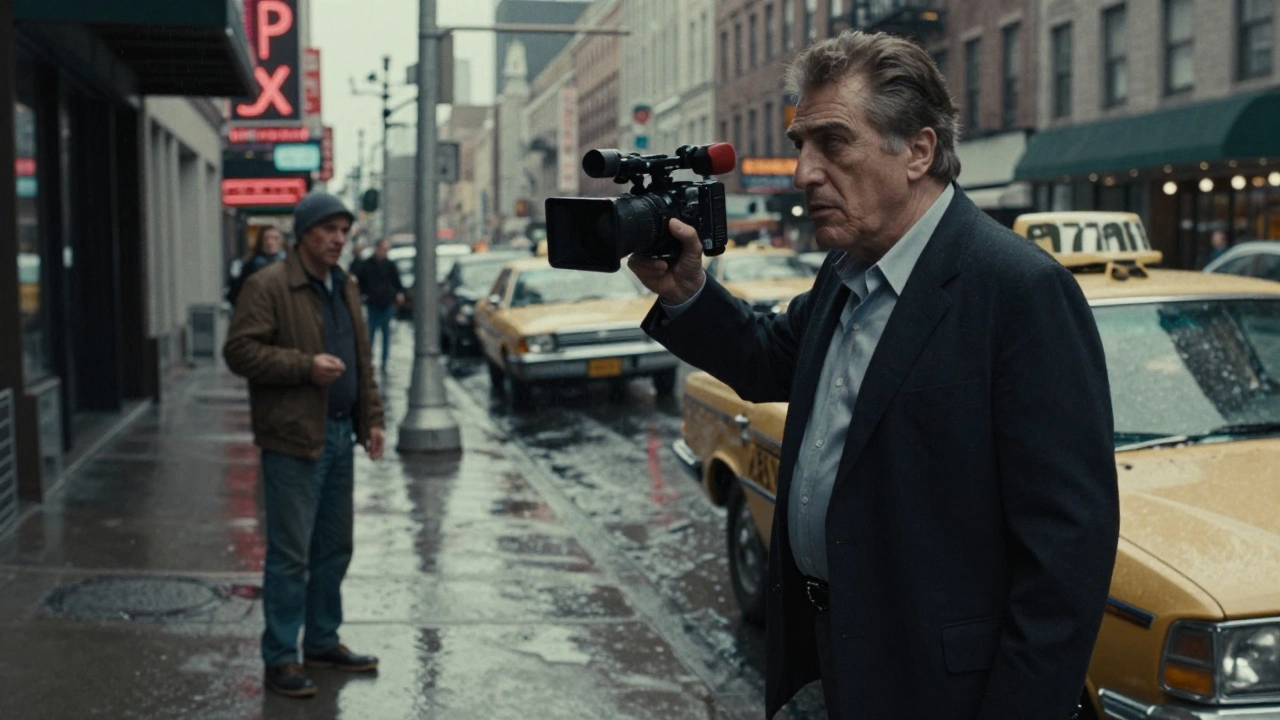
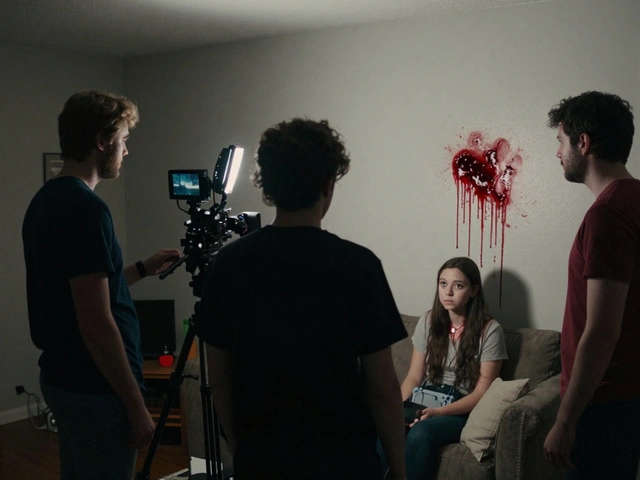
Martin Scorsese directing Robert De Niro on a rainy New York street during the making of Taxi Driver.

The Rise of the Antihero

Before the 1970s, heroes wore white hats. After? They were broken. Dirty Harry gave us a cop who broke the law to stop criminals. Mean Streets showed a guy who couldn’t escape his neighborhood, his guilt, or his rage. These weren’t characters you admired. They were characters you recognized.

Women didn’t just get love interests anymore. Chinatown gave us Faye Dunaway’s Evelyn Mulwray-a woman trapped in a world that destroyed her. Carrie gave us a girl who used her rage as power. These roles weren’t written to be pretty. They were written to be human.

Why the 1970s Still Matter

Today’s films are polished. They’re expensive. They’re safe. Studios spend billions on franchises that feel like sequels to sequels. But the 1970s taught us something vital: great cinema doesn’t need a billion-dollar budget. It needs a director with something to say.

The films of this decade didn’t just entertain. They challenged. They disturbed. They made you think about power, violence, identity, and loss. They didn’t give you answers. They gave you questions-and that’s what made them unforgettable.

That’s why, decades later, you still hear people quoting lines from Godfather. Why Taxi Driver still gives people nightmares. Why Star Wars still feels like a myth we all grew up with. Because in the 1970s, cinema didn’t just reflect the world. It ripped it open and showed us what was underneath.
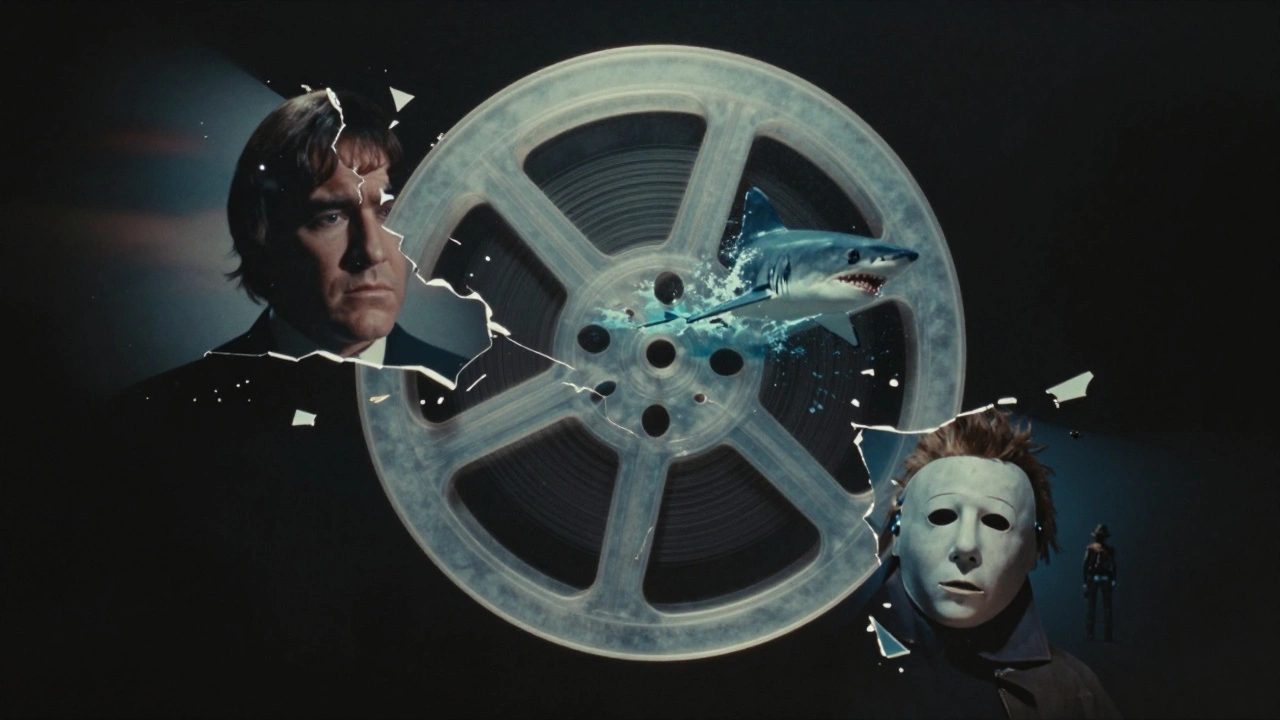
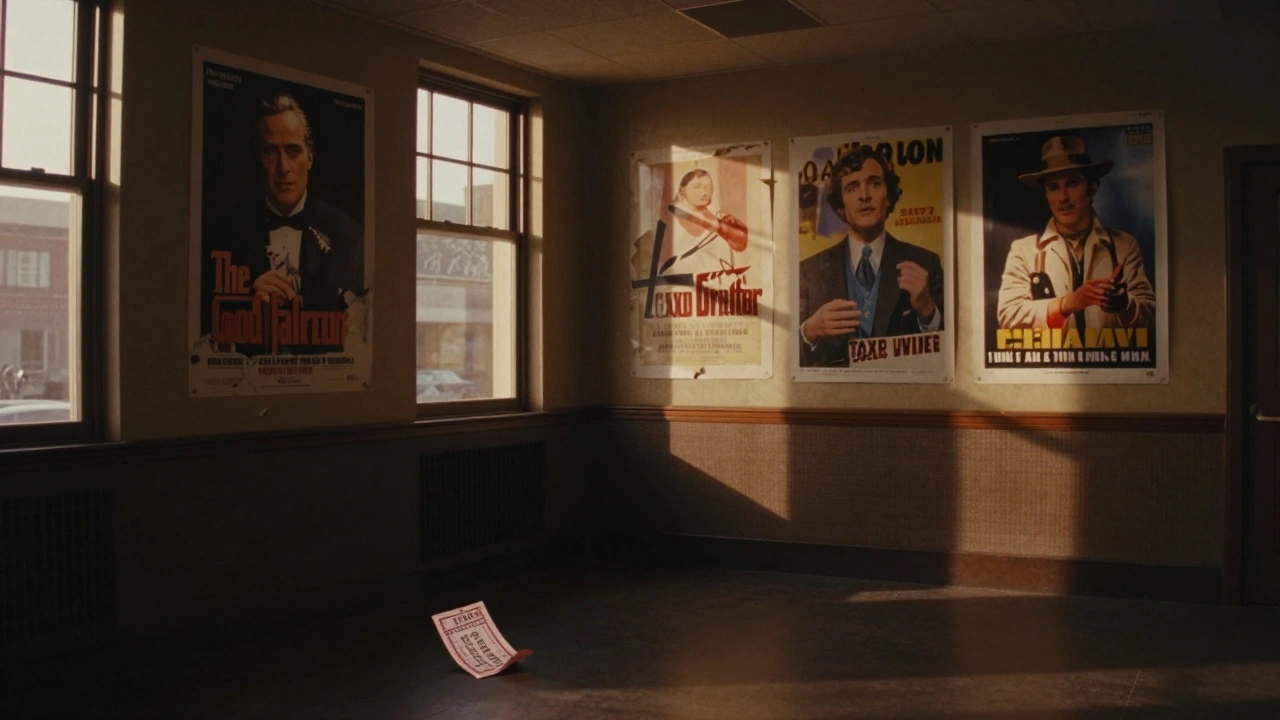
A broken film reel glowing with fragments of iconic 1970s cinematic moments.

What Made the 1970s Different

It wasn’t just the directors. It was the system. Studios were desperate. They had lost control. They gave filmmakers creative freedom because they had no other choice. That freedom didn’t last. By the late 1970s, Jaws and Star Wars made billions. Suddenly, studios realized: big movies = big profits. The experiment ended. The age of the auteur was over.

But for a few years, something rare happened. Filmmakers were allowed to fail. To be strange. To be personal. And when they did, they made films that still live today.

The Legacy Lives On

Look at today’s best films-The Lighthouse, Parasite, Everything Everywhere All at Once. They don’t look like 1970s movies. But they feel like them. They’re bold. They’re messy. They’re personal. They’re not made for algorithms. They’re made for people.

The 1970s didn’t just produce great films. They proved that cinema could be art, even when the world around it was falling apart. And that’s why, even in 2026, we still go back. Not to escape. But to remember what film can be when it’s allowed to be real.

Why are 1970s films considered the greatest ever made?

1970s films are considered the greatest because they were made during a rare window of creative freedom. Studios, financially unstable and out of touch, gave control to young directors who pushed boundaries. These films tackled complex themes-corruption, trauma, identity-with raw honesty. They didn’t rely on special effects or formulaic plots. Instead, they used character, atmosphere, and moral ambiguity to create stories that still resonate decades later. Films like The Godfather, Taxi Driver, and Chinatown didn’t just entertain-they changed how stories could be told on screen.

What made directors in the 1970s so influential?

Directors in the 1970s were influenced by European cinema, film school training, and a cultural shift toward realism. They weren’t hired to follow studio guidelines-they were hired because studios had no other options. This led to a generation of auteurs like Scorsese, Coppola, and Altman who treated film as personal expression. They used handheld cameras, natural lighting, improvisation, and nonlinear storytelling. Their films felt lived-in, not staged. That authenticity made their work unforgettable and inspired every major filmmaker who came after them.

How did the collapse of the Production Code affect 1970s cinema?

The end of the Production Code in the late 1960s removed strict rules about sex, violence, language, and morality on screen. Suddenly, filmmakers could show what real life looked like-addiction, abortion, racism, sexual trauma. This led to films like Easy Rider, which showed drug use and counterculture rebellion, and Deliverance, which depicted brutal violence without glorifying it. The absence of censorship didn’t mean chaos-it meant honesty. Audiences responded because they saw themselves in these films, not idealized versions of themselves.

Why did studios take risks on unproven directors?

By the early 1970s, traditional studio audiences were disappearing. Television was winning. Older films felt stale. Studios were losing money and desperate for hits. They turned to young filmmakers who had studied film at universities and were inspired by French New Wave and Italian Neorealism. These directors had low budgets, fresh ideas, and no track record-exactly what studios needed. The gamble paid off. Films like Mean Streets and Five Easy Pieces became critical successes. When Godfather and Star Wars became blockbusters, the studios realized: risk could pay off.

Why don’t modern films have the same impact as 1970s films?

Modern films are often built around franchises, marketing campaigns, and global box office targets. Studios prioritize safety: sequels, remakes, and superhero universes. There’s less room for personal vision. Budgets are enormous, so failure means millions lost. In the 1970s, a film could cost $5 million and still be a hit. Today, a film needs $200 million to break even. That pressure leads to formulaic storytelling. The 1970s proved that art doesn’t need a billion-dollar budget-it needs courage. And that courage is rare in today’s corporate film landscape.

Comments(10)

Scott Kurtz

Scott Kurtz

February 23, 2026 at 15:58

Let’s be real - the 1970s weren’t some golden age, they were a fluke. Studios were bankrupt, not visionary. They threw money at weirdos because they had no clue what else to do. Coppola didn’t invent depth - he just had a script that accidentally worked because no one was paying attention. And don’t get me started on Star Wars - a space opera with cardboard sets and a kid who couldn’t act his way out of a paper bag. It worked because the audience was bored of 1960s musicals and had nothing better to watch. Now we have streaming, VFX, and AI-generated scripts - and you’re nostalgic for a time when cameras broke mid-shoot and the sound guy was drunk? That’s not art, that’s chaos with a budget.

Also, calling Taxi Driver profound? Travis Bickle was just a guy with PTSD and a gun. No one was ‘challenging’ anything - they were just too broke to hire a script doctor. The real revolution was that no one knew how to make movies anymore. That’s not genius. That’s desperation dressed up as art.

And don’t even get me started on Chinatown. The twist was obvious by scene three. You think that was deep? It was just a screenplay that forgot to fix the third act. But hey, at least it had a cool hat.

Modern films? They’re polished. They’re efficient. They’re not trying to be a 12-hour fever dream while the director’s on cocaine. I’ll take a coherent story over a ‘messy masterpiece’ any day.

Also, the Production Code died because people got bored of censorship, not because art suddenly woke up. We didn’t get raw cinema - we got more nudity and swearing because the MPAA couldn’t keep up. Big whoop.

Stop romanticizing a decade where half the films were accidents. The 80s had better pacing. The 90s had better dialogue. The 2000s had better actors. The 2010s had better visuals. The 2020s have better storytelling. You’re just mad because you didn’t live through it.

And yes, I’ve seen every single one of these films. In theaters. On 35mm. With popcorn that tasted like burnt plastic. I’m not biased. I’m informed.

Muller II Thomas

Muller II Thomas

February 24, 2026 at 17:58

You call this art? This is just privilege dressed up as rebellion. These directors were rich white men with Ivy League educations who got to play with cameras while the world burned. Who’s to say the films weren’t just accidents of timing? Coppola had a father who knew studio heads. Scorsese had a film school sponsor. Spielberg? His dad worked at Universal. This wasn’t revolution - it was nepotism with a 16mm camera.

And don’t get me started on the ‘antiheroes.’ Dirty Harry was a fascist with a badge. Taxi Driver was a stalker. The Godfather glorified organized crime. You call that truth? That’s just the same old toxic masculinity with better lighting.

Women were still being cast as manic pixie dream girls or screaming victims. Evelyn Mulwray? She got murdered. Carrie? She burned down a gym. Where’s the agency? Where’s the nuance? You’re romanticizing a time when women were still the emotional fuel for male trauma narratives.

And let’s not pretend these films were ‘personal.’ They were bankrolled by corporations that wanted to sell tickets. The ‘chaos’ was just a marketing ploy. The studios didn’t care about truth - they cared about box office. And when Jaws made $470 million, they went right back to formula.

Modern cinema isn’t safe - it’s diverse. It’s inclusive. It’s global. You’re just mad because your favorite auteurs aren’t the only ones who get to tell stories anymore.

Also, ‘Apocalypse Now’ was a disaster. The set was a cult. The script was rewritten on set. The lead had a heart attack. You call that art? That’s just bad management with a Pulitzer.

Stop idolizing men who made films while the world was falling apart. The real heroes were the people who didn’t get to make them.

Pat Grant

Pat Grant

February 25, 2026 at 06:28

Interesting, but overstated. The 1970s had great films, yes. But so did the 1930s, the 1950s, and now. Calling it the ‘greatest’ is just nostalgia talking. Most of these films were critically divisive at the time. Taxi Driver was called ‘depressing’ and ‘exploitative.’ Chinatown was deemed ‘too dark.’ Godfather was thought to be ‘too long.’

Also, the idea that studios ‘lost control’ is misleading. They were simply reacting to declining attendance. They didn’t hand over power - they panicked. And when the hits came, they took it all back. The ‘auteur era’ lasted less than a decade.

And yes, the films were bold. But so were the ones from the silent era. Or French New Wave. Or Iranian cinema today.

Modern films aren’t ‘safe’ - they’re more ambitious in scope. Parasite won an Oscar. Everything Everywhere won 7. The Lighthouse was shot in black and white on a tiny budget. The difference? Now, you don’t need to be a white male from USC to get funding.

It’s not that we’ve lost art. It’s that we’ve expanded who gets to make it.

Veda Lakshmi

Veda Lakshmi

February 25, 2026 at 16:26

the 70s were a vibe. not just movies - a whole energy. like the world was holding its breath and then screaming. no filters. no algorithms. just raw, messy, human stuff. i watched taxicab driver at 3am in delhi, alone, and i didn’t sleep for two days. not because it was ‘deep’ - because it felt like my own thoughts had been filmed.

modern films try too hard to be ‘meaningful.’ 70s films just were. they didn’t care if you liked them. they didn’t need you to. and that’s why they stick.

also - the silence in chinatown? that’s the sound of truth. no music. no drama. just the wind and the lie.

we need more of that now. not more blockbusters. more quiet. more uncomfortable. more real.

Vishwajeet Kumar

Vishwajeet Kumar

February 27, 2026 at 16:12

you think they were making art? nah. they were just high. cocaine, LSD, whiskey, whatever. that’s why the films feel ‘real’ - because the directors were half-asleep or tripping. the godfather? coppola was on a bender for 6 months. scorsese was on speed. lucas was convinced aliens were sending him movie ideas.

and don’t forget - the ‘chaos’? the studios were broke because they were losing money to tv. they didn’t give freedom - they gave up. it was a last-ditch effort. not a movement.

also - the ‘antiheroes’? they were just angry white guys with guns. today we have female leads, queer leads, non-binary leads - and you’re crying about some dude with a mustache and a revolver? we’ve evolved.

and the ‘realism’? they used real blood because they couldn’t afford fake. real sweat because they didn’t have AC. real fear because the camera broke. that’s not genius - that’s bad production.

the 70s weren’t great. they were desperate. and now we’re better.

Jon Vaughn

Jon Vaughn

February 28, 2026 at 14:00

Let’s dismantle this myth once and for all. The 1970s were not a golden age - they were a statistical anomaly fueled by a temporary vacuum of corporate oversight. The notion that Coppola and Scorsese were ‘auteurs’ is a romanticized fiction propagated by film schools and Criterion Collection marketing departments.

Fact: The Godfather was almost shelved. The studio wanted to cut it to 90 minutes. Coppola had to threaten to walk away. That’s not creative freedom - that’s a hostage negotiation.

Taxi Driver? De Niro’s performance was brilliant, yes - but the script was rewritten 14 times. Scorsese didn’t ‘trust silence’ - he was out of money and couldn’t afford to shoot more scenes. The ‘haunting’ ending? That was because they ran out of film stock.

And Star Wars? A marketing masterpiece disguised as cinema. Lucas didn’t make a myth - he built a toy franchise. The ‘mythic structure’? He stole it from Joseph Campbell’s lectures. Campbell didn’t even get a credit.

The ‘rawness’? That’s just low-budget cinematography. The handheld cameras? No steadicam yet. The natural lighting? No money for lights. The ‘moral ambiguity’? Because the writers were too stoned to write a happy ending.

Modern cinema isn’t formulaic - it’s technologically advanced. We have real-time rendering, AI-assisted editing, and global storytelling. The 70s had grain, glitches, and guilt. That’s not art - that’s limitation.

And let’s not forget: most of these ‘masterpieces’ were box office bombs on release. They only became classics because critics reevaluated them decades later. That’s not genius - that’s hindsight bias.

Stop glorifying technical incompetence. We’ve moved on.

Steve Merz

Steve Merz

March 1, 2026 at 15:03

man, i get why people love the 70s - it feels like a time when movies actually meant something. like, no one was thinking about merch or sequels. they just wanted to tell a story that made you feel something. even if it was ugly.

i saw a print of midnight cowboy last year. the projector broke halfway through. people didn’t leave. they just sat there, in the dark, talking about it. that’s the magic. not the film - the moment.

today, we watch on phones. we skip. we scroll. we like. we hate. we forget. we don’t sit. we don’t feel.

the 70s didn’t have better tech. they had better attention. we lost that.

also - i don’t care if the shark didn’t work. it felt real. because the fear was real. and that’s all that matters.

Lucky George

Lucky George

March 1, 2026 at 18:09

you know what i love? how this post doesn’t say ‘the 70s were perfect.’ it says they were different. and they were. and that’s okay.

we don’t have to worship them. we don’t have to hate modern films. we can just appreciate both.

the 70s gave us courage. today gives us connection.

one made me cry. the other made me feel less alone.

both matter.

Matthew Jernstedt

Matthew Jernstedt

March 2, 2026 at 08:43

Let me tell you why the 70s still haunt me - not because of the films, but because of what they prove. That art doesn’t need permission. It doesn’t need a budget. It doesn’t need a committee. It just needs someone who refuses to look away.

Imagine this: you’re a 28-year-old with a script about a lonely man who hires a prostitute, then tries to kill a senator. You pitch it to a studio. They laugh. You say, ‘I’ll make it for $1.8 million.’ They say, ‘Fine. But we’re not releasing it.’ You say, ‘Then I’ll release it myself.’ And you do.

That’s Taxi Driver. That’s not a movie. That’s a revolution.

Today, you pitch a film. They ask: ‘Who’s the target demographic?’ ‘What’s the merch potential?’ ‘Can we franchise it?’ ‘Is there a TikTok trend?’

The 70s didn’t have algorithms. They had gut. They had rage. They had silence. They had a man with a .44 and a dream.

And yeah - some of those films were messy. Some were self-indulgent. Some were too long. But they were alive. They breathed. They bled.

Modern films? They’re perfectly engineered. Like a Tesla. Beautiful. Efficient. Cold.

I’d rather watch a broken-down 1974 Buick with no radio and a broken tail light that somehow still drives - than a self-driving limo with leather seats and no soul.

They didn’t make great films because they had money.

They made them because they had nothing left to lose.

Anthony Beharrysingh

Anthony Beharrysingh

March 2, 2026 at 14:26

Oh, so now we’re romanticizing the era when white men got to make ‘deep’ films while women, people of color, and queer voices were locked out? Let’s not pretend this was ‘art’ - it was exclusion disguised as rebellion.

Godfather? A mob epic with one Black character who dies in the first 10 minutes. Chinatown? A detective story where the only woman gets raped and murdered. Taxi Driver? A white man with a gun who ‘saves’ a child prostitute - but never asks why she’s there.

And you call this ‘truth’? It’s just the same old patriarchy with better cinematography.

Modern cinema? We have Black directors, Indigenous storytellers, Iranian auteurs, and trans filmmakers making films that shatter the mold. Not because they got lucky - because they fought for it.

Stop glorifying a time when the only ‘risk’ was whether the shark worked. The real risk was making a film with a woman of color in the lead - and no studio would touch it.

The 70s weren’t revolutionary. They were a gatekeeping fantasy.

And you? You’re still sitting in the same room, drinking your whiskey, pretending the door never closed.

Wake up. The future isn’t in the past. It’s in the hands of the ones you ignored.

Write a comment