Every year, film festivals around the world face the same challenge: how to put together a lineup that feels fresh, fair, and unforgettable-without falling into the same old patterns. It’s not just about picking the best films. It’s about making sure the audience sees stories from different cultures, voices that have been left out, and genres that rarely get the spotlight. And increasingly, the people doing this-curators-are turning to data, not just gut feelings, to make those calls.
What Goes Into a Festival Slate?
A festival slate isn’t just a list of movies. It’s a curated experience. Each selection sends a message: what kind of cinema matters right now. A festival like Sundance, Cannes, or TIFF doesn’t just show 200 films randomly. They’re building a narrative across regions, directors, languages, and themes. A festival that programs too many films from the same country? It risks looking out of touch. Too many debut directors? It might feel unpolished. Too few documentaries? It misses a whole layer of truth-telling.
Historically, curators relied on gut instinct, personal networks, and word-of-mouth. But those methods had blind spots. A curator might love a certain style of storytelling-say, slow-burn European dramas-and end up programming 15 films in that vein, simply because they kept seeing them at other festivals. Meanwhile, bold experimental films from Southeast Asia or rural documentaries from Latin America slipped through the cracks. Data is changing that.
How Curators Collect and Use Data
Modern festival programming teams now track dozens of metrics. Not just box office numbers (which don’t matter much for non-theatrical festivals), but deeper signals:
- Geographic origin of submissions (which countries, states, or regions are sending films?)
- Gender and ethnic background of directors and producers
- Language spoken in the film
- Running time and genre distribution (documentary, narrative, animation, hybrid)
- Previous festival history (has this film played at Berlin? Rotterdam? Locarno?)
- Audience engagement scores from early screenings (ratings, Q&A participation, social buzz)
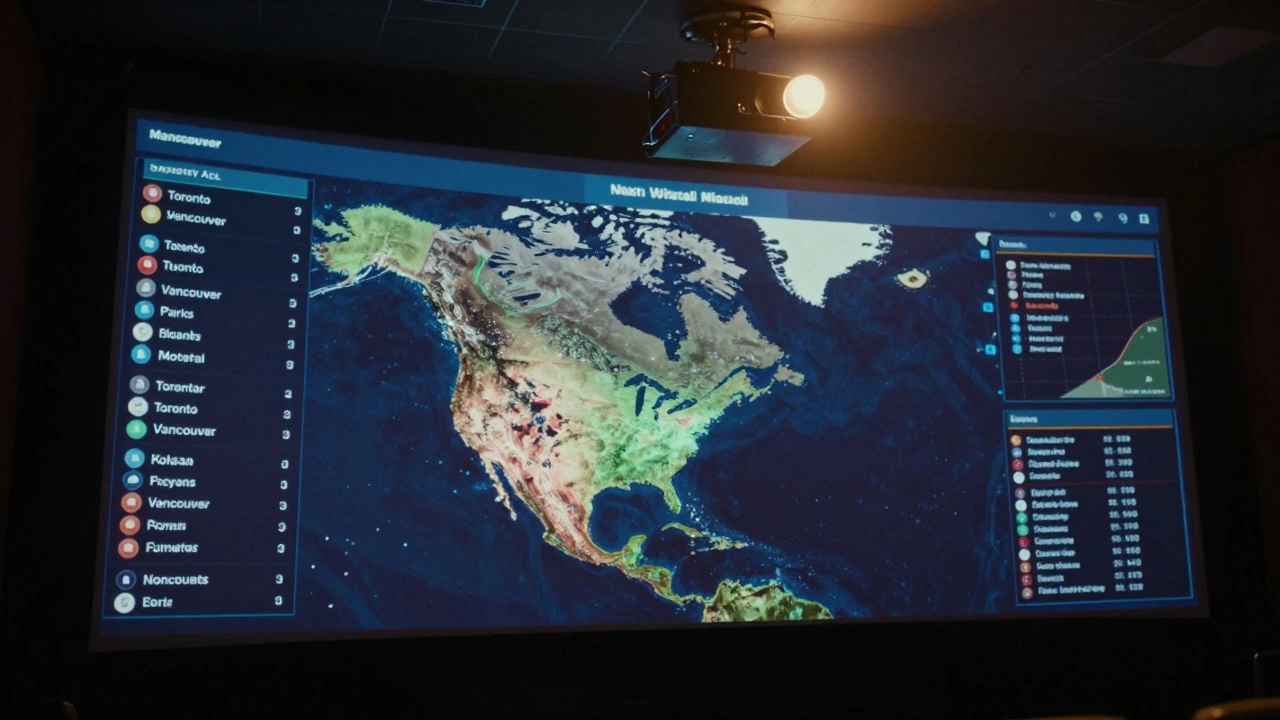
Tools like FilmFreeway, Withoutabox, and custom-built dashboards help curators visualize this data. One festival in Canada started mapping submissions by latitude and longitude. They realized 70% of their entries came from just three cities-Toronto, Vancouver, Montreal. That didn’t reflect the country’s diversity. So they launched targeted outreach programs in Atlantic Canada and the Prairies. Within two years, submissions from those regions jumped by 210%.
Breaking the Loop: Avoiding Homogeneity
One of the biggest dangers in festival programming is what’s called the “feedback loop.” A film gets into Cannes. Then it gets picked up by other festivals. Then it gets reviewed by major outlets. Then it becomes the "next big thing." Curators start chasing it, even if it’s not the best fit for their audience. Data helps break that cycle.
Take the 2025 Berlinale. Their programming team noticed that 68% of their accepted films in 2024 had directors who had been to Berlin before. That’s not a sign of quality-it’s a sign of repetition. So they set a new internal target: no more than 40% of the slate could come from filmmakers who had previously screened at Berlin. They didn’t reject great films. They just made space for new voices. The result? A 32% increase in first-time directors in the official selection.
Another example: a U.S. indie festival noticed that 80% of their narrative features were in English. They dug deeper. Only 12% of submissions were in other languages. That wasn’t because there weren’t any-there were hundreds. But those films were being submitted to other festivals first. So they changed their submission timeline, added multilingual outreach teams, and partnered with cultural centers in cities like Detroit, El Paso, and New Orleans. By the next year, non-English narrative features made up 29% of their lineup-up from 7%.

Measuring Diversity Beyond Numbers
Data alone doesn’t guarantee diversity. You can have a slate that looks balanced on paper but still feels flat. A film from Nigeria might be technically brilliant, but if it’s the only one from West Africa, it becomes a token. A female director from Japan might be brilliant, but if her film is the only one with a woman at the helm, she’s carrying the weight of an entire gender.
Smart curators look for patterns, not just counts. They ask: Are we showing a range of perspectives within a region? Are we avoiding the same tropes? Are we giving space to films that challenge norms, not just ones that fit them?
At the 2025 Hot Docs festival in Toronto, programmers started tracking not just the director’s gender, but the subject of the documentary. They found that 60% of their nonfiction films focused on urban life. Rural stories, especially from Indigenous communities, were underrepresented. They didn’t just add one rural film-they built a whole sidebar called "Land & Memory," featuring 12 films from remote communities across North America. Attendance for that section tripled. Viewers said they felt they were seeing a side of their country they’d never known.
The Human Element Still Matters
Data doesn’t replace intuition-it refines it. A curator might see a film with low audience scores in early screenings and almost pass on it. But if the data shows it’s the only film submitted from a small Pacific Island nation, and it’s the first time that country has ever been represented at the festival, they might push for it anyway. That’s where experience meets insight.
One curator in New Mexico told me: "I don’t program by numbers. I program by gaps. The numbers just show me where the gaps are."
That’s the sweet spot. Data doesn’t tell you which film to pick. It tells you which voices you’ve been missing. It shows you where your blind spots are. And then you, as a human with taste and judgment, decide how to fill them.
What Happens When You Don’t Use Data?
Festivals that ignore data end up stuck in the past. In 2023, a major U.S. festival saw a 17% drop in attendance among viewers under 30. Why? Their lineup was 84% white, 76% male, and 92% in English. Younger audiences weren’t seeing themselves reflected. They didn’t leave because the films were bad. They left because they felt like outsiders.
When the festival switched to a data-informed approach the next year, they didn’t just add "diversity slots." They restructured their entire submission review process. They formed three review panels: one focused on global cinema, one on emerging U.S. voices, and one on experimental formats. Each panel had its own diversity targets. The result? A 31% increase in under-30 attendance. Social media engagement doubled. Critics called it "the most vital lineup in a decade."
Where This Is Going
By 2026, more than 80% of major film festivals now use some form of diversity analytics. Some are even starting to predict future trends. One European consortium built a model that forecasts which regions will produce breakthrough films in the next 18 months based on funding shifts, film school enrollments, and social media trends. They’re not trying to chase trends-they’re trying to find them before they explode.
It’s not about making films "safe" or "palatable." It’s about making sure the art form doesn’t shrink. Film festivals are the last true public forums for cinematic discovery. If they only show the same stories, over and over, they stop being places of wonder-and become echo chambers.
The best curators aren’t just programmers. They’re archivists of culture. And now, with data as their compass, they’re building slates that don’t just reflect the world-but expand it.
How do film festival curators collect data on submissions?
Curators use digital submission platforms like FilmFreeway and Withoutabox, which track metadata such as director gender, country of origin, language, genre, and runtime. Many festivals also build custom dashboards that pull in audience feedback from early screenings, social media buzz, and historical programming data. Some even use geolocation tools to map where submissions are coming from, helping identify underrepresented regions.
Can data really help increase diversity in film festivals?
Yes, when used thoughtfully. Data doesn’t make decisions-it reveals blind spots. For example, a festival might discover that 85% of submissions come from just three cities, even though the country has 50+ film communities. That insight leads to targeted outreach, which in turn brings in new voices. Festivals like Berlinale and Hot Docs have shown that data-driven diversity goals lead to more vibrant, representative slates without sacrificing quality.
What’s the difference between diversity and tokenism in festival programming?
Diversity means having multiple voices from a range of backgrounds, with depth and context. Tokenism is when you include one film from a marginalized group just to check a box-without giving it real space or context. Data helps avoid tokenism by showing patterns. If you only have one film from a region every year, the data flags that. Then curators can intentionally program multiple films from that region over time, building a richer narrative.
Do festivals worry that using data will make programming feel robotic?
Some do-but the best ones use data as a tool, not a rulebook. Data tells them where the gaps are, but a human still picks the films. A curator might see a film with low ratings but high cultural significance and choose it anyway. The data doesn’t replace taste-it protects it from bias. It’s like a GPS: it doesn’t drive for you, but it stops you from getting lost.
What metrics matter most when evaluating a film for festival selection?
Beyond quality, the most useful metrics are: geographic diversity of submissions, representation of underrepresented genders and ethnicities, language variety, genre balance, and whether the film has been shown at other major festivals (to avoid repetition). Audience engagement scores from test screenings also help predict how well a film will resonate. The goal isn’t to maximize any single metric-it’s to create a balanced, surprising, and inclusive whole.




Comments(7)