
Writing a script is lonely work. You spend weeks, sometimes months, alone with your thoughts, your characters, your dialogue. You rewrite scenes until your eyes burn. You delete entire acts because they feel flat. But here’s the truth: no matter how good you think your script is, you won’t know for sure until someone else reads it. And not just anyone - someone who understands screenwriting structure, pacing, and character arcs. That’s where screenwriting communities and feedback come in.
Why Feedback Isn’t Optional
You’ve heard the saying, ‘A script is never finished, it’s abandoned.’ That’s not because writers are lazy. It’s because without outside eyes, you’re blind to your own blind spots. Maybe your protagonist’s motivation doesn’t click until page 40. Maybe your villain is a caricature. Maybe your third act collapses under its own weight. You won’t see it. Not because you’re bad at writing - because you’re too close to it.
A 2023 study by the Writers Guild of America surveyed over 1,200 professional screenwriters. Over 87% said they received their first meaningful feedback from a peer group, not a producer or agent. The writers who consistently got notes from trusted readers finished scripts 40% faster and had a 3x higher rate of optioning or selling their work.
Feedback isn’t about validation. It’s about fixing what’s broken before you send it out into the world. And the best feedback doesn’t come from your best friend who says, ‘This is amazing!’ - it comes from someone who tells you, ‘This scene doesn’t earn the emotional payoff.’
Where to Find Real Screenwriting Communities
Not all writing groups are created equal. Some are just social clubs with coffee and compliments. Real screenwriting communities have structure, accountability, and honest critique.
Here are three types that actually work:
- Local writing groups: Check out libraries, community colleges, or film schools in your area. In Asheville, the Mountain Writers Collective meets every other Thursday. They use a structured feedback form that asks for specific notes on structure, character, and dialogue. No fluff.
- Online workshops: Platforms like Stage 32 and The Black List host moderated script exchanges. You submit your script, and five other writers give you detailed notes. In return, you give them the same. Most require you to have at least one completed draft before joining.
- Mastermind pods: These are small, private groups of 3-5 writers who commit to exchanging scripts monthly. They often use a template like the ‘Three-Point Feedback System’: What worked, What confused, What needs fixing. These groups can last years - some writers have been in the same pod for over a decade.
Avoid open forums where anyone can comment. You’ll get five people saying ‘I loved it’ and two saying ‘It sucked.’ Neither helps you improve.
How to Ask for Notes - Without Getting Burned
Asking for feedback is a skill. Most writers mess it up by saying, ‘What do you think?’ That’s like asking a chef to taste your soup and say if it’s good. They’ll say, ‘It’s tasty.’ And you’ll walk away no wiser.
Instead, be specific. Here’s what works:
- State your goal: ‘I’m trying to make the protagonist’s betrayal feel shocking but inevitable. Did it land?’
- Specify the section: ‘Focus on pages 12-18. That’s where the relationship shifts.’
- Ask for the ‘why’: ‘Why did you feel the ending was rushed?’
- Set boundaries: ‘I’m not ready for line edits yet - please focus on story and character.’
And never, ever defend your script during feedback. Write everything down. Even if it feels wrong. Later, you can decide what to use. But in the moment, your job is to listen.

What Good Feedback Looks Like
Not all notes are useful. Here’s how to tell the difference:
- Bad note: ‘The dialogue is boring.’
- Good note: ‘In the coffee shop scene, the characters talk about their pasts, but it feels like exposition. What if instead, they argue about who pays the bill - and that reveals their power dynamic?’
Good feedback identifies the problem and suggests a path forward. It doesn’t just say what’s wrong - it shows you how to fix it. It’s not about rewriting your script for you. It’s about pointing out where your intent isn’t landing.
Look for notes that mention:
- Character motivation
- Pacing issues (scenes that drag or rush)
- Emotional arcs - does the audience feel what they’re supposed to feel?
- Structure - does the second act midpoint shift the story in a new direction?
If someone says, ‘I didn’t like the ending,’ ask them: ‘What did you expect to happen? Why didn’t the script build toward that?’ That’s where the real insight lives.
How to Handle Tough Feedback
Someone tells you your main character is unlikable. Your heart sinks. You spent six months on that character. You thought they were deep. Now you’re questioning everything.
That’s normal. The best writers get this feedback. The difference? They don’t take it personally. They ask: ‘Is this true?’
Here’s a trick: write down every note you get. Then, wait 48 hours. Come back to them with fresh eyes. Now, sort them into three piles:
- Yes - this needs fixing. (Usually about structure or clarity.)
- Maybe - I’ll think about it. (Usually about tone or style.)
- No - this isn’t my script. (Someone’s personal preference. Don’t bend to that.)
Most writers only use the ‘Yes’ pile. That’s fine. You don’t have to use every note. But if you ignore a note that shows up in three different readers’ feedback? That’s a red flag.
How to Give Feedback That Actually Helps
Feedback is a two-way street. If you want good notes, you have to give them too. And giving feedback well makes you a better writer.
Use this simple framework:
- What worked: ‘The opening montage with the rain and the clock ticking? Perfect tone setter.’
- What confused me: ‘I didn’t get why she left the job. Was she fired? Quit? Was it tied to her mom’s illness?’
- What needs fixing: ‘The third act feels like it starts at page 90. The climax needs to come sooner - maybe tie it to the inciting incident.’
Be kind, but be clear. Don’t sugarcoat. Don’t be harsh. Just be honest. And always, always say something positive. Even if the script is a mess, there’s always one thing that shines.
When to Stop Asking for Notes
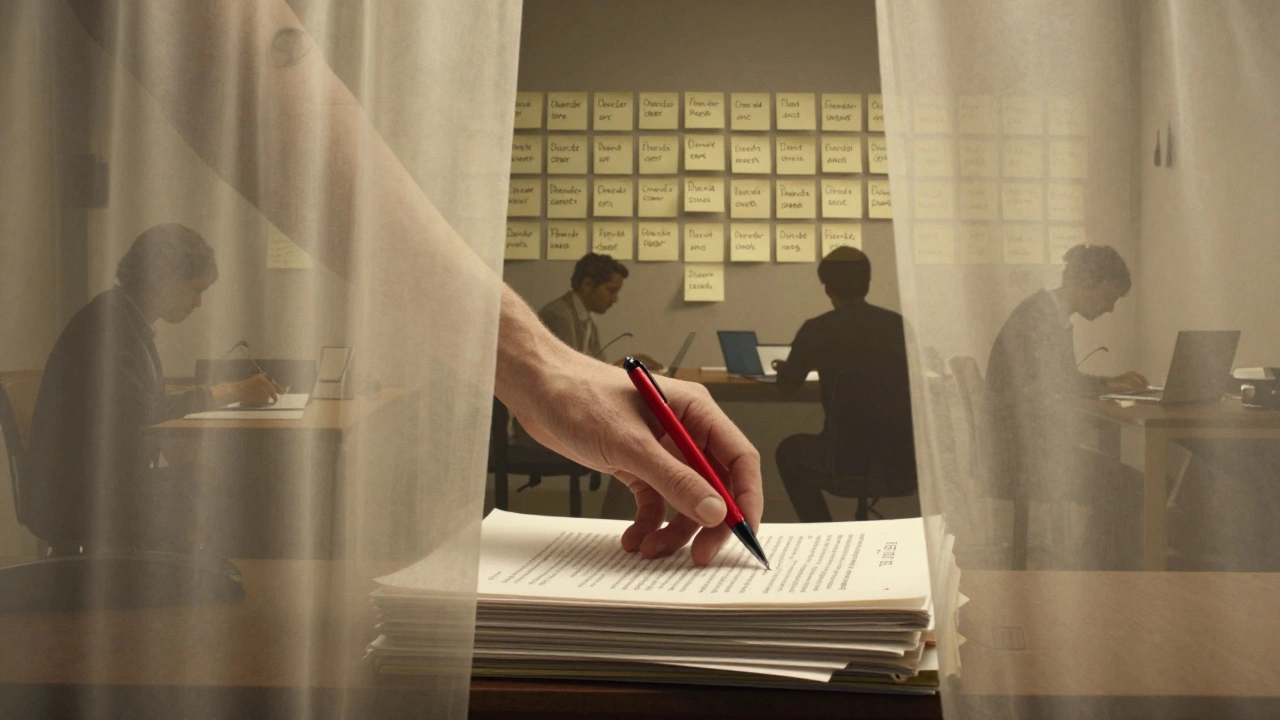
There’s a point where more feedback doesn’t help - it paralyzes you. You’ve gotten notes from six different people, and now you have six different scripts.
Here’s your exit strategy:
- You’ve had at least five readers give you feedback.
- Three or more of them say the same thing about the same problem.
- You’ve made revisions based on that feedback.
- You’ve let the script sit for two weeks and reread it. It still feels true to you.
That’s your signal to stop. Send it out. Submit it. Pitch it. If it’s not ready, you’ll know next time.
Final Thought: Feedback Is a Practice, Not a One-Time Fix
Screenwriting isn’t a solo sport. Even the most successful writers have trusted readers. Aaron Sorkin still sends drafts to his longtime collaborator. Greta Gerwig rewrote Little Women six times with input from her editor and actors.
Feedback isn’t a sign you’re failing. It’s proof you’re serious. The writers who get better aren’t the ones who write the most. They’re the ones who listen the most.
Find your group. Give notes. Take them. Rewrite. Repeat.
Where can I find free screenwriting feedback groups?
Many free options exist. Check your local library or community center for writing groups. Online, try the r/Screenwriting subreddit on Reddit - it has a weekly feedback thread. Stage 32 offers free membership tiers where you can join script exchange groups. The key is consistency - join a group that meets regularly, not just when you have a script ready.
How many readers should I get feedback from?
Five is the sweet spot. Fewer than three, and you won’t see patterns. More than seven, and you’ll get conflicting advice that paralyzes you. Look for readers who understand screenplay format and have read at least 10-15 scripts. A film student who’s read a lot of spec scripts is better than a friend who only watches Netflix.
Should I pay for professional script notes?
Only after you’ve done your own work. Professional script consultants can cost $100-$500. They’re worth it if you’ve already revised your script based on peer feedback and still feel stuck. But don’t skip the free or low-cost community feedback first. Most pros will tell you the same things your writing group already did - just more politely.
What if someone says my script is unoriginal?
Unoriginal doesn’t mean bad. Most great scripts are familiar in structure but fresh in voice. Ask them: ‘What part feels cliché?’ If they say ‘the hero’s journey,’ that’s not a problem - it’s the backbone of storytelling. But if they say ‘the mentor dies in Act Two like every other movie,’ that’s a signal. Dig deeper. Find the unique angle in your story - the character’s specific fear, the setting’s hidden rule, the twist no one saw coming.
Can I get feedback from actors or directors?
Yes - but with limits. Actors can tell you if dialogue sounds natural when spoken aloud. Directors can spot pacing issues or scenes that won’t translate visually. But they’re not script doctors. Use them to test dialogue and tone, not to rewrite your structure. Save structural notes for writers who’ve read dozens of scripts.
Next Steps: Your 7-Day Feedback Plan
- Day 1: Pick one script you’ve finished. Don’t pick your latest draft - pick the one you’re most proud of.
- Day 2: Find one screenwriting group that meets weekly. Join it. Send an intro message.
- Day 3: Write your feedback request using the specific template: goal, section, question.
- Day 4: Read a script from someone else in the group. Give them the Three-Point Feedback.
- Day 5: Wait. Don’t check your email.
- Day 6: Read all your notes. Sort them into Yes/Maybe/No piles.
- Day 7: Revise one scene based on the clearest note. Then stop. You’re done for now.
That’s it. You didn’t rewrite the whole script. You didn’t panic. You just took one step - and now you’re a better writer than you were yesterday.





Comments(10)