When a film wins at a major festival, you might see two different kinds of trophies: one from the audience, another from the judges. But what’s the real difference? And why does it matter for the movie’s future? Too many people think winning a jury prize means the film is "better," but that’s not always true. Sometimes, the audience award is the bigger deal - especially when it comes to box office, streaming deals, and long-term legacy.
What Audience Awards Actually Tell You
Audience awards are simple: people who paid to see the film voted for their favorite. No critics. No film school professors. Just regular viewers - the kind who stream movies on weekends, buy popcorn, and talk about films with friends. These awards are raw, unfiltered feedback from the market.
At Sundance, the Audience Award for Dramatic Feature has gone to films like Little Miss Sunshine, Whiplash, and The Birth of a Nation. All of them went on to earn millions after the festival. Why? Because the audience didn’t just like the film - they felt something. They laughed. They cried. They shared it. That’s the kind of reaction studios and distributors chase.
Here’s the truth: if an indie film wins the audience award, it’s almost guaranteed a distribution deal. Buyers know that if real people loved it, they’ll likely love it on Netflix, Hulu, or in theaters. It’s a signal that the film connects beyond the festival bubble.
Jury Prizes: The Critics’ Choice
Jury prizes are different. They’re handed out by a panel of filmmakers, critics, and industry insiders - people who’ve seen hundreds of films and know the rules of cinema. Their choices often reflect technical mastery, bold storytelling, or artistic risk.
At Cannes, the Palme d’Or is the top jury prize. It’s gone to films like Parasite, Blue Valentine, and La La Land. These aren’t always crowd-pleasers. Some are slow. Some are confusing. Some are uncomfortable. But they push boundaries. That’s what the jury looks for.
But here’s the catch: jury winners don’t always find audiences. Take The Death of Stalin, which won the Grand Jury Prize at Venice in 2017. It was critically acclaimed, but barely made $2 million worldwide. Why? Because it didn’t speak to the general public. It spoke to film lovers. And that’s not the same thing.
The Real Difference: Popularity vs. Prestige
Think of it this way: audience awards measure popularity. Jury prizes measure prestige.
Popularity means people will watch it. Prestige means critics will write about it. One leads to box office numbers. The other leads to Oscar buzz.
Take Manchester by the Sea. It won the Audience Award at Sundance in 2016 - and also picked up two Oscars. It had both. But not every film gets lucky. The Lighthouse won the Best Actor prize at Cannes (jury) and became a cult favorite. But it didn’t win the audience award. It didn’t need to. Its audience was niche - and that’s okay.
Some films win jury prizes and vanish. Others win audience awards and become classics. The difference isn’t about quality. It’s about connection.
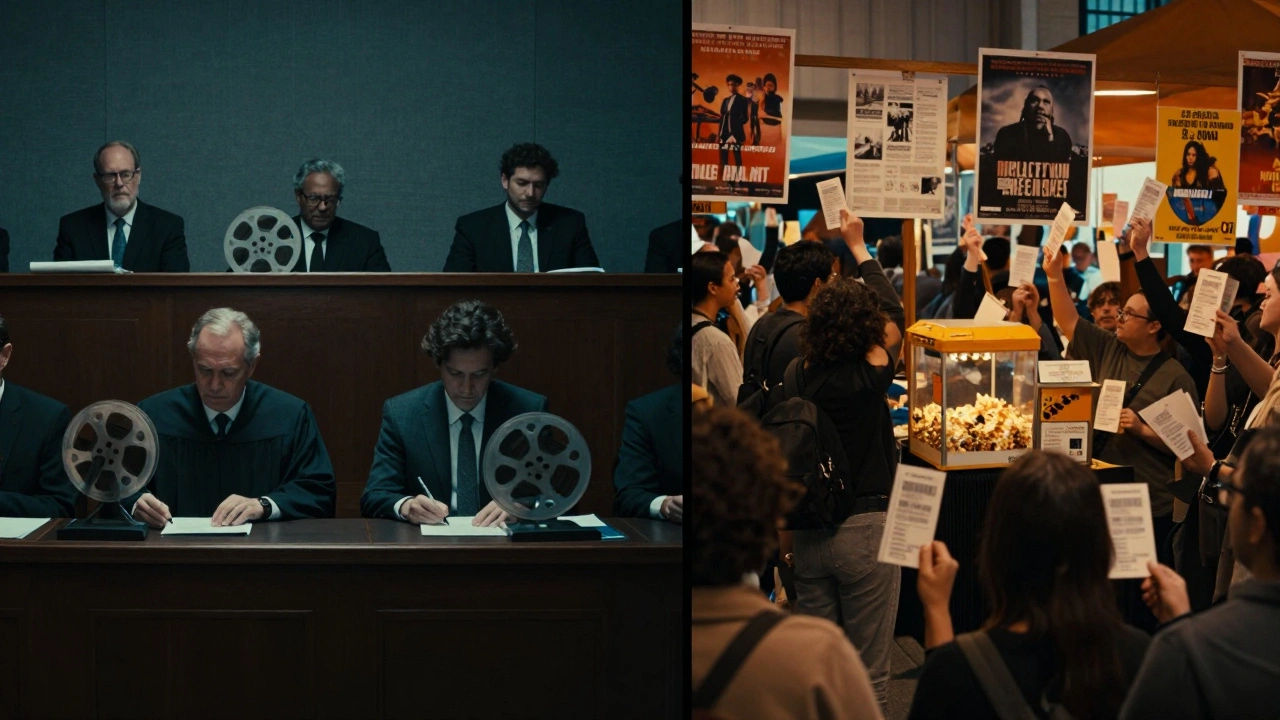
Why Audience Awards Are More Valuable for Indie Films
Most indie films don’t have marketing budgets. They rely on festivals to get noticed. And when a film wins the audience award, it doesn’t just get a trophy - it gets a lifeline.
Here’s how it works:
- Distributors pay attention. If 1,000 people in Park City stood up and cheered, that’s proof the film works outside the critic bubble.
- Press coverage spikes. Media outlets love underdog stories. "The people’s choice" is a headline magnet.
- Sales go up. Buyers at the American Film Market start calling. Streaming platforms see the numbers and get curious.
- It becomes a talking point. People recommend it. Social media buzz builds. That’s free marketing.
At SXSW, the Audience Award for Best Narrative Feature has led to distribution deals for films like The Skeleton Twins and Swiss Army Man. Neither had A-list stars. Neither had big budgets. But they had viewers who couldn’t stop talking about them.
Jury Prizes Still Matter - But for Different Reasons
Don’t write off jury prizes. They’re powerful - but in a different way.
A jury win can open doors to film schools, grant funding, and international co-productions. It can get a director invited to the next Cannes or TIFF. It can earn them a spot on the Academy’s shortlist.
For example, Past Lives didn’t win the audience award at Sundance. But it won the Grand Jury Prize at the Berlin International Film Festival. That win helped it land a deal with A24 and eventually earn two Oscar nominations.
Jury prizes are the currency of credibility. They say: "This film is important. This filmmaker is someone to watch." That matters for careers - even if it doesn’t mean millions in ticket sales.
What Happens When They Clash?
Sometimes, the audience and jury pick completely different winners. And that’s when things get interesting.
In 2023, at the Toronto International Film Festival, The Holdovers won the People’s Choice Award. It was a heartwarming, nostalgic comedy-drama with Paul Giamatti. The jury gave their top prize to The Teacher, a dark, slow-burn drama about a teacher in a war-torn region. One was a crowd favorite. The other was a critical triumph.
What happened next? The Holdovers went on to earn over $60 million worldwide and three Oscar nominations. The Teacher played in art houses and festivals - and vanished from most people’s radar.
This isn’t rare. In fact, it’s common. The audience picks the film they’ll stream. The jury picks the film they’ll study.
What Should Filmmakers Care About?
If you’re an indie filmmaker, here’s the bottom line:
- If your goal is to reach people - focus on the audience award. Make something that moves, surprises, or sticks with viewers.
- If your goal is to build a reputation - aim for the jury. Make something bold, original, and technically daring.
- If you can do both - you’ve hit the jackpot.
But don’t chase one to the exclusion of the other. The best festival strategy? Make a film that works on two levels: emotionally for viewers, and artistically for critics.
How to Tell If a Film Will Last
Here’s a quick test: ask yourself two questions after watching a film at a festival.
- Would I recommend this to a friend who doesn’t care about movies?
- Would I want to watch this again in six months - or talk about it with a film student?
If the answer to the first is "yes," it has audience potential. If the answer to the second is "yes," it has jury potential. If both? You’ve got something rare.
Most films fail because they try to please everyone. The best ones don’t. They know who they’re for - and they go all in.
Final Thought: The Real Winner
There’s no right answer. Audience awards and jury prizes aren’t rivals. They’re different tools for different jobs.
Audience awards tell you if people will watch. Jury prizes tell you if the industry will remember.
The films that last? They do both. They move people. They change conversations. They don’t just win trophies - they become part of the culture.
Do audience awards predict box office success?
Yes, more often than not. Films that win audience awards at major festivals like Sundance, SXSW, or Toronto often secure distribution deals and go on to earn millions. The audience award is a direct signal that regular viewers connected with the film - which is exactly what distributors look for.
Can a film win both an audience award and a jury prize?
Absolutely. Films like Little Miss Sunshine, Whiplash, and The Holdovers did exactly that. Winning both is rare but powerful - it means the film resonated emotionally with viewers and was recognized artistically by experts. That combination is the holy grail of festival success.
Are jury prizes more prestigious than audience awards?
In terms of industry recognition, yes - jury prizes often carry more weight with critics, awards voters, and film schools. But prestige doesn’t always mean popularity. An audience award can have a bigger real-world impact, especially for indie films trying to find an audience.
Why do some jury-winning films disappear after the festival?
Because they don’t connect with general audiences. Jury prizes often reward innovation, complexity, or challenging themes - which can be hard to market. Without broad appeal, distributors may pass, leaving the film stuck in festivals or limited art-house runs.
Do streaming platforms care about jury prizes?
They care, but not as much as audience awards. Streaming services want content that gets watched. A jury prize might get them to take a look - but an audience award tells them people will actually click play. That’s why platforms like Netflix and Apple TV+ often prioritize audience-favorite films for acquisition.