
What Really Goes Into Exhibition Costs?
Running a movie theater isn’t just about popping popcorn and turning on the projector. Behind every screening, there’s a complex web of expenses that eat into profits before a single ticket is sold. The two biggest cost drivers? Theater operations and film rentals. These aren’t optional line items-they’re the foundation of every box office result.
Think of it this way: even if your theater sells out every show, you could still lose money if the film rental fee is too high or your overhead isn’t tightly controlled. Independent theaters in small towns and multiplexes in city centers face the same pressures, but they handle them differently. Let’s break down exactly what these costs look like today.
How Film Rentals Work: The 50/50 Rule (And Why It’s Not Always True)
When you rent a film, you’re not buying a copy. You’re paying for the right to show it for a limited time. The studio takes a cut of ticket sales, and that cut changes week by week. The common myth? Studios take 50% of gross revenue. That used to be standard in the 1990s. Today? It’s far more dynamic.
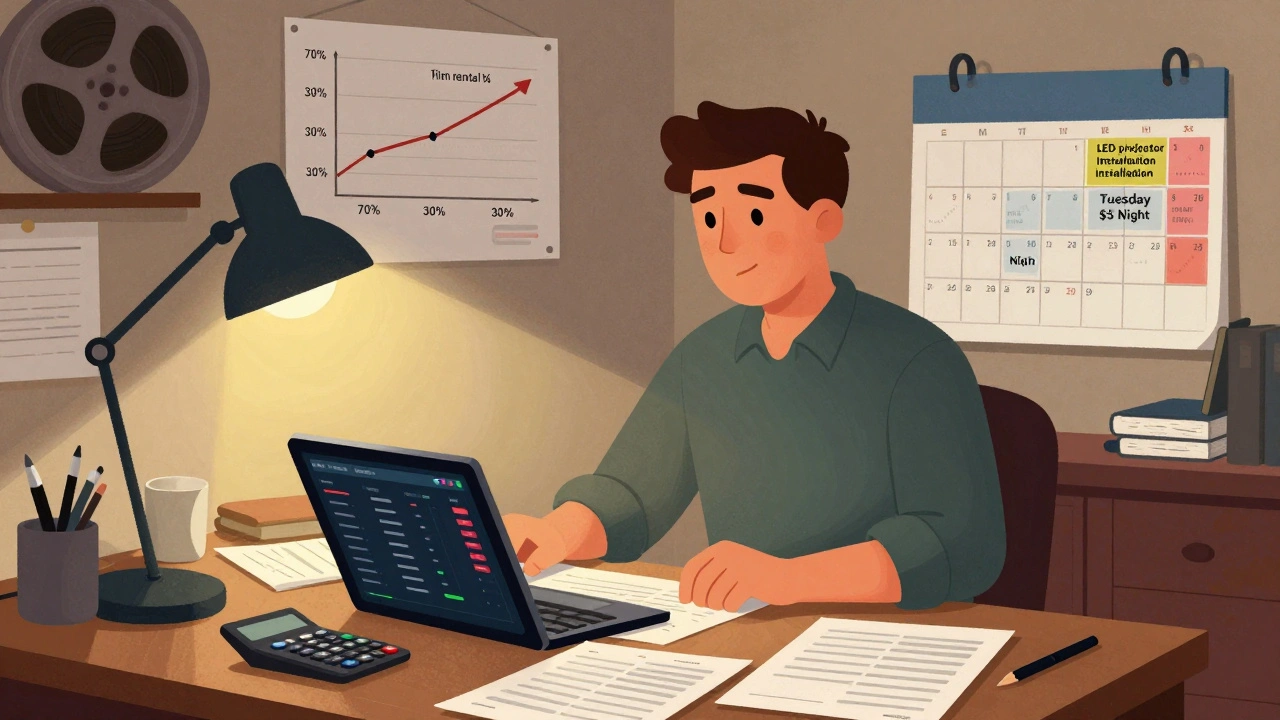
For a new blockbuster opening weekend, studios often take 70% or more. That means if you sell $10,000 in tickets on Friday night, $7,000 goes straight to the distributor. By week two, that drops to 50%. By week three, it’s often down to 30%. And by week four? You might keep 90%-but if no one’s showing up, that 90% of $200 doesn’t cover your lights.
Smaller films, indie releases, or foreign language titles sometimes have flat rental fees instead. A $1,500 weekly fee might sound better than a 70% cut-but if you only sell $2,000 in tickets that week, you’re left with $500 after rent. That’s barely enough to cover staff wages.
Some theaters negotiate revenue splits based on attendance thresholds. If you hit 80% capacity for three straight nights, your split improves. Others get guaranteed minimums: pay $3,000 regardless of sales, but keep 100% of anything above that. It’s a gamble. And studios know it.
Theater Operations: The Hidden Costs No One Talks About
While film rentals grab headlines, the real money drains happen behind the scenes. Theater operations include everything from electricity to employee payroll to cleaning supplies. These costs don’t change based on what movie is playing-they’re constant.
- Electricity: A single 4K digital projector uses 3.5 kW per hour. Running it for 12 hours a day, seven days a week? That’s over 290 kWh per week. At $0.14 per kWh, that’s $40 a week per screen-just for projection. Add in sound systems, HVAC, and concession refrigeration, and you’re looking at $1,200-$2,500 monthly per screen.
- Staffing: A small theater with four screens needs at least five full-time staff: manager, projectionist, ticket seller, concessions worker, and cleaner. Minimum wage in most states is $10-$15/hour. With overtime and benefits, payroll easily hits $15,000-$25,000 per month.
- Equipment Maintenance: Digital projectors need lamp replacements every 1,000 hours. That’s $2,000-$4,000 per lamp. Sound systems need calibration. Seats get torn. Flooring wears down. Annual maintenance budgets range from $10,000 to $50,000 depending on size and age.
- Insurance and Licensing: Liability insurance for theaters averages $5,000-$10,000/year. Performance rights fees for showing trailers or music clips? Those add up too. And don’t forget local business licenses, fire safety inspections, and ADA compliance upgrades.
Here’s a real example: a 6-screen theater in Ohio reported $42,000 in monthly operating costs in 2024. Film rentals took $28,000 of that. That left $14,000 to cover everything else-including rent, taxes, and profit. They needed to sell 1,800 tickets a week just to break even.
How Big Chains vs. Independent Theaters Handle Costs Differently
AMC, Regal, and Cinemark have advantages you won’t find at your local indie theater. They negotiate bulk film deals. They get lower equipment pricing because they buy in volume. They have centralized marketing teams that drive traffic to all locations.
But they also have massive overhead. A 20-screen megaplex costs $2 million to build. That debt service alone can be $15,000/month. Their labor costs are higher because they offer more benefits. And they’re locked into long-term leases in high-rent malls.
Independent theaters survive by being lean. Many operate with just two or three employees. Some owners run the projector themselves. They use older, cheaper projectors that need more frequent repairs but cost less upfront. They often show second-run films or host community events to fill gaps between new releases.
One theater in Portland, Oregon, makes up for lower rental margins by offering $5 Tuesday nights, hosting live Q&As with local filmmakers, and selling branded merchandise. Their film rental fees are lower because they don’t compete for first-run blockbusters. Their profit margin is thin-but steady.
The New Reality: Streaming Isn’t the Only Threat
People assume streaming killed theaters. It did-but not in the way you think. The real problem? Studios now release films directly to streaming or shorten theatrical windows. In 2024, over 40% of wide-release films had a 45-day or shorter exclusive theater run. That means theaters have less time to earn back their rental fees.
And when a film drops on Peacock or Max just three weeks after opening, the theater’s revenue potential collapses. That’s why many theaters now demand longer exclusivity windows in contracts-or they refuse to book certain films altogether.
Some theaters are turning to event cinema: live broadcasts of opera, concerts, sports, and video game tournaments. These have lower film rental fees because they’re not studio blockbusters. They also draw audiences on slow nights. A single esports event can bring in 300 people on a Tuesday-without paying a $100,000 rental fee.

What’s Working: Real Strategies to Cut Costs and Boost Revenue
If you’re running a theater, here’s what actually works in 2025:
- Bundle tickets with food: A $12 ticket + $8 popcorn combo sells 3x better than a $12 ticket alone. Concessions have 80%+ profit margins. Push bundles hard.
- Use dynamic pricing: Charge $15 for Friday night premieres, $8 for Wednesday matinees. Use apps to adjust prices in real time based on demand.
- Partner with local businesses: A coffee shop next door gives your theater a discount on coffee for your staff. In return, you put their logo on your screen before the show. Win-win.
- Switch to LED projectors: They cost more upfront-$30,000 vs. $15,000-but last 20,000 hours and use 40% less power. Payback period: under two years.
- Host rentals: Let local schools, churches, or businesses rent your theater for private showings. Charge $300-$800 for a 3-hour block. No film rental fee if they bring their own content.
One theater in Austin cut its monthly operating costs by 18% in six months by switching to LED projectors, eliminating one full-time staff member (replaced with part-time), and starting a $10 monthly membership for free popcorn. Their net profit rose 22%.
Bottom Line: It’s Not About the Blockbusters Anymore
Theaters that survive in 2025 aren’t the ones chasing the next Marvel movie. They’re the ones who treat the theater as a community space-not just a screen. They manage film rentals like a budget line item, not a lottery ticket. They control operations like a small business owner, not a passive landlord.
Exhibition costs are high. But they’re predictable. And with smart choices, they’re manageable. The future of movie theaters doesn’t depend on Hollywood’s release schedule. It depends on how well you understand your own numbers.
How much do theaters typically pay to rent a new movie?
For a new blockbuster in its opening weekend, theaters often pay 70% of ticket sales to the studio. This drops to 50% in week two, 30% in week three, and sometimes as low as 10% by week four. Some indie films use flat weekly fees, ranging from $1,000 to $5,000 depending on popularity and length of run.
What percentage of theater revenue comes from concessions?
Concessions account for about 40% of a theater’s total revenue, but they generate over 80% of its profit. A $12 popcorn bag costs less than $1 to make. That’s why bundling tickets with snacks is critical to staying profitable.
Do theaters make money from streaming releases?
No. When a movie skips theaters or has a very short window (under 45 days), theaters lose potential revenue. Studios keep all streaming income. Theaters only earn from physical ticket sales and concessions during the theatrical run.
What’s the average monthly operating cost for a 6-screen theater?
A typical 6-screen theater spends $40,000-$60,000 per month on operations, including staff, utilities, maintenance, insurance, and rent. Film rentals can add another $25,000-$40,000, depending on the mix of new releases and older films.
Are LED projectors worth the investment?
Yes. While LED projectors cost $30,000-$40,000 upfront-twice as much as traditional lamps-they last 20,000 hours (vs. 1,000-2,000 for lamps), use 40% less electricity, and require no lamp replacements. Most theaters recover the cost in 18-24 months and save $5,000-$8,000 annually after that.
Next Steps: What to Do If You Run a Theater
If you’re a theater owner, start by tracking your numbers. Don’t guess what you’re spending. Write down every expense for one month-down to the cost of toilet paper. Then compare it to your film rental payments. You might be surprised how much you’re losing on a single blockbuster.
Try switching one screen to LED lighting next year. Test a $10 membership for free popcorn. Offer a local film night once a month. Small changes compound. Theaters that survive aren’t the ones with the biggest screens-they’re the ones who understand their costs best.






Comments(7)