Winning an Oscar doesn’t change everything - but it changes enough
When a director walks offstage with a statue in hand, the world sees a triumph. But behind the applause, there’s a quiet reckoning: what now? Winning Best Director at the Oscars, the Golden Globes, or Cannes doesn’t guarantee a career boom - but it does shift the rules of the game. The money flows differently. The scripts change. The people who say yes to you? They’re no longer just colleagues. They’re believers.
Take Emerald Fennell. Before Promising Young Woman won her the Oscar in 2021, she was known as an actress and writer. Afterward, she was offered The Crown Season 6, a $100 million Netflix project, and a major studio deal to develop multiple films. Her career didn’t explode overnight - it evolved, deliberately, with more control.
Compare that to Chloé Zhao, who won the Oscar for Nomadland in 2021. She didn’t rush into another indie drama. She went straight to Marvel - directing Eternals, a $200 million blockbuster. The studio didn’t just hand her the job because she was talented. They handed it to her because they knew she could bring depth to a franchise that had grown formulaic.
Winning doesn’t make you a superstar. It makes you a decision-maker.
Money opens doors - but not all doors are worth walking through
After a major win, directors get flooded with offers. Some are tempting. Others are traps.
Here’s what usually happens:
- Studio deals: Major studios like Warner Bros., Universal, or Netflix offer multi-picture contracts. These often come with creative control - but also pressure to deliver box office hits. Denis Villeneuve signed a deal with Warner Bros. after Arrival and Blade Runner 2049 earned critical praise. He got to make Dune - but only after agreeing to a two-film commitment.
- Streaming exclusives: Platforms like Apple TV+ and Amazon Prime are now competing for award-winning directors. They offer bigger budgets and fewer notes. Taika Waititi signed a $100 million deal with Apple after Jojo Rabbit won Best Adapted Screenplay. He’s since made Our Flag Means Death and a sci-fi series - both deeply personal projects.
- Independent offers: These often come with smaller budgets but total creative freedom. After winning the Palme d’Or for Parasite, Bong Joon-ho turned down multiple Hollywood offers to make Memories of Murder re-release and a new Korean-language film, Okja’s follow-up, which he still controls entirely.
The trap? Saying yes to the wrong thing. Just because you can make a superhero movie doesn’t mean you should. Some directors burn out trying to please studios. Others lose their voice chasing awards again.
The pressure to repeat - and why it’s a myth
There’s a dangerous expectation: if you won once, you must win again. The media treats directors like athletes. “Can they do it again?” “Will they fall off?”
But film isn’t sports. A director’s next project isn’t a rematch. It’s a new language.
After Spotlight won Best Picture in 2016, Tom McCarthy didn’t rush into another investigative drama. He made The Cobbler, a quiet family film. Critics called it a “step back.” But McCarthy said he needed to “remember why I started.” He didn’t win another Oscar - but he kept making films that mattered to him.
Same with Alejandro G. Iñárritu. After winning back-to-back Oscars for Birdman and The Revenant, he didn’t chase another epic. He made Carne y Arena, a 20-minute virtual reality installation about border crossings. It wasn’t a box office hit. It was a museum piece. And it won a special Oscar.
The truth? Winning doesn’t mean you have to replicate your past. It means you get to define your next move.
Who gets to choose their next project - and who doesn’t
Not all directors get the same freedom after a win. Race, gender, and industry bias still shape what opportunities are offered - and what’s assumed you’re “supposed” to do.
Women directors who win are often steered toward “women’s stories” - dramas about grief, motherhood, or trauma. Chloé Zhao was asked to direct Eternals because Marvel wanted “a human touch.” But when Kathryn Bigelow won for The Hurt Locker, she was offered war films - not sci-fi, not comedies, not romances.
Similarly, Black directors like Barry Jenkins (Moonlight) and Jordan Peele (Get Out) were offered high-profile genre projects - horror, fantasy, superhero - because studios saw them as “the Black director” first, and the artist second.
That’s not opportunity. That’s typecasting.
But the best directors push back. Jordan Peele didn’t make another horror film after Get Out. He made Us, then Nope - both genre films, but with layered themes about fame, capitalism, and spectacle. He didn’t let the award box him in.
The real power of winning? It gives you leverage to say no.
The hidden cost: burnout, isolation, and the weight of expectation
Winning changes your relationships - with collaborators, with friends, with yourself.
Many directors report feeling lonelier after a win. Suddenly, people treat you like a brand. Your phone rings more. Your email inbox explodes. Your team grows. But your inner circle shrinks.
One director, who won Best Director at Sundance in 2022, told me: “After the win, I had 12 meetings in two weeks. No one asked how I was. Everyone asked what I’m doing next.”
Some directors take a year off. Others disappear. Paul Thomas Anderson took five years between The Master (2012) and Phantom Thread (2017). He didn’t make a film because he was stuck - he made it because he needed to feel something again.
And then there’s the pressure to be “the next great one.” Directors who win young - like Damien Chazelle at 32 for La La Land - often face relentless scrutiny. Every project after becomes a referendum on their talent.
There’s no rulebook for this. But the ones who survive? They protect their time. They say no to interviews. They turn down pitches. They go hiking. They read books. They let silence breathe.
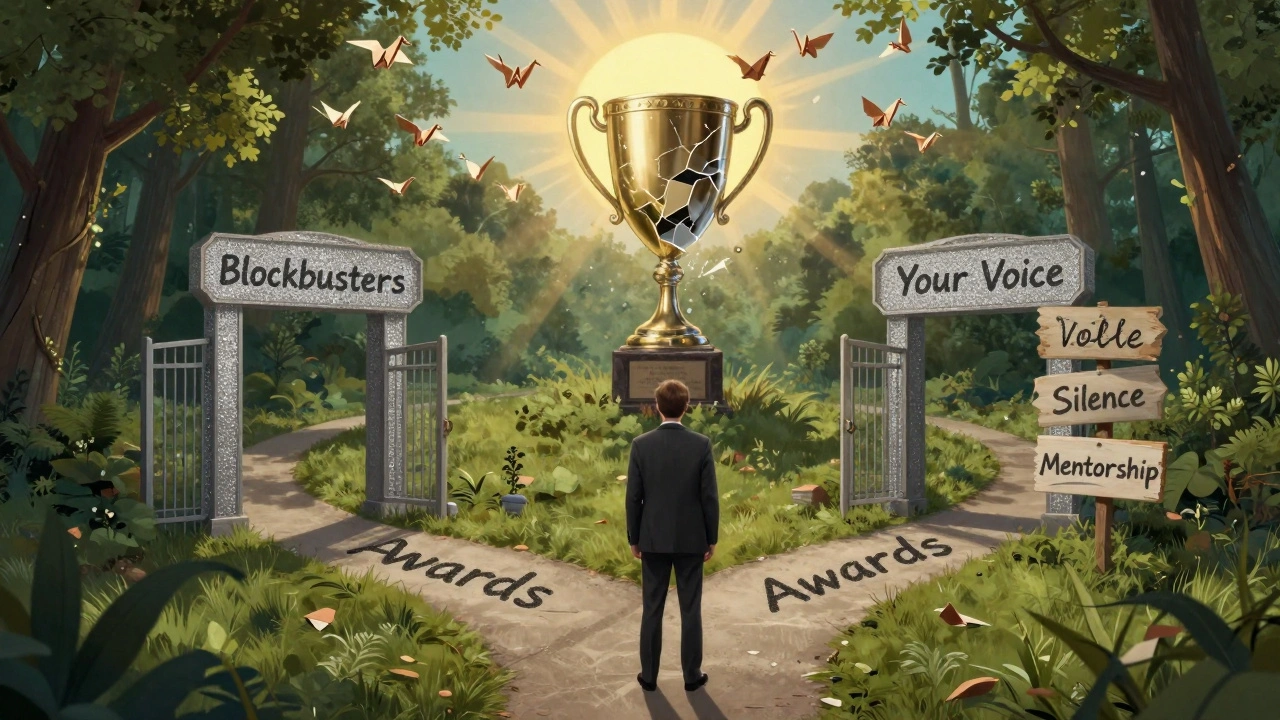
What the best directors do differently
There’s a pattern among directors who thrive after winning - not just survive.
- They don’t chase awards again. They chase stories that scare them.
- They keep working with their core team. Cinematographers, editors, composers - the people who helped them win stay on board. That’s how you keep your voice.
- They invest in development. They spend a year or two reading scripts, meeting writers, and building relationships - not just signing deals.
- They say no to the obvious. If everyone expects you to do a war film, you make a musical. If everyone expects a drama, you make a comedy.
- They give back. Many start mentorship programs, fund indie films, or teach at film schools. It reminds them why they started.
That’s how you turn a trophy into a legacy.
What happens when it doesn’t work out
Not every director thrives after winning. Some disappear. Some make one great film and vanish.
Take Lenny Abrahamson. He won the BAFTA for Room in 2016. After that, he made The Little Stranger - a gothic horror film that flopped. Then he made Frank, a quirky indie that got no attention. He didn’t get another Oscar. He didn’t get a studio deal. But he kept making films - quietly, consistently.
Or think of Jonathan Glazer. He won the BAFTA for Under the Skin in 2014. Then he disappeared for seven years. When he returned with The Zone of Interest, he didn’t try to replicate his past. He made a Holocaust film without showing the violence - just the sound. It won the Oscar in 2024.
Winning doesn’t guarantee a career. But it does give you a second chance - if you’re willing to use it differently.
What comes next? The quiet revolution
The future of award-winning directors isn’t about more Oscars. It’s about more autonomy.
Directors are no longer waiting for studios to give them permission. They’re using their wins to build their own systems: production companies, funding pools, distribution networks. Emerald Fennell launched her own indie label. Bong Joon-ho co-founded a Korean production house that funds first-time filmmakers.
And the audience? They’re tired of the same formula. They’re hungry for voices that feel real - not polished, not safe.
The directors who win now aren’t just artists. They’re architects. They’re building the next generation of cinema - one project, one no, one quiet moment at a time.
Do award-winning directors always make bigger movies after winning?
No. Many choose smaller, more personal projects. After winning the Oscar for Spotlight, Tom McCarthy made The Cobbler, a low-budget family film. Chloé Zhao went from Nomadland to directing Marvel’s Eternals, but Bong Joon-ho stayed with Korean-language films. Winning gives you choice - not a mandate to scale up.
Why do some directors disappear after winning?
Some directors face burnout, creative block, or pressure to replicate success. Others get offered projects they don’t believe in and choose silence over compromise. Jonathan Glazer vanished for seven years after Under the Skin - he didn’t make a film until he had a story he couldn’t ignore. Winning doesn’t remove the need for authenticity.
Do women and directors of color face different pressures after winning?
Yes. Women are often steered toward “emotional” or “domestic” stories. Directors of color are frequently offered genre films tied to their identity - horror, crime, or historical dramas. But many push back. Jordan Peele made Nope, a sci-fi thriller about spectacle, not trauma. Chloé Zhao directed a Marvel film - not because she had to, but because she wanted to reshape the genre.
Can a director win an award and still struggle to get funding?
Absolutely. Awards don’t guarantee funding. Many indie directors win at festivals like Sundance or Cannes but still struggle to raise money for their next project. The industry often sees them as “one-hit wonders.” It’s why many start their own production companies - to control their own future.
What’s the biggest mistake directors make after winning?
Saying yes to everything. Winning opens doors - but not all doors lead to good work. The biggest mistake is chasing fame, money, or another award instead of chasing a story that moves them. The directors who last are the ones who protect their voice, not their reputation.





Comments(6)