Back in 2018, a director signed a deal with Netflix to make three films over five years - no studio interference, no pitch meetings, just creative freedom in exchange for exclusivity. That deal wasn’t unusual anymore. By 2025, over 60% of Oscar-nominated filmmakers had signed long-term, exclusive agreements with streaming platforms. This isn’t just a trend. It’s a full-scale shift in how movies get made.
Why Filmmakers Are Walking Away From Theatrical Studios
For decades, filmmakers relied on major studios like Warner Bros., Universal, or Paramount. But those studios came with strings attached: tight budgets, mandatory test screenings, reshoots ordered by marketing teams, and release dates set by box office calendars. Many directors felt like they were making movies for executives, not audiences.
Streaming platforms changed that. Companies like Netflix, Amazon, Apple, and Disney+ started offering something studios never did: total creative control. In return, they asked for one thing - exclusivity. No more jumping between platforms. No more splitting rights. If you make a film for Apple TV+, it stays there. Forever.
Take Ryan Coogler. After Black Panther, he didn’t go back to Marvel Studios. He signed a multi-year, multi-million-dollar deal with Netflix to develop original films and series. He now has his own production arm under Netflix, with full autonomy over casting, editing, and release timing. That kind of power didn’t exist ten years ago.
What’s in These Deals? Beyond the Paycheck
These aren’t just salary packages. They’re full creative ecosystems. A typical exclusive filmmaker deal includes:
- Upfront development funding - $5M to $20M just to greenlight projects before filming begins.
- First-look rights - The platform gets the first chance to pick up every script the filmmaker develops, even if it’s not made immediately.
- Profit participation - Unlike old studio deals, many now get a cut of global streaming revenue, not just box office.
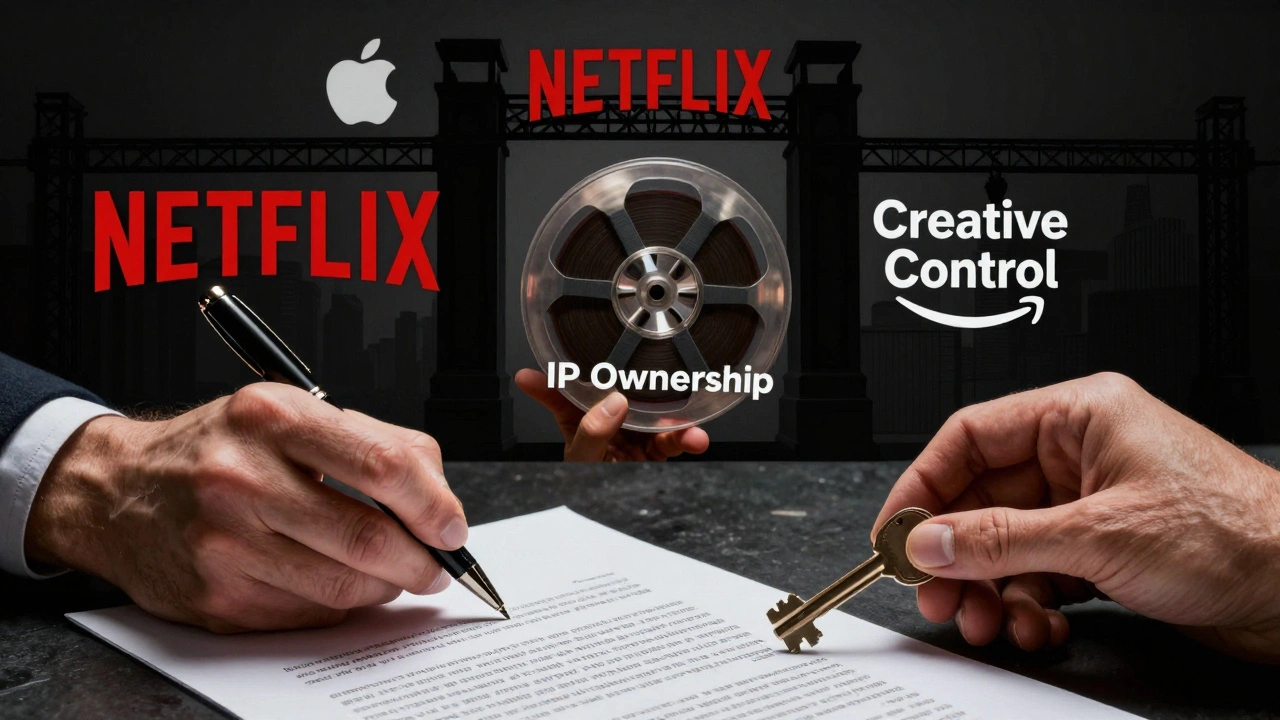
- Retention of IP - Filmmakers often keep ownership of characters, worlds, and story elements, even if the platform distributes them.
- Production autonomy - No studio notes. No mandated runtime cuts. No forced reshoots.
One director told me, "I made my last film for a studio. They cut 17 minutes out of the final cut. I didn’t even see the final version until it hit theaters. Now? I hand them the final cut. They don’t touch it. That’s worth more than money."
Platforms Are Betting Big on Original Voices
Streaming services don’t just want content - they want brand content. A director with a recognizable style becomes a signature for the platform. When viewers see a film with Pedro Almodóvar’s name attached, they know what they’re getting: bold colors, emotional intensity, complex women. That’s valuable.
That’s why Apple signed Denis Villeneuve to make a slate of original films. Why Netflix locked in Guillermo del Toro for a decade of horror and fantasy projects. Why Amazon gave Ava DuVernay a $100M fund to develop Black-led stories. These aren’t just hires. They’re branding moves.
Platforms know: audiences don’t just watch movies. They follow directors. A loyal fanbase for one filmmaker can drive millions of new subscribers. In 2024, Netflix reported that films from their exclusive directors had 37% higher viewership retention than non-exclusive originals.
The Catch: No More Cross-Platform Freedom
There’s a downside. Once you sign an exclusive deal, you’re locked in. You can’t take your next project to HBO. You can’t pitch to Sony. You can’t even make a short film for YouTube without the platform’s approval.
Some filmmakers regret it. One acclaimed indie director told me, "I signed with Hulu for $15M. I thought it was freedom. Two years later, I had three scripts I loved, but they all got rejected. I couldn’t take them anywhere else. I was stuck."
Platforms rarely let you out. Contracts are typically five to seven years. Some include non-compete clauses that prevent you from working with rival services - even as a consultant. And if you break the deal? You lose not just your funding, but your future rights to any project you developed under the contract.
Who’s Winning? Who’s Losing?
Big-name directors with proven track records? They’re winning. They get creative control, massive budgets, and global reach. A-listers like David Fincher, Bong Joon-ho, and Greta Gerwig now operate like independent studios, with platforms as their financiers.
But what about the mid-tier filmmakers? The ones who made three indie films and got buzz at Sundance? They’re being squeezed. Platforms still want original voices - but they’re increasingly turning to talent agencies to find them. And those agencies now charge platforms 15-20% fees just to connect them with directors. That means less money for the filmmakers themselves.
Even worse: some platforms now require filmmakers to bring their own funding. A producer told me, "Netflix asked us to secure $3M in co-financing before they’d even read our script. That’s not a deal. That’s a test."
The Future: More Exclusivity, Less Diversity?
As more filmmakers sign exclusives, the risk grows: the pool of original voices becomes smaller. If Netflix has 80% of the top 50 directors under contract, who’s left to make films for everyone else?
Independent theaters are already feeling it. In 2025, 68% of films that premiered at Cannes came from just three platforms: Netflix, Apple, and Amazon. That’s up from 22% in 2019.
Some argue this is inevitable. Theatrical distribution is dying. Audiences aren’t going to theaters - they’re streaming. So why not let the best creators build their own empires on the platforms that can reach them?
Others worry. What happens when one platform controls 70% of the original films people watch? What if creative diversity shrinks because only those who fit a platform’s brand get funded?
One thing’s clear: the power has shifted. The studios are no longer the gatekeepers. The platforms are. And the filmmakers who understand how to negotiate these deals - not just for money, but for control - are the ones shaping the future of cinema.
What This Means for Aspiring Filmmakers
If you’re just starting out, don’t chase exclusivity. Not yet. Focus on building a body of work. Make short films. Win festivals. Build a following. Platforms don’t sign unknowns - they sign proven voices.
But when you’re ready? Know what you’re signing. Read the fine print. Ask: Who owns the IP? Can I make a documentary elsewhere? What happens if the platform shuts down? Can I walk away after five years? Get a lawyer who specializes in digital media contracts - not just entertainment law.
The golden age of filmmaking isn’t over. It’s just moved. And the rules have changed.
What exactly is an exclusive talent deal in film?
An exclusive talent deal is a contract between a filmmaker (director, writer, or producer) and a streaming platform that gives the platform sole rights to distribute all films and series developed by that creator for a set period - usually five to seven years. In exchange, the filmmaker typically receives upfront funding, creative control, and sometimes profit-sharing. The catch: they can’t work with competing platforms during the contract term.
Which streaming platforms are most active in signing exclusive filmmaker deals?
Netflix leads in volume, signing over 120 filmmakers since 2020. Amazon and Apple focus on high-profile auteurs like Denis Villeneuve and Greta Gerwig. Disney+ has been slower but is now aggressively targeting Oscar-winning directors to boost its original content. HBO Max (now Max) still signs deals but mostly with established TV creators rather than feature filmmakers.
Do these deals guarantee better films?
Not always. But they do remove the biggest creative barriers: studio interference, forced edits, and rigid release schedules. Many of the most critically acclaimed originals in recent years - like The Power of the Dog, Parasite (Netflix release), and Minari - came from filmmakers who had some level of creative autonomy. When directors aren’t answering to marketing teams, the results often feel more personal and original.
Can a filmmaker break an exclusive deal?
It’s extremely rare and risky. Most contracts include steep financial penalties - often millions of dollars - if the filmmaker violates exclusivity. Some deals also include "clawback" clauses, where the platform demands repayment of all upfront money if the filmmaker leaves early. Legal battles are common, and courts usually side with the platform. Few filmmakers risk it.
Are these deals good for the industry overall?
It depends. For top-tier filmmakers, they’re a dream: creative freedom, global reach, financial security. But for the broader ecosystem, they’re narrowing diversity. With so many key creators locked into a few platforms, smaller studios, indie theaters, and non-streaming distributors struggle to compete. The result? A more homogenized film landscape, even if the quality of individual projects is high.


Comments(6)