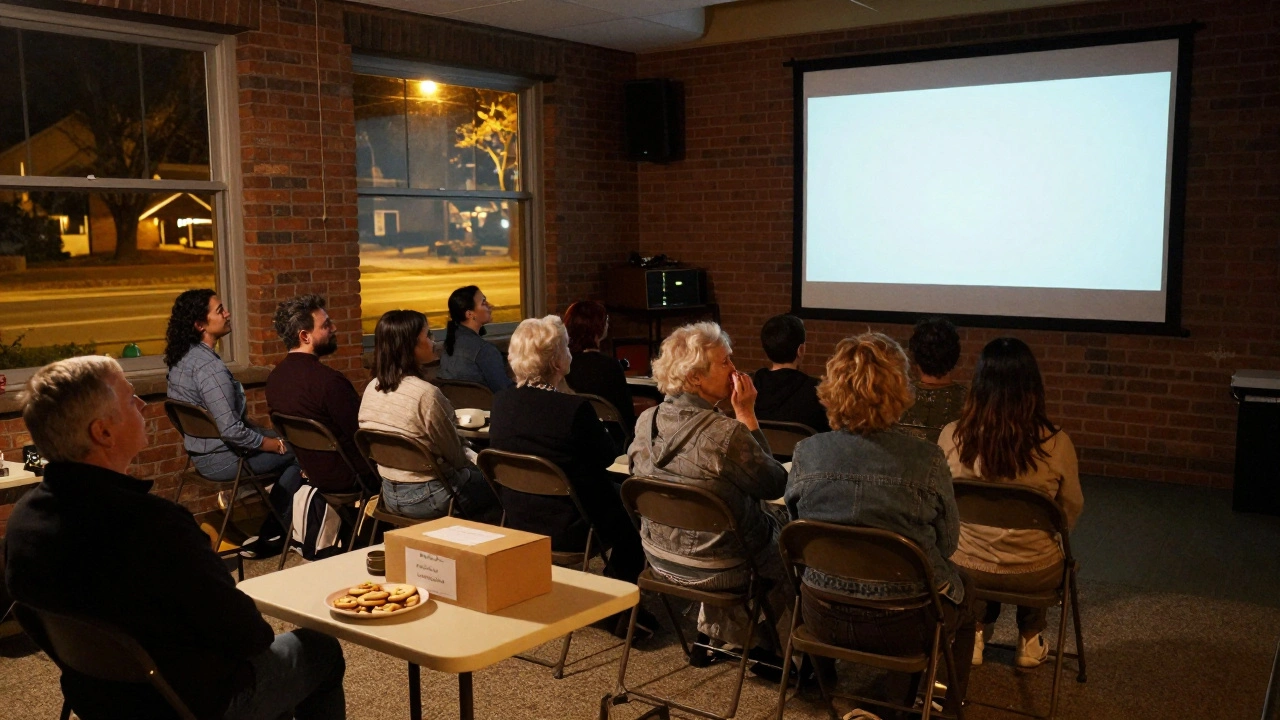
Most indie films never play in a theater. Not because they’re bad, but because theaters don’t pay for them. The real life of an indie film happens in libraries, churches, community centers, college campuses, and even living rooms. These are the event screenings-the quiet engines that turn small films into lasting cultural moments.
Why Event Screenings Matter More Than Theaters
Think about the last indie film you loved. Was it the one you saw on Netflix? Or the one you watched with a group of strangers in a church basement, followed by a 45-minute Q&A that turned into a debate about class, identity, or justice? That’s the difference.
Theatrical releases are expensive. A single print costs $1,500. A digital cinema package runs $1,000. Theaters take 50% of ticket sales. For a film that cost $50,000 to make, that’s a losing game unless you’re lucky enough to land a slot at Sundance or get picked up by a distributor with deep pockets.
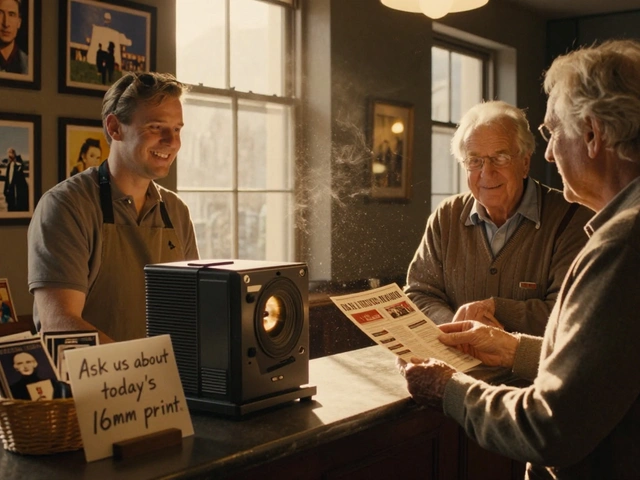
Event screenings don’t need any of that. All you need is a projector, a screen, a local host, and an audience willing to show up. You can rent a projector for $75 a day. You can use a white sheet on a garage wall. You can charge $10 a ticket-or ask for a donation. The goal isn’t to make millions. It’s to make connections.
How Non-Theatrical Distribution Actually Works
Non-theatrical distribution means showing your film outside traditional movie theaters. That includes:
- Community centers and public libraries
- Universities and high schools
- Religious institutions and nonprofit spaces
- Film festivals with outreach programs
- Senior centers, prisons, and homeless shelters
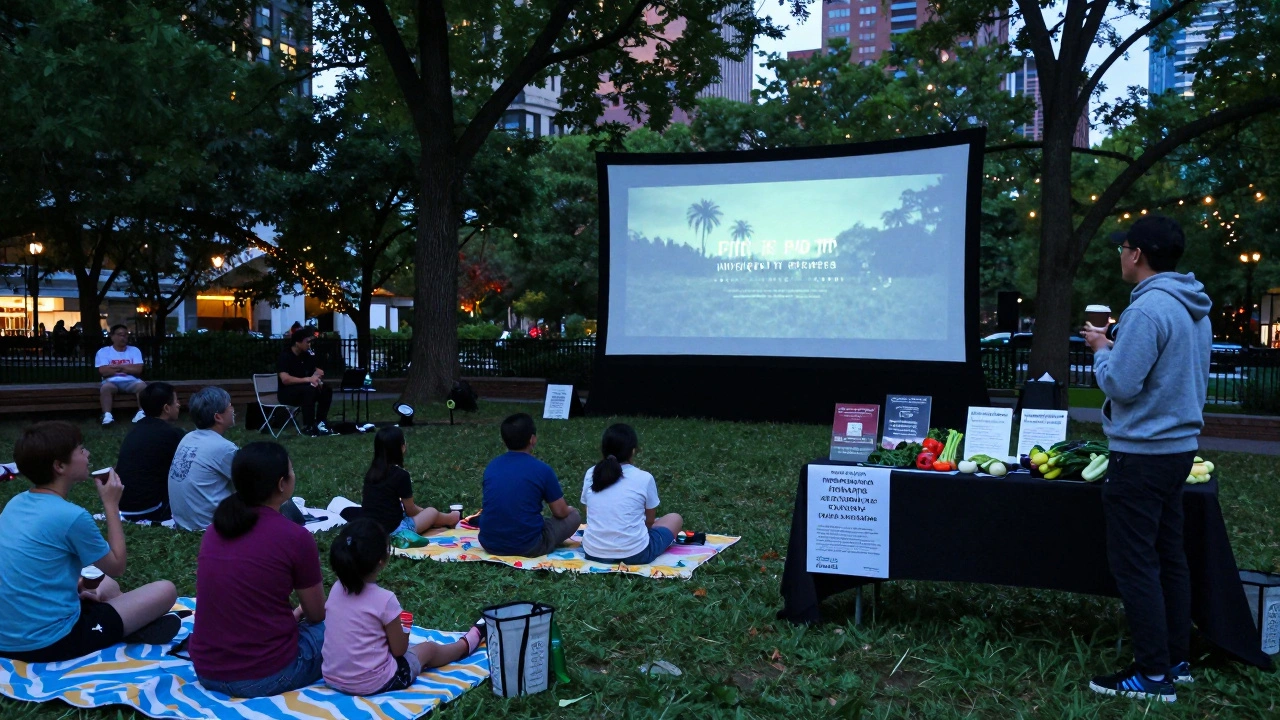
- Pop-up events in parks or food markets
These aren’t backup plans. They’re the main plan for most indie filmmakers. A film like The Florida Project started with small screenings in Florida libraries before it got picked up. Boyhood had over 200 non-theatrical events before its wide release. These aren’t outliers-they’re the blueprint.
The key is licensing. You can’t just upload your film to YouTube and call it a screening. You need public performance rights. That’s where companies like Swank Motion Pictures, Criterion Pictures, and Facets Multi-Media come in. They handle the legal side so you don’t have to. You pay a flat fee per screening-often $150 to $400-and you’re covered. No lawyers. No risk.
Building Community Through Film
A screening isn’t just a movie night. It’s an event. And events build community.
In Asheville, a filmmaker named Lena Ruiz showed her documentary about immigrant farmers at a local food co-op. She didn’t advertise on Instagram. She called every organic farm in Buncombe County. She brought samples of the vegetables the farmers grew. After the film, people stayed for two hours talking about land access, food justice, and what their own gardens could do.
That’s the power. Film becomes a conversation starter. A catalyst. A way to bring people together around something real.
Successful screenings have three things:
- A clear purpose: Why this film? Why now?
- A local partner: A library, church, or nonprofit that already has an audience
- A follow-up action: A discussion, a petition, a donation drive, a volunteer sign-up
Don’t just show the film. Use it.
Who Shows Up? And Why?
People who go to non-theatrical screenings aren’t looking for popcorn and distraction. They’re looking for meaning.
They’re teachers who want to use the film in class. They’re activists who need visuals for their campaign. They’re seniors who haven’t seen a film about their generation in years. They’re students who can’t afford a theater ticket but can afford $5.
One filmmaker tracked attendance at 47 screenings of her film about mental health in rural Appalachia. The average age? 58. The most common response? “I didn’t know anyone else felt this way.”
That’s the metric that matters. Not box office. Not streaming numbers. Not likes. It’s the quiet moment when someone says, “That was my story.”
How to Plan Your First Screening
Here’s how to do it without overcomplicating it:
- Choose your venue first. Pick a place that already has a regular audience-your local library, a community college, a church with a social justice group. Don’t try to build an audience from scratch.
- Contact them. Ask if they’d host a film night. Most have a budget for cultural events. Offer to handle the projector and promotion.
- Get public performance rights. Use Facets or Swank. Pay the fee. Keep the receipt.
- Design a simple flyer: Film title, date, time, location, a one-line description, and a QR code to your website.
- Invite local organizations. Email nonprofits, schools, activist groups. Don’t blast it. Personalize it. “I thought you might want to bring your group to this.”
- Plan the conversation. Have 3 questions ready. Ask the audience what they felt. What surprised them? What would they do differently?
- Follow up. Send a thank-you email. Ask if they’d host another. Collect emails. Build a list.
You don’t need a marketing team. You just need to show up-and be honest.
Real Examples That Worked
Here are three films that didn’t rely on theaters-and still made an impact:
- 13th: After its Netflix release, the filmmakers partnered with over 1,200 universities and prisons for screenings. Each one came with a discussion guide on mass incarceration. The film became a tool for change, not just entertainment.
- My Octopus Teacher: A small team screened it in 87 coastal towns across the U.S. They brought sea shells and coral samples. They invited marine biologists. They sold local art. The film didn’t just get seen-it sparked ocean conservation efforts in places that had never seen a documentary before.
- The Last Repair Shop: This Oscar-winning short about instrument repair in L.A. schools was screened in 200 public schools. Each screening came with a donation drive for broken instruments. They raised $220,000 in six months.
These films didn’t win because they were perfect. They won because they were used.
What Doesn’t Work
Don’t do this:
- Host a screening in an empty auditorium and hope people show up.
- Use a YouTube link on a laptop without sound. No one will stay.
- Charge $20 for a film that cost $10,000 to make. People will feel ripped off.
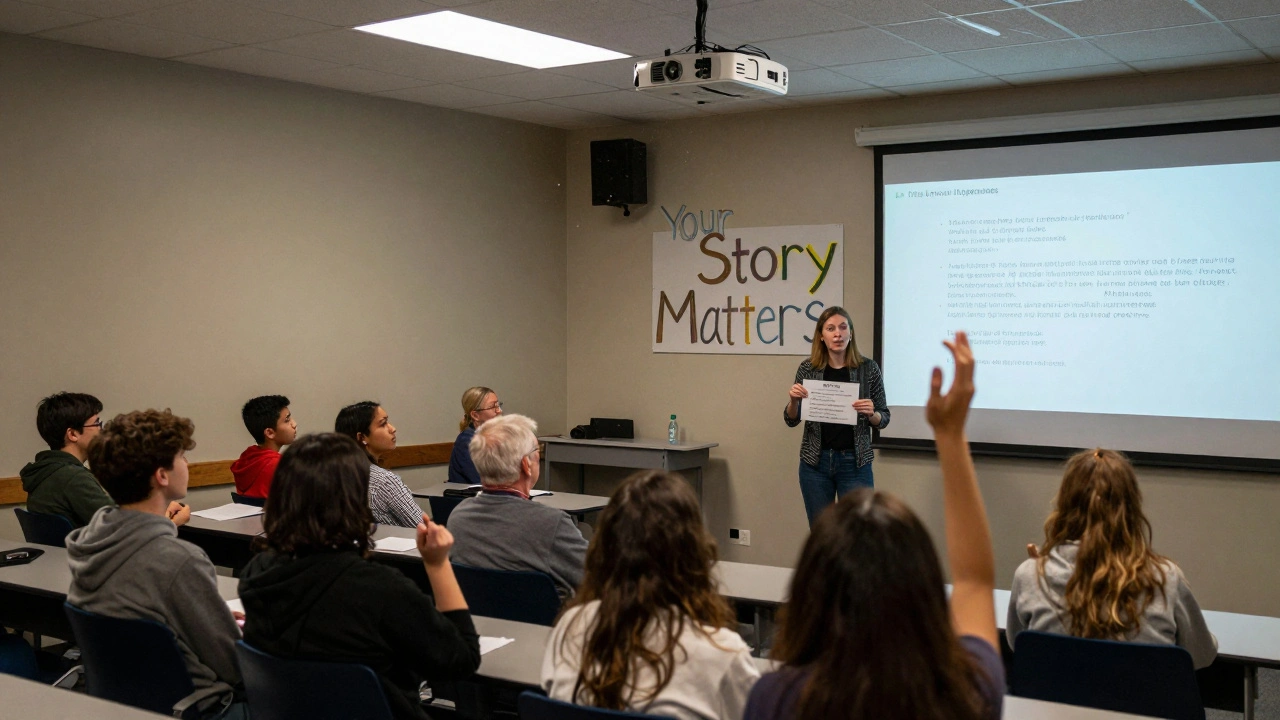
- Forget to talk to your audience afterward. The film is the hook. The conversation is the payoff.
Also, don’t think you need to be “professional.” A shaky camera, a slightly out-of-sync sound, a volunteer running the projector-none of that matters if the story hits home.
What Comes After the Screening
The real work starts after the lights come up.
Collect emails. Ask for feedback. Offer a downloadable discussion guide. Link to your website. Ask if they want to help organize the next one.
Many filmmakers build entire distribution networks this way. One filmmaker in Portland screened her film about housing insecurity in 37 locations over 18 months. She ended up partnering with three housing nonprofits. She got grants. She got press. She got a TV deal-not because a studio found her, but because the community asked for more.
Your film doesn’t need a distributor. It needs a movement.
Where to Start Today
You don’t need money. You don’t need a team. You just need to pick one place and show up.
Call your local library. Ask if they’d host a film night next month. Pick a film you care about. Get the rights. Print five flyers. Hand them to people you know. Show up early. Set up the projector. Say hello to the first person who walks in.
That’s how it starts.
And if you do it right? You won’t just show a film. You’ll change something.
Do I need a license to screen an indie film in a public space?
Yes. Even if you didn’t charge money, showing a film in a public space like a library, school, or church requires public performance rights. These are separate from home viewing rights. You can get them through companies like Swank, Criterion Pictures, or Facets Multi-Media. Fees range from $150 to $400 per screening, depending on the film and audience size.
Can I use YouTube or Vimeo for a public screening?
No. Streaming platforms like YouTube and Vimeo only grant personal, non-commercial viewing rights. Even if your film is uploaded there, showing it publicly-whether free or paid-requires a separate public performance license. Using a YouTube link at a community event can lead to legal issues, even if you didn’t mean to break the rules.
How much should I charge for tickets to a community screening?
There’s no fixed rule. Many community screenings use a “pay what you can” model, with suggested donations of $5-$10. Some charge nothing and take a collection box. Others partner with nonprofits and use the screening as a fundraiser. The goal isn’t profit-it’s access. Keep it affordable so people who can’t afford theaters still feel welcome.
What equipment do I need for a successful screening?
You need a projector, a screen or white wall, speakers, and a device to play the film (laptop or media player). A good projector costs $500-$1,000, but you can rent one for $75 a day. Sound is critical-don’t rely on laptop speakers. Use external speakers. Test everything before the event. Bring extra cables and adapters. And always have a backup copy on a USB drive.
How do I find venues willing to host indie films?
Start local. Libraries, community centers, churches, and universities often have budgets for cultural events. Call or email their programming coordinator. Offer to handle all the logistics: projector, license, promotion. Frame it as a free cultural offering for their community. Many will say yes if you make it easy for them.
Can I make money from non-theatrical screenings?
You can cover your costs-and sometimes make a small profit. But the real return isn’t financial. It’s in audience growth, media attention, and partnerships. Some filmmakers use screenings to build a mailing list, then sell DVDs, streaming access, or merch. Others use the buzz to attract grants or festival invites. Profit isn’t the point. Impact is.
If you’ve made a film, don’t wait for someone else to find it. Take it to the places where people already gather. Show it where it matters. That’s how indie films survive. Not by chasing theaters-but by building communities.



Comments(7)